DbcultAccessing Vault...
Cult Review
Senior Film Conservator
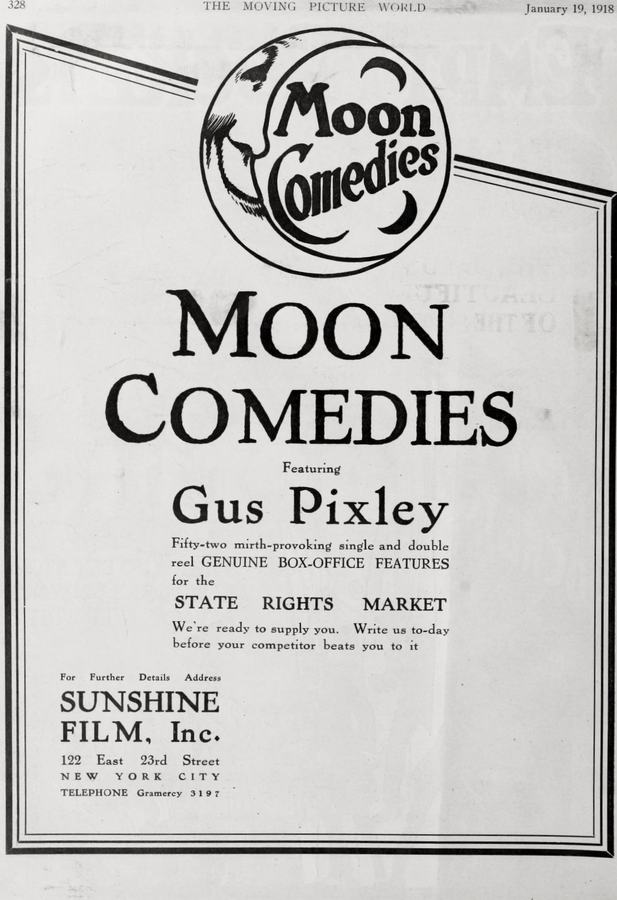
In the annals of early cinema, where narratives often unfolded with a charming directness, a particular gem emerges that, despite its brevity, encapsulates a timeless human dilemma with a delightful comedic flourish. 'No Money, No Fun,' a work featuring the engaging Gus Pixley, doesn't merely present a story; it offers a microcosm of economic anxiety and ingenious improvisation, all wrapped in a package that remains surprisingly resonant even today. It's a testament to the power of silent storytelling, demonstrating how character, circumstance, and a well-timed twist can transcend the absence of spoken dialogue, communicating universal truths about ambition, necessity, and the often-unpredictable currents of fortune. The film, in its unassuming elegance, manages to probe the delicate balance between familial obligation and personal survival, a theme as pertinent in the nascent days of cinema as it is in our contemporary landscape of shifting economic realities. Its brilliance lies not in grand pronouncements or intricate subplots, but in the sheer simplicity and relatable humanity of its central premise.
The narrative pivot of 'No Money, No Fun' is refreshingly straightforward, yet it harbors layers of subtle social commentary. Our protagonist, Gus, finds himself in that most unenviable of positions: impecunious, but with an affluent relative seemingly unwilling to part with ready cash. The uncle's offer – to reside in his grand home, treating it as his own – initially appears a generous reprieve, a comfortable if somewhat condescending solution to Gus's financial woes. However, it's this very ambiguity, this open-ended invitation to 'be comfortable,' that Gus, a man of evident resourcefulness born of necessity, exploits with an almost entrepreneurial zeal. The uncle's subsequent departure provides the perfect, albeit temporary, vacuum for Gus's audacious plan to take root. This isn't merely a tale of a young man down on his luck; it's a study in interpreting generosity, or perhaps, the lack thereof, through a lens of pragmatic survival. The film subtly questions the nature of charity and the expectations placed upon those with means, contrasting it with the raw, inventive drive of an individual pushed to the brink. It’s a delightful subversion of the traditional benefactor-dependent dynamic, turning the tables with a quiet, comedic confidence.
Gus Pixley, though perhaps not a household name for modern audiences, delivers a performance that anchors the film with an undeniable charisma. His portrayal of Gus is not one of a scoundrel, but rather a man propelled by circumstance, his actions more a testament to an inventive spirit than outright malice. Pixley’s physical comedy, a hallmark of the silent era, is employed with a nuanced touch; his expressions convey a blend of anxiety, cunning, and eventual relief that transcends the need for spoken dialogue. We witness his initial apprehension, the spark of an idea, the cautious execution of his plan, and the growing confidence as his illicit enterprise flourishes. It’s a masterclass in conveying complex emotional arcs through subtle gestures and facial shifts. The audience roots for Gus, not because his actions are morally unimpeachable, but because his plight is so universally understood. His is the struggle of the everyman, navigating a world where opportunities are scarce and self-reliance is paramount. Pixley transforms what could have been a morally dubious character into an endearing figure, a testament to his skill in eliciting empathy through purely visual means. He doesn't just act the part; he embodies the very essence of a man making the best of a challenging hand, finding 'fun' even when 'money' is scarce.
The heart of the film’s comedic engine lies in Gus’s transformation of his uncle’s stately residence into a bustling, albeit temporary, boarding house. This is where the visual humor truly shines. Imagining the staid elegance of a wealthy man’s home suddenly filled with an assortment of tenants, each paying for their room, creates an immediate comedic tableau. The film invites us to picture the subtle chaos, the hurried movements, the constant efforts to maintain an air of normalcy while simultaneously running a clandestine operation. It’s a delicate dance, a continuous balancing act between discretion and the demands of commerce. The humor isn't boisterous or slapstick; it's derived from the sheer audacity of the scheme and the impending threat of discovery. Gus must be a landlord, a concierge, and a vigilant guardian of his secret, all while maintaining the facade of merely 'being comfortable.' The film brilliantly uses the contrast between the uncle's initial intention and Gus's radical interpretation to generate its laughs. It's a delightful exploration of how necessity truly is the mother of invention, pushing boundaries and redefining spaces in the most unexpected ways.
The film masterfully builds tension towards the inevitable return of the uncle. The audience anticipates the confrontation, the righteous indignation, and Gus’s desperate scramble to conceal his activities. However, 'No Money, No Fun' subverts these expectations with a truly inspired narrative twist. The uncle returns not in a state of financial well-being, but surprisingly, in dire need of ready money himself. This revelation completely recontextualizes Gus's 'misdemeanor.' What was once a transgression against familial trust becomes, almost magically, a solution to a shared problem. The 'humming' house, once a symbol of Gus's illicit enterprise, now represents a readily available source of income. This twist is the film's comedic zenith, transforming potential conflict into an unexpected alliance. It underscores a profound truth about human nature: that despite societal conventions or familial hierarchies, financial necessity often levels the playing field, making strange bedfellows of those who might otherwise be at odds. The irony is delicious, and the resolution, far from feeling contrived, feels earned precisely because it mirrors the unpredictable nature of life itself. The film deftly navigates this shift, creating a satisfying conclusion that is both humorous and insightful.
Beyond its surface-level comedy, 'No Money, No Fun' delves into several compelling themes. At its core, it's a narrative about survival and the lengths to which individuals will go when faced with financial precarity. Gus's actions, while bending the rules of hospitality, are driven by a fundamental need, a desire to simply make ends meet. This resonates deeply, touching upon the universal human struggle against economic hardship. The film also playfully examines the concept of 'luck' or 'fortune.' Gus's initial predicament is a stroke of bad luck, but his resourceful response, coupled with the uncle's unforeseen financial woes, creates a bizarrely fortunate outcome. This interplay of good and bad fortune, where one man's crisis becomes another's opportunity, is reminiscent of the capricious nature of fate explored in films like Blind Man's Luck, though 'No Money, No Fun' maintains a distinctly lighter, more optimistic tone. It suggests that sometimes, the solutions to our problems emerge from the most unexpected corners, often requiring a bit of daring and a dash of good timing. The film is a charming reminder that resourcefulness, when paired with a little serendipity, can turn the tide of even the most daunting financial predicaments.
As a product of the silent era, 'No Money, No Fun' is a superb example of how filmmakers conveyed complex ideas and emotions without spoken dialogue. The pacing is deliberate, allowing the audience to absorb the visual cues and understand the characters' motivations through their actions and expressions. The staging within the uncle's house, even if simple by today's standards, effectively communicates the transformation from an empty, grand residence to a lively, albeit illicit, inn. Gus Pixley's performance is central to this, his every gesture and glance contributing to the narrative's clarity and comedic impact. The use of intertitles, though minimal, would have been precisely placed to provide crucial plot points or humorous asides, guiding the audience through the story with elegant efficiency. This precision in visual storytelling, where every frame counts and every action speaks volumes, is a hallmark of early cinema at its best. It's a reminder that compelling narratives don't require elaborate special effects or complex soundscapes; they thrive on strong characterization and ingenious plot construction. The film's charm lies in its economical yet expressive delivery.
The film also offers a subtle commentary on societal structures and the moral ambiguities that arise within them. Gus's actions, while technically a breach of trust, are presented in such a way that the audience is encouraged to empathize with his plight rather than condemn his methods. This nuanced portrayal of 'right' and 'wrong' is a refreshing departure from more overtly moralistic narratives of the time. While films like The Mortal Sin or The Law That Failed might explore the darker consequences of desperation, 'No Money, No Fun' opts for a lighter, more forgiving examination. It suggests that in the face of genuine need, certain conventions can be, and perhaps should be, bent. The uncle's eventual acceptance of Gus's scheme, driven by his own financial exigencies, further blurs these lines, creating a world where pragmatism often trumps strict adherence to rules. This moral flexibility, presented through the lens of comedy, allows the film to explore complex themes without becoming didactic. It’s a testament to the sophistication of early comedic storytelling, proving that humor can indeed be a vehicle for deeper social observation.
What truly elevates 'No Money, No Fun' beyond a mere historical curiosity is its enduring relatability. The core struggle – the desire for financial stability, the tension between family expectations and personal ambition, and the unexpected twists of fate – remains universally understood. Gus's journey, from penniless dependent to resourceful entrepreneur, resonates with anyone who has ever felt the pinch of financial insecurity or dreamed of a clever solution to their woes. The film doesn't preach; it entertains, inviting us to laugh at the absurdity of the situation and the ingenious ways people adapt. It reminds us that sometimes, the most profound insights into the human condition are found not in grand epics, but in the intimate, comedic struggles of everyday life. Its simplicity is its strength, allowing its central message of resourcefulness and the unpredictable nature of fortune to shine through untainted by unnecessary complexities. In an era often romanticized for its grand gestures and dramatic narratives, 'No Money, No Fun' stands as a charming counterpoint, proving that even a small, silent comedy can offer an abundance of joy and a surprising depth of understanding. It’s a delightful reminder that sometimes, the most effective way to navigate a world without 'money' is to find the 'fun' in the most unexpected places.
The film's compact narrative, devoid of any superfluous elements, ensures that every scene, every interaction, contributes meaningfully to the overall arc. There is an admirable economy of storytelling at play, a characteristic often found in the most effective early shorts. This conciseness prevents the narrative from becoming bogged down, maintaining a brisk pace that keeps the audience engaged from Gus’s initial predicament to the clever resolution. It's a masterclass in how much can be conveyed with minimal exposition, relying instead on visual cues and the innate understanding of human motivations. The charm of 'No Money, No Fun' lies in this elegant simplicity, a directness that allows its comedic ingenuity and thematic depth to emerge with striking clarity. It stands as a testament to the creative vigor of silent cinema, demonstrating its capacity to deliver both laughter and subtle social commentary in equal measure.
IMDb —
1927
Community
Log in to comment.