DbcultAccessing Vault...
Cult Review
Senior Film Conservator
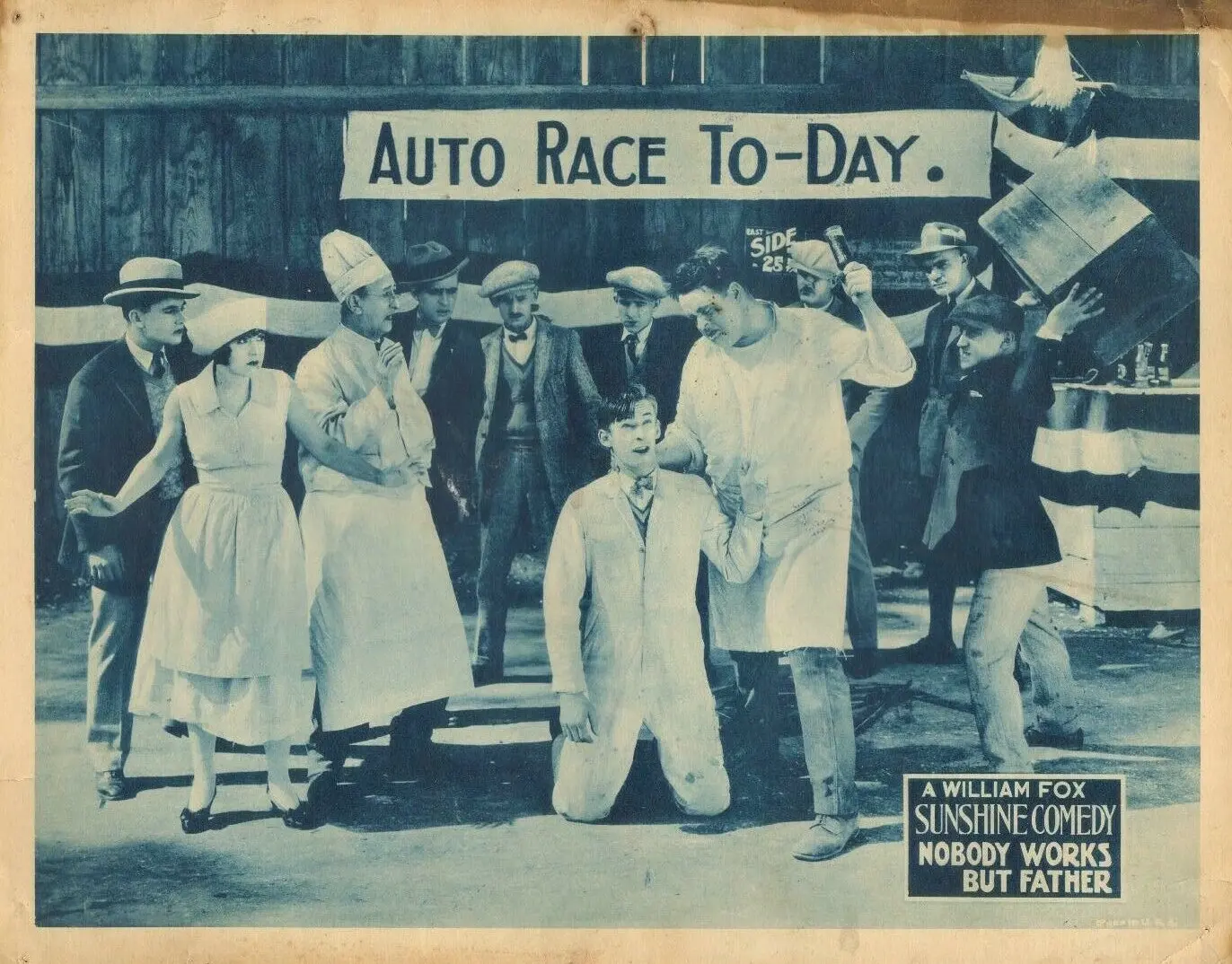
Is 'Nobody Works But Father' worth watching today? Short answer: yes, but with significant, perhaps even glaring, caveats. This early silent comedy, a fascinating relic from cinema’s formative years, offers a unique, if often disjointed, glimpse into the nascent art of slapstick and narrative experimentation. It’s a film that demands a specific kind of engagement, a willingness to look past modern polish and embrace the raw, often clumsy, charm of its era.
This film is absolutely for cinephiles, historians, and those with a deep, abiding appreciation for the foundational elements of cinema. It’s a perfect case study for understanding how early filmmakers grappled with storytelling and visual humor. However, it is decidedly NOT for anyone seeking modern comedic pacing, intricate character development, or high-budget spectacle. If your comedic palate demands rapid-fire gags and sophisticated plotlines, prepare for a jarring experience. Expect broad strokes, earnest efforts, and a narrative structure that feels less like a cohesive story and more like two distinct, albeit thematically linked, comedic sketches.
This film works because... it captures a raw, unpretentious form of physical comedy, unafraid to embrace the absurd. Its two disparate segments, while jarringly disconnected, each contain moments of genuine, if rudimentary, humor that showcase the era's innovative spirit. The sheer audacity of its central premises – a man racing a stork, a novice in a car race – is undeniably captivating in its simplicity and speaks to a time when narrative logic was often secondary to visual spectacle.
This film fails because... its narrative cohesion is virtually nonexistent, feeling less like a single story and more like two distinct shorts hastily stitched together. The comedic timing, while period-appropriate, often feels drawn out by today's standards, testing the patience of even dedicated viewers. There's a lack of thematic depth or character arc that might anchor the chaos, leaving the audience to simply observe rather than truly engage.
You should watch it if... you are an enthusiast of silent cinema, a student of film history, or simply curious about the origins of screen comedy. It serves as an invaluable historical document, illustrating how filmmakers experimented with narrative and gag construction long before established conventions took hold. It’s a window into a bygone era of entertainment, a charmingly clumsy ancestor to every comedy that followed.
The most striking, and perhaps most baffling, aspect of 'Nobody Works But Father' is its bifurcated structure. The film presents itself in two distinct halves, each a self-contained comedic premise. The first, and arguably more memorable, part thrusts us into the domestic turmoil of a father burdened by an ever-expanding family. His desperate attempt to literally outrace a stork, a symbol of impending parenthood, is a visual metaphor for the overwhelming nature of his responsibilities. It’s a sight gag elevated to an entire sequence, showcasing a commitment to the absurd that is genuinely endearing.
Imagine the frantic, almost balletic movements of the messenger, presumably Albert Herman, attempting to physically block a bird from descending a chimney – perhaps with a ladder, a net, or simply wildly flailing limbs. This is physical comedy in its purest form, a universal language of exasperation that transcends the lack of spoken dialogue. The humor here isn't subtle; it's broad, physical, and relies entirely on the visual spectacle of a man fighting against an unstoppable, feathery force of nature.
The second half of the film, however, pivots sharply, years later, to the father's grown son. This younger man, despite his complete lack of driving experience, is inexplicably dragooned into an auto race. This segment taps into a different vein of early 20th-century anxiety: the advent of new, dangerous technology and the inherent comedic potential of incompetence. It’s a shift from domestic farce to mechanical chaos, a testament to the experimental nature of early filmmaking where narrative coherence sometimes took a backseat to novel concepts.
The abrupt transition between these two plots feels less like a narrative progression and more like a programming choice, as if two separate short films were spliced together for a single viewing. This lack of a smooth through-line is a significant hurdle for modern audiences accustomed to tightly constructed narratives. Yet, for the film historian, it offers a fascinating insight into the evolving language of cinema, where such structural eccentricities were not uncommon as filmmakers explored the boundaries of the new medium.
While the writers are uncredited, the performance, particularly by Albert Herman, is the engine that drives this comedic vehicle. In silent cinema, the actor’s body and face are the primary instruments of storytelling and humor. Herman, whether as the beleaguered father or the terrified son, embodies this principle with an almost relentless energy. His performance would have relied on exaggerated gestures, wide-eyed expressions of panic, and a commitment to slapstick that leaves little room for subtlety.
Consider the father's contorted expressions of exasperation and futility as the stork approaches, or his desperate leaps and lunges to prevent its landing. This isn't nuanced acting; it's a grand, theatrical performance designed to be read from the back row of a nickelodeon, where every emotion must be writ large. The humor arises from the sheer effort and the inevitable failure, a classic comedic setup.
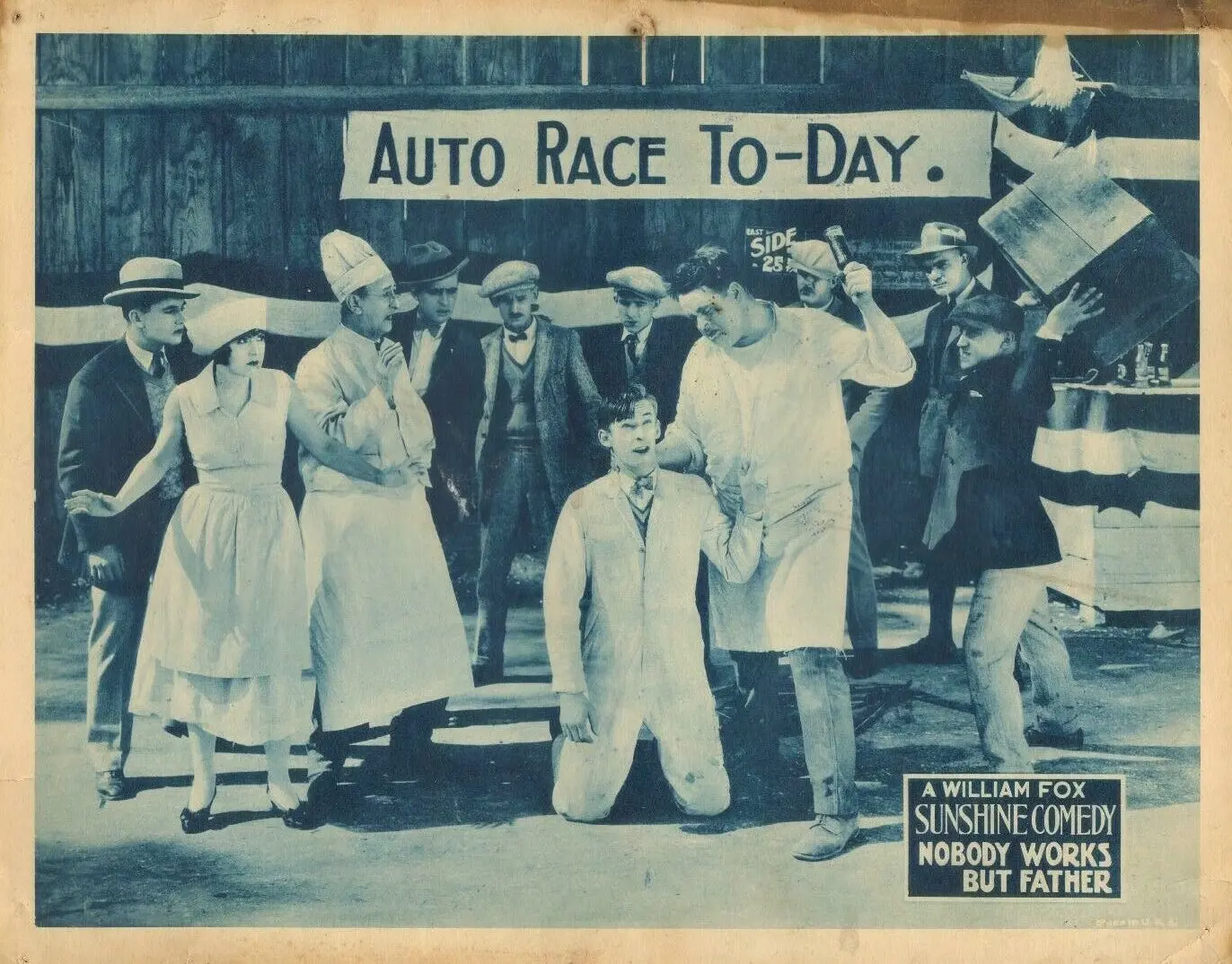
Similarly, as the son, Herman’s portrayal of a novice driver in a high-speed race would have been a masterclass in physical panic. One can easily imagine him white-knuckling the steering wheel, eyes wide with terror, the car swerving erratically, narrowly avoiding collisions, perhaps even careening off the track entirely. These are not performances meant to delve into psychological depth, but rather to elicit immediate, visceral laughter through relatable, if exaggerated, human predicaments. It’s raw, it’s unrefined, and in its own way, it's effective. The sheer commitment to the bit, however ridiculous, is what makes these moments land.
It's easy to dismiss such performances as overly theatrical by today's standards, but to do so is to misunderstand the context. These actors were pioneers, developing a new language of performance for a medium that had stripped away dialogue. Their physical prowess and ability to convey narrative through gesture were paramount. Herman’s work here, though rudimentary, is a testament to that early innovation, proving that sometimes, bold strokes are more impactful than delicate shadings.
The directorial choices, though uncredited, are indicative of early filmmaking practices. The pacing, in particular, stands out. Unlike modern comedies that often rely on rapid-fire editing and quick cuts to build momentum, 'Nobody Works But Father' allows its gags to breathe, sometimes to the point of exhaustion. The sustained shots of the messenger's frantic efforts against the stork, or the son’s extended struggles with the automobile, are typical of early cinema, where the novelty of moving pictures often dictated a more deliberate rhythm.
This measured pace, while challenging for contemporary viewers, allowed audiences of the time to fully absorb the visual information and the comedic staging. It’s a slower burn, building humor through repetition and the sheer spectacle of the unfolding chaos. The director, whoever they were, understood the power of the long take in allowing an actor's physical comedy to play out in full, unedited glory.
The most unconventional directorial choice, however, is undoubtedly the film's two-part structure. There’s no clear narrative bridge, no exposition explaining the jump in time or the shift in focus from father to son. It simply happens. This abruptness, while jarring, also speaks to a period when narrative conventions were still fluid and experimental. Filmmakers were still discovering what worked, what audiences would accept, and how to construct a cohesive story. This film feels less like a singular vision and more like an anthology of comedic ideas, loosely bound by a familial thread.
Perhaps it was a practical decision – two short comedic reels combined for a feature-length experience. Or perhaps it was an early, albeit clumsy, attempt at a multi-generational narrative. Whatever the reason, this structural oddity is a defining characteristic of the film and a point of both fascination and frustration for viewers trying to make sense of its narrative logic. It’s a brave choice, perhaps, or merely an uninformed one, but it certainly makes the film distinctive.
The cinematography of 'Nobody Works But Father' is, as expected for its era, functional rather than overtly artistic. The camera is largely static, capturing the action in wide shots that prioritize visibility of the entire scene and the physical comedy unfolding within it. There are no elaborate tracking shots or dynamic close-ups; the focus is on framing the action clearly, allowing the actors and the situation to generate the humor.
The exterior shots, likely filmed on a studio backlot or available street, present a quaint, almost documentary-like view of the era, contrasting sharply with the exaggerated actions unfolding within the frame. These simple, unadorned visuals are part of the film's charm, offering an unvarnished glimpse into early 20th-century life, even amidst the comedic chaos.
The tone is undeniably lighthearted and slapstick. There's an underlying earnestness to the performances and the gags, a sense that the filmmakers were genuinely trying to entertain with the tools they had. While the father’s plight might seem dire (another mouth to feed!), the film never dips into genuine pathos. The humor is derived from the sheer absurdity of the situations and the physical comedy, not from any deep emotional resonance. It’s a pure form of escapism, designed to provide simple laughs without demanding much thought from the audience.
The film lacks the sophisticated visual storytelling that would emerge in later silent films by masters like Buster Keaton or Charlie Chaplin, but it lays some of the groundwork. It's a reminder that even before the camera became a character in itself, it was a crucial observer, capturing the raw energy of performers experimenting with a new medium. The film’s visual language is rudimentary. But it’s effective for its purpose.
For pure entertainment in the modern sense, perhaps not for everyone. For historical insight, absolutely. This film is a time capsule, preserving a particular brand of early 20th-century humor. It showcases the fundamental building blocks of narrative and comedic timing. It's a testament to the ingenuity of early filmmakers working with limited resources. It requires patience. But it rewards curiosity. If you approach it not as a contemporary comedy, but as an artifact, its value becomes clear. It’s a significant piece of cinematic history, even if its entertainment value is now largely academic.
"Nobody Works But Father" is not a film that will resonate with casual viewers. Its quirks are profound, its humor broad, and its structure bafflingly disjointed. Yet, for those willing to engage with cinema on its own historical terms, it offers a peculiar charm and invaluable insights. It's a testament to the raw, unrefined energy of an art form finding its feet, a charmingly clumsy ancestor to every comedy that followed. It’s a historical curiosity, an oddity worth acknowledging. And occasionally, amidst the dated pacing and simplistic gags, it even manages to make you smile. It’s a film that demands understanding, not just passive viewing. And in that demand, there’s a quiet power, a reminder of cinema's humble, yet audacious, beginnings. It’s not great. But it’s important. And sometimes, that’s enough.
IMDb 6.9
1927
Community
Log in to comment.