DbcultAccessing Vault...
Cult Review
Senior Film Conservator
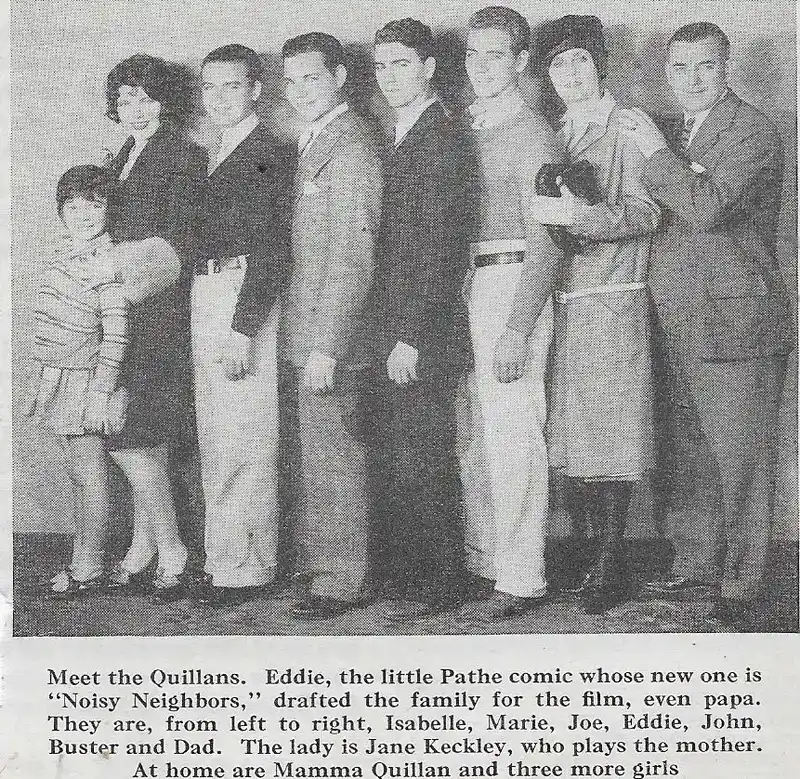
If you've ever wondered what happens when a whole family of stage actors gets dropped into a movie together, Noisy Neighbors is your answer. It is worth a look if you like that hyper-energetic vaudeville style that doesn't really exist anymore.
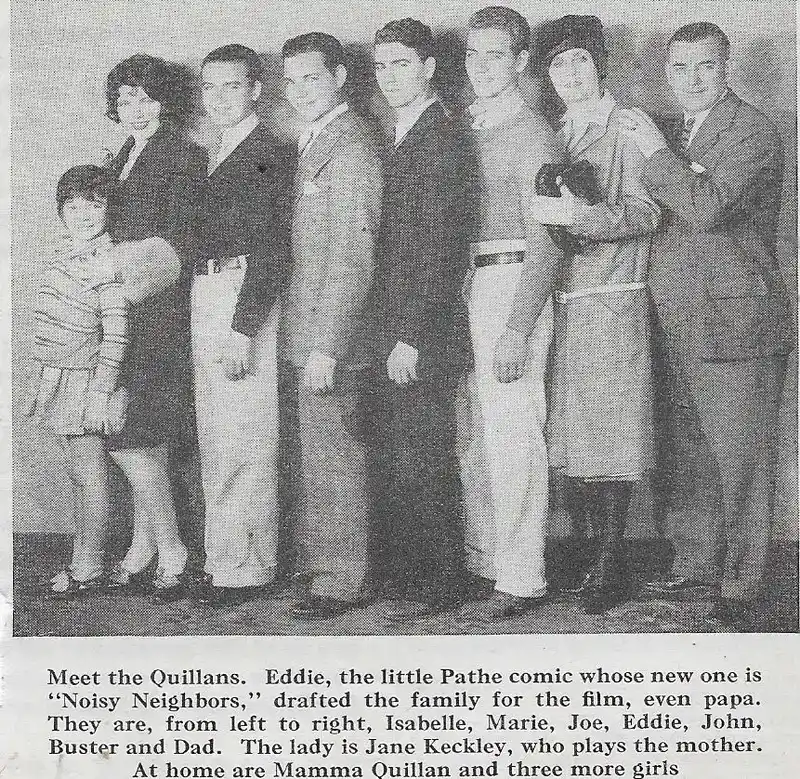
Most people today will probably find it way too loud or frantic, especially the way the Quillan family interacts. But there is something weirdly sweet about seeing all these real-life siblings—Eddie, Marie, Buster, Joseph, and even Billy—running around on screen together.
The plot is basically a setup for them to do their bits. They play the Van Revels, a family of performers who are down on their luck until they find out they've inherited a plantation in the South.
It’s a classic fish-out-of-water story, but with a lot more shouting. Honestly, the first ten minutes feel like everyone is trying to out-talk each other.
The whole thing turns on a feud with the Carstairs family. And the reason for the feud? A croquet game from sixty years ago.
I love how petty that is. It’s not about land or money originally; it’s just about someone being a sore loser with a wooden mallet.
Eddie Quillan is the lead here, and he has this face that looks like it’s made of rubber. He falls for the daughter of the rival family, because of course he does.
The romance is the thinnest part of the movie. You can tell they just needed a reason to keep the two families in the same zip code.
There is a scene where Eddie is trying to be romantic, but he keeps doing these little physical double-takes. It’s hard to tell if he’s actually supposed to be in love or if he’s just waiting for the next punchline.
I noticed a small detail in the plantation house scenes—the furniture looks incredibly uncomfortable. Like, nobody has sat in those chairs for fifty years, which I guess fits the story, but it made me feel stiff just looking at it.
Then there are the mountaineer cousins. This is where the movie gets actually insane.
The Carstairs clan calls in their relatives from the mountains to finish off the Van Revels. These guys show up looking like they haven't seen a bathtub since the Civil War.
The shift in tone is pretty jarring. One minute it’s a light comedy about stage actors, and the next, there are guys with long beards trying to shoot everyone.
It reminds me a bit of the frantic energy in The Iron Mule, but with more family bickering. There’s a certain 1920s chaos that you just don't see in modern films.
I think my favorite character might actually be the father, played by Theodore Roberts. He has this way of looking at his children like he’s constantly wondering how they all ended up in the same room.
There’s one shot where he’s holding a piece of paper—the inheritance notice, I think—and he’s shaking so much the paper is just a white blur. I can't tell if he was nervous or if the camera was just vibrating.
The mountaineers start a full-on siege near the end. It’s supposed to be tense, I guess, but it mostly looks like a lot of people falling over boxes.
The way the Quillans defend themselves is by using their vaudeville skills. It’s super cheesy but I kind of liked it.
It’s like they decided that the only way to beat a guy with a gun is to do a dance routine or a magic trick. It makes no sense, but it’s fun to watch.
I did find myself checking the runtime about forty minutes in. Even though it’s short, some of the gags go on way too long.
Like the bit with the trunks. They spend forever moving luggage around, and it stops being funny after the third time someone trips.
It’s not quite as polished as something like The Barker, which came out around the same time. That movie feels like a real story, whereas this feels like a filmed stage show.
There is a lot of shouting. I know it's a silent movie (or mostly silent depending on the version you find), but you can see the shouting in their neck veins.
The film doesn't really know how to end. It just sort of stops once the feud is settled and the couples are together.
I wish there was more of the croquet history. I wanted to see the original fight from sixty years ago, but we only get people talking about it.
Also, the neighbor's daughter, played by Alberta Vaughn, doesn't have much to do. She mostly just stands there looking worried while Eddie does flips.
If you’ve seen Duck Inn, you know this kind of broad comedy. It’s meant for a specific audience that just wants to laugh at people falling down.
I think the film is a bit of a time capsule. It shows how much audiences in 1929 loved the Quillan family, even if the material was pretty thin.
The cinematography is... fine? It’s very flat. Everything is lit like a grocery store.
But there’s a charm to the messiness. It feels like they were having a good time making it, which counts for something.
One weird thing: there is a dog in one scene that looks like it really wants to leave the set. It keeps looking at the camera and then at the door.
I felt for that dog during the longer slapstick sequences. Sometimes less is more, but the Quillans didn't believe in that.
It’s a decent enough way to spend an hour if you’re a film nerd. Just don't expect it to change your life or anything.
It's just a movie about people being loud and annoying to their neighbors, which is something we can all relate to, I guess. Especially the croquet part.
IMDb 7
1920
Community
Log in to comment.