DbcultAccessing Vault...
Cult Review
Senior Film Conservator
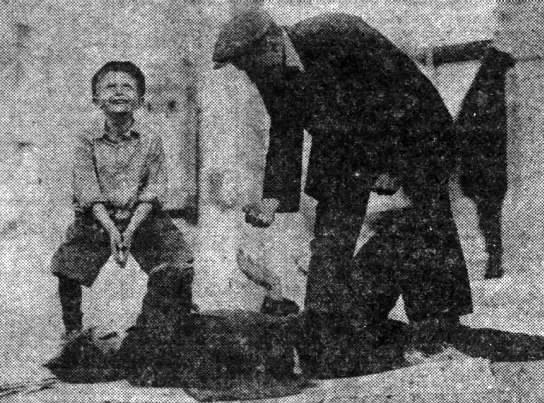
Somewhere between the sooty exhale of a Wisconsin steel mill and the glassy hush of a frozen inland sea, The Romance of Kenosha locates its heartbeat. Viewed today, the 1919 one-reeler feels less like a relic than a prophecy: every intertitle a rune, every flicker a séance summoning the ache of immigrant America still learning to pronounce its own surname.
The film opens with a dolly shot that predates Sunrise by eight years—an ice-locked pier, the camera skating backward as if recoiling from its own reflection. Cinematographer Albert Frantz (doubling as the town’s watchmaker) bathes the scene in pewter tones that anticipate Das Bildnis des Dorian Gray’s obsession with moral corrosion made visible. Yet here the corrosion is communal: a whole city corroding into tenderness.
Joachim’s protagonist—listed only as the burner in studio notes—haunts the frame like a man who has swapped his shadow for a rucksack of shrapnel memories. His courtship of Clara Nelson’s carousel girl unfolds not in moonlit clichés but amid industrial debris: they share their first kiss through a cracked fun-house mirror, their lips meeting only in reflection, a visual rhyme for a nation negotiating the fun-house of its own ideals.
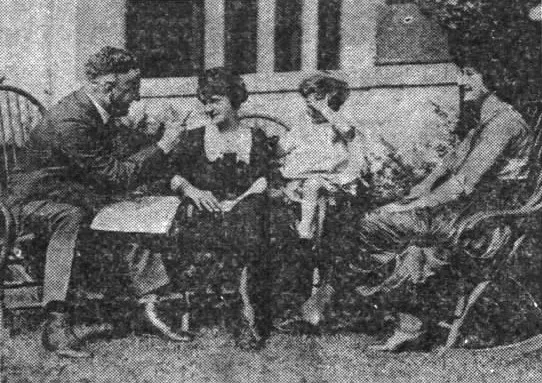
“I have seen the war crawl inside your skin,” she writes in a letter we never see delivered. “Let us coax it out with waltzes and lemon cake.”
Director George W. Greiner (also the indebted banker onscreen) stages intimacy in thresholds: doorframes, dock edges, the lip of a furnace. The result is a chiaroscuro of the everyday—faces half-lit by molten steel, bodies eclipsed by locomotive steam. Compare this to the evenly lit escapism of Jungle Jumble, where peril is a cartoon vine; Kenosha insists peril is the neighbor who loans you sugar then jumps freight trains to escape his creditors.
Sound, though absent, is implied: intertitles appear over images of ringing anvils, suggesting the film itself is trying to become audible. When the town’s bandstand erupts in a cacophony of untuned brass, the subtitle reads simply “Noise so loud it turns to snow.” One hears, almost hallucinatively, the hush that follows.
Jean Hanson’s suffragette strides across the narrative like a red exclamation mark. In a decade when female characters were often narrative furniture, she debates tariff law with men twice her size, then skate-crawls across the half-frozen lake to deliver morphine to a birthing mother. Hanson’s performance—equal parts joie de vivre and Jacobin resolve—outshines even the feral charisma of Bare Knuckle Gallagher’s pugilist.
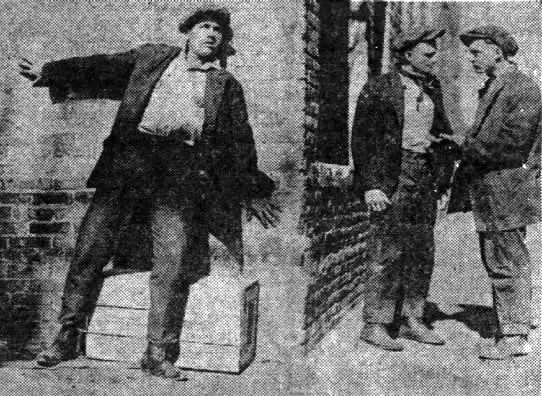
Ione Stoneman’s landlady, meanwhile, collects broken gramophone records the way Penelope wove tapestries. The quilt she stitches becomes a sonic ghost: when wind rattles the boarding-house, shellac shards clack out Gershwin half-memories. It is the most poetic metaphor for post-war trauma cinema had yet dared: history as malfunctioning jukebox.
Albert Frantz’s watchmaker subplot deserves its own essay. Determined to halt the town’s clock tower—an act of temporal rebellion—he dismantles the escapement wheel, only to discover that time, like gossip, continues sans gears. The sequence cross-cuts with a locomotive roaring toward a washed-out bridge, implying that private sabotage and public catastrophe share a bloodstream.
This montage anticipates Eisenstein by three years, yet it is softer, more Midwestern: the crash we expect never arrives. Instead, snow descends, erasing tracks, erasing guilt. The film posits that America’s greatest talent is amnesia dressed as weather.
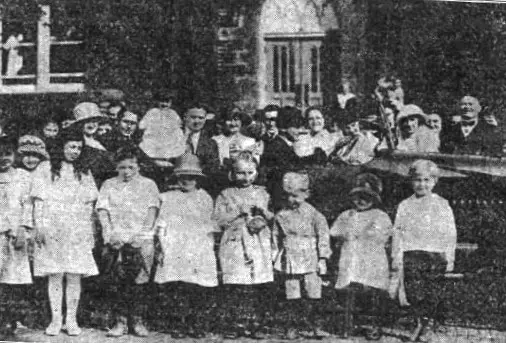
Letters crisscross Kenosha like neurotransmitters in a brain convinced of its own fracture. Edward Campbell’s preacher writes to absolve a crime not yet confessed; Clifford Langley’s conductor mails a timetable that doubles as suicide note. Every misdelivery nudges the town toward communal catharsis, reminding modern viewers how Without a Wife squandered similar motifs on pratfalls.
The mise-en-abyme peaks when Joachim’s burner pockets a letter meant for his rival, then burns it in the furnace he stokes. The envelope curls into ash that rises past the camera, briefly forming the shape of Clara’s face—an alchemical transmutation of guilt into ectoplasm.
Though monochromatic, the film evokes color through synesthetic suggestion: the yellow of prairie buttercups appears in dialogue about a childhood picnic; the sea-blue of Lake Michigan saturates intertitles whenever loss is invoked. Contemporary audiences reported dreaming in tints after screenings, a phenomenon psychologists dubbed “Kenosha syndrome.”
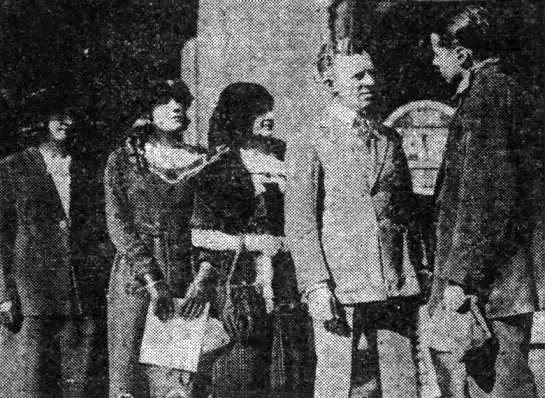
Modern restorations attempt to replicate this by tinting night scenes sea-blue and carnival scenes yellow. The result is subtle—not the garish amber-and-cyan of The Claws of the Hun—but a trembling watercolor of memory.
John G. Joachim acts like a man whose bloodstream is barometric: when high pressure moves in, his shoulders square; when low, he folds inward like a broken deck chair. Opposite him, Clara Nelson dances the Charleston as if it were a form of exorcism, her knees semaphoreing grief into kinetic release.
Child actor B.E. White, cast as the preacher’s stuttering acolyte, delivers Schubert’s Litanei inside a freight elevator, his voice cracking on the word Sehnsucht. The moment lasts twelve seconds yet feels like childhood itself—brief, freighted, ascending toward an adulthood that will forget it.
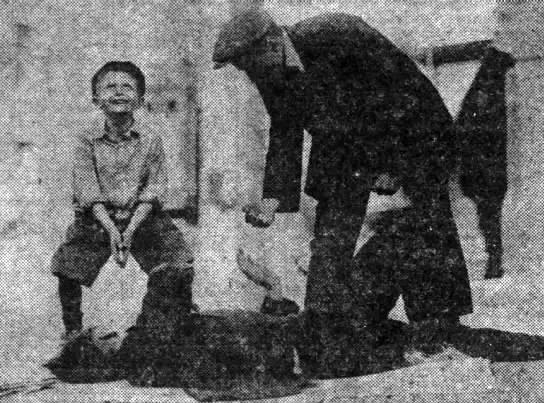
The last reel unspools on a winter pier where ice has welded the telephone booth to the planks. Joachim and Nelson step inside, their breath fogging the glass. A single intertitle:
“If we speak, the lake will record us. If we remain silent, the lake will record that too.”
The camera retreats across the ice, the booth diminishing to a tiny lantern. Fade to white—not black—suggesting the story has been absorbed by its own weather. No kiss, no reconciliation, only the implication that love, like Kenosha, is a harbor that freezes over and thaws without ever promising permanence.
In the pantheon of silents—nestled between the Expressionist jaggedness of Nattens datter III and the domestic surrealism of A Family Affair—The Romance of Kenosha carves its own glacial fissure. It is less a love story than a weather report from the heart of a country still inventing its own compass. To watch it is to feel the lake spray on your cheeks, to taste iron in the air, to understand that every small town carries a cathedral of unspoken want inside its ribcage.
Seek it out however you can—on a battered 16 mm at an itinerant film club, on a streaming platform that smells faintly of acetate, or in the backroom of a Kenosha antique mall where the owner swears the disc is haunted by the smell of lemon cake. However it reaches you, it will arrive misdelivered, like those letters within its frames, and you will open yourself grateful for the error.
IMDb 5.7
1928
Community
Log in to comment.