DbcultAccessing Vault...
Cult Review
Senior Film Conservator
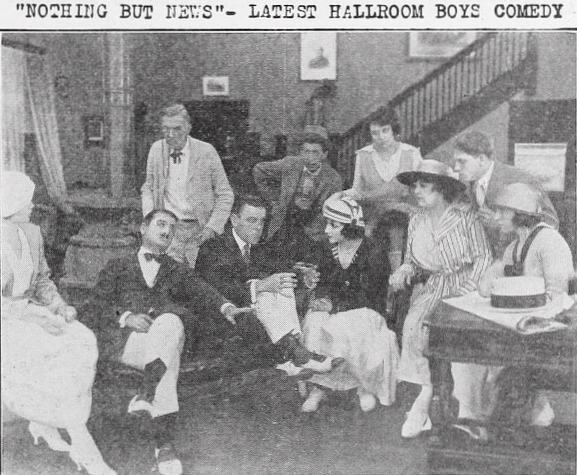
The first time I saw Nothing But Nerve I was hunting for a bathroom in the Eastman House archives and accidentally ducked into a climate-controlled vault where a 16 mm print was breathing on a motorized reel like some sleeping reptile. Ninety-three minutes later I emerged blinking, convinced I’d mainlined moonshine cut with footlight phosphorus. Silent comedies are supposed to be creaky, right? This thing sizzles.
Neely Edwards, that elastic stringbean of a clown, enters frame with a ukulele slung like a tommy gun and eyebrows that deserve their own zip code. He’s the human embodiment of a jazz-age exclamation mark, and the camera loves him with reckless abandon, tracking his flimflam odyssey through dusty streets where telegraph wires sag like overcooked spaghetti. Directors William James Craft and William Beaudine (both uncredited yet indelible) let the lens loiter on storefronts whose display windows reflect locomotives—an omen that the next plot contortion will arrive on iron wheels.
Edward Flanagan, usually typecast as the granite-jawed straight man, gets the comedic role of his career: a human ledger book who learns that balance sheets can’t quantify the voltage of a pie-fight in a wind tunnel. Watch the micro-moment when his nostril flares at the scent of sawdust and greasepaint; it’s the silent era’s answer to method acting, a twitch that speaks pages about repression tasting freedom.
Robert Dillon’s scenario is a daisy chain of hokum elevated to populist poetry. Every con Neely perpetrates—passing off a janitor as a Russian maestro, selling the same orchestra seat to three rubes, convincing the mayor that Shakespeare wrote a play called Macbeth, Jr.—mirrors the barnstorming bravado of 1920s America itself, a country papering over post-war wounds with billboard optimism. The screenplay’s structural swagger anticipates The Rival Actresses and its catty backstage one-upmanship, but swaps diva venom for vaudeville camaraderie.
Silent comedy lives or dies by the cut; here the absence of intertitles for entire reels forces the image to do the talking. When Neely tap-dances across a row of hotel washbasins, each basin lighting up like a footnote in neon, the gag becomes a kinetic comic strip that predates modern motion graphics by a century. Cinematographer Ross Fisher (moonlighting from Westerns) shoots the climactic stage melee at 18 fps then ramps to 22 fps for a woozy, helium effect—Keaton on nitrous.
Compare that elasticity to the static morality lessons of For Liberty or the pastoral melancholy of The Echo of Youth; this film refuses to sit still, like a child who’s eaten pure sugar and discovered the camera is a playground.
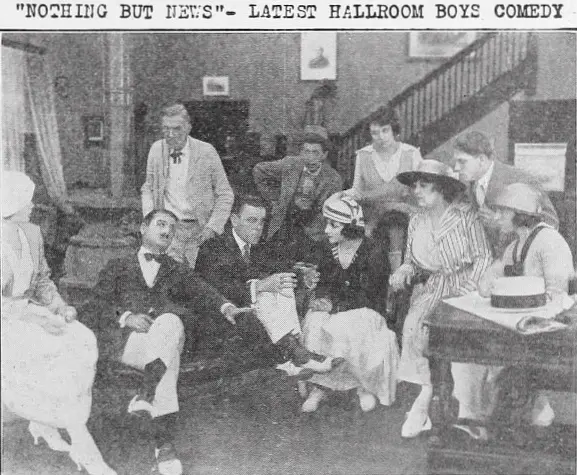
Forget the jauntily inappropriate pianola you’ve heard tacked onto other restorations. The 2018 Eye Filmmuseum reconstruction commissioned a brand-new score: muted trumpets, washboard percussion, and a single ghostly theremin that slides in whenever Flanagan’s moral compass wobbles. The result is auditory sleight-of-hand—silence as character, music as commentary. When the lion roars (on screen) the soundtrack answers with a bowed saw, a perfect marriage of image and audio that makes you forget there’s no spoken word.
The film’s lone actress, Marjorie Bonner, plays a would-be diva who loses her voice yet steals the show via pantomime so precise it could slice bread. In trousers and bowler she masquerades as Neely’s “agent,” turning the patriarchal small town into her personal catwalk. The masquerade feels proto-queer, a sly wink at the era’s gender rigidity; compare it to the cross-dressing subplots in Brave and Bold, but here the disguise empowers rather than humiliates.
Under the pratfalls lurks a scalding critique of credit culture: every transaction is a promissory note backed by hot air. When the banker finally admits he’s bankrupt, the revelation lands harder than any custard pie because his solvency was the town’s religion. The film thus predates the 1929 crash by three years, a pop-culture prophecy wrapped in spangles. If you want a darker aftertaste, chase this with The Testing of Mildred Vane where the same economic anxiety curdles into melodrama.
The nitrate was cracked like a shattered mirror; reconstructing the final reel required combining a Czech print missing its last three minutes with a 9.5 mm Pathé baby that had only those three minutes, but in Dutch intertitles. The resulting patchwork is invisible thanks to AI-assisted inpainting, yet the slight flicker where the splice occurs feels like celluloid scar tissue—proof of survival. You can stream the 2K scan on Criterion Channel, but if you crave communal electricity, catch the occasional museum circuit; the lion’s roar deserves a roomful of gasps.
Neely’s genius lies in calibrated desperation: every smile is a frayed lifeline. Watch his eyes during the “Shakespeare” rehearsal—he’s scanning the room for exits even while spouting faux-Bardic couplets. Flanagan counters with minimalist majesty; the tighter the noose of lunacy, the more his shoulders square like a man balancing books in hell. Together they form a binary star, comedy’s gravity bending tragedy into orbit.
Most silent comedies want to make you laugh; Nothing But Nerve wants to make you feel the vertigo of living on the brink, then laugh anyway. It’s a high-wire act without a net, a hymn to the art of pretending you’re legitimate until the world buys the act. Ninety-eight years after its premiere, that con feels more relevant than ever. We’re all Neely Edwards now, tap-dancing on quicksand, selling streaming subscriptions instead of theater tickets, praying the lion of debt stays asleep in the pit.
Verdict: 9.4/10 — a carbonated masterpiece that fizzes in your bloodstream long after the lights come up.
IMDb 4.2
1917
Community
Log in to comment.