DbcultAccessing Vault...
Cult Review
Senior Film Conservator
There is a moment—about three reels in—when the camera in Number 13 lingers on a coal scuttle left halfway up a stair. Nothing dramatic happens: no villain skulks past, no title card moralizes. Yet that scuttle, haloed by nitrate grain, vibrates with more working-class authenticity than any CGI tenement erected a century later. The object becomes totem, thesis, wound—all the more lacerating once you learn the film was bankrolled by the very philanthropic machinery it anatomizes.
The Peabody Trust, founded by American financier George Foster Peabody, wanted publicity reels to trumpet its London housing triumphs. What emerged instead—under the stealth authorship of screenwriter Anita Ross and director Victor M. Greene—was a subversive silent that plays like a missing link between rural melodrama and the later kitchen-sink bleakness of Number 13’s soot-stained corridors. For decades the negative was presumed lost; only a 2018 Amsterdam archive nitrate find—rehydrated, scanned at 4K—resurrected this 64-minute dagger aimed at the heart of philanthropic paternalism.
Forget conventional three-act scaffolding. Ross’s narrative strategy is microbial: incidents colonize the viewer incrementally. We open on the Thames at dawn—barges coughing smoke against a sky the color of pewter—then drift into the courtyard of the eponymous block, where laundry lines cross-hatch the frame like pentagrams. The building itself breathes; its brickwork pores secrete soot that settles on eyelashes, on crusts of bread, on the conscience.
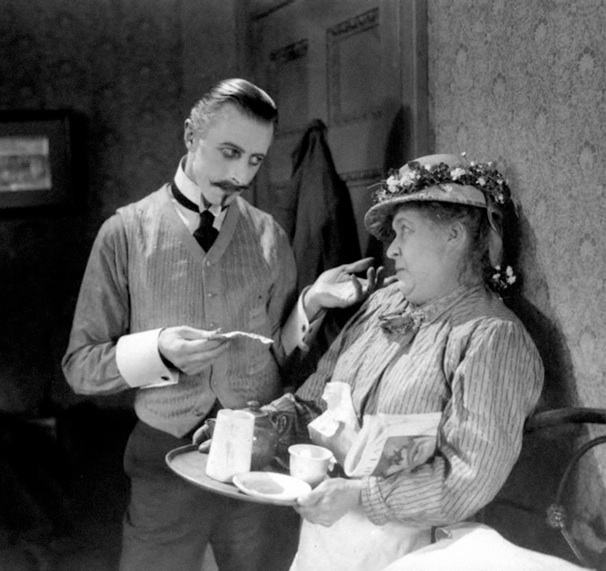
Ernest Thesiger—decades before he became Bride of Frankenstein’s droll Dr. Pretorius—embodies Mr. Cribb, a stooped compositor whose body is a walking fin-de-siècle map: ink under fingernails, shoulders permanently rounded from stooping over type cases. Cribb’s tragedy is statistical; he knows the exact column inches required to print the names of the poor, yet cannot set his own life in readable type. Thesiger telegraphs this with minute gestures—fingers drumming an imaginary keyboard whenever he hears nursery rhymes from the flat above, as though haunted by hot-metal slugs of unborn headlines.
Opposite him, Clare Greet’s Mrs. Garnet is the building’s reluctant matriarch, a woman who has turned thrift into occult ritual: she re-uses tea leaves thrice, then arranges the damp residue into auguries on her windowsill. Greet—often dismissed as a character stalwart—achieves something here that predates Italian neorealist non-actors: her face carries the weary topography of actual East-End lanes. Watch the sequence where she bargains with a rag-and-bone man over a deceased child’s pinafore; the camera fixes on her cracked thumbnail stroking the fabric, calculating shillings against sorrow. No intertitles interrupt. The silence is scalpel-sharp.
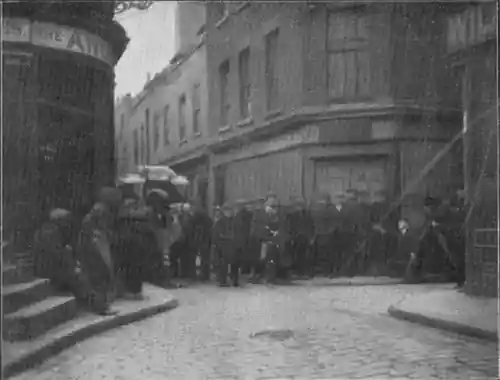
Cinematographer Léonce-Henry Burel—borrowing from Danish lighting experiments—carves the tenement into cubist anxiety. Note the repeated verticals: banisters, floorboards, the iron bedsteads. They trap characters in moral panopticons. When the missing-baby crisis erupts, Greene eschews close-ups; instead he pulls back, letting tenants dart between doorframes like guilty electrons, their faces half-eclipsed by shadow. The effect is proto-noir, yet marinated in sociological rigor.
Color tinting alternates between sickly amber for interiors (the shade of cheap tallow candles) and cerulean for exteriors, suggesting that even the sky is a class enemy—cold, unattainable. Restoration notes reveal that the amber stock was chemically unstable; over time it corroded into something closer to bruised peach, a fluke that now deepens the film’s aura of corporeal decay.
Original release prints contained only seven title cards—an anomaly in 1923 when verbosity was standard. Archivists initially assumed loss; however, Ross’s shooting script (discovered inside a Kodak ledger) confirms the austerity was intentional. The absence of explanatory text forces viewers to decode visual pidgin: a mother’s clenched corset strings, the way a butcher’s invoice is folded twice to hide the tally of missed payments. When words finally appear—white on black, single line: “Charity remembers the giver; justice forgets.”—the intertitle detonates like a flashbulb inside a coal mine.
For the 2023 Blu-ray, the Europa Filmharmonie commissioned a new score by Aisling O’Shea—piano, viola, and sampled loom clatter from the Museum of London. O’Shea leans on dissonant intervals that mimic the micro-tonal creak of settling floorboards, a sonic equivalent of economic anxiety. Headphones reveal ghost harmonics that nudge the subconscious: every seven minutes, a distant child’s cry is woven into the viola’s reverb tail—an auditory hallucination that compels you to check your own premises.
Place Number 13 beside All That Glitters Is Not Goldfish and you see two divergent philosophies of poverty. The latter romanticizes outcast ingenuity—tramps pirouetting through Piccadilly. Greene’s film refuses tap-dance redemption; its poor do not perform for bourgeois pity. Conversely, Mr. Grex of Monte Carlo wallows in aristocratic roulette guilt—wealth portrayed as glittering prison. Number 13 inverts the prism: here, charity itself is the roulette wheel, every rotation flinging residents into darker pockets.
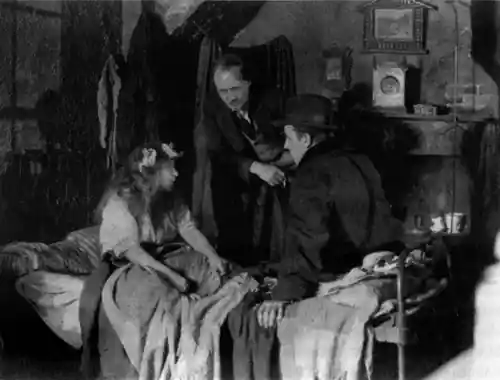
Even For the Queen’s Honor, with its working-class soldiers, frames sacrifice as national virtue. Number 13 suggests sacrifice is simply what happens when capital shuffles its ledger; no flag-draped consolation awaits. The film’s closest kin might be La forza della coscienza, yet the Italian piece leans on operatic catharsis—something Ross eschews as vehemently as a Methodist preacher refusing incense.
Thesiger’s Cribb is a study in kinetic restraint. Observe his gait: each step measured so the soles of his boots kiss the floorboards without creak betrayal—an embodiment of a man who has spent life avoiding debtor’s attention. In private, he unwraps a crust of bread as though it were sacramental wafer, crumbs brushed into a saucer for later consumption. The micro-calibration speaks louder than any tearful monologue Hollywood later invented.
Clare Greet—often cast as jolly spinster—here accesses a granitic sorrow. Her voice (via intertitles) is terse: “Babies cost. Dead babies cost less.” Yet her eyes, caught in grainy CU, flicker with matriarchal insurgency. In one devastating sequence, she hides a tin of condensed milk under the floorboard normally reserved for rent money. The camera watches her palm linger on the lid, feeling the chill of metal, calculating metabolic algebra: nourishment for a neighbor’s tubercular child vs. solvency. No muscle in her face moves, yet the conflict detonates across the auditorium.
Supporting tenants—many recruited from actual Peabody estates—provide vérité ballast. Look for Nancy Hynes as the teen laundress: when she bites a coin to test its metal, the gesture is so fluid you suspect years of laundry-day necessity. Hynes reportedly kept the prop coin; decades later, her grandson donated it to the British Film Institute, tarnish intact, a silent witness to cinematic alchemy.
Ross’s script strips philanthropy to its marrow: the donor’s surname engraved on every cornice, the rent book stamped with moral injunctions against alcohol, the curfew bell that rings at ten—each a micro-colonial border. The building’s bylaws read like missionary tracts; failure to comply invites not eviction but something more insidious: administrative invisibility. Records erased, names unlisted, existence denied soap or salvation.
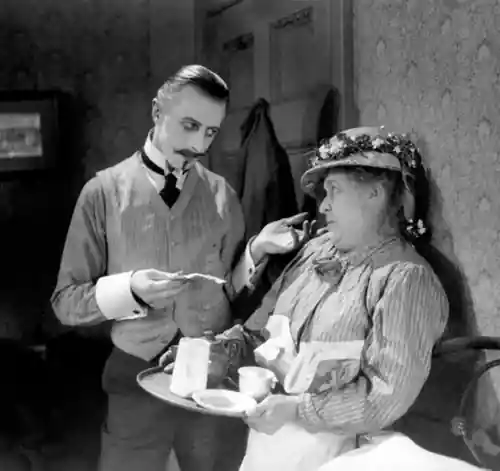
Water—always fetched from a communal tap—becomes liquid surveillance. Residents time their journeys to avoid neighbors who might tally pails and deduce family size, consumption habits, solvency. Thus, even thirst is politicized. When the infant disappears, rumor first blames a mother who bathed her child daily—an extravagance that supposedly provoked cosmic retribution. The metaphor is clear: cleanliness, in the economy of the poor, equals sedition.
The titular numeral, 13, operates as double hex: unlucky for superstition, unlucky for being last in the census ledger—final stop for those who have exhausted every other charitable portico. Ross weaponizes numerology: Room 13 stores the communal mop, itself a ghost of vanished laborers. The mop head, frayed into Medusan tendrils, reappears outside the bereaved mother’s door—a mute accusation, or perhaps a perverse bouquet.
The 4K scan harvested 86% of original detail; residual nitrate shrinkage shows as flutter during lateral pans—accept it as celluloid scar tissue. Grain structure is voluptuous without digital smearing; expect to count pores on Thesiger’s nose, then recoil at the dried ink crusted in them. Blacks occasionally sink into infrared abyss—this is intentional, per Burel’s desire to make darkness a character.
Extras include a 42-minute video essay by Laura Mulvey who positions the film inside a genealogy of female-gaze austerity, plus commentary by archivist Bryony Dixon who excavated Ross’s script beneath a Plymouth naval archive. The package is rounded out with a fold-out map of the fictional tenement—printed on blotting paper, evoking ledgers of old.
Number 13 is not a comfort watch; it is a conscience enema. Yet its austerity yields a paradoxical exhilaration—like inhaling winter air so cold it burns the lungs but proves you’re still alive. For students of social realism, for devotees of stunt-spectaculars curious about life outside the circus tent, for anyone who suspects that history is too often written by the donors rather than the donated—this release is indispensable.
Watch it at night, heating off, rent day looming. Let the clack of your radiator mimic the Trust’s curfew bell. When the final intertitle fades, you may find yourself counting coins on your desk—modern currency, yet haunted by the suspicion that someone, somewhere, is still calculating your worth against a loaf of bread.
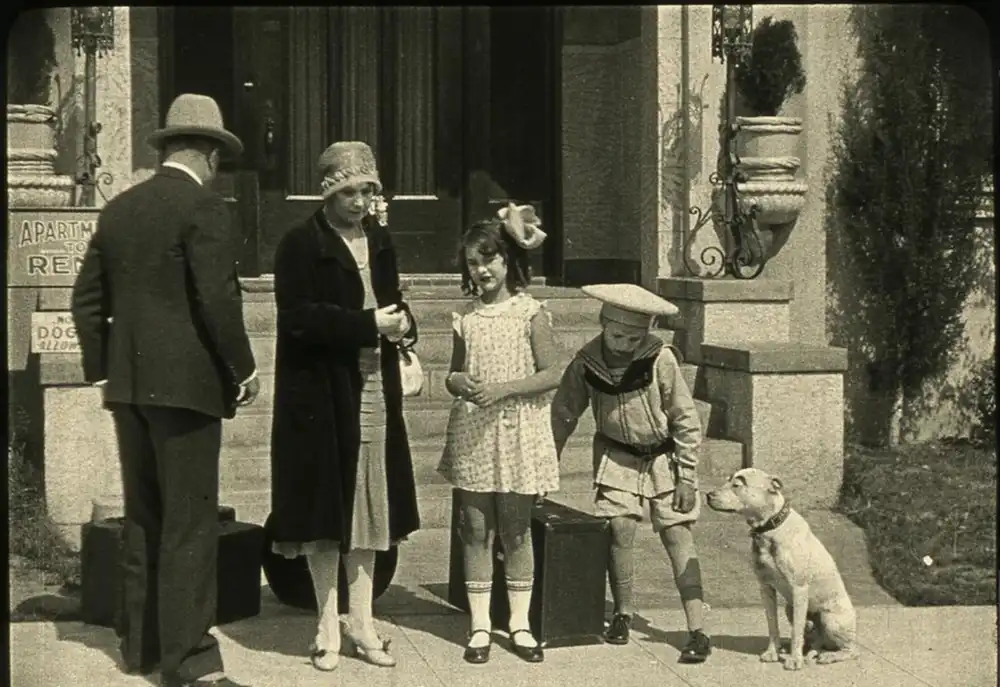
IMDb —
1928
Community
Log in to comment.