DbcultAccessing Vault...
Cult Review
Senior Film Conservator
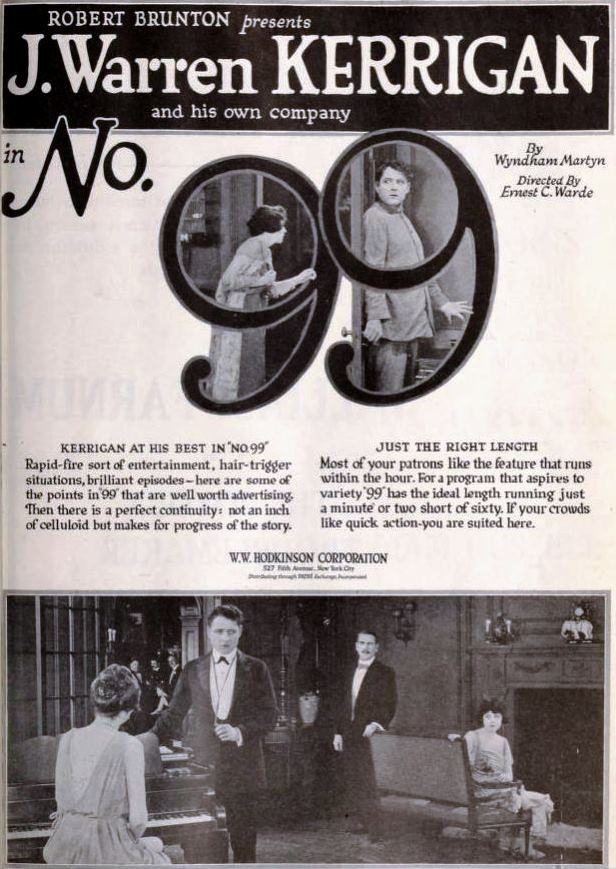
The year 1920 stood at a precipice of cinematic evolution, a moment where the crude gesticulations of early nickelodeons were being supplanted by a sophisticated visual grammar. Within this ferment, Number 99 emerges as a fascinating artifact of silent suspense, anchoring its narrative in the magnetic presence of J. Warren Kerrigan. Unlike the more overtly gothic tones of The Soul Master, this production leans into a kinetic realism, blending the high-stakes tension of a fugitive chase with the drawing-room intrigue of a social comedy.
The "wronged man" trope is a perennial engine of drama, yet in the hands of writers Wyndham Martin and Jack Cunningham, it receives a distinctive polish. Arthur Penryn is not merely a victim of circumstance; he is a man of action whose first instinct upon escaping the iron grip of the law is to commandeer the very symbols of the elite that cast him out. The sequence involving the stolen limousine is a masterclass in early practical effects and pacing. When the vehicle plunges into the artificial lake of the Vivian estate, it signifies more than a mere plot device—it is the literal drowning of Penryn's past identity.
As he emerges, bedraggled but resolute, the film transitions from an outdoor odyssey to a claustrophobic chamber piece. This shift in spatial dynamics mirrors the psychological pressure mounting upon our protagonist. Kerrigan’s performance here is nuanced; he eschews the broad histrionics common in the era for a more internalised struggle. One can see echoes of the stoicism found in The Wildcat, though Penryn possesses a vulnerability that makes his eventual triumph more resonant.
Enter Cynthia Vivian, portrayed by Fritzi Brunette with a refreshing agency. In many contemporary films like Young Mother Hubbard, the female lead is often relegated to a passive observer of her own fate. Cynthia, however, is the architect of the film's central deception. By dressing Penryn in the finery of James Valentine, she facilitates a subversion of class expectations. The party scene is a brilliantly orchestrated sequence of social navigation where every handshake is a potential exposure.
The arrival of the real James Valentine introduces a thread of dark comedy. The decision to lock the genuine article in the garage is a narrative gamble that pays off, injecting a sense of urgency that propels the second act. This tension is reminiscent of the frantic energy seen in Hubby's Mistake, though the stakes here are significantly more dire. The police, hovering at the periphery of the estate, serve as a ticking clock, their proximity a constant reminder of the thin line Arthur is walking.
While the film may lack the expressionistic shadows of Der Tunnel, its cinematography is nonetheless effective in its clarity. The use of depth of field during the party scenes allows the audience to track Arthur’s movements while simultaneously monitoring the movements of the police and the real culprit. This visual layering is essential for a story built on observation and concealment. The director understands that in a silent film, the gaze is everything.
The search for the man who framed Arthur is handled with a procedural rigor. It isn't just a matter of a sudden epiphany; it is a calculated hunt. The confrontation with the guilty party is staged with a visceral intensity that rivals the climactic moments of The Teeth of the Tiger. Here, the film sheds its comedic skin and returns to its roots as a gritty crime drama. William V. Mong and Charles Arling provide formidable support, grounding the film's more fantastical elements in a recognizable human greed.
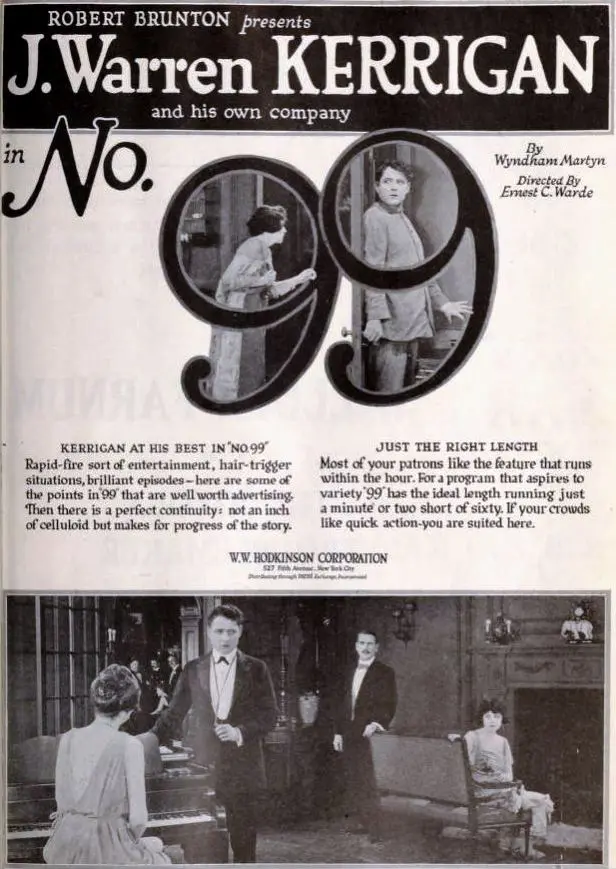
The resolution of Number 99 is remarkably satisfying because it avoids the saccharine pitfalls of many 1920s romances. The bond between Arthur and Cynthia is not born of a lightning bolt of attraction, but of a shared secret—a mutual transgression against the status quo. Their love is a byproduct of their survival. This pragmatism is a hallmark of Jack Cunningham’s writing, which often favoured character development over melodrama, a trait also visible in his work on Wanted - $5,000.
As the police are finally redirected toward the true criminal, the sense of relief is palpable. The film closes not on a grand gesture, but on a moment of quiet connection. It acknowledges that while the law has been satisfied, the characters themselves have been irrevocably altered by the night’s events. They are no longer the people they were when the limousine first hit the water.
To view Number 99 today is to witness the birth of the modern thriller. It contains the DNA of Hitchcockian suspense—the innocent man on the run, the icy blonde who aids him, the use of a single location to generate maximum tension. While it might be overshadowed in history books by the grand epics like Sahara, its influence is undeniable. It represents a transition away from the theatricality of Boundary House toward a more cinematic form of storytelling.
The film also serves as a testament to the versatility of its cast. J. Warren Kerrigan, often pigeonholed as a matinee idol, proves his dramatic mettle, while the supporting players like Emmett King and Kathleen Kirkham fill the frame with lived-in performances. Even the smaller roles, such as those that might appear in a short like Frisky Lions and Wicked Husbands, are treated with a level of care that suggests a cohesive directorial vision.
In the vast landscape of silent cinema, many films are lost to time or relegated to the status of footnotes. Number 99 deserves better. It is a taut, expertly crafted piece of entertainment that manages to be both a product of its time and surprisingly modern in its execution. Whether it’s the technical achievement of the car crash or the subtle interplay of its lead actors, there is much to admire here. It lacks the didacticism of How the Telephone Talks and the sprawling scope of The Grandee's Ring, opting instead for a focused, high-octane narrative that never overstays its welcome.
For those interested in the evolution of the crime genre, or simply for fans of J. Warren Kerrigan’s work in Your Obedient Servant, this film is essential viewing. It reminds us that even a century ago, the themes of justice, identity, and the transformative power of love were being explored with sophistication and flair. Number 99 is not just a number; it is a landmark of silent storytelling that continues to resonate with its clever plotting and emotional honesty.
Technical Specs: Directed by Ernest C. Warde | Produced by Hodkinson | Starring J. Warren Kerrigan, Fritzi Brunette | Running Time: 5 Reels | Released: 1920.
IMDb 6.4
1923
Community
Log in to comment.