DbcultAccessing Vault...
Cult Review
Senior Film Conservator
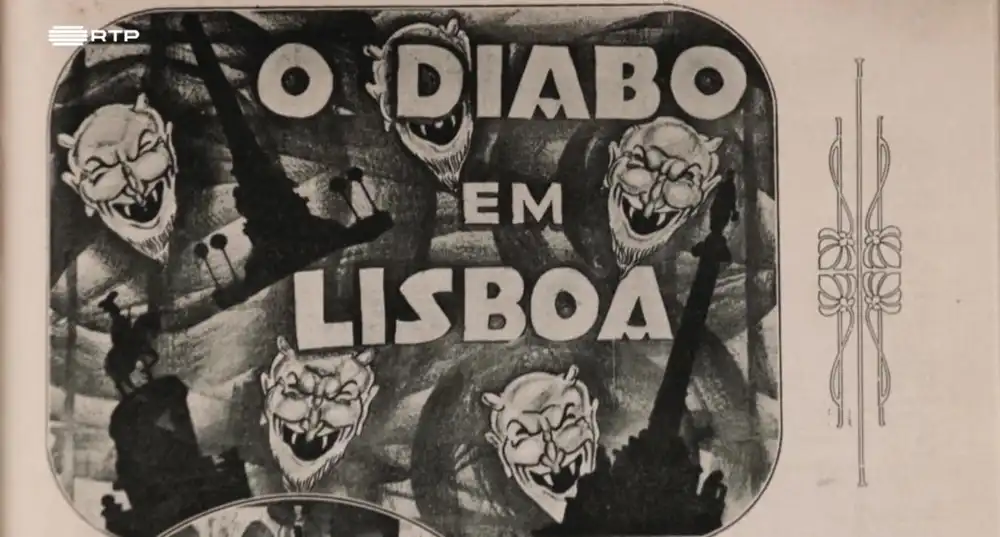
"O Diabo em Lisboa" is a strange beast from 1925. If you're not already deep into the rabbit hole of early cinema, particularly Portuguese silent film, this one's probably not for you. It asks for a certain patience, a willingness to engage with its quirks and its very specific rhythm. But if you have even a passing curiosity about film history, or just enjoy something truly off-kilter, there’s a surprising amount here to hold your attention, even if it’s often for reasons the filmmakers might not have intended.
The premise alone is enough to pique interest: Lucifer, the actual Devil, decides to take a sabbatical in Lisbon. Not to tempt souls or cause widespread mayhem, mind you. No, he just... observes. He wanders through the winding streets of Mouraria, a bohemian district, watching the lives unfold, particularly the dramatic saga of a famous fado singer named Severa. Carlos de Arbués plays Lucifer, and honestly, he spends most of the film looking a bit like a bored tourist in a fancy cape. He's not menacing, not even particularly curious, just sort of... there. It’s a very passive depiction of the Prince of Darkness, which is an interesting choice, if not always a dramatically engaging one.
The film really tries to make Lisbon itself a character. There are these gorgeous establishing shots of the city, the light hitting the old buildings, the hustle and bustle of the marketplace. You get a real sense of place, even through the scratchy black and white. But then you’ll get a crowd scene that feels oddly sparse, like half the extras went for a coffee break. It breaks the immersion a little, these moments where the production feels stretched.
Maria Emília Castelo Branco as Severa delivers a performance that’s very much of its time. The grand gestures, the wide-eyed despair, the dramatic swoons – it's all there. Sometimes it hits, especially when she’s singing fado (or rather, miming it, as the intertitles describe the emotion). Other times, it feels a little overcooked. There’s a particular scene where she collapses in distress, and the way she goes down is almost comical, a bit too stiff to be truly heartbreaking. You can almost feel the film trying to convince you this moment matters more than it lands.
The pacing is probably the biggest hurdle. There are long stretches, especially early on, where Lucifer just stands in various picturesque locations, watching. And watching. And watching. It feels like the director, Rino Lupo, was so enamored with the idea of the Devil as an observer that he forgot to give him much to observe that truly drives the plot forward. The human drama, when it finally takes over, is a fairly standard melodrama: love triangles, jealousy, betrayal. It’s well-trodden ground, even for 1925.
One thing that genuinely works are the costumes. The shawls, the intricate dresses, the men’s fedoras – they feel lived-in and authentic. You get a real sense of the period, the way people dressed and carried themselves. It’s a subtle detail, but it grounds the more melodramatic elements in a tangible reality.
There are some truly bizarre tonal shifts. One minute, you have these almost philosophical intertitles about Lucifer's ancient gaze on humanity, and the next, it’s a very grounded, almost soap-operatic fight between two lovers. The two threads, Lucifer's detached observation and Severa's passionate tragedy, never quite weave together into a cohesive whole. It’s like watching two different films that occasionally bump into each other.
The ending feels less like a conclusion and more like the film just ran out of steam. Lucifer simply... leaves. He hasn't really changed anything, hasn't learned anything profound, hasn't even had a particularly exciting vacation. It's a shrug of an ending, which, in its own way, is kind of fitting for such an understated portrayal of the Devil.
If you’re the kind of person who enjoys digging through cinematic archives, picking apart the early attempts at storytelling, and appreciating a film for its historical context as much as its narrative prowess, then "O Diabo em Lisboa" is absolutely worth a watch. It’s an imperfect, fascinating relic, a snapshot of a specific time and place in Portuguese cinema. Just don't go in expecting a tightly plotted, fast-paced narrative. This is a slow burn, a visual poem with some clunky acting and a surprisingly chill Devil. It’s a film that leaves you thinking about what it could have been, but also appreciating what it is: a unique, if flawed, piece of a bygone era.
IMDb 6.8
1936
Community
Log in to comment.