DbcultAccessing Vault...
6.5/10
Senior Film Conservator
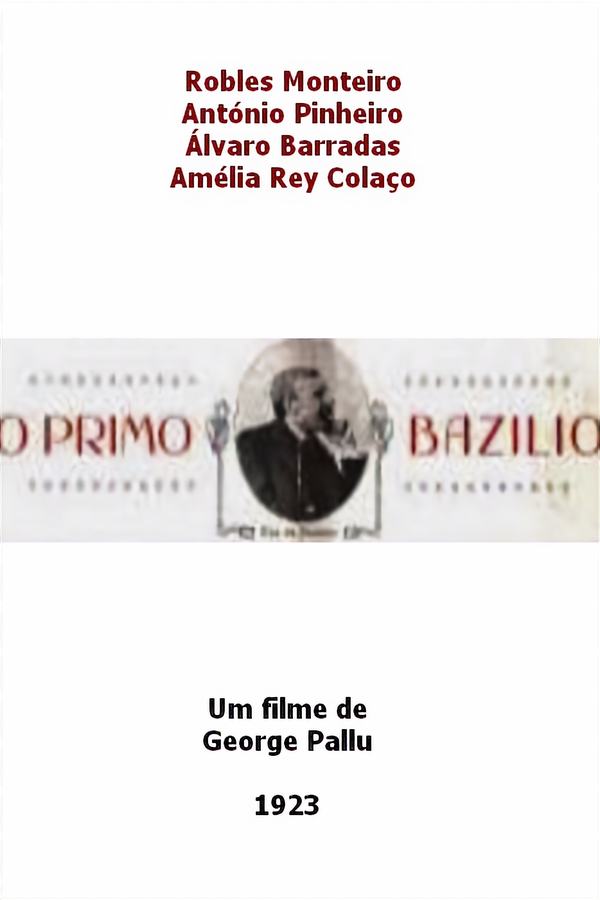
A definitive 6.5/10 rating for a film that redefined the boundaries of cult cinema. O Primo Basílio remains a cornerstone of transgressive art.
When the black‑and‑white frames of O Primo Basílio flicker to life, the viewer is immediately thrust into a domestic tableau that feels both intimate and suffocating. The film, helmed by Arthur Duarte, captures the languid cadence of Lisbon’s bourgeois interiors, where polished wood and heavy drapery conceal the simmering disquiet of its inhabitants.
Luísa (Regina Montenegro) is introduced not merely as Jorge’s (António Pinheiro) compliant spouse but as a woman whose intellect flickers like a candle in a drafty room. Her conversations with the housemaid reveal a mind that craves stimulation beyond the predictable rhythms of charity work and polite soirées. Duarte’s direction subtly underscores this yearning through lingering close‑ups of Luísa’s gaze, which often drifts toward the window, as if searching for an escape beyond the confines of her gilded cage.
Enter Basilio (Arthur Duarte), the prodigal cousin whose return from Brazil is heralded by whispers of exotic riches and a swagger that seems to bend the very air. Basilio’s entrance is choreographed with a flourish: a carriage rattles down the cobblestones, the camera tracks his silhouette against the setting sun, and a swell of orchestral brass announces his arrival. The visual language here is unmistakable—Basilio is the embodiment of the foreign, the unknown, the promise of a life unshackled from the stifling expectations of Portuguese propriety.
The narrative tension escalates as Basilio’s presence destabilizes the household equilibrium. He is simultaneously a confidant, a provocateur, and a mirror reflecting Luísa’s suppressed desires. Their clandestine meetings are staged in shadowed alcoves, the lighting deliberately low to evoke the secrecy that cloaks their affair. The film’s chiaroscuro, reminiscent of German Expressionist influences, amplifies the moral ambiguity that pervades their interactions.
Jorge’s impending mission to the Alentejo serves as both a plot catalyst and a thematic counterpoint. His departure promises liberation for Luísa, yet paradoxically it also intensifies her entanglement with Basilio. The audience senses a looming void—Jorge’s absence will create an emotional vacuum that Basilio is eager to fill, turning love into a transactional exchange.
The supporting cast enriches the tapestry of social commentary. Ângela Pinto, as the matriarchal figure of Dona Maria, offers a stern, almost didactic presence, embodying the rigid moral code of the era. Amélia Rey Colaço’s portrayal of the housemaid, Clara, provides a grounded perspective, her whispered observations serving as a Greek chorus that comments on the unfolding drama.
Duarte’s screenplay, faithful to Eça de Queirós’s prose, interweaves satire with tragedy. The dialogue crackles with irony; Basilio’s boasts about his Brazilian fortunes are laced with a thin veneer of humility that quickly dissolves under Luísa’s probing questions. The film does not shy away from exposing the hypocrisy of a society that venerates wealth while condemning the very passions it incites.
Cinematically, the film employs a palette that is both muted and striking. The predominant greys of the interiors are punctuated by bursts of the film’s signature colors: a dark orange scarf draped over Luísa’s shoulders (#C2410C) symbolizes her inner fire, while a yellowed letter from Basilio (#EAB308) becomes a visual motif for temptation. The sea‑blue hue of the river that flows behind the estate (#0E7490) mirrors the undercurrent of melancholy that runs through the narrative.
The pacing is deliberate, allowing each character’s psychological landscape to unfurl organically. Scenes linger on the rustle of silk, the clink of teacups, the distant toll of a church bell—each soundscape element reinforcing the oppressive atmosphere that fuels Luísa’s rebellion.
When comparing O Primo Basílio to contemporaneous works, one cannot ignore the thematic resonance with Lasca, which also explores the destructive potential of forbidden love within a rigid social hierarchy. Similarly, Sanz y el secreto de su arte delves into the allure of exotic wealth, a motif that Basilio embodies with palpable charisma.
The film’s climax arrives with Jorge’s return, a moment that is both cathartic and devastating. The confrontation between husband and wife is staged in the grand salon, the camera rotating slowly to capture the shifting power dynamics. Luísa’s confession, delivered in a trembling whisper, is juxtaposed against Basilio’s smug smile, creating a tableau that is as visually arresting as it is emotionally charged.
In the aftermath, the narrative does not offer tidy redemption. Instead, it presents a sobering tableau of consequences: Luísa’s reputation is irrevocably tarnished, Basilio’s fortunes are revealed to be a veneer masking financial ruin, and Jorge’s mission to the Alentejo proceeds under a cloud of personal disillusionment. The final shot—a lingering view of the river at dusk—suggests that the currents of desire and regret continue to flow, unseen yet inexorable.
The performances merit particular commendation. Regina Montenegro’s nuanced portrayal of Luísa oscillates between restrained poise and explosive vulnerability, her eyes often conveying more than the scripted dialogue. Arthur Duarte, as Basilio, balances charm with a subtle undercurrent of menace, making his character both alluring and unsettling. António Pinheiro’s Jorge is a study in stoic restraint, his silence speaking volumes about the era’s expectations of masculine composure.
From a technical standpoint, the film’s editing is seamless, employing cross‑cuts that juxtapose Luísa’s domestic duties with Basilio’s flamboyant escapades, thereby highlighting the dichotomy of her double life. The use of intertitles is sparing yet effective, preserving the narrative’s momentum without resorting to excessive exposition.
The score, composed by an anonymous orchestra, weaves a melancholic leitmotif that resurfaces during moments of introspection, reinforcing the film’s overarching theme of inevitable decay beneath a veneer of elegance. The music’s subtle crescendos during the affair’s apex amplify the emotional stakes without overwhelming the visual storytelling.
When situating O Primo Basílio within the broader canon of early 20th‑century Portuguese cinema, its influence becomes evident. The film’s exploration of moral ambiguity prefigures later works such as The Wild Rider and Twin Beds, both of which interrogate the tension between societal expectations and personal desire.
Moreover, the film’s treatment of wealth as both a catalyst and a corrupting force finds echoes in Revenge and The Shepherd of the Hills, where characters grapple with the moral compromises demanded by material ambition.
The thematic resonance extends to more contemporary narratives, such as Scandal (1917) and The Politicians, which similarly dissect the interplay between public image and private transgression.
In terms of cultural impact, O Primo Basílio remains a touchstone for discussions about gender dynamics in Portuguese literature and film. Its portrayal of a woman who dares to transgress the prescribed boundaries of marital fidelity invites ongoing scholarly debate, positioning the film as a valuable artifact for both cinephiles and historians.
The film’s visual composition, narrative depth, and stellar performances coalesce into a work that transcends its era. It invites the audience to contemplate the fragile architecture of social mores, the intoxicating allure of forbidden passion, and the inevitable erosion of illusion when confronted with stark reality.
For viewers seeking a richer understanding of early Portuguese cinema, the following titles provide complementary perspectives: The Apostle of Vengeance, Pieces of Silver: A Story of Hearts and Souls, Skyfire, The Secret Kingdom, and The Dead Secret. Each of these films, while distinct in narrative, shares an undercurrent of moral complexity that resonates with the core themes explored in O Primo Basílio.
In sum, O Primo Basílio stands as a masterclass in silent‑era storytelling, marrying literary fidelity with cinematic innovation. Its exploration of love, betrayal, and societal constraint remains as compelling today as it was a century ago, offering a timeless meditation on the human condition.
IMDb —
1929
Community
Log in to comment.