DbcultAccessing Vault...
Cult Review
Senior Film Conservator
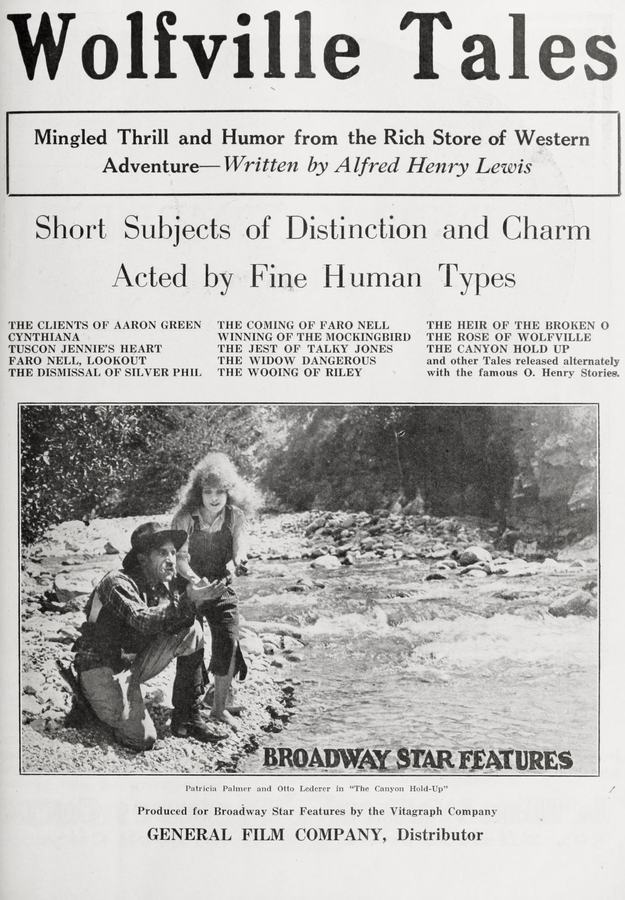
Francis Ford’s The Canyon Hold-Up (1914) arrives not with the predictable thunder of hooves and gunfire but with the insidious scrape of shifting pebbles—a whisper that something far more complex than mere robbery is afoot. This isn’t Murphy of Anzac’s battlefield heroics; it’s a claustrophobic tango of intellects staged beneath a pitiless sun, where the greatest weapon holstered isn’t a Colt but the human capacity for deception. Alfred Henry Lewis’ script, adapted from his own frontier tales, elevates a B-western premise into a nerve-jangling examination of power dynamics, proving that the tightest noose can be woven from frayed loyalties.
"Ford frames the canyon walls like slamming cell doors—nature itself becomes an accomplice to tension."
Al J. Jennings, the real-life outlaw-turned-actor, delivers ironic gravitas as McCullough. His performance rejects swagger; watch how he conveys authority through stillness—a slight tilt of the head while cleaning spectacles, or the deliberate slowness with which he folds a map, each movement subtly undermining Otto Lederer’s gloriously twitchy bandit chief. Lederer’s villainy festers in real-time: eyes darting between accomplices as McCullough’s planted seeds of distrust sprout poisonous blooms. Patricia Palmer, however, hijacks the film’s moral compass. Her character, Miss Thorne, weaponizes Victorian propriety. In a scene echoing the gothic unease of Vampire, she recounts a bandit’s abandoned child to him in honeyed tones, her lace gloves pristine as his psyche crumbles into the dust.
Ford’s direction transforms geography into narrative architecture. The canyon isn’t backdrop—it’s a silent antagonist. Deep-focus shots force our eyes to dart between foreground threats and background crevices where ambushes brew. Unlike the European flourishes of Das Spiel vom Tode, Ford employs stark chiaroscuro: sunlight bleaches villainous faces into skull-like masks, while twilight pools in rock hollows like spilled ink. His masterstroke? The suffocating silence. With no synchronous sound, the absence of gunshots after the initial volley becomes deafening. We lean in, scanning eyes and trembling hands for clues—a technique more psychologically immersive than any score.
Beneath its western trappings, The Canyon Hold-Up dissects America’s founding myths. The stagecoach passengers embody societal strata colliding under duress—the capitalist’s gold becomes worthless weight, the heiress’s pedigree irrelevant. McCullough’s triumph through manipulation rather than force quietly critiques Teddy Roosevelt’s cult of masculine vigor. This cerebral resolution aligns it more with the ethical quandaries of The Great Problem than the patriotic bombast of The Victoria Cross. Even the bandits aren’t monolithic evil; their unraveling brotherhood reflects pre-WWI anxieties about societal fragility. When McCullough tosses empty money bags to the fracturing gang, it’s not just tactics—it’s a scorching metaphor for capitalism’s hollow promises.
"Palmer delivers monologues that could crack granite—her politeness is a stiletto between the ribs of machismo."
Modern viewers might detect DNA strands in The Yaqui’s landscape-as-prison aesthetic or even A Girl Like That’s subversive gender dynamics. But Ford’s true innovation lies in restraint. Where contemporaries staged last-minute cavalry rescues, he locks us inside the characters’ escalating panic. The climax’s power derives not from heroics but from Lederer’s bandit frantically digging through sand for non-existent gold—a Sisyphean nightmare visualized years before existentialism gripped Europe. This rejection of cathartic violence makes its 1914 audience’s reported unease wholly understandable. We’re left not cheering, but contemplating the sheriff’s final ride into the horizon: a silhouette dissolving into heat haze, leaving us to wonder if the true hold-up was our own expectation of moral simplicity.
In today’s era of superheroic excess, The Canyon Hold-Up feels startlingly modern. Its intimate scale and psychological brutality prefigure Out of a Clear Sky’s contained thrillers. Jennings’ world-weary lawman anticipates antiheroes decades before Brando mumbled into his sweaty undershirt. Most radically, it positions wit and observation as greater survival tools than firepower—a notion as radical now as then. While later films like Graustark draped escapism in velvet, Ford forces us to stare into the abyss of human frailty… and find unsettling familiarity in the reflection.
IMDb —
1921
Community
Log in to comment.