DbcultAccessing Vault...
Cult Review
Senior Film Conservator
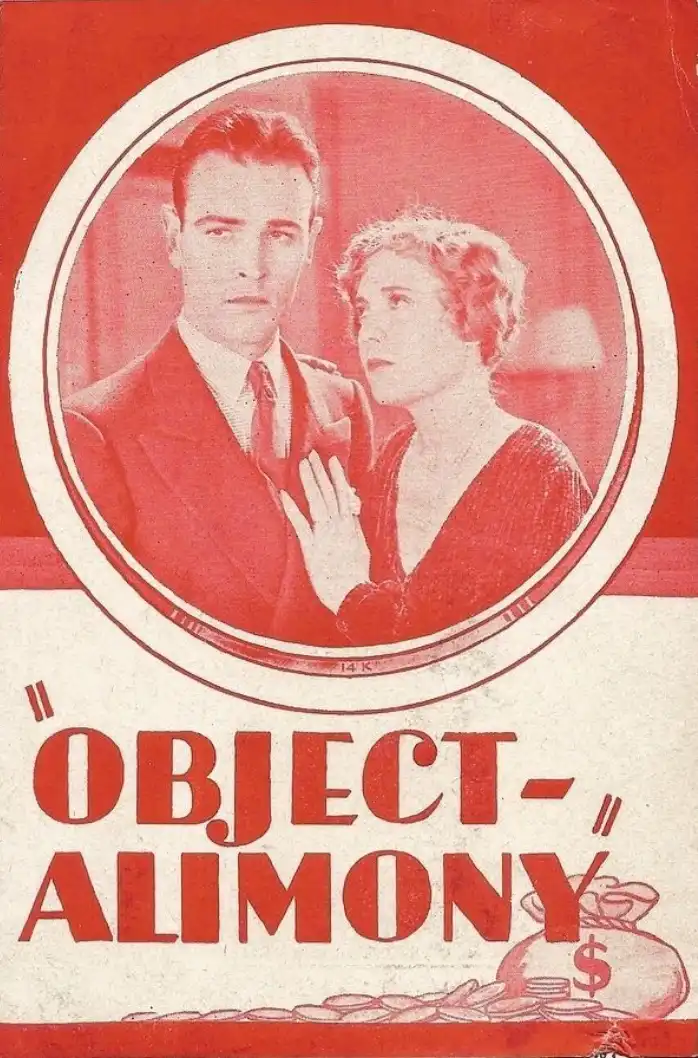
If you have about an hour to kill and you don't mind a movie that treats logic like a suggestion rather than a rule, Object: Alimony is actually worth a look. Its definitely for the crowd that loves those old silent films where people communicate mostly through intense staring and very dramatic hand gestures.
If you hate movies where a simple thirty-second conversation could solve every single problem, you are going to want to throw your remote at the screen. But for everyone else, it’s a pretty fun ride through 1928 melodrama.
Lois Wilson plays Ruth, and honestly, she’s the only reason this thing doesn't just fall apart. She works at an "emporium," which is a word I really wish we still used for big stores because it sounds so much more important than it actually is.
Her boss is Mrs. Rutledge, who is played by Jane Keckley with this permanent look of smelling something bad. She owns the store and apparently thinks her son Jimmy is way too good for a girl who actually has to work for a living.
The way Mrs. Rutledge glares at Ruth across the store floor is terrifying. It reminds me a bit of the heavy atmosphere in The Scarlet Lady, just without the big historical backdrop.
So anyway, Ruth and Jimmy get married, and it happens so fast you might blink and miss the wedding. It’s one of those movie marriages where you wonder if they even know each other's middle names before they're living in the same house.
Then comes Renaud Graham. This guy is a piece of work. He’s one of those "friends of the family" who just hangs around being oily and gross.
He forces his way into Ruth's apartment and tries to make "violent love" to her, which is just 1920s talk for a really nasty assault. The lighting in this scene is actually pretty good, all dark shadows and claustrophobic vibes.
Of course, Jimmy walks in right at the worst possible moment. Instead of asking "Hey, why is this creep attacking my wife?" he just assumes Ruth is cheating and walks out.
It’s the most frustrating thing I’ve seen in a movie all week. He doesn't even let her speak! He just does the big dramatic exit and leaves her there.
Ruth ends up in a boarding house, and this is where the movie gets a bit more interesting to me. The boarding house feels lived-in, unlike the fancy sets at the start of the film.
She’s pregnant, which the movie handles with a lot of soft-focus shots and sad violin energy even though you can't hear the violins. It’s got a bit of that same grit you see in Running Wild, where things just keep going wrong for the main character.
Then she meets Al Bryant, who is an aspiring writer. He’s played by Roscoe Karns, who usually does comedy, so seeing him as a serious writer is a bit weird.
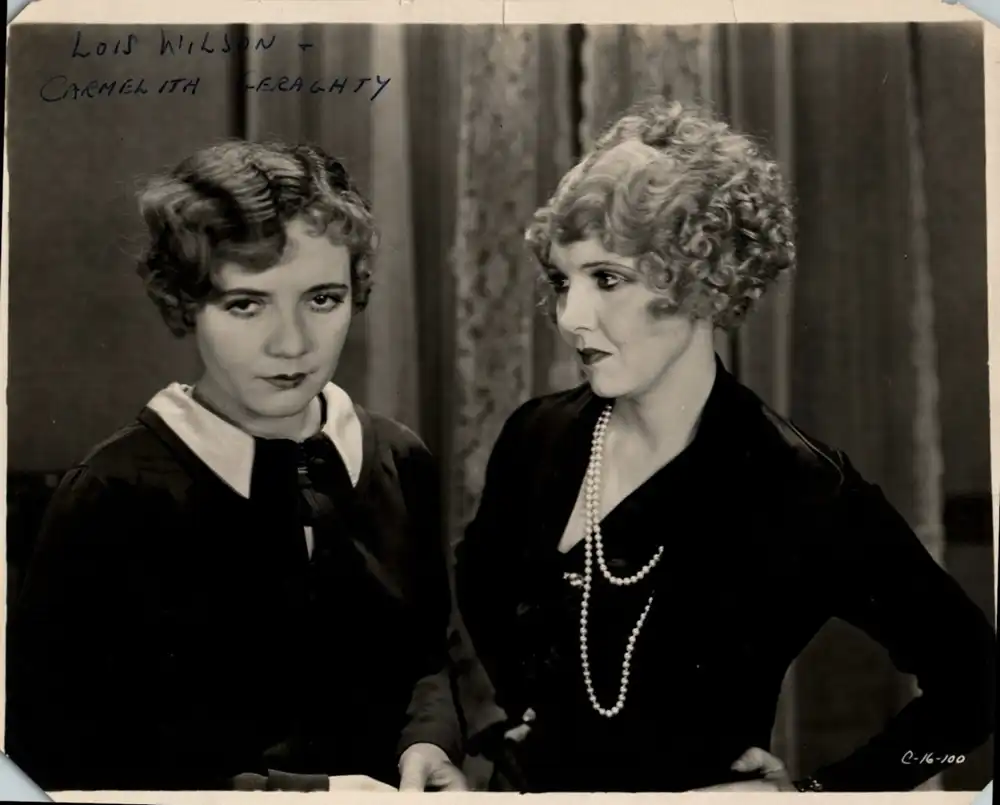
Al is basically a 1920s podcaster because he takes Ruth's entire tragic life story and turns it into a best-selling book. He doesn't even change the names much, apparently.
There is a scene where Al is typing away and he looks so proud of himself for making money off her trauma. It’s a little bit exploitative if you think about it too hard, but the movie wants us to think he’s a hero.
The book becomes a play, and this leads to the most ridiculous ending ever. Jimmy, the idiot husband, goes to see the play.
He sits in the audience and watches a bunch of actors recreate the worst night of his life. And that’s what it takes for him to realize he was wrong?
He needs a literal theatrical production to explain to him that his wife wasn't cheating. It’s so silly that I actually laughed out loud.
I noticed the kid, Dickie Moore, is in this too. He’s just a tiny little thing here, barely a toddler, but he’s got those big eyes that the camera loves.
The sets for the play-within-the-movie look almost exactly like the sets for the actual movie, which made me wonder if they just reused the furniture to save a few bucks. It wouldn't surprise me.
Lois Wilson really does some heavy lifting in the final act. She has to look forgiven and happy when Jimmy comes crawling back, but if it were me, I’d have kicked him out.
The movie doesn't really care about the mother-in-law's reaction at the end, which is a bummer. I wanted to see her face when she realized her plan failed.
If you've seen things like The Vocation of André Carel, you’ll recognize the pacing here. It drags in the middle when they’re at the boarding house, then zooms to the finish line.
The film print I saw was a bit grainy, and some of the title cards have weird spelling, but it adds to the charm. It feels like a real relic from a time when movies were still trying to figure out how to tell a long story.
I wouldn't call it a masterpiece, not even close. But as a piece of melodramatic junk food, it’s pretty satisfying.
Jimmy is still a jerk, though. I hope the book royalties went to Ruth and not him.

IMDb 7.4
1932
Community
Log in to comment.