DbcultAccessing Vault...
Cult Review
Senior Film Conservator
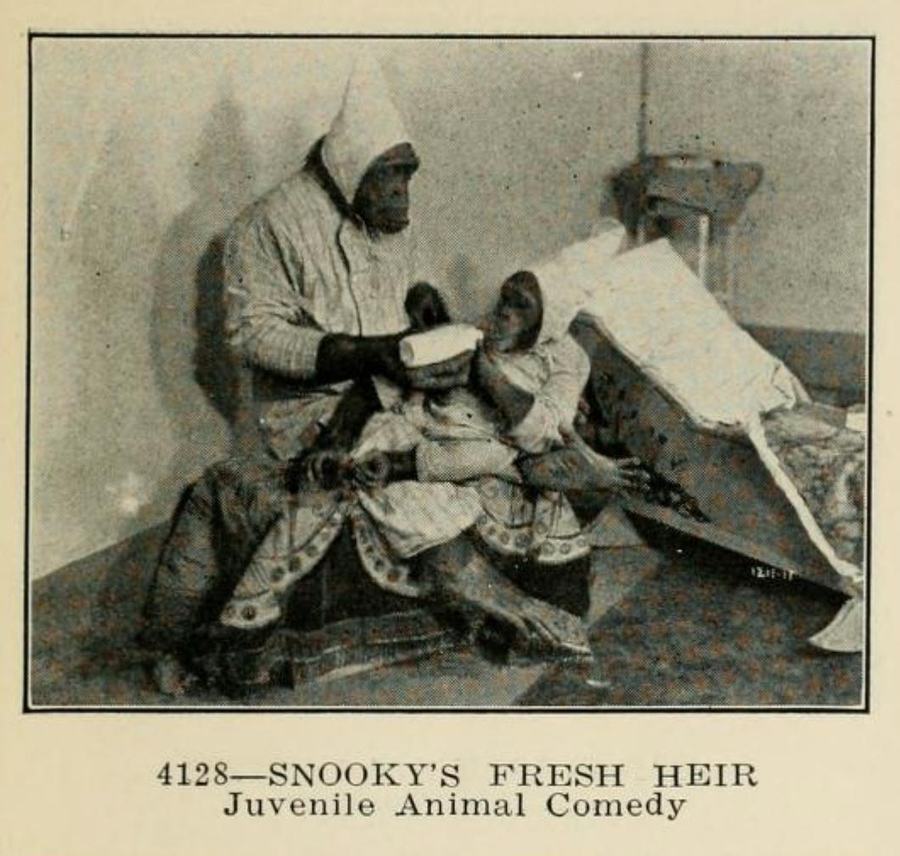
Imagine Charlie Chaplin’s tramp crashing into a child-rearing manual written by Rousseau, then filtered through the chiaroscuro lenses of a 1920 nickelodeon—that’s the kinetic universe of Snooky's Fresh Heir. The film, clocking in at a lean twenty-one minutes, is a masterclass in micro-narrative compression: every cracked plate, every pirouette of the broomstick carries symbolic heft, sketching the eternal tug-of-war between entropy and tenderness inside the bourgeois nest.
Unlike the morbid fatalism of Devi Gory or the spiritual asceticism of The Song of the Soul, this picture locates transcendence not in martyrdom but in mundane chores. Snooky’s victory is measured in folded linen, in the glossy sheen of a stewpot. The camera, static yet voyeuristic, frames the tenement like a diorama: foreground cluttered with saucepans, background dissolving into a murk of peeling plaster. The visual grammar borrows from German Expressionism—tilted shadows slant across the floorboards, suggesting a world always half a breath from toppling—but the tone is unmistakably American, pragmatic, optimistic.
Snooky (played by the eponymous comedian whose surname history swallowed) operates in the liminal zone between pathos and slapstick. His gait—knees swiveling inward like a marionette with loose strings—communicates exhaustion before the intertitles spell it out. Watch him attempt to lull the rampaging offspring: he drops to all fours, morphs into a pony, tongue clopping, eyes rolling; the child’s glee detonates like a string of firecrackers. The scene is comic, yes, yet beneath the pratfalls lurks a manifesto: parenthood as performance art, identity as putty.
The wife, billed only as “Mrs. Snooky,” deserves cine-historical redemption. In her weary grimace one senses the ghost of every overtaxed matriarch from Pauline to Angoisse. Yet her departure for a brief holiday—shot in a luminous close-up as she boards a streetcar—becomes an act of radical self-care, rare in 1920 cinema. The intertitle reads: “She needed air beyond the sour breath of broken dishes.” That line, folks, is proto-feminist oxygen.
Domestic Choreography
Once the missus exits, the apartment transmogrifies into an obstacle course. Here the director, anonymous in studio ledgers, orchestrates a symphony of mundane objects. Dishsoap suds swell like cumulonimbi; broom bristles become orchestral strings; the kettle’s whistle provides a diegetic score. Snooky’s ballet with the mop prefigures Jacques Tati’s Monsieur Hulot by three decades. He glides across the linoleum, socks skating on wax, and for a fleeting moment domestic labor looks like Astaire’s waltz—until the mop handle smacks the ceiling fan and chaos re-erupts. The film’s genius lies in that pendulum swing between grace and disaster.
The offspring—no name, just “Junior” in publicity sheets—embodies Freud’s id incarnate, a whirling dervish of appetite and anarchy. Yet the camera never demonizes. In a luminous sequence, Junior discovers the acoustic magic of pots and pans: each lid becomes a cymbal, each spoon a drumstick. The clang reverberates through the tenement, drawing neighbors whose scowls melt into delight. The scene anticipates the communal euphoria of Don't Weaken!, though unlike that sports-centric romp, the catharsis here is percussive, domestic, miniature.
Snooky’s pedagogical counter-revolution is to harness rather than suppress this sonic chaos. He introduces a makeshift orchestra: wooden spoons for timpani, colander as resonator. Father and son descend into a polyrhythmic jam session. The editing—rapid jump-cuts mimicking syncopation—feels startlingly modern, almost Eisensteinian, though Eisenstein was still theorizing montage in Soviet labs while this little American one-reeler played rural bijous.
Critics often slot Snooky's Fresh Heir alongside Die Tangokönigin as lightweight escapism. That’s reductive. Beneath the slapstick lies a quiet earthquake in gender tectonics. Snooky’s domestic prowess—he degreases stovetops, folds diapers into origami cranes—undercuts the hegemonic masculinity celebrated in The Outlaw's Revenge or Joseph. The film proposes that caregiving is not emasculation but virtuosity. In one sublime gag he cradles Junior while flipping pancakes mid-air with the other hand, a feat worthy of a Bolshoi juggler. The intertitle quips: “A man’s reach should exceed his whisk, or what’s a kitchen for?”
Compare this to the fatalistic unions in The Fatal Marriage, where wedlock equals doom. Here, marriage is elastic, negotiable. The wife’s return—streetcar bell chiming like a benediction—doesn’t restore patriarchal order but inaugurates a communal triad: she enters bearing a bouquet of daisies, Snooky presents her with a soufflé risen to airy perfection, Junior bangs out a welcome rhythm on the copperware. The final tableau, bathed in amber lamplight, dissolves any hierarchy between wage-earner and home-keeper. It is, whisper it, utopian.
Cinematographic Relics
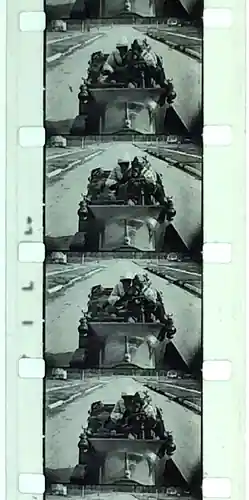
Technically the film survives only in a weather-beaten 35mm print, nitrate decomposition nibbling the edges like silverfish. Yet what remains is ravishing: the interplay of candlelight and tungsten yields a chiaroscuro reminiscent of Tepeyac’s reverent glow. The camera’s occasional iris-in—closing the aperture around Snooky’s harried face—feels proto-Lubitsch, a visual wink acknowledging the audience as co-conspirators in this domestic miracle.

Sound, obviously, is absent, but the intertitles display literary panache. One card reads: “Dishes, like stubborn memories, must be scoured again and again.” Such poetics elevate the film above its programmers—Protea II or The Mysterious Miss Terry—whose intertitles merely ferry exposition.
Legacy in the DNA of Sitcoms
Trace the lineage and you’ll detect this one-reeler’s DNA in everything from The Honeymooners to Parks and Recreation: the buffoonish but well-meaning patriarch, the competent yet exasperated wife, the anarchic child, the triumph of communal love over systemic fatigue. Yet unlike post-war sitcoms that ultimately re-entrench traditional roles, Snooky's Fresh Heir ends on a note of egalitarian suspension. The final intertitle: “Together they swept, sang, and set the table for three.” No moralizing, no restoration of order—just the ongoing, collaborative labor of living.
Film historians hunting for early feminist Americana often overlook this modest gem, preferring the overt melodrama of Die Liebschaften des Hektor Dalmore. Yet here, in a cramped set lit by flickering carbon arcs, is a quiet revolution: a man who discovers that his greatest heroic act is to scour, stir, and soothe. That revelation still feels radical a century on.
Does the film have shortcomings? Of course. Its gags sometimes sprawl past punchline, and racial representation is nil—an omission endemic to 1920 mainstream cinema. Yet measured against contemporaneous one-reelers, Snooky's Fresh Heir bursts with humanist verve. It preaches not via sermon but through the susurrus of a broom, the clatter of pots, the whispered lullaby of a father who learns that peace is something you scrub into existence, one dish at a time.
Seek it out at archival festivals, YouTube’s dusty corners, or 16mm basement swaps. Bring children, bring skeptics of silent cinema. Let them witness Snooky’s quiet rebellion: the moment he trades roar for lullaby, chaos for compost, and in the process rewrites the grammar of fatherhood for the flickering century ahead.
IMDb 6.7
1921
Community
Log in to comment.