DbcultAccessing Vault...
Cult Review
Senior Film Conservator
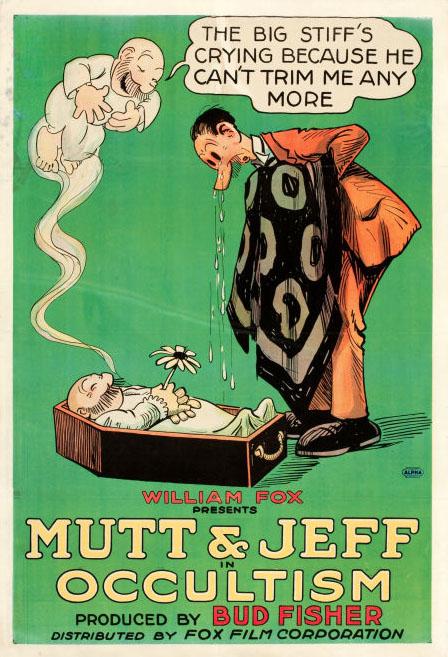
From the moment the flickering title card of Occultism graces the screen, a palpable sense of dread, thick and suffocating as ancient dust, descends upon the viewer. This isn't merely a film; it's an archaeological dig into the darkest recesses of the human mind, a harrowing descent into an abyss paved with forbidden knowledge and the shattered fragments of sanity. Bud Fisher, in his dual role as both the visionary writer and the tormented protagonist, Professor Alistair Finch, orchestrates a symphony of psychological horror that resonates long after the final, ambiguous frame. It’s a work that challenges the very foundations of perception, forcing us to question the thin, fragile membrane separating empirical reality from the terrifying expanse of the unknown.
Fisher's narrative, a meticulously crafted tapestry of grief, intellectual hubris, and spiritual yearning, centers on Finch, a scholar of formidable intellect whose world is irrevocably fractured by the premature death of his beloved sister, Eleanor. Refusing to accept the finality of mortality, Finch retreats into the cavernous, shadow-drenched library of his ancestral estate. This isn't just a place of study; it's a mausoleum of forgotten lore, a sanctuary for his burgeoning obsession with the esoteric. He pores over ancient grimoires, their brittle pages whispering secrets of thaumaturgy, necromancy, and trans-dimensional communication. His motivation is a potent cocktail of despair and defiance: a desperate hope to breach the veil, to reconnect with Eleanor, or at the very least, to comprehend the true nature of existence beyond the corporeal. This profound personal drive elevates Occultism beyond a mere cautionary tale, embedding it with a tragic, almost empathetic core that distinguishes it from more superficial explorations of the supernatural.
The genius of Occultism lies in its unflinching portrayal of Finch's gradual disintegration. Fisher, as an actor, embodies this unraveling with a chilling precision that is both mesmerizing and deeply disturbing. His eyes, initially sharp with intellectual fervor, slowly transform into pools of manic intensity, reflecting the unholy knowledge he consumes. The subtle tremors in his hands, the increasingly dishevelled appearance, the desperate, almost animalistic intensity of his focus – every nuance contributes to a masterclass in silent film acting. We witness not a sudden break, but a creeping erosion of sanity, a slow-motion car crash of the mind. This nuanced approach to madness sets it apart from more melodramatic portrayals found in contemporaries, offering a psychological depth that feels startlingly modern. One might even draw a thematic parallel, albeit a starkly contrasting one, to the innocent, almost naive aspirations seen in films like The Rainbow Girl, where hope triumphs over adversity, whereas here, hope curdles into a corrosive obsession.
As the narrative progresses, the film's atmosphere becomes a character in itself. The cinematography, though of the silent era, is remarkably sophisticated. Shadows are not merely an absence of light; they are living entities, writhing and stretching, hinting at unseen horrors. The flickering gaslight in Finch's study casts monstrous, elongated forms across the walls, a visual metaphor for the malevolent presences he believes he is conjuring. Close-ups on Finch's increasingly haunted face amplify his isolation and terror, allowing the audience to feel the suffocating weight of his solitary quest. The set design, too, deserves commendation: the cluttered, decaying library, overflowing with arcane tomes and esoteric artifacts, feels less like a room and more like a portal to another dimension, a place where the mundane and the metaphysical violently collide. This attention to visual detail creates a world as rich and unsettling as the psychological landscape it explores, a far cry from the simpler, more direct storytelling often seen in films like Luksuschaufføren, which focused on social realism rather than existential dread.
The script, penned by Fisher himself, demonstrates an uncanny understanding of psychological tension. The intertitles, sparse and impactful, serve not just to convey dialogue but to deepen the pervasive sense of unease, often posing philosophical questions that haunt the viewer. We are not spoon-fed explanations; instead, we are invited to participate in Finch's descent, to interpret the ambiguous phenomena he experiences. Is he truly communing with the dead, or are these merely the elaborate hallucinations of a mind teetering on the brink? The film masterfully exploits this uncertainty, making the unseen far more terrifying than any overt monstrous reveal. It’s a testament to Fisher’s skill that he crafts a narrative so compelling and terrifying without relying on cheap jump scares or gratuitous spectacle. In this sense, it shares a certain intellectual rigor with The Making of Maddalena, which also delved into complex internal struggles, albeit of a different nature.
As weeks bleed into months within the narrative, Finch’s sanity frays further. He experiences vivid, unsettling hallucinations: spectral figures flitting in the periphery of his vision, disembodied whispers echoing through the cavernous halls, and the pervasive, cloying scent of ozone and decay. The film’s pacing is deliberate, almost ritualistic, building tension with an agonizing slowness that is incredibly effective. Each discovery, each deciphered glyph, brings Finch closer to his goal, but also closer to the precipice of madness. The atmosphere becomes almost suffocating, a testament to the power of suggestion and the evocative visual storytelling. Unlike the more action-oriented dramas such as Nan of Music Mountain or The Gun Woman, where external conflicts drive the plot, Occultism finds its most potent battles raging within the tormented soul of its sole protagonist.
The culmination of Finch’s obsessive research arrives with the deciphering of a particularly obscure ritual, one promising direct communion with entities from an “outer sphere.” The sequence leading up to this ritual is a masterclass in mounting dread. Finch, with feverish intensity, prepares his study, adorning it with arcane symbols and implements. The weight of centuries of forbidden knowledge seems to press down upon him, and by extension, upon the audience. The ritual itself is a harrowing, almost unbearable sequence of visual and implied sound (one can only imagine the discordant, otherworldly score that would accompany such a scene). As he chants the ancient incantations, the very fabric of his reality warps. Objects levitate with an unnatural grace, shadows writhe with what appears to be malevolent sentience, and an unearthly light pulsates from the central sigil, casting grotesque, shifting forms across the room. The sheer visual spectacle, even in its silent form, is breathtakingly unsettling, a testament to Fisher's directorial vision.
The emotional core of the film, Finch’s desire to see Eleanor again, reaches its apex during this ritual. He believes he sees her, her form ethereal and sorrowful, reaching out to him from beyond the veil. But here, Occultism delivers its most agonizing blow: the ambiguity. Is it truly Eleanor, a manifestation of his deepest longing, or a malevolent entity mimicking her likeness to ensnare his soul, to drag him fully into its abyssal domain? The film leaves this agonizing question unanswered, a gaping wound in the viewer’s psyche. This refusal to provide easy answers, this embrace of the terrifying unknown, elevates the film into the realm of true art. It's a stark contrast to the clear-cut moralities or resolutions often found in films like One of Our Girls or A Continental Girl, which, while engaging, don't demand the same level of existential introspection.
The climax sees Finch either achieving a terrifying form of enlightenment, his eyes reflecting an alien understanding that transcends human comprehension, or succumbing entirely to madness, a vacant, catatonic shell. The final shot is profoundly disturbing: Finch, perhaps smiling beatifically, perhaps staring blankly into space, surrounded by the wreckage of his study, the air still humming with residual, unseen energies. The true nature of his transformation remains elusive, a chilling enigma that haunts the viewer. Has he become a god, a demon, or merely a broken man? This refusal to define his ultimate fate underscores the film's central theme: the perils of venturing into realms not meant for mortal minds. It’s a far more insidious form of temptation than the romantic or social dilemmas explored in The Eternal Temptress, for here the soul itself is at stake.
Occultism is a profound meditation on the human desire for transcendence and the terrifying cost of ambition. Bud Fisher, as both author and performer, crafts a work that is both intellectually stimulating and viscerally terrifying. His singular vision shines through every frame, demonstrating a mastery of atmosphere and psychological nuance that few filmmakers of any era achieve. While other films of the period, such as The Three of Us or Other Men's Daughters, explored the complexities of human relationships, Occultism delves into the ultimate isolation of the individual facing cosmic horror, a unique and harrowing journey.
The film's enduring legacy lies in its ability to provoke thought and terror in equal measure. It doesn't rely on cheap scares, but on the insidious erosion of sanity and the unsettling implications of forbidden knowledge. It is a testament to the power of visual storytelling in the silent era, proving that profound psychological depth could be achieved without spoken dialogue. The film's influence can be felt in later works that explore cosmic horror and psychological dread, cementing its place as an unheralded masterpiece. Its examination of societal outsiders, albeit self-imposed, offers a darker parallel to the social commentary found in films like The Young Lady and the Hooligan, highlighting different forms of societal alienation.
In a cinematic landscape often dominated by grand narratives or simplistic escapism, Occultism stands as a stark, uncompromising vision. It’s a film that demands engagement, that forces its audience to confront uncomfortable truths about human curiosity and the boundaries of the known universe. Fisher's achievement here is monumental, a singular voice crafting a terrifying, beautiful, and utterly unforgettable cinematic experience. It is a film that, much like the esoteric texts Finch so diligently studied, offers a glimpse into something profound and terrifying, leaving an indelible mark on the soul of anyone brave enough to witness its dark revelations. Its exploration of internal conflict and societal pressure, albeit through a supernatural lens, could be distantly related to the themes of duty and sacrifice in The Victoria Cross or the weight of legacy in The Last of the Carnabys, though Occultism pushes these concepts into far more dangerous, metaphysical territory. Even compared to films depicting more overt external conflicts, like The Storm, the internal tempest raging within Finch is far more devastating. Indeed, the very title The Idler, suggesting a lack of purpose, serves as a stark counterpoint to Finch's relentless, all-consuming pursuit, however destructive it proves to be.
Do yourself a favor, if you dare to traverse the shadowy corridors of the human psyche, and seek out Occultism. It is a journey into darkness, yes, but one illuminated by the flickering, unsettling brilliance of a true cinematic visionary. Prepare to be disturbed, to be challenged, and perhaps, to never quite look at the world the same way again.

IMDb 5.8
1933
Community
Log in to comment.