DbcultAccessing Vault...
Cult Review
Senior Film Conservator
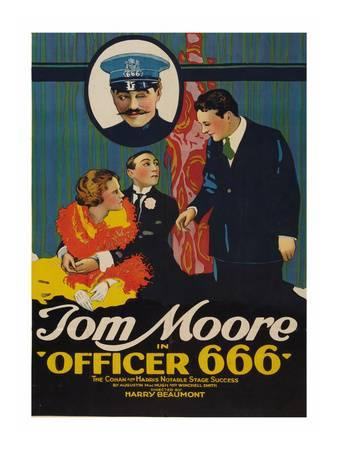
The first time you watch Officer 666 you half-expect the celluloid itself to don a false mustache and vanish from the projector, so intoxicated is this 1920 one-reeler with the slipperiness of who anybody actually is. Nearly a century before face-swap apps and deep-fake paranoia, here is a film that treats identity like a silk pocket square—something to be flicked out, flourished, discarded, and reclaimed in the same breath.
Hardee Kirkland directs with the brisk, caffeinated tempo of a Broadway farce that’s had its foot kissed by jazz. The camera glides, stumbles, pirouettes through cavernous sets where every door seems to open onto another version of the same man. Jerome Patrick’s dual performance—Travers Gladwyn the blasé plutocrat and Alf Wilson the shape-shifting thief—never relies on the timid split-screen gimmickry audiences would see later in The Millionaire’s Double. Instead, Patrick simply inhabits two distinct rhythms: the languid drawl of inherited wealth versus the staccato swagger of a man who’s stolen everything including his own biography.
Priscilla Bonner’s Helen Barton arrives like a struck match in a midnight garden. She’s introduced in a swirl of Parisian chiffon and misapprehension, believing herself to be a guest in her fiancé’s townhouse when in fact she’s wandering her beloved’s target zone. Bonner plays the confusion with wide-eyed sincerity, never tipping into the shrill caricature that sank many a flapper heroine. The moment she rests her gloved hand on the wrong man’s lapel—thinking him Travers—the film’s romantic geometry combusts into a scalene love triangle where every angle is a lie.
Notice how cinematographer Jules Cronjager (un-credited yet cinephiles recognize his signature) bathes the mansion in tenebrous chiaroscuro—ivory shafts slicing through obsidian corridors—so that every character carries their own private noir before the genre officially exists. When Travers-in-uniform confronts Wilson-in-tuxedo, the frame splits into rival spotlights: sea-blue gel on the left, sulfur-yellow on the right. It’s a silent concession that morality here is not a question of black-and-white but of conflicting color temperatures.
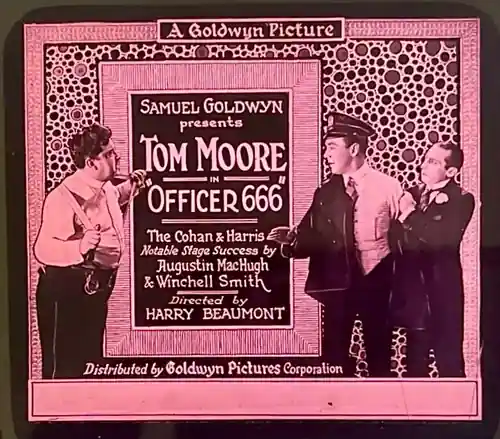
Sound, of course, is absent, yet the intertitles—penned by Gerald C. Duffy and Augustin MacHugh—snap like snare drums. “I’m afraid you have the counterfeit article,” Wilson sneers, sliding the $500 bill back toward Phelan. The line lands doubly: currency and identity both forged, both negotiable. Duffy, who’d later win an Oscar for The Crowd, already understood that the most combustible dialogue in any medium is the kind that can be read two ways at once.
What makes Officer 666 more than a trifle is its sly conviction that money is the ultimate master key. Travers can purchase a cop’s soul with a single banknote; Wilson can purchase Travers’s public face with nothing more than chutzpah. Even Helen, ostensibly the innocent, is traded across the ballroom like a rare stamp. The film’s Marxist heartbeat is masked by pratfalls—Tom Moore’s inebriated butler sliding down a bannister, Maurice ‘Lefty’ Flynn’s Keystone-lite detective tripping over his own baton—but the subtext never stops whispering: in a society where everything is for sale, selfhood itself becomes a commodity.
Compare this to Way Down East, where D.W. Griffith moralizes poverty as saintliness. Kirkland’s approach is cooler, more libertine: he invites you to laugh at the absurdity, then lingers on the hangover. The final shot—Travers and Helen framed against a stained-glass window shaped like a dollar sign—feels almost Bunuelian in its impudent candor.
Silent cinema seldom gets credit for its proto-feminist undertones, yet Helen’s arc here prefigures the disruptive flappers of Clara Bow. She enters as a naïf clutching elopement luggage, exits as a woman who’s witnessed the construction and demolition of male identity in real time. When she ultimately chooses Travers, it’s not because he’s “won” but because he’s unmasked—a rare man willing to stand naked in his own contradictions. Bonner lets a micro-smile flicker at the corner of her mouth, signaling that the power dynamic has shifted forever.
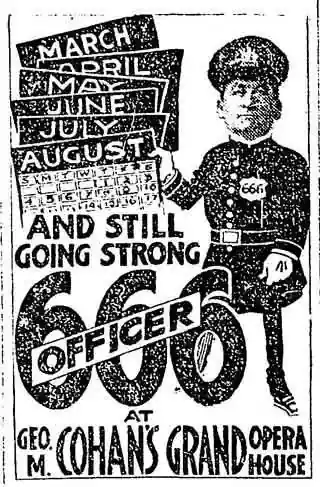
Meanwhile, Kate Lester’s dowager aunt—barely sketched in the script—becomes a scene-stealer through pure physicality: the way she clutches her pearls as if they’re the last tether to a world that no longer exists. Watch her eyes during the climactic reveal; they don’t register shock so much as weary recognition that the game was always rigged.
Modern thrillers equate tension with bombast— Hans Zimmer foghorns, drone shots spiriting over cities, exposition shouted across runways. Officer 666 achieves more with a fraction of runtime and zero decibels. The pacing is a masterclass in narrative hydraulics: each deception pumps pressure until the valve of the final act hisses open. At 58 minutes, it’s shorter than most streaming episodes, yet it contains multitudes: heist, romance, social satire, philosophical inquiry.
Critics often compare it to The Green Cloak for its stolen-art MacGuffin, but Kirkland’s film is less whodunit than who-is-who. The suspense isn’t whether the paintings will vanish—it’s whether identity itself can be safeguarded in a culture where surveillance is privatized and authenticity is auctioned nightly.
For decades Officer 666 languished in anonymity, a single tinted print buried in the Bibliothèque nationale de France. When Lobster Films performed their 4K restoration in 2019, they unearthed more than nitrate—they resurrected a Rosetta Stone of early jazz-age mischief. The hand-painted amber glow of ballroom scenes now shimmers like liquid topaz; the cyanotype blues of police lanterns feel subaquatic. Suddenly the film’s obsession with forgery doubles back on itself: a replica so precise it becomes the new original.
Accompanying the restoration, Maude Cartaud’s new score—performed by the Orchestre Métaphysique—fuses stride-piano syncopation with Bernard Herrmann-esque staccato strings. When Wilson first claims the Gladwyn name, a muted trumpet lets out a blue note that seems to curdle the air itself. It’s the rare re-score that doesn’t just illustrate but interrogates, asking whether every adopted identity is merely a new arrangement of pre-existing chords.
Place Officer 666 beside Danger Trail and you’ll notice both trade in counterfeit lineage, yet where the latter moralizes (crime never pays), Kirkland’s film pirouettes on ambiguity. Pair it with The Barker and you’ll hear parallel notes on class tourism: one man slipping into another’s skin for sport, discovering too late that skin is inextricably stitched to soul. Even Le destin est maître, though continents apart, shares the conviction that destiny is less a ladder than a hall of mirrors.
Yet unlike many silents that feel embalmed in their own epoch, Officer 666 vibrates with modern resonance. Swap Gladwyn’s Gatsby-esque manor for a Silicon Valley smart home, replace the forged $500 bill with a deep-fake IPO, and the plot clicks into place like a sliding door. We still live in an economy where attention is capital, where identity is brand, where love itself can be swiped right or catfished into heartbreak.
Jerome Patrick’s duality is not achieved through trick photography but through posture: Travers holds his shoulders as if burdened by the weight of too many options; Wilson’s shoulder blades snap forward like a predator sniffing carrion. Watch the micro-moment when Wilson realizes his bluff might succeed—Patrick’s pupils dilate a millimeter, a silent sonnet of self-congratulation.
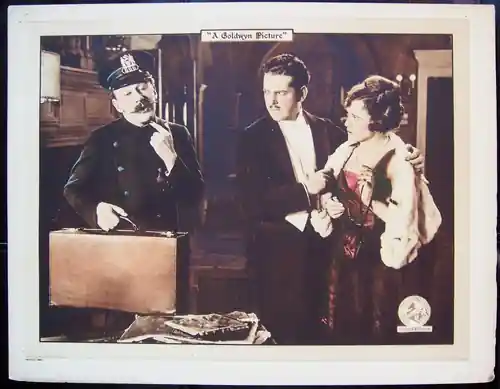
As Phelan, Albert Edmondson channels the everyman bewilderment that Buster Keaton would refine in The Devil’s Daughter. His rubbery double-takes serve as the film’s moral gyroscope: when ethics become negotiable, the only sane response is slapstick.
So is Officer 666 a neglected masterpiece? Not quite. Third-act coincidences arrive with the delicacy of a boot through stained glass, and the kidnapped-backstory retcon feels stapled on by producers nervous the audience might sympathize too heartily with the rogue. Yet its flaws are the blemishes that prove human touch, like the craquelure on an Old Master that reassures you it’s not a print.
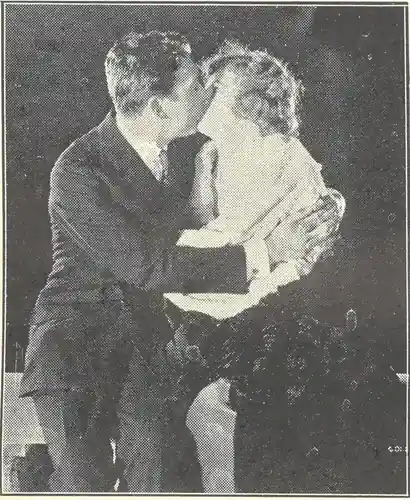
What lingers is the aftertaste: the suspicion that your own business card, social-media handle, even the reflection nodding back from the mirror might be negotiable currency in some deal you haven’t yet consented to. Kirkland’s film ends on a kiss, but the real embrace is between the viewer and the vertigo of modernity. Long after the projector’s hum dies, you’re left clutching your own identity like Travers clutching the battered $500 bill—wondering if it’s genuine, and realizing the question matters less than the thrill of the gamble.
Verdict: A mischievous, metronomic romp that pickpockets your certainties and replaces them with glittering question marks. 8.7/10
IMDb 4.8
1929
Community
Log in to comment.