DbcultAccessing Vault...
6.6/10
Senior Film Conservator
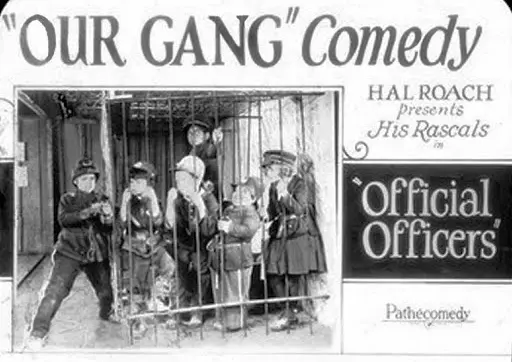
A definitive 6.6/10 rating for a film that redefined the boundaries of cult cinema. Official Officers remains a cornerstone of transgressive art.
Does a nearly century-old silent comedy about kids playing cops still hold up in our hyper-stimulated era? Short answer: yes, but with a significant asterisk. Official Officers, a 1921 Hal Roach production, offers a fascinating glimpse into early cinema and the foundations of the beloved 'Our Gang' series, yet its pacing and comedic sensibilities are decidedly of its time.
This film is best suited for silent film enthusiasts, film historians, and dedicated fans of the 'Our Gang' shorts curious about their origins. It offers a unique historical document and a charming, if simple, narrative. However, those accustomed to modern pacing, complex narratives, or contemporary humor might find its 20-minute runtime to be surprisingly demanding, offering more of a historical curiosity than a universally entertaining romp.
This film works because of its unique blend of childlike ingenuity and genuine, albeit subtle, social commentary, its historical significance as a foundational Hal Roach comedy, and the surprisingly effective, naturalistic performances from its young cast.
This film fails because its narrative simplicity and the slower comedic timing can feel sluggish to modern viewers, and some of its humorous beats are undeniably dated, requiring a generous historical lens.
You should watch it if you appreciate the artistry and historical context of early cinema, enjoy the foundations of slapstick comedy, or are curious about the formative years of the iconic 'Our Gang' series.
Official Officers is more than just a forgotten film; it's a vital piece of the puzzle that is early Hollywood. Released in 1921, it stands as a testament to the burgeoning talent of Hal Roach, a producer and director whose name would become synonymous with some of the most enduring comedies of the silent and early sound eras. Before the 'Our Gang' officially became 'The Little Rascals,' Roach was already experimenting with the delightful chaos of child actors, capturing their unvarnished energy and charm.
The film exists in a fascinating transitional period. Cinema was rapidly evolving, moving beyond simple actualités and one-reelers towards more structured narratives. Official Officers embodies this evolution, offering a straightforward yet engaging story that relies heavily on visual gags and the inherent appeal of its young stars. It’s a snapshot of a time when the medium itself was finding its voice, and audiences were eager for novel forms of entertainment.
What truly resonates about this era, and this film in particular, is the raw, untamed quality of the performances. Without the polish and often overbearing direction of later decades, these child actors project a genuine innocence that is both endearing and surprisingly authentic. It’s a reminder that sometimes, the simplest stories, told by the most unassuming players, can leave the most lasting impression.
The plot of Official Officers is disarmingly simple, yet surprisingly effective in its execution. It begins with a universal childhood dilemma: the lack of a safe place to play. For the tenement kids, the bustling, dangerous streets are their only recourse. Mickey, a character who clearly possesses nascent leadership qualities, devises a solution that is both audacious and logical: barricading an intersection. This act, while innocent, immediately establishes the central conflict between childhood freedom and adult authority.
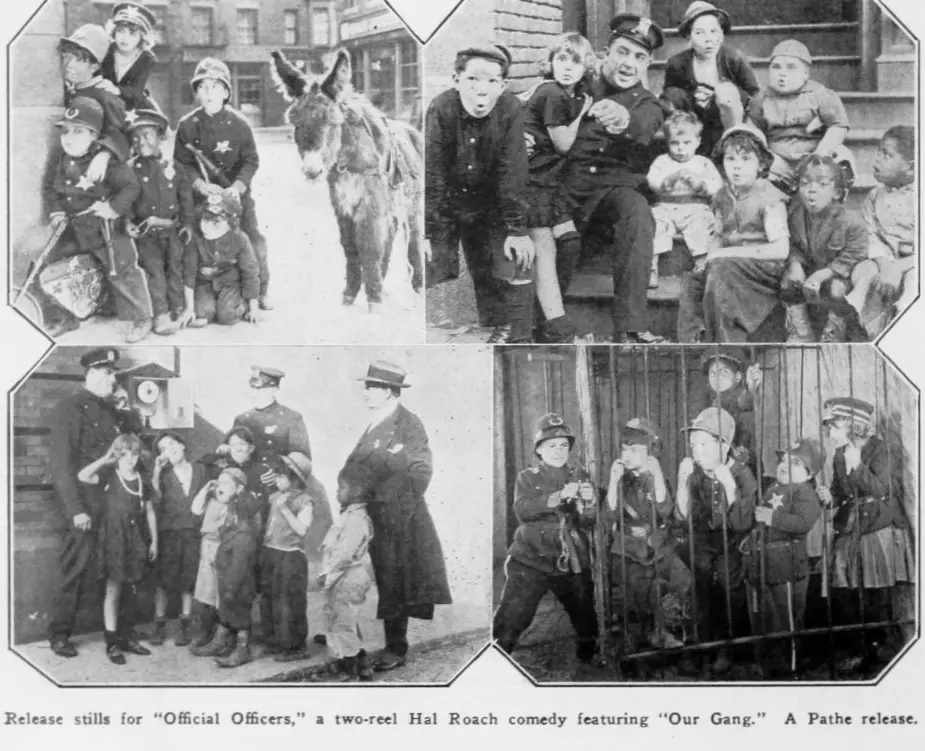
Enter "Hard-Boiled" McManus, played with a delightful gruffness by James Finlayson. His character is the quintessential stern beat cop, a figure of rigid rules and little empathy for youthful exuberance. The scene where he systematically dismantles the children's painstakingly constructed barricades is a masterclass in silent film antagonism, eliciting genuine sympathy for the kids. Finlayson’s exaggerated expressions of exasperation and annoyance are a highlight, setting the stage for his eventual comeuppance.
The narrative then pivots with the introduction of a sympathetic constable and a detective, who, crucially, are fathers themselves. This parental perspective humanizes law enforcement, transforming it from an oppressive force into a potential ally. Their decision to deputize the children, transforming them into a junior police force, is a stroke of comedic genius, and also carries a subtle undertone of community engagement.
The subsequent montage of the children, now in uniform, performing their duties is charmingly executed. One particularly memorable moment features Joe, eyes wide with mischievous intent, diligently monitoring Tony’s fruit stand – specifically, the tempting pile of bananas. It’s a moment that perfectly encapsulates the film's playful spirit and the inherent humor of children taking on adult responsibilities. This shift from street-level rebellion to sanctioned, if slightly absurd, civic duty provides the film with its unique comedic identity.
The climax arrives when McManus, now fired and seeking revenge, returns to settle scores. This turn elevates the stakes, moving beyond simple slapstick into a more structured confrontation. It's here that the junior officers and their adult mentors must truly work together, showcasing the nascent themes of teamwork and community that would become hallmarks of later Hal Roach productions. The pacing, while slower than modern audiences might expect, allows these character dynamics to unfold naturally, building to a satisfying, if predictable, resolution.
The heart of Official Officers lies squarely with its young cast, many of whom would go on to become familiar faces in the 'Our Gang' series. Mickey Daniels, with his distinctive freckles and energetic presence, immediately stands out as the natural leader, embodying the spirit of childhood enterprise. His performance is full of a mischievous charm that feels authentic, even through the lens of silent film acting. Mary Kornman adds a touch of innocent sweetness, often acting as the moral compass or the voice of reason among the boisterous boys.
Perhaps the most iconic early appearance is that of Allen 'Farina' Hoskins. Even at this nascent stage, Farina's expressive face and distinctive reactions were already captivating. His ability to convey humor and emotion with just a glance or a subtle movement is remarkable, hinting at the comedic genius he would later develop. These children, despite the lack of dialogue, communicate a vast range of feelings and intentions through their physicality and facial expressions, a testament to their innate talent and Hal Roach's astute casting.
Among the adults, James Finlayson as "Hard-Boiled" McManus is a standout. Finlayson was a master of the slow burn, the exasperated stare, and the comedic double-take. His portrayal of the rigid, rule-bound cop who can't quite comprehend the logic of children's play is both frustrating and hilarious. Later, as the vengeful ex-cop, he transitions seamlessly into a more overt antagonist, providing a strong foil for the children's good-natured efforts. His performance, while theatrical, is perfectly calibrated for silent comedy, providing broad strokes of emotion that are easily understood.
The film successfully balances the naturalism of the children with the more exaggerated style of the adults, creating a dynamic that enhances the comedic impact. It’s a testament to the directorial hand of Hal Roach that these disparate acting styles coalesce into a cohesive and entertaining whole. The performances, particularly from the child actors, are a compelling reason to revisit this historical gem, offering a glimpse into the raw talent that would define a generation of comedy.
Hal Roach's early directorial style, evident in Official Officers, is characterized by its pragmatic efficiency and an intuitive understanding of visual storytelling. Given the technological limitations and budgetary constraints of the era, Roach focused on clear, concise narrative progression and maximizing the comedic potential of each scene. The cinematography, while not groundbreaking, is functional and effective, serving the story without drawing undue attention to itself.
The film makes excellent use of its limited locations, primarily the bustling tenement streets. These real-world settings lend an authentic, gritty backdrop to the children's adventures, contrasting sharply with the often artificial studio sets of the time. This choice grounds the narrative in a tangible reality, making the children's plight and subsequent escapades feel more immediate and relatable. The wide shots of children playing amidst traffic effectively convey the danger and the necessity of their barricade project.
Roach's direction emphasizes action and reaction, relying on physical comedy and exaggerated expressions to convey emotion and plot points. There are no elaborate camera movements or sophisticated lighting techniques; instead, the camera is positioned to capture the unfolding events clearly, allowing the performances and the inherent humor of the situation to shine. For instance, the sequence where McManus dismantles the barricades is shot with a straightforward clarity that highlights his methodical destruction and the children's immediate despair.
Compared to more visually ambitious films of the era, like perhaps The City of Silent Men, Official Officers prioritizes narrative clarity and comedic timing over visual spectacle. This isn't a criticism, but rather an observation of Roach's practical approach to filmmaking. He understood that for a short comedy, the most important elements were engaging characters, a simple premise, and effective gags. The film’s visual language is direct and unpretentious, reflecting a nascent industry still figuring out its artistic boundaries while simultaneously striving to entertain the masses.
Official Officers expertly balances lighthearted slapstick comedy with surprisingly profound underlying themes. At its core, the film explores the universal desire for safe play spaces for children, a concern that remains relevant even today. The children's initial act of rebellion – building barricades – is not born of malice, but of a fundamental need for security and freedom to express their youth.
The film also delves into the complex relationship between childhood innocence and adult authority. McManus represents arbitrary, unyielding authority, while the sympathetic constable and detective embody a more nuanced, empathetic approach. The film subtly suggests that authority, when wielded with understanding and compassion, can foster community and empower individuals, even children. This 'good cop, bad cop' dynamic, while simplistic, is surprisingly sophisticated for its era and genre, offering a subtle critique of arbitrary power.
An unconventional observation emerges from this dynamic: the true antagonist isn't McManus himself, but rather the indifference of a city that fails to provide safe, designated spaces for its youngest citizens. This theme, subtly woven into the fabric of the slapstick, predates modern urban planning and child advocacy by decades, making the film an unintentional sociological document. It highlights the stark realities of urban childhood in the 1920s more effectively than many contemporary dramas, grounding its humor in a tangible social issue.
The theme of community also shines through. The children, initially united by their shared predicament, are then brought into a larger community framework through their deputization. Their eventual confrontation with the vengeful McManus solidifies this sense of collective responsibility and mutual support. Official Officers is a charming exploration of how even the smallest members of society can contribute to order and justice, provided they are given the opportunity and guidance.
Yes, Official Officers is absolutely worth watching today, but with the right expectations. It’s not a film that will cater to modern sensibilities for fast-paced action or complex character arcs. Instead, its value lies in its historical significance and its enduring charm. It serves as a vital precursor to the 'Our Gang' series, offering a foundational look at the comedic genius of Hal Roach and the raw talent of his young stars.
Watch it if you are a film student, a historian of early cinema, or simply someone who appreciates the unique artistry of silent movies. It provides a fascinating window into the social fabric of the 1920s and the burgeoning genre of child-centric comedies. If you’re looking for a quick, lighthearted diversion that transports you to a different era, this film delivers. However, if you're seeking a contemporary cinematic experience, you might find its pace and humor a challenge.
Official Officers isn't a forgotten masterpiece, but it's far from a cinematic footnote. It works. It’s simple, but effective. This early Hal Roach comedy offers a delightful, if sometimes slow, window into a bygone era of filmmaking and childhood. Its historical value alone makes it compelling, but its genuine warmth, rudimentary charm, and the sheer joy of watching these nascent 'Little Rascals' elevate it beyond a mere artifact.
While it demands a degree of patience from modern viewers, the rewards are significant: a rare glimpse into the origins of a comedic dynasty, a charming story of childhood ingenuity, and a subtle social commentary that resonates even today. For those willing to step back in time, Official Officers is a worthwhile and surprisingly endearing watch, proving that even in its infancy, cinema had the power to capture the universal truths of human experience, one barricade and banana at a time.
IMDb 6.3
1937
Community
Log in to comment.