DbcultAccessing Vault...
6.2/10
Senior Film Conservator
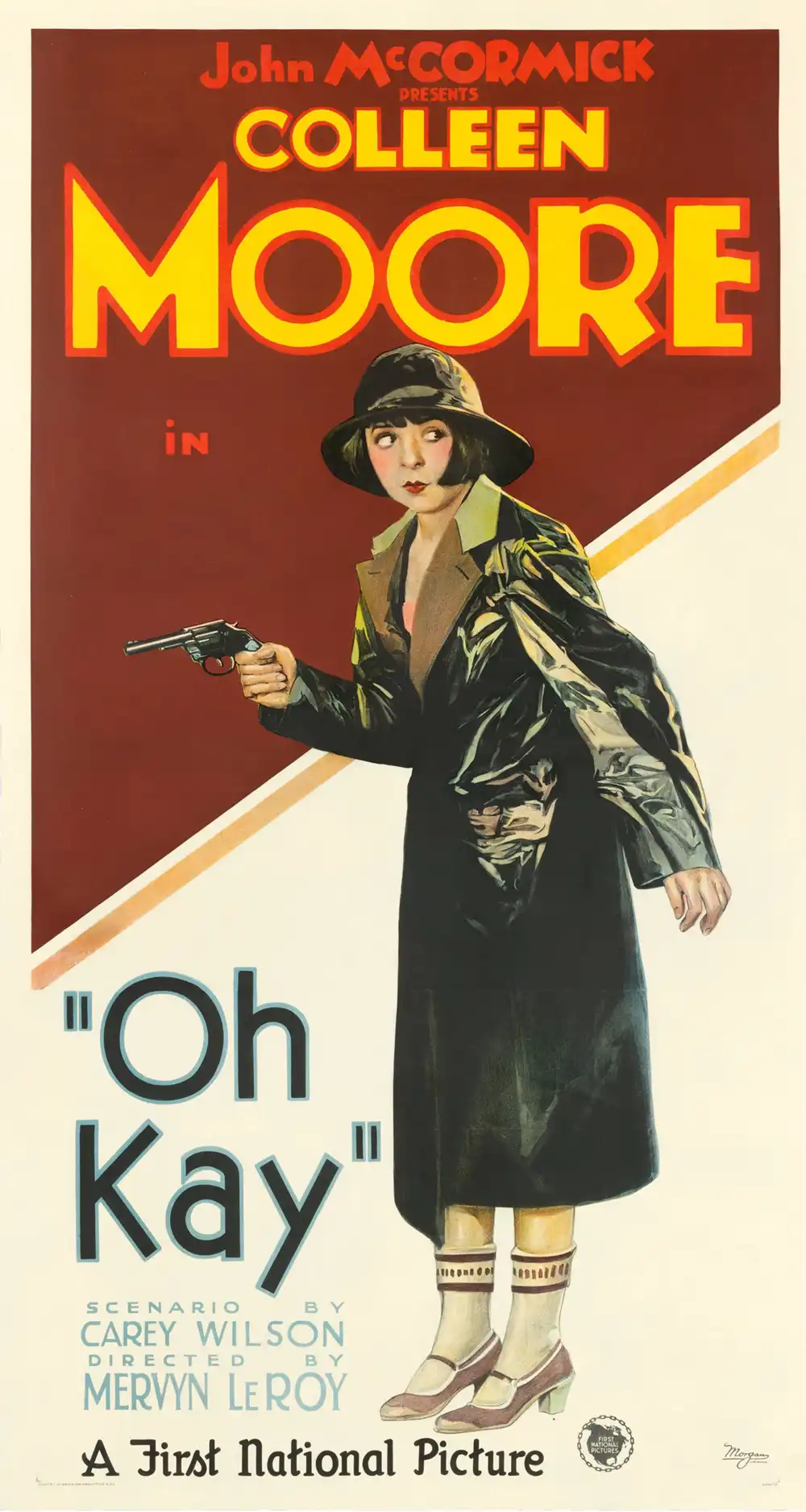
A definitive 6.2/10 rating for a film that redefined the boundaries of cult cinema. Oh Kay! remains a cornerstone of transgressive art.
Is it worth watching Oh Kay! today? The answer depends entirely on your tolerance for the specific brand of high-energy, wide-eyed flapper comedy that Colleen Moore pioneered. If you are a student of 1920s social history or a fan of late-silent era production values, it’s a fascinating artifact. However, if you are coming to this because you love the Gershwin musical, be warned: watching a silent film based on a legendary musical score is a bit like reading a transcript of a symphony. You can see the rhythm, but you can't hear the melody.
For the modern viewer, this film serves primarily as a showcase for Colleen Moore at the height of her powers. By 1928, Moore was a massive star, and her performance here is a masterclass in the 'tomboy' archetype. She isn't just playing a character; she’s performing a persona. Those expecting a gritty look at Prohibition will be disappointed. This is bootlegging as a lark—a lighthearted backdrop for a comedy of manners and slapstick.
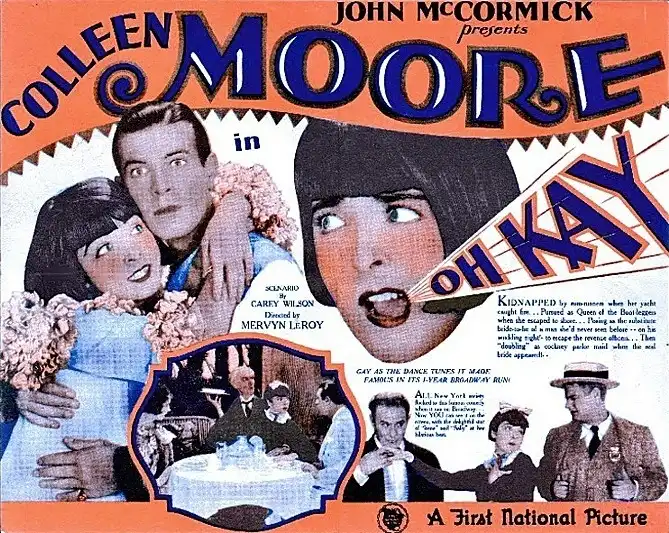
The transition of Oh Kay! from the stage to the screen is handled with a surprising amount of wit, thanks in no small part to the writing team, which included the legendary P.G. Wodehouse. You can feel the Wodehouse influence in the intertitles and the general absurdity of the English aristocrats-turned-smugglers. It shares a certain DNA with other Wodehouse-adjacent projects of the era, such as The Prince and Betty, focusing on the intersection of old-world titles and new-world chaos.
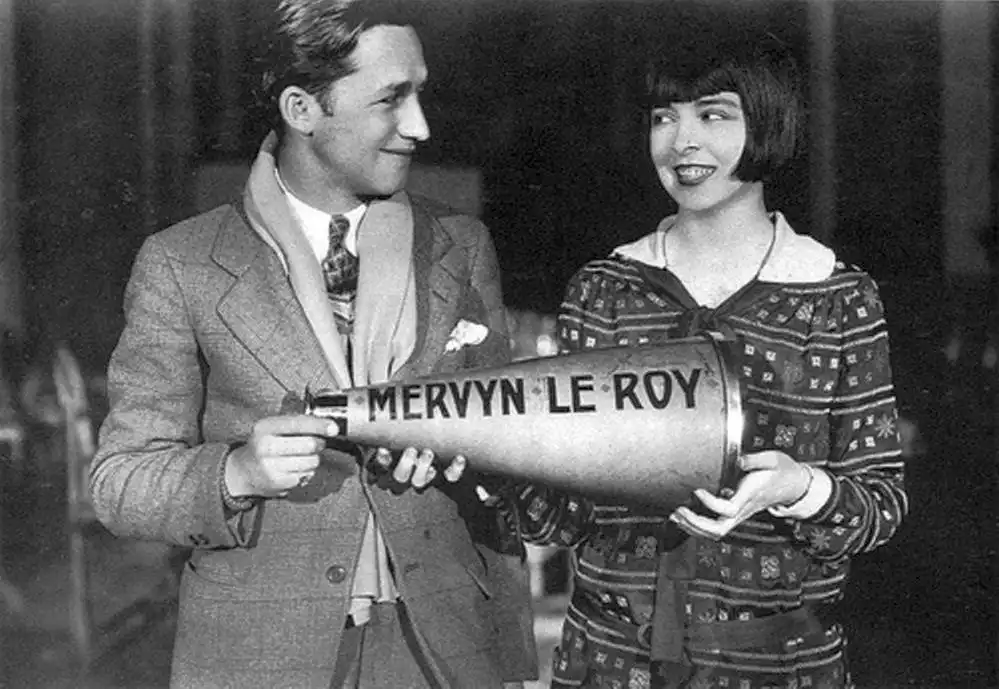
Director Mervyn LeRoy, who would go on to do much grittier work in the 1930s, keeps the camera relatively static but the movement within the frame is constant. The film doesn't rely on flashy editing; instead, it trusts Moore and the veteran supporting cast to carry the weight. There is a specific rhythm to the way Moore moves—a jerky, caffeinated energy that was the hallmark of the 'flapper' style. It’s a performance that feels very 'modern' for 1928, even if the plot beats are traditional farce.
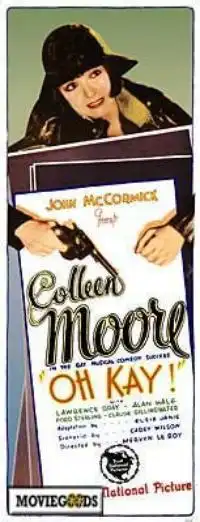
The real joy of the film isn't the romance between Kay and Jimmy Winter (Lawrence Gray), which feels somewhat perfunctory. Instead, the film shines during the scenes involving the 'help.' Ford Sterling, a veteran of the Keystone Cops era, brings a frantic, sweaty energy to his role as Shorty McGee. When he and Moore are on screen together, the film shifts from a romantic comedy into a pure physical farce. There is a particularly well-timed sequence involving the hiding of liquor crates under a table during a dinner party that relies on precision movements and panicked eye contact. It’s the kind of scene that would be ruined by dialogue; the silence actually enhances the tension of the 'near-miss' comedy.
Alan Hale, playing the revenue officer, provides a solid, stoic foil to the chaos. He has a way of standing in a doorway that makes the room feel smaller, which works perfectly for the claustrophobic feeling of the second act. Lawrence Gray is fine as the leading man, but he is largely there to look handsome and be confused. He doesn't quite match Moore’s screen presence, making the central romance feel a bit lopsided.
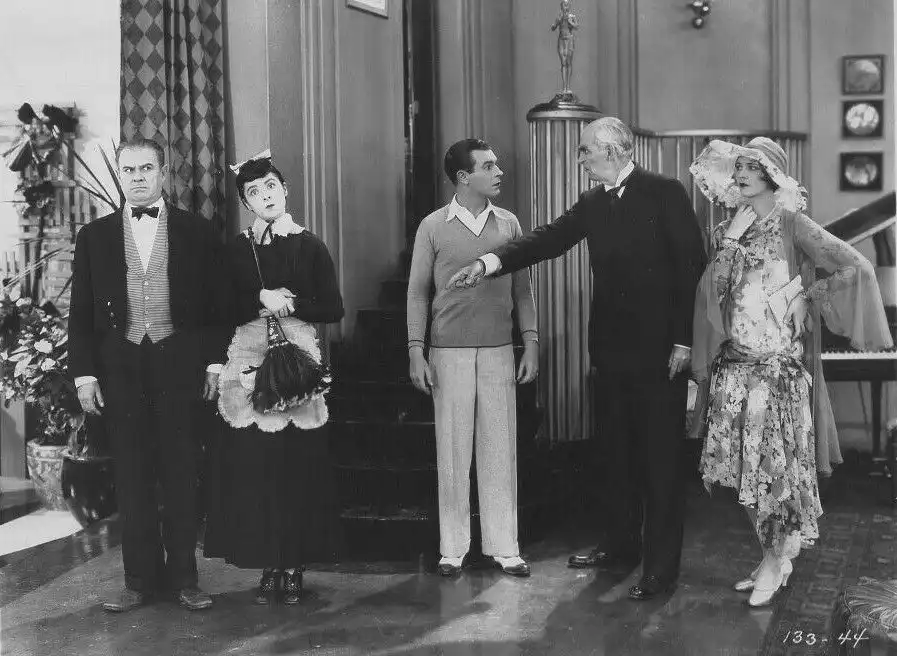
Visually, Oh Kay! is a polished example of late-silent studio filmmaking. The interior of the Winter mansion is sprawling and expensive-looking, providing plenty of architectural features—staircases, closets, and long hallways—for the characters to hide in. The lighting is generally bright and flat, typical for comedies of the time, though there are some nice atmospheric shots during the opening storm sequence where the contrast is pushed a bit further to create a sense of 'danger' that the rest of the film quickly abandons.
One detail that only someone watching closely would notice is the costume design for Moore. Even when she is disguised as a maid, her outfits are impeccably tailored, maintaining that specific 1928 silhouette. There’s a scene where she’s trying to serve tea while distracted by the presence of the police, and the way she handles the porcelain—clunky, intentional fumbles that never actually break the props—shows a level of physical control that is often overlooked in silent comedy.
The middle section of the film, where the 'fake maid' trope is stretched to its limit, does begin to wear thin. There are only so many times a character can narrowly avoid being recognized before the stakes start to feel non-existent. The pacing stutters around the forty-minute mark, where a few too many intertitles are used to explain plot points that the actors were already conveying perfectly well with their faces. Silent films of this era sometimes suffered from an over-reliance on text when the visual storytelling was already doing the heavy lifting.
Additionally, the ending feels rushed. After an hour of build-up regarding the bootlegging and the romantic rivalry, the resolution happens in a flurry of quick cuts and convenient realizations. It’s a 'happily ever after' that feels mandated by the studio rather than earned by the characters.
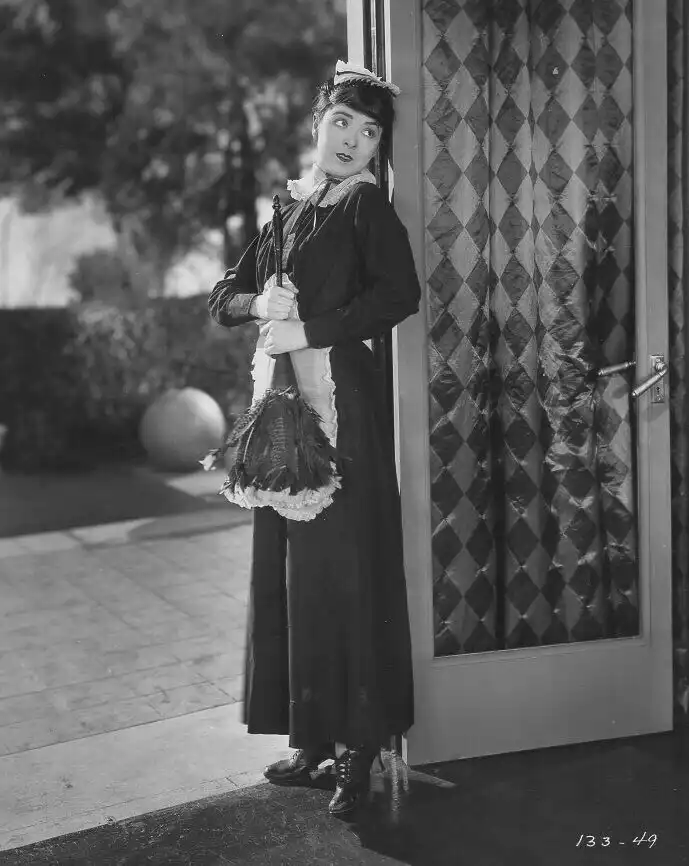
Oh Kay! is a charming, if lightweight, piece of cinema history. It doesn't have the emotional depth of the era's great dramas, nor the revolutionary technical flair of the German Expressionist films being imported at the time. What it does have is Colleen Moore, whose charisma manages to bridge the gap between 1928 and today. If you want to understand why she was the highest-paid actress in the world for a time, this is a great place to start.
It’s a film for people who enjoy the 'bright young things' aesthetic and don't mind a plot that is as thin as a cocktail napkin. It’s an easy watch, a breezy 60-odd minutes that captures the frantic, slightly desperate optimism of the late twenties, just before the talkies and the Great Depression changed the landscape of Hollywood forever. It might not be a masterpiece, but it is a very professional, very funny piece of entertainment that succeeds despite the missing Gershwin tunes.
IMDb 7.1
1928
Community
Log in to comment.