DbcultAccessing Vault...
Cult Review
Senior Film Conservator
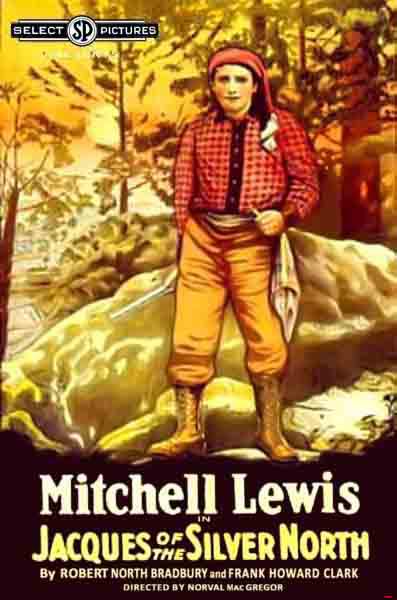
The film opens with sweeping vistas of an unforgiving tundra, where Jacques La Rouge (Edward Hearn) navigates the treacherous ice with the practiced ease of a man born of two worlds. His love for Memory Baird (Fritzi Brunette) is rendered in lingering glances and unspoken gestures, a romance that the script deliberately denies the audience any conventional resolution. When Memory strays into the roadhouse—an establishment that seems to exist outside the law—she is thrust into a vortex of exploitation orchestrated by Jim Blake (James Gordon). The narrative pivots sharply as Joseph Clyde Treffery (Mitchell Lewis), a fugitive whose life hinges on Memory’s earlier act of kindness, declares her his wife in a desperate bid to shield her from Blake’s lecherous advances.
The forced marriage, a mere charade in Blake’s eyes, becomes the fulcrum for a cascade of betrayals. Treffery’s promise of an annulment rings hollow as Memory’s heart gravitates toward Warren Sherman (Fred Mack), a dignified American trader whose moral compass stands in stark contrast to the roadhouse’s decadence. The ensuing conflict escalates to a violent showdown that claims the life of Memory’s father, underscoring the film’s unflinching portrayal of frontier lawlessness.
Edward Hearn delivers a performance that oscillates between stoic restraint and raw vulnerability. His expressive eyes convey a depth that dialogue‑free cinema demands, especially in the climactic sled chase where his determination is palpable without a single spoken word. Fritzi Brunette, as Memory, balances innocence with a burgeoning agency; her transition from a naïve daughter to a woman who asserts her own destiny is both subtle and compelling.
Mitchell Lewis embodies the volatile Treffery with a ferocity that borders on the theatrical, yet his moments of tenderness toward Memory hint at a conflicted humanity. James Gordon’s Jim Blake is a study in villainy—his sneering demeanor and exaggerated gestures make him instantly recognizable as the film’s antagonistic force.
Directed by Robert N. Bradbury, the film leverages the stark monochrome palette of the silent era to accentuate the harshness of the northern wilderness. Bradbury’s use of natural lighting—sunlight glinting off icy surfaces—creates a visual metaphor for the characters’ internal struggles. The roadhouse interior, bathed in low‑key illumination, becomes a chiaroscuro stage where moral ambiguity thrives.
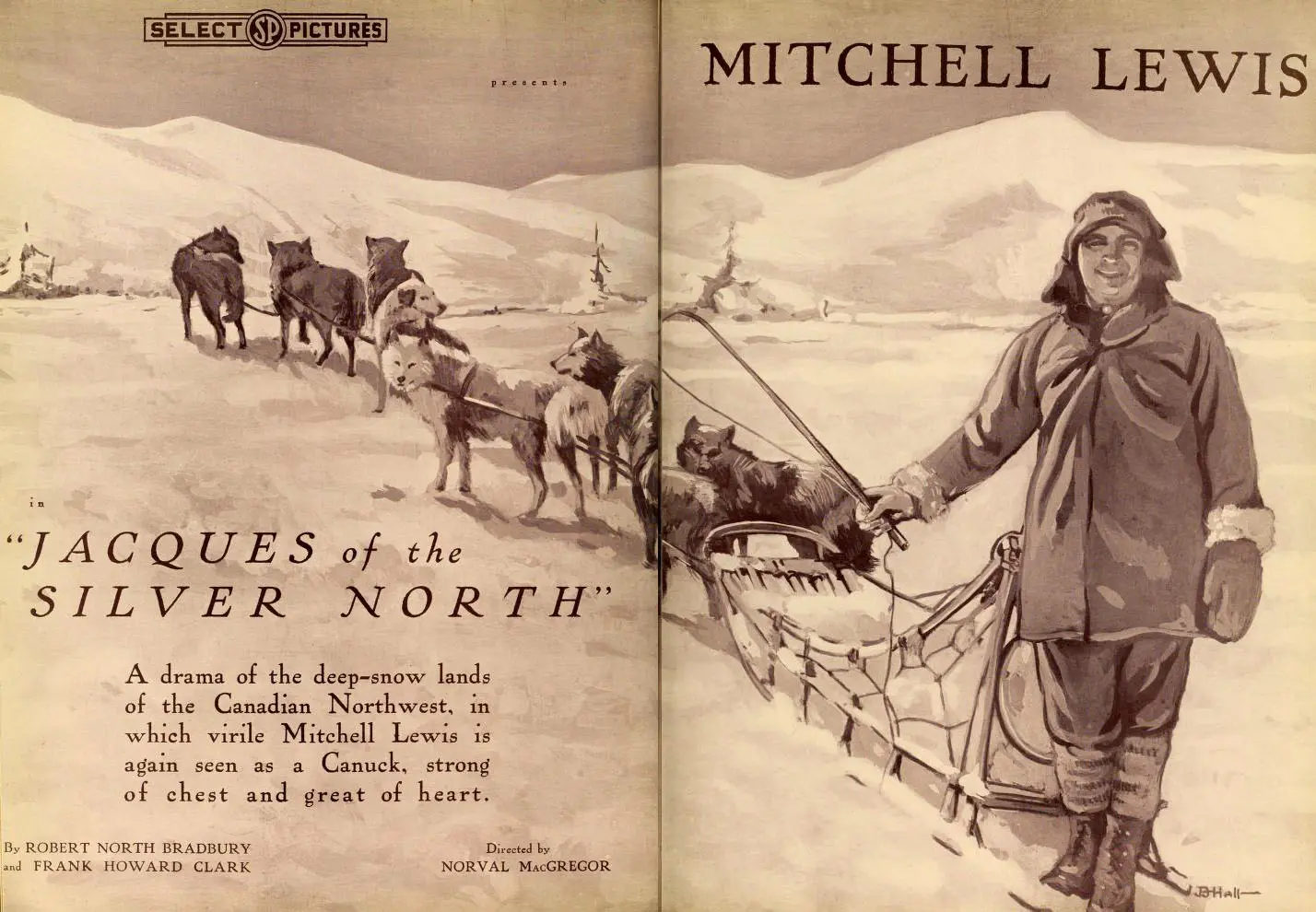
One of the most striking sequences is the dog‑sled pursuit. The camera follows the sled in a series of tracking shots that convey both speed and peril. The editing rhythm accelerates as Jacques draws nearer, culminating in a visceral collision with the wolves that dispatch Treffery. This scene showcases Bradbury’s ability to blend action with emotional stakes, a technique reminiscent of the kinetic energy found in Daring and Dynamite.
Although the film is monochrome, the director employs tonal contrast to evoke the emotional palette associated with the narrative’s key colors. Dark orange (#C2410C) surfaces in the firelight of the roadhouse, symbolizing both danger and fleeting warmth. Yellow (#EAB308) appears in the glint of Memory’s jewelry, a visual cue of her lingering hope amidst oppression. Sea blue (#0E7490) dominates the expansive sky and frozen waters, reflecting Jacques’s melancholy and the vast, indifferent world that frames his sorrow.
The cinematographer’s choice to linger on the horizon during Jacques’s solitary song at the film’s close is a masterstroke, allowing the audience to feel the weight of his unvoiced yearning. This technique parallels the lingering shots in The Years of the Locust, where silence speaks louder than dialogue.
At its core, Jacques of the Silver North interrogates the myth of the American frontier as a space of limitless opportunity. Jacques’s half‑blood status renders him an outsider, a narrative device that critiques the era’s racial hierarchies. His unrequited love for Memory becomes a metaphor for a broader yearning for acceptance within a society that marginalizes the ‘other.’
Memory’s trajectory—from a protected daughter to a self‑determined woman—mirrors the evolving role of women in early twentieth‑century cinema. Her decision to marry Warren, rather than succumb to the coercive marriage imposed by Treffery, signals an assertion of agency that foreshadows the feminist undercurrents present in later silent dramas such as Seeing America.
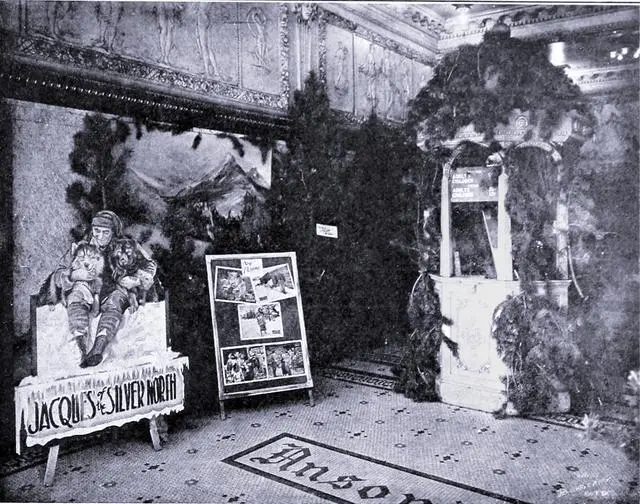
The film also explores the concept of fate versus free will. Jacques’s final act—singing to mask his broken heart—suggests a surrender to destiny, yet his song itself is an act of defiance, a claim over his narrative in a world that has repeatedly silenced him.
When juxtaposed with Frank Howard Clark’s Better Times, Jacques of the Silver North shares a thematic preoccupation with socioeconomic disparity, yet it diverges in tone; where Better Times adopts a hopeful optimism, Jacques delves into bleak fatalism. The film’s pacing and emphasis on visual storytelling align it more closely with the atmospheric tension found in Lights of London, though its rugged setting distinguishes it from urban noir.
Bradbury’s direction also anticipates the narrative complexity of later sound era epics like The Rebel, particularly in its portrayal of conflicted loyalties and the cost of personal convictions.
Although Jacques of the Silver North has receded from mainstream retrospectives, its exploration of intersectional identity and its unflinching depiction of frontier brutality render it a valuable artifact for contemporary scholars. The film’s nuanced treatment of a half‑blood protagonist predates later cinematic attempts to grapple with mixed heritage, positioning it as a quiet forerunner to works like Gornichnaya Dzhenni.
The preservation of its original prints, especially the dog‑sled chase, offers modern audiences a visceral glimpse into the kinetic possibilities of silent cinema—a reminder that action and emotion need not rely on spoken word.
Jacques of the Silver North stands as a testament to the silent era’s capacity for narrative depth and visual poetry. Its layered characters, stark landscapes, and thematic daring coalesce into a film that rewards repeated viewings. For aficionados of early cinema, it provides a richly textured experience that bridges the gap between raw frontier myth and sophisticated character study.

IMDb 5.8
1927
Community
Log in to comment.