DbcultAccessing Vault...
Cult Review
Senior Film Conservator
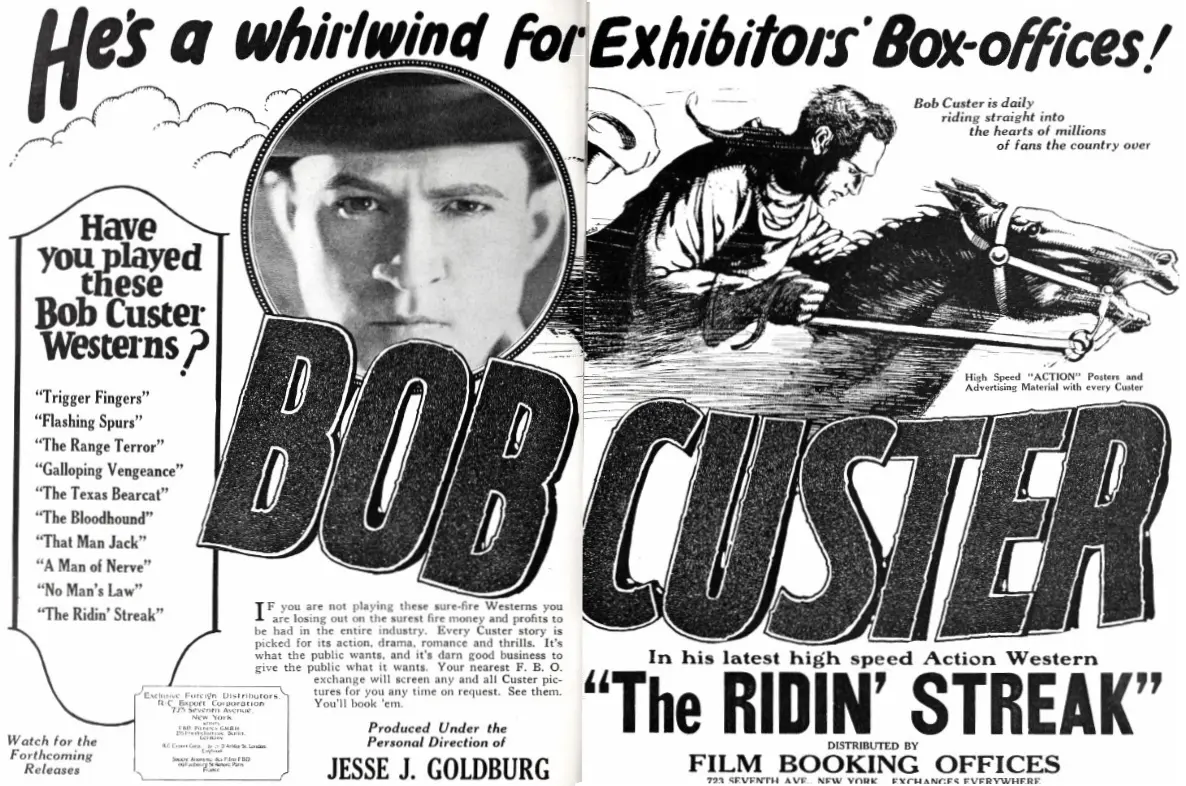
Short answer: yes, but only if you have an appetite for the raw, unpolished kineticism of the 1920s B-Western. This film is for silent cinema completists and those fascinated by the evolution of the 'cowboy hero' archetype; it is definitely not for viewers who require the psychological depth of a modern revisionist Western or the high-gloss production values of the late silent era.
The Ridin' Streak, released in 1925, is a fascinating specimen of the 'poverty row' style of filmmaking that nonetheless managed to capture the physical thrill of the frontier better than many of its big-budget contemporaries. Directed with a workmanlike efficiency, it centers on Bill Pendleton (played by the rugged Bob Custer), a character who embodies the dual nature of the West: the wild athleticism of the rodeo and the rigid responsibility of the law. While films like Hitchin' Posts explored the slower, more methodical aspects of frontier life, The Ridin' Streak is obsessed with momentum.
The film’s central conflict is surprisingly grounded in economic anxiety. We aren't dealing with a simple bank robbery; we are dealing with the legal seizure of assets. J.S. Dokes is a villain who understands that the law can be a weapon. By holding the notes on Ruth Howells’ property, he creates a situation where her only escape is a forced marriage to his 'no-account' son, Gus. This type of domestic pressure was a staple of the era, seen in various forms in dramas like The Better Wife, but here it is given a rugged, outdoor urgency.
The auction scene itself is a masterclass in silent tension. Every time the gavel is about to fall, there is a palpable sense of dread. The film works because it makes the loss of a horse—the White Duchess—feel as tragic as the loss of a home. In one specific sequence, Ruth’s face as she looks at her horse for perhaps the last time conveys more than any title card could. It’s a moment of quiet pathos in a film otherwise defined by dust and hoofbeats.
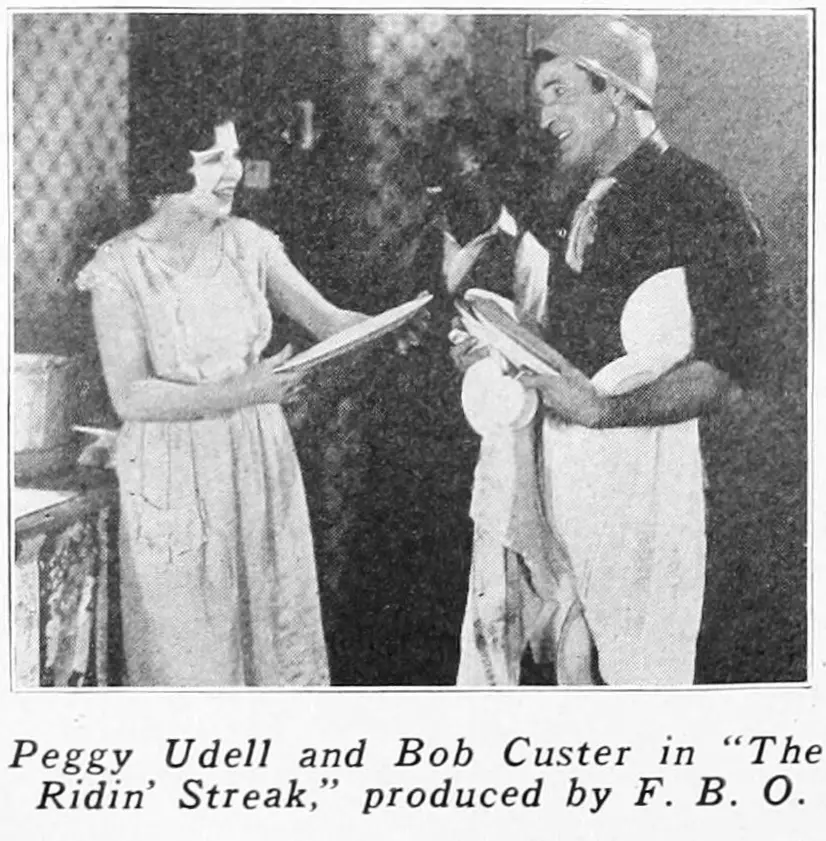
Bob Custer was never the most expressive actor, but in The Ridin' Streak, his lack of theatricality works in his favor. He feels like a man of the earth, someone who would actually know how to handle a horse under pressure. Unlike the more polished performances in Pampered Youth, Custer’s movements are jerky, powerful, and utterly devoid of vanity. When he decides to resign his post as sheriff to enter the race, it isn't a grand moral stand; it’s a practical solution to a rigged game.
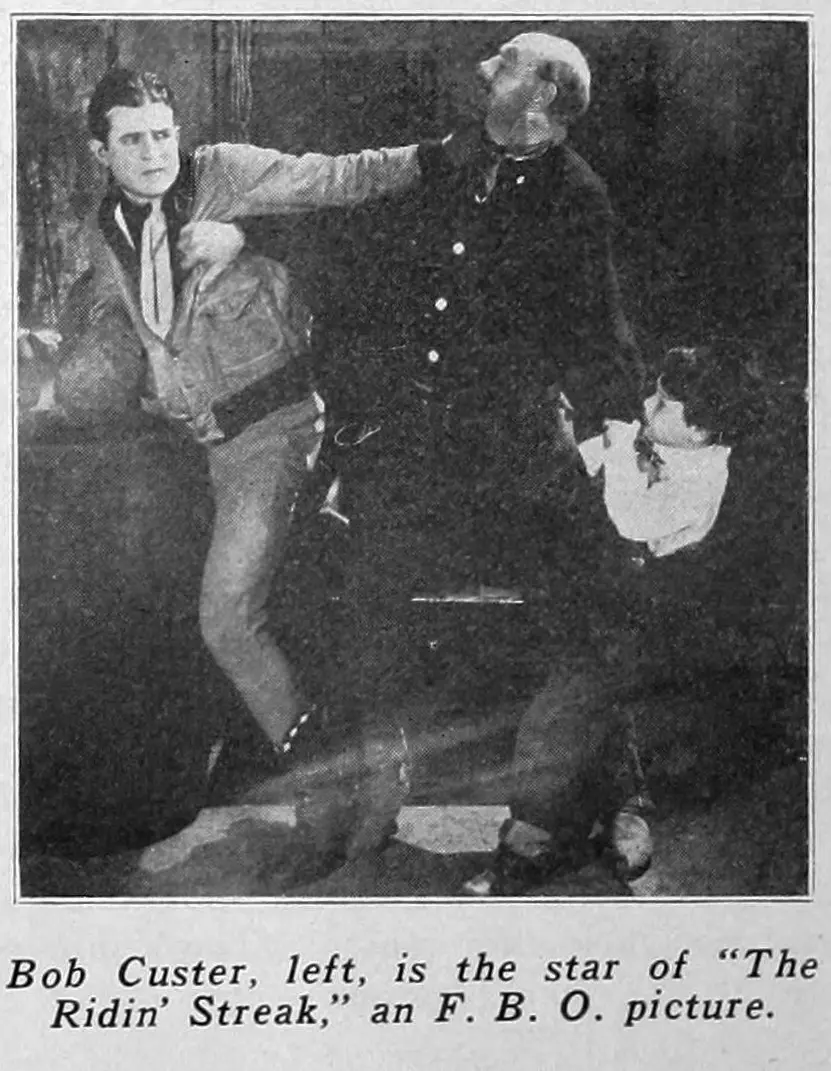
The physicality of the race itself is where the film excels. There are no green screens or sophisticated stunt doubles here. When Pendleton is riding through the interference of Dokes’s men, you can see the genuine danger in the horse’s gait and the uneven terrain. This film fails because its secondary characters, particularly Gus, are painted with such broad strokes of incompetence that they cease to be threatening, but Custer’s performance anchors the stakes in reality.
The decision to use a Pony Express-style race as a distraction for bidders is a plot point that feels uniquely 'Western.' Dokes knows that the townspeople’s love for spectacle is greater than their sense of community. It’s a cynical observation that elevates the film above standard melodrama. While a film like Sky-Eye used the novelty of aviation to draw crowds, The Ridin' Streak relies on the primal thrill of the gallop.
One of the most debatable aspects of the film is its pacing. The middle act is almost entirely consumed by the race. To some, this might feel like padding. To me, it feels like an immersive experience. You feel the exhaustion of the riders and the desperation of Pendleton as he realizes the clock is ticking against the auctioneer’s gavel. It’s an early example of 'real-time' tension that modern action films still struggle to replicate.
When we look at other films from this period, such as Pettigrew's Girl or The Price of Pleasure, we see a heavy emphasis on social climbing and urban morality. The Ridin' Streak is a refreshing rejection of those themes. It is a film about dirt, sweat, and animal instinct. Even the 'White Duchess' herself is treated with a level of respect usually reserved for human costars. In fact, an unconventional observation I would make is that the horse has a better character arc than the villain. The horse goes from a piece of 'chattel' to a heroic vehicle of salvation.
The abduction of Ruth in the final act feels slightly tacked on, a concession to the tropes of the day. We see similar 'damsel in distress' beats in Adventures of Tarzan, but here, the rescue is integrated into the riding theme. Pendleton doesn't just save her; he saves her using the very horse he just rescued from the auction. It’s a circular bit of storytelling that provides a satisfying, if predictable, payoff.
You should watch it if you want to see how the "hero sheriff" trope was solidified before the talkies arrived. It is a stark reminder that the Western was once the primary vehicle for American action cinema. However, if you are looking for the sophisticated narrative weaving found in something like L'innamorata, you will likely find the plot of The Ridin' Streak too thin to sustain its runtime.
This film works because its climax relies on genuine horsemanship rather than editing tricks. In the final chase, the camera stays wide, allowing us to see the distance covered and the speed of the animals. It’s a level of transparency that modern CGI-heavy Westerns have lost. This film fails because the antagonist’s plan—using a pony express race as a distraction—is unnecessarily convoluted and relies on the entire town being remarkably easily distracted.
The Ridin' Streak is a punchy, unpretentious piece of silent era entertainment. It doesn't have the artistic loftiness of Tao or the complex mystery of Fate's Frame-Up, but it knows exactly what it is. It’s a film about the thrill of the chase and the satisfaction of seeing a bully get his comeuppance in the dirt. While the gender politics are dated and the plot is thin, the sheer energy of Bob Custer’s riding makes it a worthwhile watch for any fan of the genre. It’s a 75-minute sprint that reminds us why the West was, for a time, the only story Hollywood wanted to tell.
"A gritty, dust-covered relic that proves the best silent Westerns didn't need words to explain the bond between a man, his horse, and his sense of justice."
IMDb 4.9
1933
Community
Log in to comment.