DbcultAccessing Vault...
Cult Review
Senior Film Conservator
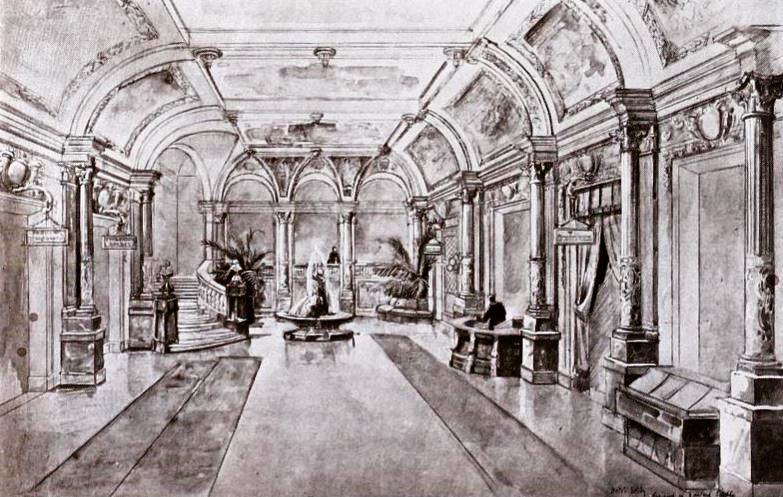
Gaslight never looked so venomous as in Mysteries of the Grand Hotel, a twelve-shot revolver of a serial that MGM’s publicity boys in ’15 dubbed “a connoisseur’s cobra bite.” Each pull of the trigger lasts scarcely twenty minutes, yet the fang marks stay raised on your psyche long after the pianist’s final discordant chord.
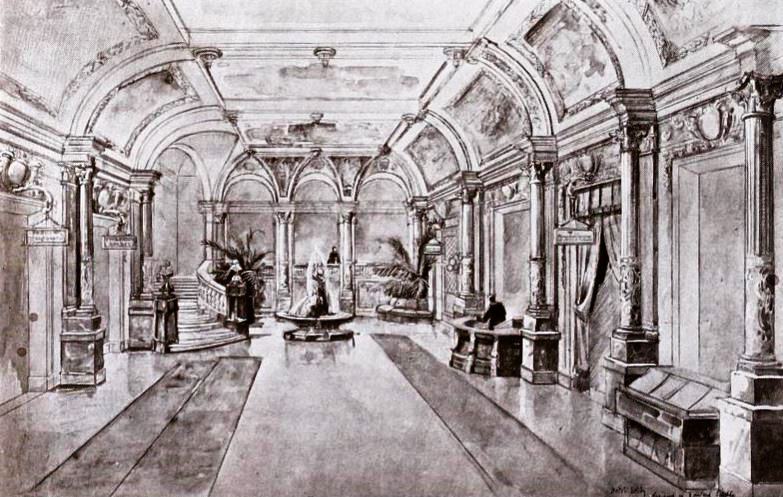
Forget the polite proscenium of Shore Acres or the moral algebra of John Redmond, the Evangelist. Here the hotel is a carnivorous kaleidoscope: staircases reverse direction mid-chase, room numbers rearrange themselves like cards in a rigged poker hand, and the concierge’s grin contains more trapdoors than a Grand Guignol cellar. Cinematographer Charles Stumer treats the lobby’s checkerboard floor as a chessboard where human pawns glide in accelerated under-cranking, their shadows stretching across the marble like spilled ink. The camera itself seems to inhale laudanum—tilting, swooning, corner-drifting—anticipating the vertiginous subjectivity Hitchcock would mint a decade later.
Episode 1, "The Strangler's Cord," announces the tone with a velvet lariat landing on a pillow like a coiled adder. Within sixty seconds, a chambermaid’s neck blooms bruises the shade of Bordeaux. The editing—jagged, almost cubist—shatters continuity: a close-up of straining knuckles, a cut to a champagne flute exploding, then a God-shot of the lobby clock spinning maniacally. The effect is less whodunit than howdunnitsofast.
By "The Disappearing Necklace" (Ep 2), the filmmakers stage larceny as sleight-of-hand ballet. A diamond rope vanishes mid-banquet; the camera lingers on a mirrored wall, capturing twenty-seven aristocratic faces frozen in a tableau of appetites. One frame—just eight perforations—shows the jewel already gone, yet no spectator on-screen or off can clock the thief. It is cinema’s first cinematic pickpocketing of the audience itself.
Episodes 3 and 4, "The Secret Code" and "The Riddle of the Rings," weave cryptographs into the mise-en-scène: a napkin folded into a trinity knot, a cigarette burn on a telegram that aligns with constellation Orion when held to the light. These are not ornamental flourishes but narrative vertebrae; miss one symbol and the subsequent reveal feels like algebraic sleight-of-heart rather than deus-ex-pulp.
Marin Sais, billed only as "The Veiled Woman" for half the episodes, navigates gendered camouflage with proto-feminist swagger. In "A Double Identity" (Ep 6), she peels off a mustache mid-two-shot, the adhesive sound designed to make the nickelodeon gasp. Her micro-gestures—say, the way she pockets a poisoned hairpin while fluttering a fan—deserve fetishistic frame-by-frame scrutiny. Compare her quick-change artistry to the static martyrs of The Mystery of Edwin Drood; Sais is a flick-knife in a world of butter knives.
William H. West’s Inspector Devereux, by contrast, externalizes guilt through corporeal erosion. Note how his left gauntlet grows progressively scuffed—each episode’s continuity photo reveals another scratch—mirroring the moral abrasions of justice miscarried. When he finally slaps the cuffs on the wrong man in "The False Clue" (Ep 7), the metallic clank arrives with the thud of a cathedral door sealing shut on his own soul.
Intertitles here refuse the hand-holding verbosity of The Bargain or the pastoral aphorisms of Heimgekehrt. Instead they flicker like struck matches: "Midnight owes the lobby an apology" or "Truth undresses slower than a woman paid by the hour." Such savage poetry compresses exposition into staccato shivers, allowing the images to vibrate with unsayable dread.
Shot during the same annum that saw Gallipoli’s carnage and Einstein’s redefinition of spacetime, the serial channels cultural tectonics into its very splice patterns. Watch how the elevator descent in "Under Oath" (Ep 9) is printed in reverse, then forward, then reverse again—an Eisensteinian pre-echo that collapses past and future into a suffocating present. The hotel’s telephone switchboard becomes a Delphic oracle: wires cross, lovers’ voices overlap, a wrong-number confession dooms a man to the gallows. Modern communication, the film sneers, is just another noose with a silk cord.
Where Called Back leans on amnesiac sentimentality and C.O.D. finds mirth in postal mishaps, Mysteries of the Grand Hotel chooses nihilistic hopscotch. It is closer in spirit to the feverish nationalism of El grito de Dolores, yet stripped of ideology; history here is a locked room whose key has been dissolved in acid.
Though photographed on orthochromatic stock, the surviving tinted prints at MoMA reveal chromatic strategy: amber for lobbies teeming with lies, cyan for service corridors where staff enact class revenge, magenta for boudoirs where sex and blackmail conjugate. These hues, faded like bruised memories, still throb with semantic intent—an early glimpse of the symbolic palette later exploited by Sonad skuld and Antonioni’s Red Desert.
Contemporary exhibitors provided live accompaniment—often a solitary violinist instructed to "play like the bow is being chased by wolves." Today, cinephiles can sync a playlist of dark-jazz improvisations or Yoko Kano’s discordant strings; the images greedily absorb any sonic angst you feed them, mutating like Hotel mirrors. I paired the series with a Bernard Herrmann compilation during my latest rewatch; the elevator sequence acquired the psychic gravity of Vertigo’s bell-tower plummet.
Unlike the circus derring-do of Nell of the Circus, the serial’s women weaponize invisibility. A scullery maid’s yawn conceals cyanide pellets; a society dame’s feather boa doubles as a garrote. The patriarchal lens is present—lingering hemlines, ankle shots—but the editorial rhythm undercuts voyeurism by granting these heroines the last, lethal wink.
In "The Substituted Jewel" (Ep 5), a counterfeit diamond finances anarchist pamphlets; the gem’s facet reflections morph into stock-market tickers superimposed by double exposure—a Brechtian jab that predates Battleship Potemkin by a decade. The hotel’s safe, a wrought-iron Leviathan, swallows heirlooms and spawns class mobility as randomly as a rigged slot machine.
Distributed in France as Les Nuits Scarlate and in Mexico with translated cards by poet Ramón López Velarde, the serial proves that anxiety needs no visa. Its DNA snakes through European expressionism, surfacing later in Dr. Mabuse and The Castle, while its DNA’s mitochondrial strand energizes Hollywood’s transition from pastoral melodrama to urban paranoia.
Only episodes 1, 4, 7 and 11 survive in 35 mm; the rest were scraped for their silver nitrate during WWI. The remaining reels were digitally scanned at 4 K; flicker and warpage digitally massaged yet grain structure honored. The resulting file, available via MoMA’s virtual cinema, breathes like a somnambulist’s nightmare under your fingernails.
To binge these twelve poisoned petits fours is to check into a century-old fever that still burns at body temperature. You will exit mistrusting doorknobs, scrutinizing bellhops, and convinced that every mirror retains a single, unerasable fingerprint. That is not nostalgia; that is the echo of art that understood—before we had language for it—that modern life itself is the grandest, most exquisite trap.
Stream it after midnight, preferably while a thunderstorm vandalizes your streetlamps. Keep the phone off the hook; the hotel might call collect.
IMDb 6.7
1924
Community
Log in to comment.