DbcultAccessing Vault...
Cult Review
Senior Film Conservator
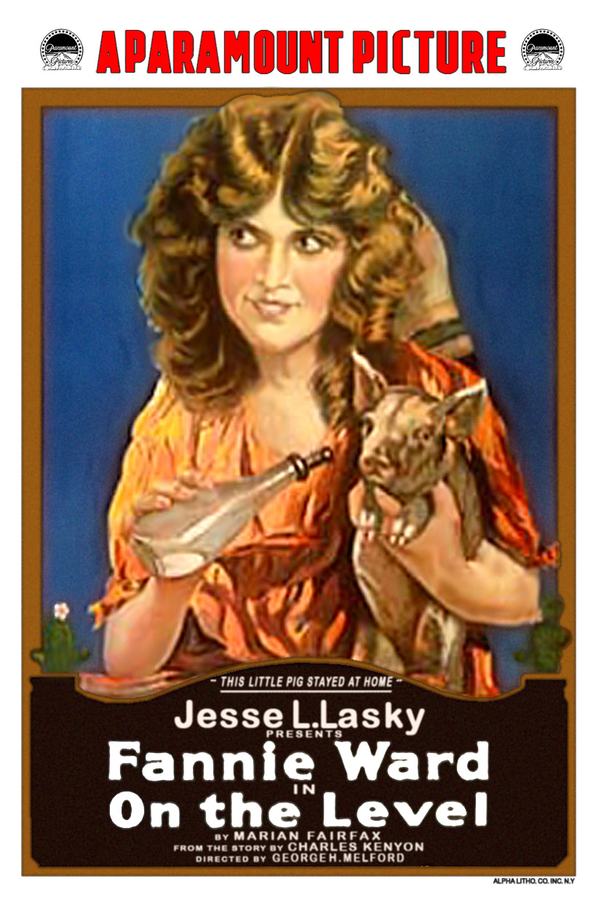
In the annals of early cinema, where narratives often painted in broad strokes of melodrama and moral absolutism, there occasionally emerges a work that, even a century later, retains a surprising depth and emotional resonance. On the Level, a 1917 silent film starring the formidable Fannie Ward, is precisely such a picture. It’s a compelling journey through the treacherous terrain of the American West, not merely geographically, but emotionally and morally. This isn't just a tale of cowboys and rustlers; it's a profound exploration of innocence brutalized, identity forged in adversity, and the redemptive power of an unconventional love, all set against a backdrop of societal judgment and personal struggle.
The film plunges us into the seemingly idyllic existence of Merlin Warner, the cherished daughter of a sheep rancher. Her world, though materially modest, is rich with the simple pleasures of nature – the open range, the companionship of her horse, and the solace found within the pages of books. It’s a pastoral dream, a canvas of untainted youth and burgeoning intellect, until the shadow of Pete Sontag falls upon it. Sontag, a character whose villainy is etched with chilling clarity, shatters this Edenic peace, not just by murdering Merlin's father, but by absconding with Merlin herself. This act of brutal abduction marks the irreversible rupture of her innocence, a violent severing from her past that immediately sets the tone for a narrative steeped in the harsh realities of survival. This abrupt transition from pastoral bliss to harrowing captivity is a masterstroke in establishing the stakes, reminiscent of the sudden, life-altering events that often define characters in films like The Despoiler, where circumstance dictates a complete upheaval of one's known world.
Years later, the transformation is complete, and tragically so. Merlin Warner is no more; in her place stands Mexicali Mae, the fiery dancer of Pete Sontag’s saloon. Sontag, having transitioned from rustler to drug trafficker, rules his domain with an iron fist, using Mae not only as an attraction but as a pawn in his illicit empire. Mae’s vibrant performances on stage are a cruel facade, a testament to her enforced resilience, masking the beatings and coercion that define her daily existence. Fannie Ward’s portrayal of Mae is nothing short of captivating. She imbues Mae with a raw, defiant energy, a spirit that, despite being brutalized, refuses to be entirely extinguished. It’s a performance that speaks volumes without dialogue, relying on gesture, expression, and the sheer force of her presence. This kind of forced metamorphosis, where a character is stripped of their original identity and compelled to adopt a new, often darker persona, resonates with the thematic undercurrents found in stories like The Gilded Youth, where societal pressures or tragic events sculpt individuals into unrecognizable versions of their former selves.
The turning point in Mae's desolate existence arrives in the form of Joe Blanchard, a man equally adrift, though from a different kind of torment: morphine addiction. Joe, unlike the other rough patrons of the saloon, possesses an unexpected sensitivity. He sees beyond the painted smile and the provocative dance, recognizing the intellectual curiosity and love for culture that still flickers within Mae. His appeal to her dormant passions for books and music acts as a lifeline, a bridge back to the Merlin she once was. It’s a beautifully rendered connection, a testament to the idea that solace and understanding can be found in the most unlikely of places. Their burgeoning romance is delicate, fragile, built on mutual vulnerability and a shared yearning for something more. This relationship, born amidst the grit and despair, offers a potent counterpoint to the prevalent cynicism, suggesting that even in the bleakest circumstances, human connection can blossom and offer a path to redemption.
However, happiness for Mae and Joe is a fleeting commodity in a world governed by Sontag's malevolence. Pete, ever the schemer, frames Joe for a murder he committed, a calculated move to eliminate his rival and reclaim his control over Mae. This act of treachery forces Mae to take drastic measures, hiding Joe in a secluded homestead in the hills. This period of clandestine refuge becomes a crucible for their relationship. Here, away from the corrupting influence of the saloon and Sontag, Mae dedicates herself to Joe's recovery, nursing him through the agonizing throes of withdrawal. Her unwavering commitment, her quiet strength, and her boundless compassion become the instruments of his healing. It's a powerful depiction of love as a force for transformation, a theme that, while universal, is rendered with particular poignancy in the silent era, relying on visual storytelling to convey the depth of their struggle and eventual triumph over addiction. The arduous journey of recovery, and the steadfast support offered by one individual to another, finds echoes in the moral fortitude depicted in films such as Moral Courage, where characters must confront personal demons with unwavering resolve.
Joe's eventual cure from his addiction is a moment of profound relief, a testament to Mae's steadfast devotion. Out of gratitude, and undoubtedly a deeper affection, he proposes. Mae, despite her past, accepts, daring to hope for a future free from her tormentor. But the forces of societal judgment, often more insidious than outright villainy, soon rear their heads. The arrival of Joe's mother and his fiancée, Eleanor, introduces a new conflict, one rooted in class distinction and prejudice. They represent the 'respectable' world from which Mae, as Mexicali Mae, is irrevocably estranged. Their offer of money for her to leave Joe is a cruel, demeaning act, designed to highlight her perceived unsuitability. While Mae, with admirable dignity, refuses the money, the damage is done. The insidious poison of their judgment convinces her that she is indeed not good enough for Joe, that her past will forever taint his future. This self-sacrificial decision, born of a profound, albeit misguided, love, drives her back to the very place she sought to escape: the saloon. She leaves Joe a note, a heartbreaking testament to her perceived unworthiness, believing she is protecting him by sacrificing her own happiness.
The ensuing sequence is a masterclass in silent film tragedy. Joe, heartbroken and bewildered, follows her, witnessing her apparent 'happiness' back in the saloon. The sight, a cruel illusion, convinces him that she has returned to her old life willingly, shattering his hopes. This misinterpretation, a classic narrative device, amplifies the emotional stakes, leading both characters down paths of despair. Mae, having returned to her desolate shack, consumed by despair and convinced of her bleak future, prepares to end her life. It's a moment of profound darkness, a testament to the psychological toll her journey has taken. Just as she is about to pull the trigger, Pete Sontag, the architect of her misery, intervenes. His appearance is a chilling reminder of the inescapable nature of her past, a dark force constantly lurking at the periphery of her fragile existence. This scene, steeped in raw emotion and high tension, showcases the dramatic capabilities of the silent film medium.
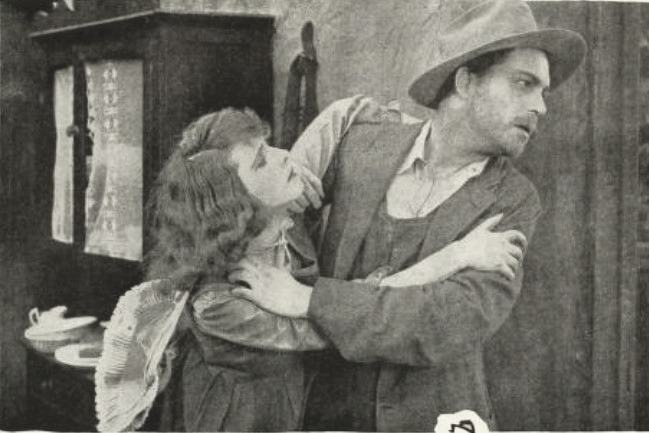
The climax is a whirlwind of action and revelation. Joe, having finally learned of his mother's manipulative interference, arrives, his eyes now opened to the truth of Mae's sacrifice. He confronts Pete, leading to a violent struggle, a visceral clash between good and evil, liberation and oppression. The gun, a symbol of both destruction and resolution, discharges, ending Pete Sontag's reign of terror. In the aftermath of this dramatic confrontation, Mae and Joe are finally reconciled, their love triumphant over adversity, misunderstanding, and the machinations of others. Mae, demonstrating a magnanimity born of her own suffering, extends forgiveness to Joe's repentant mother. This act of grace, a final flourish of her character's profound journey, underscores the film's ultimate message of compassion and the possibility of new beginnings, even after profound trauma.
The performances in On the Level are uniformly strong, but it is Fannie Ward's portrayal of Merlin/Mae that anchors the film. Her ability to convey such a vast spectrum of emotion – from youthful innocence to hardened cynicism, from desperate love to profound despair – without uttering a single word, is a testament to her skill as an actress. The supporting cast, particularly James Neill as the despicable Pete Sontag, provides the necessary foil, their villainy serving to highlight Mae's resilience. The direction, by an uncredited hand but likely a collaborative effort given the era, demonstrates a keen understanding of visual storytelling, utilizing close-ups and dramatic staging to convey emotional depth and narrative momentum. The film's aesthetic, while simple by modern standards, effectively captures the rugged authenticity of the Western setting, grounding the melodramatic elements in a believable, if harsh, reality. One might draw parallels to the stark realism found in early Westerns like Rose of the Rancho, which also sought to blend compelling human drama with the raw, untamed landscape.
Beyond its immediate narrative, On the Level offers a fascinating glimpse into the social anxieties and moral compass of early 20th-century America. The film's exploration of drug addiction, a taboo subject even then, is handled with a surprising degree of realism and empathy, positioning Joe's struggle not as a moral failing but as a sickness requiring compassion and care. Furthermore, the theme of societal judgment, particularly towards women who deviate from prescribed norms, is powerfully articulated through Mae's struggles. Her past, forced upon her, becomes a weapon used by the 'respectable' society to deny her a future. This social commentary, subtle yet potent, elevates the film beyond mere entertainment, inviting viewers to ponder the complexities of class, morality, and forgiveness. It’s a narrative that, despite its silent origins, speaks volumes about the enduring human condition and the constant battle between personal integrity and external prejudice.
The narrative construction, despite its reliance on certain melodramatic conventions of the era, is remarkably tight and purposeful. Each plot point, from Merlin’s abduction to Mae’s decision to return to the saloon, serves to intensify the emotional stakes and propel the characters towards their ultimate destiny. The writers, Marion Fairfax and Charles Kenyon, crafted a story that, while grand in its scope, remains deeply personal, focusing on the internal struggles of its protagonists. Their script understands the power of silent acting, creating situations that allow the performers to convey complex emotions through physicality and facial expression. This careful crafting of character arcs, particularly Mae's journey from victim to self-sacrificing heroine, then to a woman reclaiming her agency, is a testament to sophisticated storytelling for its time. It evokes the meticulous narrative development seen in other compelling dramas of the period, such as Strathmore, where character evolution is central to the plot's impact.
The film’s resolution, with the death of Sontag and the reconciliation of Mae and Joe, provides a satisfying, if somewhat conventional, sense of closure. However, it is the journey to this resolution, the psychological and emotional landscapes traversed by Mae, that truly distinguishes On the Level. It’s a powerful reminder that even in an era of nascent filmmaking, stories could be told with profound emotional depth and social relevance. The enduring power of love, the resilience of the human spirit, and the ultimate triumph of good over evil are themes that resonate universally, and this film handles them with a grace and gravitas that belies its age. The film asks us to look beyond superficial appearances and societal labels, to recognize the intrinsic worth and goodness that can persist even in the most tarnished of souls. It’s a call for empathy, a plea for understanding, and a celebration of the redemptive potential inherent in genuine human connection.
In conclusion, On the Level is more than just a historical artifact; it is a vibrant, compelling piece of cinema that offers a rich tapestry of human experience. Fannie Ward’s performance is a particular highlight, delivering a nuanced and powerful portrayal of a woman caught in the throes of a cruel fate yet ultimately finding her way to self-worth and love. For enthusiasts of silent film, or anyone interested in the evolution of cinematic storytelling, this film provides an invaluable window into a bygone era, proving that even without synchronized sound, the power of a well-told story, brought to life by dedicated performers, can transcend time and continue to move audiences. It stands as a testament to the artistry and emotional potency that characterized the nascent years of filmmaking, a true gem in the cinematic firmament that deserves to be rediscovered and appreciated for its enduring qualities. Much like the quiet strength found in The Concealed Truth, this film reveals profound insights through its dramatic narrative, making it a compelling watch for those who appreciate depth in storytelling.
The film’s title itself, On the Level, carries multiple layers of meaning. It speaks to the authenticity of emotion that Mae and Joe eventually find, the 'level' ground they reach after traversing treacherous peaks and valleys of deceit and despair. It also hints at the plain, unvarnished truth that eventually comes to light, exposing Pete Sontag's villainy and Joe’s mother's misguided interference. It’s a promise of honesty and integrity, a stark contrast to the lies and deceptions that dominate much of the narrative. This thematic resonance, woven into the very title, underscores the film's thoughtful construction and its commitment to exploring complex moral landscapes. It’s a film that demands empathy, rewards patience, and ultimately affirms the enduring strength of the human heart against overwhelming odds. The journey of its protagonists reminds us that even after being knocked down, one can always strive to get 'on the level' again, to find balance and truth in a world constantly seeking to tip us off our feet. This makes it a film not just of its time, but one that echoes universal struggles and triumphs, solidifying its place as a significant, though perhaps overlooked, silent classic.
IMDb 4.7
1930
Community
Log in to comment.