DbcultAccessing Vault...
5.7/10
Senior Film Conservator
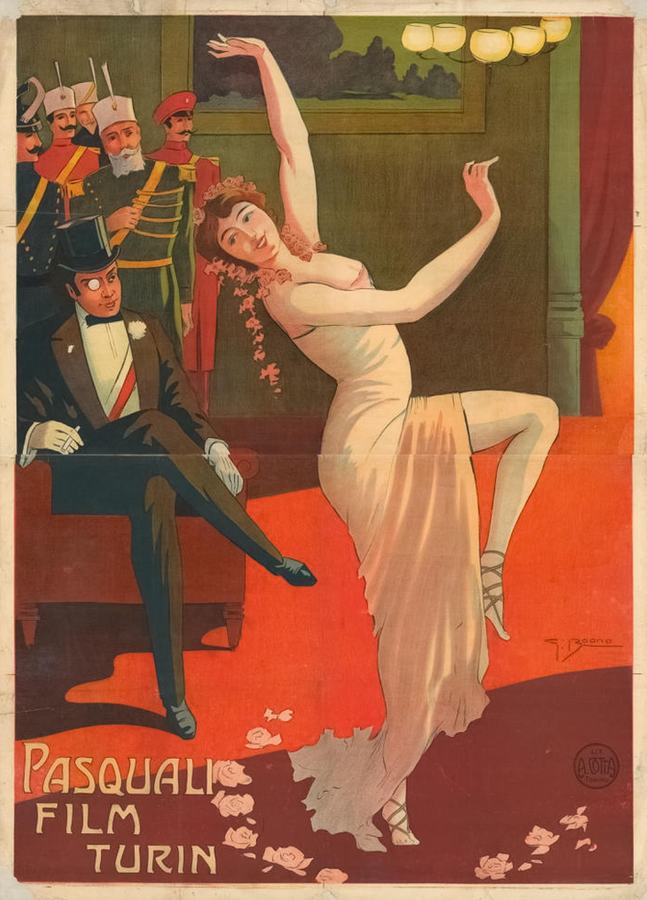
A definitive 5.7/10 rating for a film that redefined the boundaries of cult cinema. On the Steps of the Throne remains a cornerstone of transgressive art.
Regency decay has rarely shimmered with such venomous opulence as in On the Steps of the Throne, a 1912 Italian one-reel marvel that distills every adolescent fear of usurpation into forty-five minutes of mercury-quick incident. Count Backine—half Richelieu, half praying mantis—glides through palace corridors paved with mirrors, his cadaverous smile doubled ad infinitum, hinting that identity itself is a fungible currency in Silistria.
Director Arrigo Frusta (hiding beneath the anglicized “Henry Fost” for export prints) wields tableau style like a jeweled scalpel: each static wide-shot is crammed with heraldic banners, sentinel halberds, and candelabra dripping wax tears. He understands that space can connote rot—doorframes yawning a fraction too high, chairs positioned one step out of reach—so the throne room feels pre-haunted, waiting for the wrong posterior to warm its velvet.
Vladimir—played by Alberto Capozzi with a porcelain pout that can fracture into steel—never doubts his sovereignty until the Council politely requests his Parisian grand tour. Notice how the camera ingests his final Silistrian dusk: silhouettes of cypress against a tangerine sky dissolve into a superimposed locomotive plume, the montage predicting Soviet kino-fist while still corseted by 1912 decorum. That fencing wound, a sliver of pink tissue blooming on alabaster forearm, becomes the film’s silent signature—the only thing an impostor cannot Photoshop in an era predating Photoshop by decades.
Paris is rendered through stock footage of boulevard bustle and a studio-built café so dense with haze it feels marinaded in absinthe. Enter Mlle Thais (Maria Gandini), a danseuse whose serpentine scarf echoes Loïe Fuller’s electric ballets. She twirls, the camera pirouettes with her, and for a heartbeat the picture believes it can abandon politics for sensual reverie—until Chicita, a gutter faun with Vladimir’s cheekbones, steps from the wings like Dorian Gray’s debauched reflection.
The substitution plot—so primal it could be cribbed from Plautus—gets modern bite through mechanical modernity: a spring-loaded trapdoor whose hinges resemble a cash-register’s guts, a cellar lit by a single swinging bulb (an anachronistic delight), and a fuse cord that hisses like gossip. When Chicita, powdered to pallor, rehearses royal waves in front of a cracked mirror, the reflection splits his face into cubist shards—Frusta hinting, avant la lettre, at identity fracturing under mass-media scrutiny.
Yet the film refuses to demonize the double. In a poignant insert, Chicita thumbs Vladimir’s love-letter to Olga, ink blurred by cellar damp; his eyes soften, suggesting that even a disposable mimic can yearn for authenticity. This glint of empathy elevates the thriller into tragedy: everyone is hostage to someone else’s narrative.
Olga (a luminous but criminally under-credited actress) owns the moral x-ray. While courtiers bow before the counterfeit, she reads absence: gait a half-inch too swaggering, the way gloved fingers drum impatiently on a sword hilt. Her suspicion, relayed through eyeline match and hand-cupped whispers, drives the detective spine of the film—an antidote to the “sleeping princess” syndrome plaguing Edwardian melodrama.
Cinephiles will taste echoes of The Black Chancellor (1911), where a scheming minister likewise puppeteers royalty, and anticipate the body-double gambit later perfected in Hamlet (1911). Yet Frusta’s synthesis of court intrigue, travelogue, and proto-noir feels sui generis—closer in DNA to the political poison of Les Amours de la reine Élisabeth than to the biblical pageantry of Life and Passion of Christ.
Capozzi’s dual turn pivots on micro-gesture: the real Vladimir straightens cuff-links with reverence, as if fabric itself were constitution; Chicita flexes wrists outward—subconscious flamenco—betraying cabaret DNA. Watch how, during the climactic coronation, the impostor’s left eyebrow hitches when trumpets blare—a spasm of impostor syndrome magnificently legible even in long shot.
Giovanni Ciusa’s Backine chews no scenery; instead he freezes it, voiceless eyes boring holes through nephews, allies, portraits of ancestors. His final comeuppance—swept aside by guards whose halberds cross like scissors—lasts mere seconds, but the speed intensifies the humiliation: tyrants become punch-lines once unmasked.
Restored by Cineteca di Bologna from a Desmet color-tinted nitrate, the surviving print drenches night sequences in Prussian blue, while ballroom scenes pulse amber, candlelight flickers hand-painted sea-foam green. These chromatic chords anticipate the symbolic palette of Dante’s Inferno (1911) and remind us that silent cinema never accepted monochrome as moral default.
Modern viewers conditioned to three-act symmetry may reel at the film’s relentless propulsion: exile, impersonation, imprisonment, escape, assassination, coronation coup—all in under an hour. Transitions rely on explanatory intertitles (“Vladimir, betrayed, descends into darkness”) rather than psychological breathing room. Yet this speed mirrors the pulp novels audiences devoured on tram commutes; the screen becomes page, each tableau a serial instalment.
Alexandra, Backine’s niece, drifts through the plot like a chess queen slammed onto a square by male hands. Still, her final glare at the usurper—caught in medium-close-up—implies complicity curdling into resistance. Thais, the jealous Parisian starlet, owns the most seismic arc: from erotic rival to inadvertent jailer to conscience-struck savior, she embodies the era’s ambivalence toward public womanhood: desired, vilified, ultimately redemptive.
Circa 1912, Italian exhibitors cued live ensembles with “Marcia Reale” for royal pomp and Offenbach can-can for Montmartre fizz. Contemporary festivals often commission new scores; I caught a 2019 screening with accordion and bandoneon whose melancholy wheeze underscored the theme of continental drift—royal heirs severed from homeland, lovers separated by trap-doors and class.
The doppelgänger trope resurfaces in Fritz Lang’s Der Januskopf (1920) and Hitchcock’s Vertigo (1958), while the scar-as-identifier echoes in Captain Blood (1935). Most strikingly, the coronation crash-preceded-by-explosion anticipates the climax of The Three Musketeers (1921) where a kingdom’s fate ricochets through secret passages.
Scholars tracing the evolution of cinematic nationhood should compare this to The Independence of Romania (1912), where historical tableaux sanctify sovereignty. Frusta, by contrast, treats monarchy as performance—crowns glued with greasepaint, easily yanked off in a coup de cinéma.
Does the film transcend its penny-dreadful roots? Partially. Its psychology remains ornamental rather than internal, its women orbiting male agency. Yet its velocity, visual wit, and moral cynicism feel startlingly modern. In an era when most historical dramas genuflected toward edification, On the Steps of the Throne winks at the audience, admitting that thrones are but steps—precarious, climbable, and forever slippery with blood.
Seek it out in any available format: 8 mm reduction, Digital Beta, even GIF fragments on Tumblr. Each replay rewards the hunter with fresh details—hand-shaped bruise on a dancer’s arm, the way dust motes swirl like galaxies around the usurper’s boots. Silent cinema at its best does not merely resurrect the past; it reminds us that intrigue, passion, and the hunger for legitimacy are timeless currencies, minted anew on every screen that dares to glow.
★★★★☆ – A baroque bullet-train of royal skulduggery, still scalding after a century.
IMDb —
1916
Community
Log in to comment.