DbcultAccessing Vault...
Cult Review
Senior Film Conservator
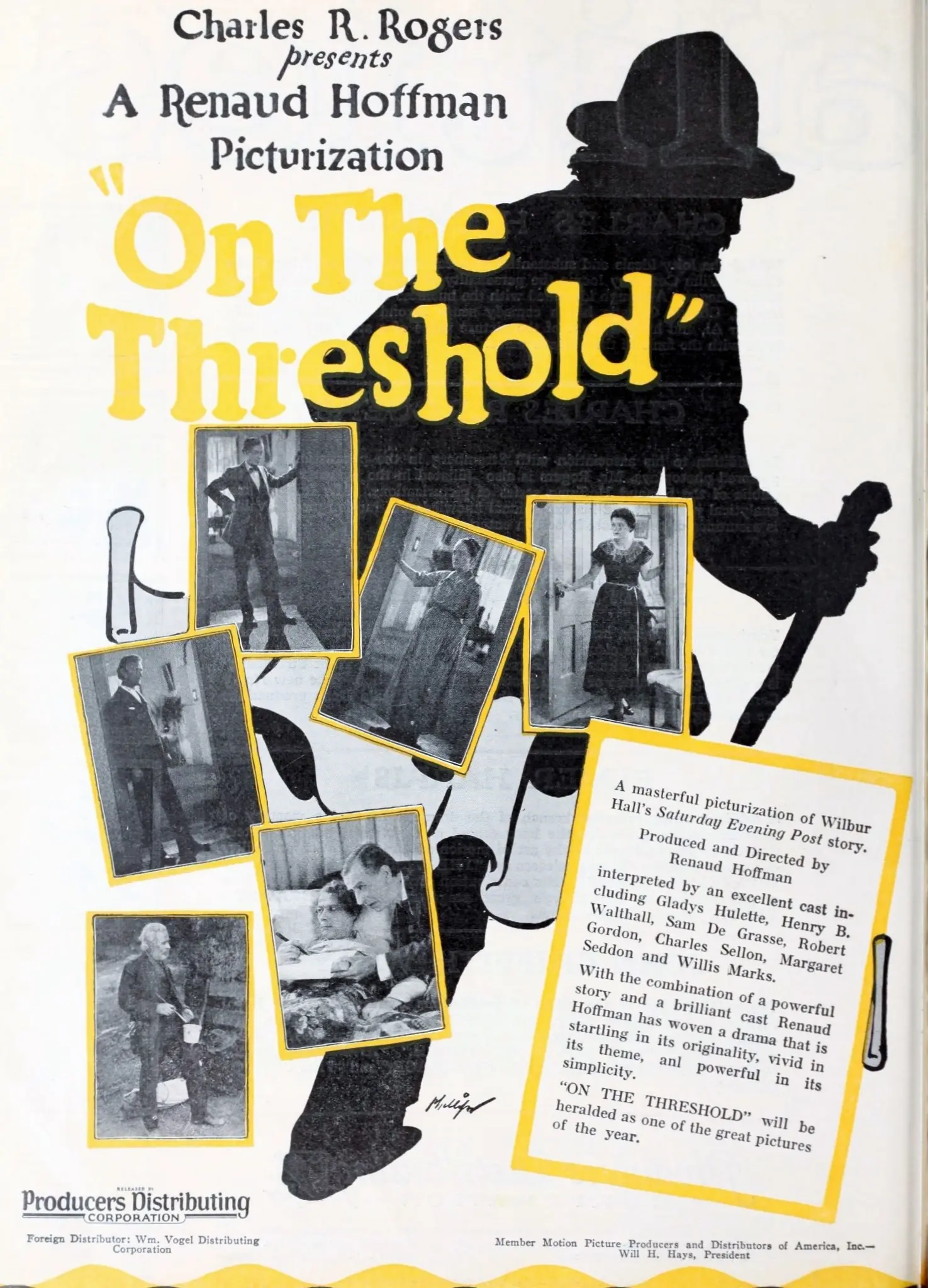
Short answer: yes, but only if you have the patience for the high-stakes emotional gravity of 1920s silent cinema. This film is for those who appreciate character-driven tragedies and the intense, expressive acting styles of the era, but it is definitely not for viewers who require fast-paced action or modern narrative subtlety.
This film works because it treats religious disillusionment as a raw, visceral wound rather than a theological debate. This film fails because the pacing in the middle act drags while waiting for the inevitable romantic conflict to erupt. You should watch it if you want to see Henry B. Walthall deliver a performance that borders on the operatic in its intensity.
In the landscape of silent cinema, few films capture the claustrophobia of domestic control as effectively as On the Threshold. While many films of 1925 were moving toward grander spectacles, this production keeps its focus localized, turning a family home into a psychological battlefield. For the modern viewer, it offers a fascinating look at the 'angry father' archetype before it became a tired trope of the talkies.
The film is particularly relevant for those interested in the evolution of the melodrama. It doesn't rely on external villains or mustache-twirling antagonists. Instead, the antagonist is the protagonist's own grief-stricken psyche. This internal conflict makes it a much more rewarding watch than many of its contemporaries, such as the more straightforward The Heart of a Child.
The core of the film rests on a moment of profound spiritual crisis. When Walthall’s character loses his wife, his reaction isn't just sadness; it is a calculated, cold rejection of the divine. He doesn't just stop believing in God; he attempts to replace God by controlling the destiny of his daughter. This is a dark, heavy premise for 1925, and the film doesn't shy away from the ugliness of his obsession.
There is a specific scene early in the film where the father stands by the empty cradle, his face illuminated by a single, harsh light source. The way he looks at the child is not with love, but with a terrifying sense of ownership. He views her as a second chance to defeat death, which is a deeply disturbing psychological motivation that the film handles with surprising maturity.
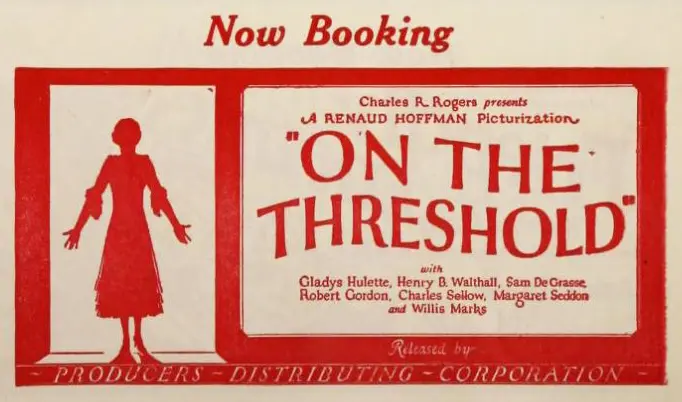
Unlike the fantasy elements found in The Phantom Carriage, the horror here is entirely human. There are no ghosts, only the haunting memory of a woman who died because of the very love the father now seeks to banish. The 'threshold' becomes a recurring visual motif—the father often stands in doorways, physically blocking his daughter's path to the outside world, a literal manifestation of his gatekeeping of her life.
Henry B. Walthall was known as the 'Little Colonel' of the silent screen, but in On the Threshold, he sheds his more heroic persona for something far more jagged. His performance is a masterclass in using the eyes to convey a crumbling mind. In the scenes where he realizes his daughter has fallen in love, his transition from shock to manic anger is executed with a precision that feels modern.
Compare his performance here to the more adventure-focused roles of the era, like those seen in The Broken Coin. Walthall isn't interested in being likable. He is interested in being honest. There is a moment where he discovers a hidden letter, and instead of a grand gesture, he simply goes still. The stillness is more frightening than a scream could ever be. It’s a performance that demands your attention, even when the plot beats feel familiar.
The supporting cast, including Newton House and Gladys Hulette, do their best to keep up with Walthall’s gravity. Hulette, playing the daughter, manages to convey a sense of 'stifled vitality.' You can feel her yearning to cross that threshold, not just for a man, but for the right to exist outside of her father’s shadow. Her performance prevents the film from becoming a one-man show and gives the audience a necessary emotional anchor.
The direction of On the Threshold is surprisingly sophisticated in its use of space. The house is shot to feel progressively smaller as the daughter grows up. In the beginning, the rooms are airy and bright, but as the father’s vow takes hold, the cinematography shifts. Shadows become longer, and the framing becomes tighter, emphasizing the girl's isolation.
There is a brilliant use of depth of field in a scene where the daughter is talking to her lover through a window while the father sits in the foreground, oblivious but looming. It creates a tension that is almost unbearable. This visual storytelling is far more effective than any intertitle could be. It shows a director who understands that cinema is the art of what is seen, not what is read.
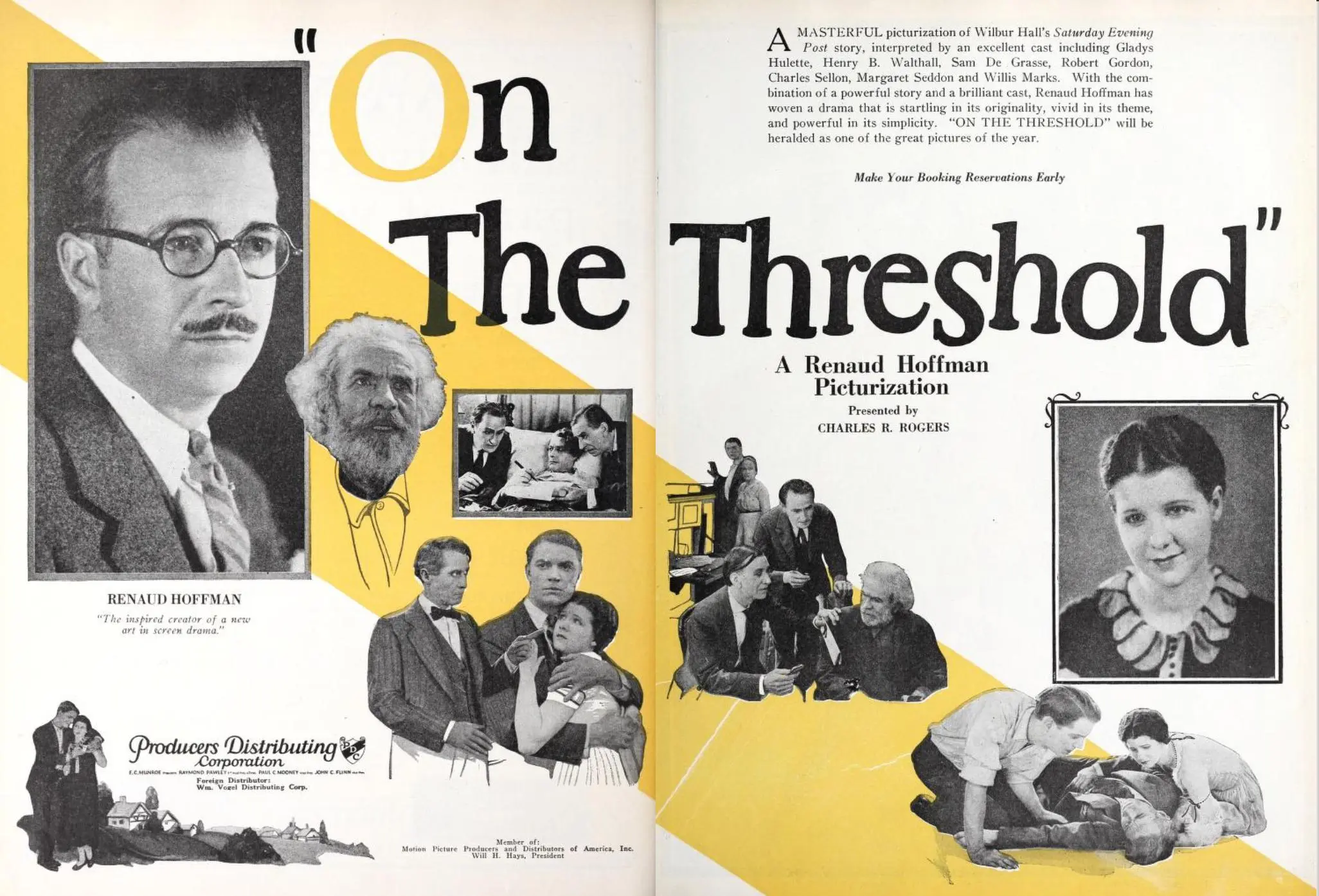
The pacing, however, is where the film shows its age. There are several sequences involving the daughter’s suitor that feel like padding. While the film needs to establish their romance to raise the stakes, these moments lack the psychological grit of the scenes featuring the father. It’s a common issue in films of this period, where the 'romance' is often treated with a sugary lightness that clashes with the darker themes of the main plot.
Opinion 1: The father is the true villain, and the film’s attempt to redeem him is its biggest flaw. In the final act, the film tries to soften the father’s image, suggesting that his actions were born out of a misguided sense of love. I disagree. His actions were born out of narcissism and a desire to control what he could not understand. A more daring film would have left him in his self-imposed exile.
Opinion 2: The film is actually a secret critique of the patriarchal structures of the 1920s. While on the surface it’s a melodrama about a vow, it’s really about the absurdity of a man trying to dictate the biological and emotional reality of a woman. The daughter’s 'rebellion' is framed as a natural force, like the tide, which no amount of paternal 'God-playing' can stop.
One unconventional observation: notice the recurring imagery of hands throughout the film. The father’s hands are often clenched or gripping furniture, while the daughter’s hands are usually open or reaching out. This subtle physical language tells the whole story of the film without a single word of dialogue. It’s a detail often missed in casual viewings but adds a layer of depth to the viewing experience.
On the Threshold is a compelling, if occasionally uneven, piece of silent cinema. It stands out because of its willingness to explore the darker corners of the human heart—grief, spite, and the toxic desire for control. While it shares some DNA with other melodramas like Let-'Er-Go Gallagher, it possesses a psychological weight that those films often lack.
The film isn't a masterpiece of technical innovation, but it is a masterpiece of emotional texture. It captures a specific type of domestic horror that still resonates today: the parent who loves so much they end up strangling the life out of the child. If you can move past the 1920s sentimentality, you’ll find a story that is surprisingly sharp and deeply human.
Ultimately, On the Threshold is a reminder that the most dangerous prisons are the ones we build for ourselves out of our own tragedies. It is a film that lingers in the mind long after the final iris-out, driven by Walthall’s haunting eyes and a story that refuses to offer easy answers.
IMDb 6.9
1935
Community
Log in to comment.