DbcultAccessing Vault...
Cult Review
Senior Film Conservator
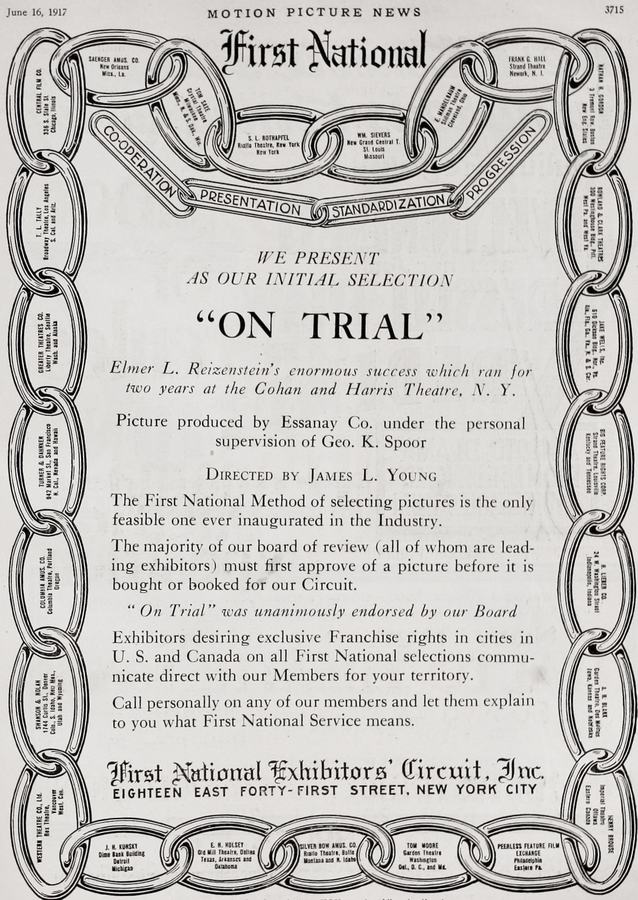
The first time you witness Robert Strickland’s mute defiance—eyes like shuttered windows, shoulders squared as if bracing against invisible squalls—you sense the picture will not sermonise, but scar. Director James Young, adapting Elmer Rice’s hit play, refuses the tidy catharsis of early-cinema morality tales; instead he curates a gallery of half-truths, each testimony a cracked mirror refracting the same events into wildly divergent moral constellations. The result is a silent film that murmurs rather than declaims, a chiaroscuro anxiety dream where intertitles feel almost intrusive, rupturing the uneasy hush that pools inside the courtroom.
Patrick Calhoun’s Strickland is a marvel of minimalist anguish. Notice how his fingers twitch only when the camera lingers on the witness box—tiny tremors that betray the volcanic pressure of unspoken history. Calhoun lets the corners of his mouth sink, not into melodramatic grimace, but into the exhausted droop of a man who has already served a life sentence in the penitentiary of his own shame. Modern viewers, weaned on Method fireworks, may find this restraint revolutionary; it is suffering distilled, not displayed.
Barbara Castleton, as the compromised wife, navigates an even narrower strait. The script affords her no confessional monologue, only the accusatory gaze of a daughter who discovers maternal fallibility in real time. Castleton answers with a tremulous blink rate—cinema’s earliest, most candid lie-detector—signalling guilt, gratitude, and a feral instinct to shield her child from the abyss. Watch her hands clasp and unclasp beneath the counsel’s interrogation: each digit appears to recoil from its own skin, as though flesh itself were an unreliable narrator.
The picture’s visual grammar is surprisingly modern. Young favours oblique angles—jurors framed from knee-level, towering like colossal idols; the judge’s bench shot from a balcony so vertiginous it resembles a deity’s ledge. Shadows carve gulfs between characters, implying that physical proximity is no antidote to emotional galaxies. Cinematographer Harry Dunkinson (also essaying a bit part) bathes faces in single-source tungsten, letting cheekbones become cliffs of light while eye-sockets drown in ink. Silent-era haters who dismiss monochrome as mere nostalgia should study this interplay; it is Rembrandt by way of gas-lamp, every frame a daguerreotype of dread.
Yet the film’s true engine is structural: a Russian-doll flashback nestled inside cross-examination. Each question flays open another layer, revealing not only Trask’s predation but the transactional silences that follow—hush-money paid in social currency, reputations mortgaged against marital stability. The device prefigures Kurosawa’s Rashomon by decades, though here the contradictions emerge via courtroom theatre rather than woodland parable. Where later films would treat unreliable narration as philosophical game, On Trial treats it as domestic fact: memory itself is on the docket.
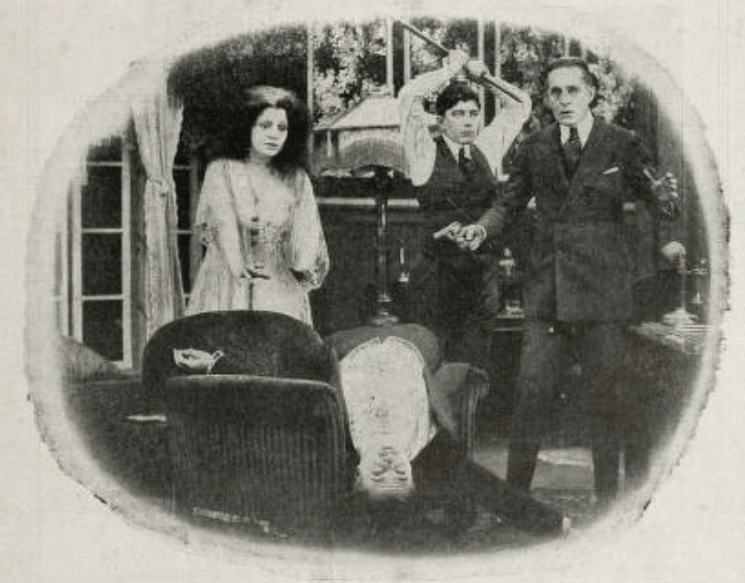
Some historians slot this narrative into the “disreputable woman” cycle popular post-1915, but such filing flattens the picture’s radical empathy. The screenplay declines to brand Mrs. Strickland with scarlet letter; instead it indicts the predatory magnate whose wealth purchases access, then alibis. Trask, unseen save for corpse and portrait, looms as an early template for the capitalist ogre, his safe not merely coffer but patriarchal strongbox. When the missing money finally reappears—via the secretary’s teary confession—the film suggests that capital, not carnality, is the original sin.
James Young’s direction of ensemble is surgical. Note the jury-room sequence: twelve men sweat through suspenders and moral calculus, yet Young resists the temptation to caricature the lone hold-out as hayseed or villain. Instead the dissenter’s fiscal scruples echo the era’s post-crash anxieties—America still limping from 1907’s panic, distrustful of banksters and safe-crackers alike. That macroeconomic tremor vibrates beneath the micro drama, lending the verdict a socio-economic resonance many prestige pictures of the age disdained.
Still, the film’s boldest gambit is sonic absence. Without spoken dialogue, ambient reality evaporates; we are stranded inside a cocoon of rustling papers and creaking benches. The silence becomes a character—an omnipresent juror weighing every gesture. Contemporary exhibitors often accompanied such thrillers with stark percussion or pipe-organ shrieks, yet surviving cue sheets suggest Young lobbied for minimalist scoring, preferring the squeak of gallery hinges to any sympathetic oboe. The effect is proto-Pinteresque: terror blooms in the gaps.
Compare this to Hypocrites (1913), where Lois Weber wields allegory like a flaming sword, or to What Will People Say? (1915) whose title alone telegraphs its moral didacticism. On Trial opts for murkier waters, closer in DNA to the continental bleakness later surfacing in Dvoynaya zhizn. It is American silent cinema’s rare admission that justice and exoneration are not synonyms.
Robert Bolder, as the defense attorney, supplies the film’s sole vein of swagger. His arm-swinging stride into frame feels like a gust of fresh oxygen, yet even he is eventually winded by the moral altitude. Watch his final handshake with Strickland: fingers clasp, but eyes avert, as though victory tastes of iron. The moment lasts three seconds yet refracts the entire ethos—legal triumph cannot launder spiritual stain.
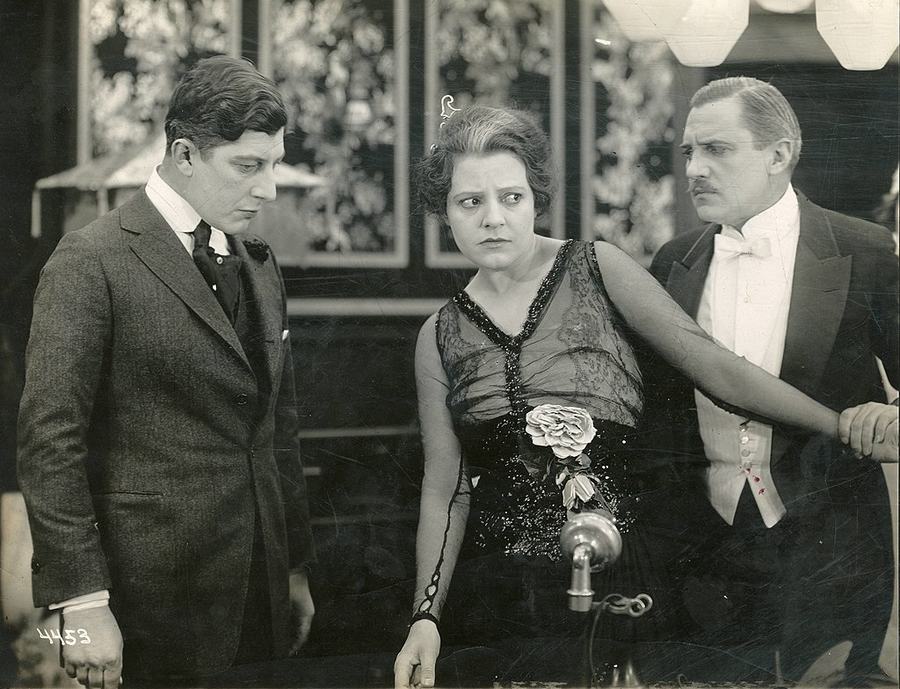
Gender critics will savour the daughter Doris, essayed by Mary McAllister with flapper-before-her-time spunk. She bookends the narrative, first as cherubic spectator, finally as courier of absolution, trotting into her father’s arms beneath the courthouse steps. Yet Young denies us the group hug close-up; camera lingers at medium distance, implying reunion is probationary, not predestined. The ellipsis is heart-swelling and stomach-dropping in equal measure.
Technically, the print survives in 35mm at Library of Congress, though many circulating versions derive from a 1922 re-issue that trimmed a subplot about Trask’s municipal bribery. Even in truncated form, the moral lattice holds. Restorationists have colour-tinted the courtroom scenes a cadaverous amber, while night-exteriors shimmer in cerulean—an aesthetic choice that, while not original, amplifies the film’s temperature contrast between public scrutiny and private shame.
Box-office ledgers of the era reveal On Trial recouped four times its $27,000 negative cost, out-grossing even The Miracle of Life in key urban corridors. Variety’s 1917 capsule praised its “tourniquet-tight” plotting, though dismissed Calhoun as “statue-esque.” That appraisal misses the point: stillness can be the loudest performance in a cacophonous world.
For modern cinephiles, the film offers a master-class in narrative economy. In 58 minutes we traverse seduction, murder accusation, class resentment, larceny, and filial rupture—yet nothing feels shoe-horned. Elmer Rice’s source play ran three acts and nearly three hours; Young condenses via visual shorthand (a torn theatre programme, a blood-stained handkerchief) that prefigures the later montage theories of Kuleshov and Eisenstein.
Amid the current boom in silent-festival revivals, On Trial screens infrequently, overshadowed by safer canon staples. That neglect is cine-criminal. Seek it out whether you’re a noir aficionado tracing moral relativism back before Double Indemnity, or a courtroom-drama junkie curious how jurisprudential anxiety was staged before sound allowed lawyers to object. The film’s DNA lurks inside everything from 12 Angry Men to The Night Of, its quietude echoing wherever subsequent storytellers ask whether exoneration equals innocence.
Ultimately, On Trial lingers because it refuses catharsis on cheap terms. The final iris-in closes not on beaming spouses but on a family stepping into fog, armed only with the fragile armour of a legal technicality. Somewhere in that mist Gerald Trask’s corpse still rots, and the safe—though refilled—still clangs shut. Justice, the film insists, is a verdict; absolution is a lifetime sentence.
IMDb —
1920
Community
Log in to comment.