DbcultAccessing Vault...
Cult Review
Senior Film Conservator
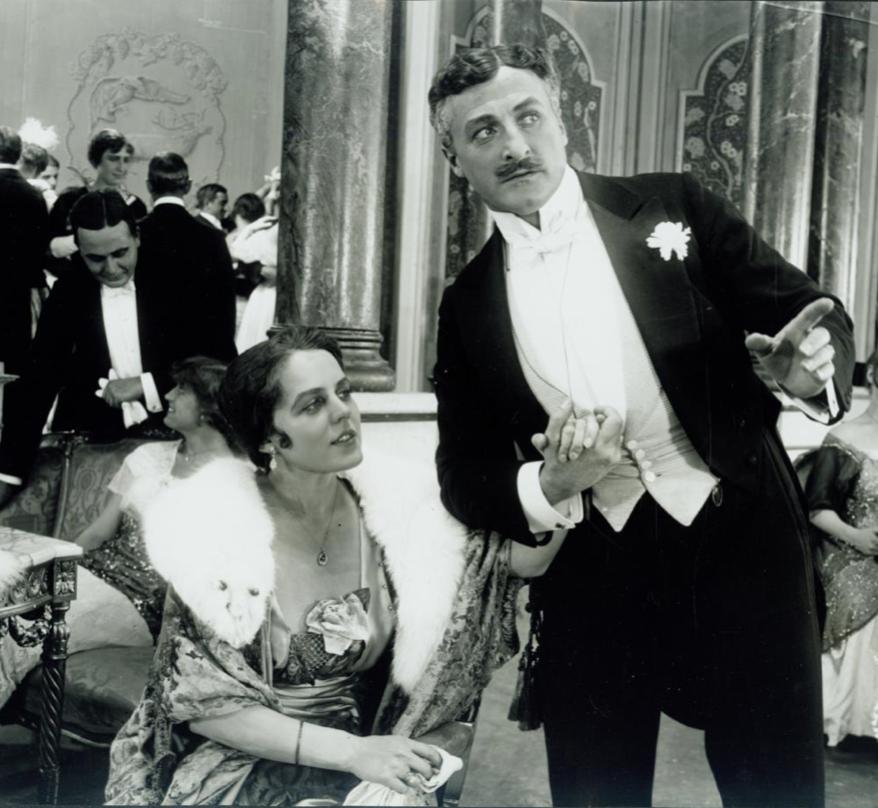
As the flickering shadows of early cinema danced across the silver screen, a particular potency emerged from the melodramas that dared to dissect societal mores and individual resilience. "Selskabsdamen," a Danish cinematic jewel from an era often overlooked, stands as a testament to this power, a silent film that speaks volumes through its nuanced performances and intricate narrative. Penned by the insightful Otto Rung, this picture transcends mere entertainment, offering a profound commentary on class, virtue, and the relentless human spirit. It is a work that, even today, compels viewers to reflect on the enduring struggles for dignity and truth in a world perpetually stratified by arbitrary social constructs, where appearances often dictate destiny. The film's brilliance lies not just in its dramatic arc, but in its meticulous construction of character and atmosphere, drawing the audience into a world of both suffocating privilege and quiet desperation, a poignant exploration of human vulnerability and strength.
At its core, "Selskabsdamen" unfurls a deeply affecting saga centered on Elinore, portrayed with exquisite pathos by the incomparable Ebba Thomsen. Thomsen, a titan of Danish silent cinema, imbues Elinore with an ethereal grace and an unyielding inner strength, making her trials palpably real and deeply sympathetic. We witness Elinore's forced descent into the precarious world of a lady's companion, a position that, despite its superficial gentility, often teetered on the brink of servitude and social invisibility. Her new existence unfolds within the grand, yet emotionally barren, estate of the formidable Baroness von Klingenfeldt, a character brought to life with chilling authority by Henny Lauritzen. Lauritzen's portrayal is a masterclass in silent menace, her subtle gestures and piercing gaze conveying an entire universe of aristocratic disdain and unyielding control, a performance that truly defines the antagonist without uttering a single word. The contrast between Elinore's quiet suffering and the Baroness's overt command forms the very bedrock of the film's dramatic tension, a conflict as stark as it is resonant and profoundly impactful.
The narrative, under Otto Rung's astute guidance, deftly explores the subtle cruelties inherent in the class system. Elinore, though of noble birth, finds her lineage rendered meaningless by her lack of financial independence. This predicament forces her into an intimate proximity with those who hold power, yet simultaneously alienates her from any genuine human connection within that sphere. Her isolation is further exacerbated by the conniving presence of Miss Agnes, the Baroness's secretary, played with chilling precision by Betzy Kofoed. Kofoed crafts a villainess whose malevolence is all the more effective for its understated delivery; her every glance and calculated movement speaks volumes of envy and ambition. Agnes’s machinations against Elinore are not merely acts of personal spite but symptomatic of a broader societal struggle, where individuals are pitted against each other in a desperate scramble for security and status. This intricate dance of power and vulnerability evokes echoes of other silent era social commentaries, such as East Lynne (1916), which similarly dissected the devastating impact of societal judgment on a woman's fate.
Amidst this backdrop of emotional duress, a flicker of hope emerges in the form of Lieutenant Erik Holm, the Baroness’s nephew, brought to life by the charismatic Olaf Fønss. Fønss, with his striking presence and nuanced expressions, portrays Erik as a man caught between the expectations of his aristocratic lineage and a genuine, burgeoning affection for Elinore. Their nascent romance is depicted with a delicate touch, relying on stolen glances and unspoken understandings, a hallmark of silent film storytelling at its finest. However, this fragile bond becomes a prime target for Agnes's venomous schemes. The film masterfully builds suspense as Agnes orchestrates a series of betrayals, including the forging of a letter that casts Elinore in a compromising light, threatening to utterly destroy her reputation and any chance of happiness. The tension is palpable, a testament to Rung's skillful plotting and the actors' ability to convey complex emotions without uttering a single word.
The film's exploration of deceit and its consequences is remarkably sophisticated for its time. It delves into the psychological toll of slander and the insidious nature of false accusations. Elinore’s struggle for vindication is not merely a personal quest but a battle against the very fabric of a society quick to condemn and slow to understand. The narrative gains further depth with the introduction of Anton de Verdier, whose portrayal of a powerful, perhaps initially skeptical, figure adds another layer to Elinore’s arduous journey. De Verdier, known for his commanding screen presence, brings a gravitas that is crucial to the film's climactic resolution. His character serves as a pivotal force, capable of either sealing Elinore's fate or aiding in her redemption. The intricate web of relationships and the slow unraveling of Agnes’s duplicity keep the audience enthralled, demonstrating the enduring power of a well-crafted melodrama.
Beyond its compelling plot and stellar performances, "Selskabsdamen" is a visual feast, showcasing the artistry of early Danish cinematography. The use of light and shadow, typical of the era, is employed here with particular skill to enhance the emotional landscape. Grand interiors are often bathed in a soft, melancholic glow, while moments of high drama are underscored by stark contrasts, mirroring the internal turmoil of the characters. The costume design, though not explicitly detailed in the surviving records, would undoubtedly have played a crucial role in delineating class and character, a silent language understood by contemporary audiences. The meticulous attention to detail in set design and mise-en-scène further immerses the viewer in the film's world, elevating it beyond a simple story into a carefully constructed cinematic experience. This visual storytelling, where every frame contributes to the narrative and emotional impact, is a hallmark of the era, reminiscent of the evocative imagery found in films like Bella Donna, where atmosphere is as critical as dialogue.
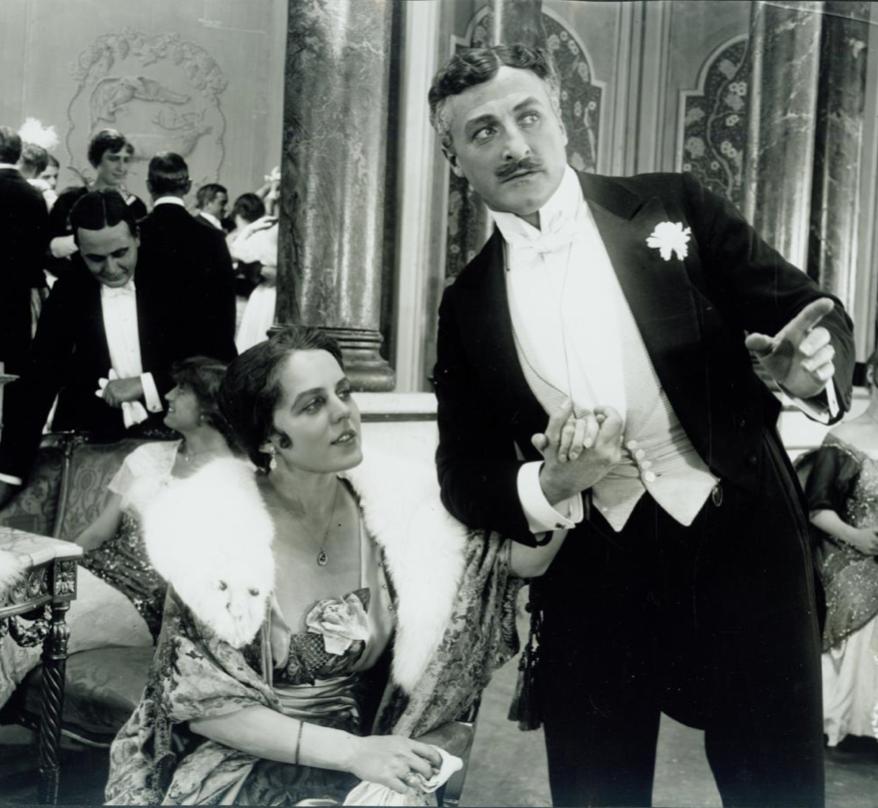
The thematic undercurrents of "Selskabsdamen" are remarkably progressive. While rooted in the conventions of melodrama, it subtly challenges the rigid societal norms that often dictated women's lives. Elinore's journey is one of self-assertion and resilience, a refusal to be defined by her circumstances or by the malicious gossip of others. Her eventual triumph is not merely a happy ending but a powerful statement on the importance of integrity and courage in the face of adversity. This emphasis on female agency, even within the confines of a patriarchal society, is a recurring motif in the works of many early twentieth-century filmmakers, reflecting a nascent awareness of women's evolving roles. The presence of Ingeborg Spangsfeldt, likely in a supporting role, adds another texture to the ensemble, her presence contributing to the rich tapestry of human experience depicted. Her character, whether a sympathetic confidante or another pawn in the social game, would have further grounded the narrative in relatable human interactions, making the emotional stakes feel even more tangible.
The narrative sophistication of "Selskabsdamen" is undeniably attributable to its writer, Otto Rung. Rung, a prolific figure in Danish literature and cinema, possessed a keen understanding of human psychology and the dramatic potential of social conflict. His screenplay avoids simplistic good-versus-evil tropes, instead crafting characters with believable motivations, however flawed. The gradual revelation of Elinore’s hidden family secret—a discredited inheritance—adds layers of complexity, transforming her personal struggle into a fight for her rightful legacy. This element of a past injustice, requiring present-day rectification, is a powerful narrative device that resonates deeply. Rung’s ability to weave together romantic intrigue, social commentary, and a compelling mystery is what elevates "Selskabsdamen" beyond a standard melodrama. His writing ensured that even without spoken dialogue, the characters' inner lives and the plot's intricacies were conveyed with crystal clarity, a testament to his mastery of visual storytelling.
The climactic sequence, where Elinore courageously exposes Agnes's duplicity and reveals the existence of a long-lost will, is handled with an exhilarating tension. It is here that the various threads of the plot converge, culminating in a satisfying resolution that affirms the power of truth and justice. The vindication of Elinore's honor and her eventual union with Erik Holm, built on a foundation of mutual respect and understanding, provides a deeply gratifying conclusion. This kind of redemptive narrative, where virtue is ultimately rewarded, was a powerful draw for audiences of the era, offering a hopeful counterpoint to the often harsh realities of life. The film’s ability to deliver such an emotionally resonant conclusion, relying almost entirely on visual cues and the expressive power of its actors, solidifies its place as a significant work of early cinema. It shares a thematic kinship with films like Was She Justified?, which similarly grappled with questions of reputation, societal judgment, and the ultimate triumph of moral rectitude.
"Selskabsdamen" serves as a crucial artifact for understanding the evolution of cinematic narrative and performance. It showcases the sophisticated storytelling capabilities of the silent era, demonstrating that complex emotions and intricate plots could be conveyed without the aid of spoken dialogue. The film's enduring appeal lies in its universal themes: the struggle for identity, the corrosive effects of envy, the enduring power of love, and the relentless pursuit of justice. These are themes that transcend time and cultural boundaries, making the film as relevant today as it was upon its initial release. For modern audiences, it offers a window into a bygone era, allowing us to appreciate the foundational artistry upon which contemporary cinema is built. The performances, especially that of Ebba Thomsen, continue to captivate, reminding us of the profound expressive potential inherent in the human face and body.
The film’s historical significance extends beyond its artistic merits. It is a vital piece of Danish cinematic heritage, representing a period of robust film production and international influence for Nordisk Film, the studio likely behind such a production. The contributions of actors like Anton de Verdier, Ebba Thomsen, Olaf Fønss, and writers like Otto Rung were instrumental in shaping the aesthetic and narrative conventions of early European cinema. Their work laid the groundwork for future generations of filmmakers, demonstrating the commercial and artistic viability of dramatic storytelling on the silver screen. In an age of rapid technological advancement in filmmaking, revisiting works like "Selskabsdamen" provides a valuable perspective on the core elements that make cinema so powerful: compelling characters, engaging plots, and the ability to evoke deep emotional responses. Its narrative echoes can even be found in later works dealing with social climbing and hidden pasts, like The Soul of Kura San, albeit in different cultural contexts, proving the enduring appeal of such dramatic frameworks. The subtle nuances of class distinction and the moral quandaries faced by the protagonists resonate with similar themes explored in contemporary dramas, showcasing the timeless nature of Rung's thematic concerns and the universal appeal of stories about overcoming adversity.
Ultimately, "Selskabsdamen" is more than just a historical curiosity; it is a vibrant, emotionally charged drama that continues to resonate. It invites us to ponder the persistent societal pressures that shape individual destinies and the unwavering strength required to overcome them. It is a powerful reminder of cinema's capacity to both entertain and enlighten, to transport us to another time while speaking to timeless truths. Its elegant storytelling, propelled by the silent yet eloquent performances of its ensemble cast, particularly Ebba Thomsen’s luminous portrayal of Elinore, ensures its place as a cherished classic. For anyone seeking to delve into the rich tapestry of early European cinema, this film offers an unparalleled experience, a journey into the heart of human resilience beautifully rendered in the language of shadows and light. Its intricate plot and character dynamics are a far cry from the simpler adventure narratives of the time, such as On the Spanish Main or the more direct action of In the Nick of Time, highlighting the diverse range of storytelling approaches even in the nascent days of film. The profound depth of human emotion explored here also sets it apart from more straightforward action films like Samson (1915) or the frontier drama of Arizona, cementing its status as a significant dramatic achievement that masterfully balances psychological introspection with external conflict.

IMDb 6
1913
Community
Log in to comment.