DbcultAccessing Vault...
8/10
Senior Film Conservator
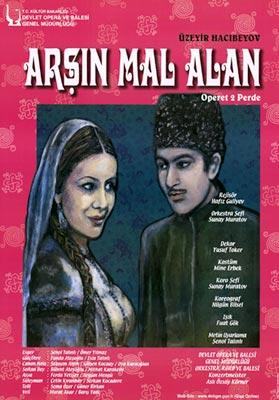
A definitive 8/10 rating for a film that redefined the boundaries of cult cinema. Arshin mal-alan remains a cornerstone of transgressive art.
Stepping back into the nascent days of cinema, one occasionally unearths a gem whose brilliance, far from diminishing with time, only seems to deepen. Such is the profound and delightful experience of encountering Arshin mal-alan, a cinematic adaptation of Uzeyir Hajibayov's beloved operetta. Released in 1917, this Azerbaijani masterpiece transcends its era, offering a vibrant, often humorous, exploration of love, tradition, and the ingenious ways human desire can navigate societal strictures. It’s more than just a film; it’s a cultural touchstone, a window into the soul of early 20th-century Baku, brimming with the kind of charm and wit that resonates across generations and geographical divides.
At its heart, Arshin mal-alan spins a narrative as old as time, yet rendered with a distinct cultural flavor that makes it feel utterly fresh. Our protagonist is Askar, a prosperous young businessman in Baku, whose wealth and social standing would, in most contexts, guarantee him his pick of brides. However, the rigid Azerbaijani traditions of the era dictate that a prospective groom cannot lay eyes upon his intended until after the marriage contract is sealed. This particular custom, designed to preserve modesty and family honor, presents a formidable obstacle to Askar, who yearns for a love founded on mutual attraction and personal acquaintance, not merely on familial arrangement. He is a modern man trapped by ancient customs, and his solution is as audacious as it is romantic.
Askar's brilliant stratagem involves a complete transformation: he disguises himself as an ‘Arshin mal-alan,’ a wandering cloth peddler. These peddlers, often women, were granted unique access to the private quarters of homes, a realm strictly off-limits to other men. This ingenious disguise allows Askar to mingle with women, observe them, and most importantly, to be observed, without the constraints of societal expectations. It's a delightful setup that immediately establishes the film's comedic tone and its underlying critique of societal rigidity. This isn't just about finding a wife; it's about claiming agency in a world that often denied it, particularly to women, but also, surprisingly, to men like Askar who sought personal connection over prescribed duty.
In his humble peddler's garb, Askar encounters Gulchohra, a young woman whose spirit and beauty immediately captivate him. What unfolds is a blossoming romance, pure and unburdened by the societal expectations that would otherwise dictate their interaction. Gulchohra, unaware of Askar's true identity, falls deeply for the charming peddler. However, their love is quickly overshadowed by the harsh realities of their perceived social disparity. Gulchohra grieves, knowing full well that her father, a man of standing, would never consent to her marrying a mere cloth merchant. This dramatic tension, built on mistaken identity and social hierarchy, is where the film truly shines, highlighting the emotional toll of such rigid class distinctions.
The climax of this romantic entanglement arrives when Askar, having won Gulchohra’s heart, finally reveals his true identity to her father. The transformation from impoverished peddler to wealthy businessman is, of course, met with an immediate and enthusiastic reversal of the father’s initial disdain. The social barrier, once seemingly insurmountable, dissolves with the revelation of Askar's true affluence. It's a resolution that, while perhaps a touch idealistic, perfectly encapsulates the operetta's comedic spirit and its gentle critique of a society where financial standing often dictated destiny more than genuine affection. The joy of their union, now sanctioned by both love and lucre, forms the heartwarming conclusion.
Arshin mal-alan holds immense historical significance as one of the earliest and most successful Azerbaijani films. Its enduring popularity speaks volumes about its intrinsic quality and its deep roots in the cultural fabric of Azerbaijan. Uzeyir Hajibayov, the original writer of the operetta, was a titan of Azerbaijani music and theatre, and his genius is beautifully translated to the screen. The film itself, despite the limitations of early 20th-century filmmaking, manages to capture the vibrant spirit of Baku, its bustling bazaars, its traditional homes, and the intricate social dynamics that defined the era. It's a priceless ethnographic record as much as it is a charming piece of entertainment.
The cast, featuring talents like Aleksandra Olenskaya, Ahmed Agdamski, and Yeva Olenskaya, delivers performances that, while perhaps broad by modern standards, are perfectly suited to the operatic origins of the piece. Their expressions, gestures, and the sheer energy they bring to their roles are captivating, drawing the audience into their world. Huseyngulu Sarabski, Alakbar Huseynzade, and Mirzaagha Aliyev also contribute significantly, each portraying their characters with a distinct flair that adds layers to the ensemble. It’s a testament to their skill that even without synchronized sound (a luxury of later decades), the narrative and emotional beats are conveyed with clarity and impact.
Beyond its immediate narrative, Arshin mal-alan delves into universal themes that remain pertinent today. The conflict between individual desire and societal expectation is timeless. Askar’s rebellion against the custom of arranged, sight-unseen marriage speaks to a yearning for personal autonomy that transcends cultural boundaries. The film subtly critiques the superficiality of judging individuals based on their perceived social standing rather than their inherent character. While the resolution is comedic and convenient, it underscores the persistent human impulse to find connection and love on one's own terms.
The element of disguise, a classic trope in comedy, is masterfully employed here. It allows for both physical humor and a deeper exploration of identity. Askar, in shedding his wealthy persona, gains a unique perspective, allowing him to truly understand the world beyond his gilded cage. Similarly, Gulchohra falls for the man, not his fortune, a testament to the idea that true love transcends material concerns – even if the film ultimately reconciles both. This narrative device is a common thread in storytelling, from Shakespearean comedies to more contemporary romantic fare, proving its enduring power to entertain and enlighten.
When placing Arshin mal-alan within the broader context of early 20th-century cinema, its uniqueness becomes even more pronounced. While American cinema of the same period might have been exploring different facets of identity and social mobility, perhaps through films like Who's Who in Society (though a direct thematic link isn't always obvious, the exploration of social strata remains), Arshin mal-alan offers a distinctive Central Asian perspective. Its focus on traditional customs and their circumvention through cleverness provides a fascinating counterpoint to Western narratives of the time.
The lighthearted tone of this operatic adaptation stands in stark contrast to more dramatic explorations of societal constraints, such as The Chattel, which might have delved into the more oppressive aspects of women's roles or social classes. Arshin mal-alan chooses laughter and cleverness as its primary weapons against rigidity, making its commentary more palatable and universally appealing. Even when compared to films capturing vastly different cultural landscapes, like In the Days of the Thundering Herd, which would have showcased early American frontier life, Arshin mal-alan reminds us of the incredible diversity of human experience and storytelling even in cinema's infancy.
The film's silent nature, a characteristic of its era, necessitates a reliance on visual storytelling and the expressive capabilities of its actors. In this regard, the cast excels, communicating emotions and plot points with clarity, often through exaggerated but effective pantomime. This visual emphasis makes it accessible even without a full understanding of the original operetta's lyrical nuances, allowing the universal themes of love and deception to shine through. It is a testament to the power of visual narrative that a story from such a specific cultural context could achieve such broad appeal and longevity.
The enduring legacy of Arshin mal-alan cannot be overstated. It has been adapted numerous times, both on stage and screen, demonstrating its timeless appeal. Its melodies are ingrained in the Azerbaijani consciousness, and its characters are archetypes that continue to charm. For a film produced over a century ago, it retains a remarkable vitality, a testament to the strength of its source material and the skillful execution of its early cinematic rendition. It’s a joyous celebration of culture, ingenuity, and the universal quest for love that defies convention.
Watching Arshin mal-alan today is not merely an act of historical appreciation; it is an engaging cinematic experience. It reminds us that fundamental human desires – for connection, for authenticity, for happiness – remain constant, even as the social landscapes around us shift and evolve. The film's light touch, its clever plot, and its vibrant portrayal of a specific cultural moment make it a delightful watch, proving that some stories, when told with heart and wit, truly are immortal. It’s a must-see for anyone interested in the rich tapestry of world cinema, especially those who appreciate the subtle art of romantic comedy woven with cultural depth.
In conclusion, Arshin mal-alan is more than just an early film; it's a cultural artifact that continues to entertain and enlighten. Its narrative of a young man cleverly navigating traditional obstacles to find true love is universally appealing, while its specific Azerbaijani setting provides a rich and fascinating backdrop. It stands as a vibrant testament to the power of storytelling and the enduring appeal of a good romantic comedy, proving that some tales are simply meant to be told, and retold, across generations and borders, leaving a lasting impression of joy and cultural insight.
IMDb —
1924
Community
Log in to comment.