DbcultAccessing Vault...
Cult Review
Senior Film Conservator
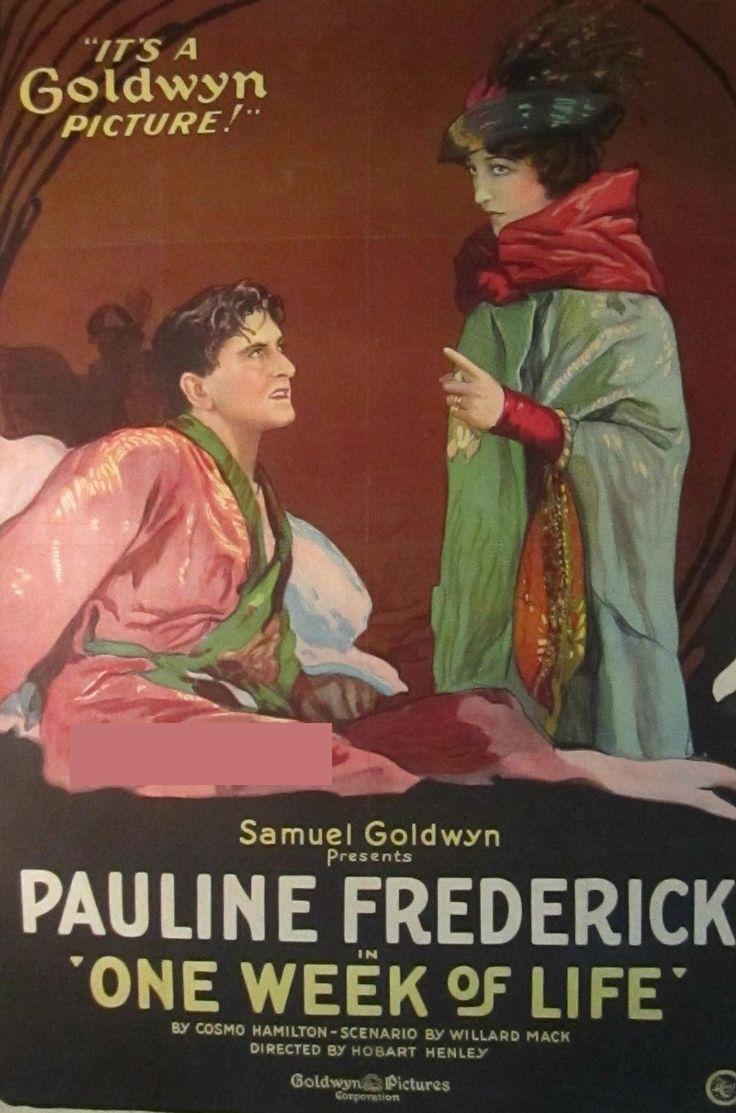
Ah, the silent era. A time when emotions were writ large across the screen, conveyed not through dialogue, but through the nuanced contortions of the human face, the dramatic sweep of gesture, and the evocative power of visual storytelling. In this rich tapestry of early cinema, 'One Week of Life' emerges as a particularly fascinating thread, a film that delves into the very fabric of identity, desire, and the profound, often perilous, quest for personal fulfillment. It’s a narrative that, even a century later, retains a startling resonance, prompting us to consider the fragile architecture of our relationships and the desperate measures one might take to escape an unbearable existence.
The premise, crafted with a keen eye for psychological drama by writers Cosmo Hamilton and Willard Mack, is deceptively simple yet profoundly unsettling. We are introduced to Mrs. Sherwood, a woman steeped in a profound marital ennui, her spirit suffocated by a life that has become a gilded cage. Her husband, in a tragically reciprocal dance of unhappiness, finds solace, or perhaps oblivion, in the ever-deepening amber of his glass. This isn't merely a tale of domestic discord; it's a stark portrayal of two souls drifting irrevocably apart, each trapped in their own particular brand of quiet desperation. Mrs. Sherwood's affections, having long since withered for her spouse, have found fertile ground in the attentions of Le Roy Scott, a man whose love for her becomes the unwitting catalyst for a spiraling deception.
The narrative truly ignites when Scott, in a stroke of narrative brilliance or perhaps a twist of fate, encounters Marion Roche. The cinematic trope of the doppelgänger is often employed for comedic effect or thrilling suspense, but here, it serves as the linchpin for an audacious, morally ambiguous plot. Marion Roche, with features so astonishingly identical to Mrs. Sherwood's, becomes the perfect, unwitting pawn in Scott's elaborate scheme. His intention is clear: to substitute Marion for Mrs. Sherwood, thereby liberating his beloved for a clandestine escape, a week of stolen bliss away from the suffocating confines of her marriage. It’s a plan born of passion, certainly, but also of a chilling disregard for the lives he so carelessly manipulates. This moment, the very act of substitution, sets the stage for a dramatic irony that permeates the entire film, forcing the audience to ponder the ethical labyrinth into which these characters willingly stumble.
What unfolds next is a testament to the unpredictable nature of the human heart. Marion Roche, stepping into the shoes—and the life—of Mrs. Sherwood, doesn't merely mimic her predecessor. She embodies a different spirit, a warmth and genuine affection that Mr. Sherwood, dulled by years of neglect and unhappiness, had long forgotten. This imposter, this stand-in, proves to be the very wife he had perhaps only dreamed of, a partner capable of rekindling the embers of a dying marriage. The transformation in Mr. Sherwood is palpable, a gradual shedding of his alcoholic haze, replaced by a renewed vigor and a burgeoning tenderness for this 'new' woman. And Marion, in turn, finds herself falling deeply, authentically in love with the man whose life she has usurped. It’s a tragicomic ballet of mistaken identity, where genuine affection blossoms from the bitter soil of deceit.
Pauline Frederick, a luminary of the silent screen, likely carries the immense burden of portraying both Mrs. Sherwood and Marion Roche, or at least the visual identicality that drives the plot. Her ability to convey distinct personalities within the same physical framework would have been paramount, a masterclass in subtle differentiation. As Mrs. Sherwood, one imagines a portrayal steeped in weary resignation, a woman whose very posture speaks of entrapment. As Marion, however, she must project an innocence, a burgeoning joy, and ultimately, a fierce possessiveness over the happiness she has inadvertently found. This dualistic performance is the beating heart of the film, providing a nuanced exploration of what it means to truly inhabit a role, both on and off the screen.
Thomas Holding, as Mr. Sherwood, must navigate a complex emotional arc. His initial portrayal of a man consumed by drink and despair would require a convincing descent into despondency. Yet, his subsequent awakening, his gradual succumbing to Marion's charms, demands a delicate touch, portraying a man rediscovering joy and affection. The chemistry, or lack thereof, between him and the 'original' Mrs. Sherwood, contrasted with the burgeoning connection with Marion, is crucial for the audience to believe in this most improbable of rekindled loves. It’s a performance that hinges on portraying both the depths of human sorrow and the unexpected capacity for renewal.
The narrative, as it progresses, becomes a taut psychological thriller. Marion, now deeply invested in her new life and the love she shares with Sherwood, determines to solidify her position. The idea of relinquishing this newfound happiness, of returning to her former existence, becomes unbearable. Her resolve to permanently replace the real Mrs. Sherwood transforms the film from a simple tale of romantic entanglement into a chilling exploration of ambition and survival. This pivotal turn elevates the stakes considerably, pushing the boundaries of morality and forcing the audience to grapple with uncomfortable questions about deservedness and the ethics of obtaining happiness through deceit.
The supporting cast, including Sidney Ainsworth, Percy Challenger, and Corinne Barker, would undoubtedly contribute to the film’s atmosphere, lending credibility to the world in which this audacious deception unfolds. Their performances, even in smaller roles, would be instrumental in grounding the more fantastical elements of the plot in a believable reality. The intricacies of the scheme, the near misses, the moments of doubt and suspicion, would all rely on their convincing portrayals of reactions to the shifting dynamics of the Sherwood household.
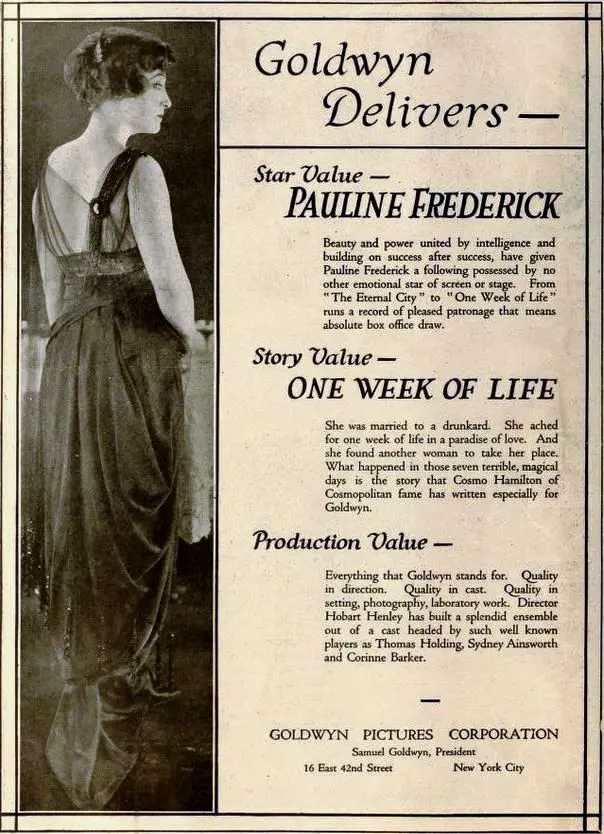
'One Week of Life' is more than just a story of mistaken identity; it's a profound commentary on the performative nature of marriage and the desperate human need for connection. It asks whether love, when born from a lie, can still be considered true. It challenges our perceptions of what constitutes a 'real' relationship, especially when the imposter fulfills the role more completely than the original. This thematic depth is what elevates the film beyond mere melodrama, embedding it with a philosophical inquiry that continues to resonate.
Comparing 'One Week of Life' to other films of its era, one can discern shared anxieties and narrative conventions. The theme of marital dissatisfaction and the allure of illicit romance, for instance, finds echoes in films like The Love Girl, though perhaps without the same audacious twist of identity. The very concept of an imposter taking over a life, and the moral quandaries that arise, can be seen in a more direct parallel with films such as The Phantom Honeymoon, where deception forms the bedrock of a marital union, albeit under different circumstances. However, 'One Week of Life' distinguishes itself by allowing the imposter to not only succeed but to genuinely foster a deeper, more fulfilling relationship, turning the traditional morality play on its head.
Furthermore, the exploration of a woman's desire to escape a suffocating marriage, even through drastic means, aligns with broader societal shifts reflected in early 20th-century cinema. While films like His Wife's Good Name might focus on the preservation of reputation amidst marital challenges, 'One Week of Life' dares to suggest that sometimes, a complete overhaul, even a fraudulent one, might be the only path to genuine happiness for all parties involved, albeit with immense ethical baggage. It’s a bold narrative choice for its time, challenging conventional notions of loyalty and matrimonial duty.
The writers, Cosmo Hamilton and Willard Mack, deserve significant credit for constructing such a tightly wound and emotionally complex narrative. Their ability to introduce a fantastical element like the doppelgänger and then ground it in believable human emotion is a testament to their storytelling prowess. The film’s pacing, a crucial element in silent cinema, would have been meticulously crafted to build suspense, allow for moments of profound emotional expression, and drive the plot towards its inevitable, dramatic confrontation. The visual language would have been rich with symbolism: perhaps the stark contrast between Mrs. Sherwood's opulent yet empty home and the vibrant, renewed atmosphere Marion creates; the lingering shots on faces to convey unspoken desires and growing affections.
Ultimately, 'One Week of Life' is a compelling cinematic experience that transcends its silent film origins. It forces us to confront uncomfortable truths about the nature of love, the allure of authenticity, and the lengths to which individuals will go to find solace and happiness. The film doesn't offer easy answers; instead, it presents a multifaceted dilemma, where the lines between right and wrong become blurred, and where the pursuit of personal happiness collides with the ethical implications of deception. The audience is left to ponder whether the genuine love that blossoms from a lie can ever truly justify the means, and what becomes of the original self when another has so completely taken its place.
The film’s enduring power lies in its capacity to provoke introspection. What defines us? Is it our name, our past, or the role we play in the lives of others? If a doppelgänger can fulfill our duties and even inspire deeper affection, what does that say about our own irreplaceable essence? These are not questions unique to the silent era, but universal human queries that 'One Week of Life' masterfully brings to the forefront. It’s a testament to the power of cinema, even in its earliest forms, to explore the profound complexities of the human condition with both daring imagination and emotional depth. A truly remarkable achievement that deserves a place in any serious discussion of film history.
The sheer audacity of Marion Roche's decision to permanently supplant Mrs. Sherwood represents a dramatic climax that challenges conventional morality tales. It’s a moment that asks the audience to consider the desperate human need for belonging and happiness, even if that happiness is built upon a foundation of sand. The film doesn't shy away from the moral ambiguities, but rather embraces them, presenting a narrative that is as thrilling as it is thought-provoking. This is not a simple story of good versus evil, but a nuanced exploration of human desires and the convoluted paths we sometimes take to achieve them. It is a film that lingers long after the final frame, prompting continued reflection on its intricate web of deceit, desire, and the elusive nature of true identity.
In its exploration of the human psyche, 'One Week of Life' stands as a powerful example of how silent films, through their visual poetry and heightened performances, could convey narratives of immense emotional and philosophical weight. It’s a reminder that compelling storytelling transcends spoken dialogue, relying instead on universal themes and the raw, unfiltered expression of the human heart. For those who appreciate cinema that delves into the depths of character and challenges societal norms, this film remains an essential viewing, a vibrant relic that continues to speak volumes about the eternal quest for a life truly lived, irrespective of the identities we assume or shed along the way.
IMDb —
1918
Community
Log in to comment.