DbcultAccessing Vault...
Cult Review
Senior Film Conservator
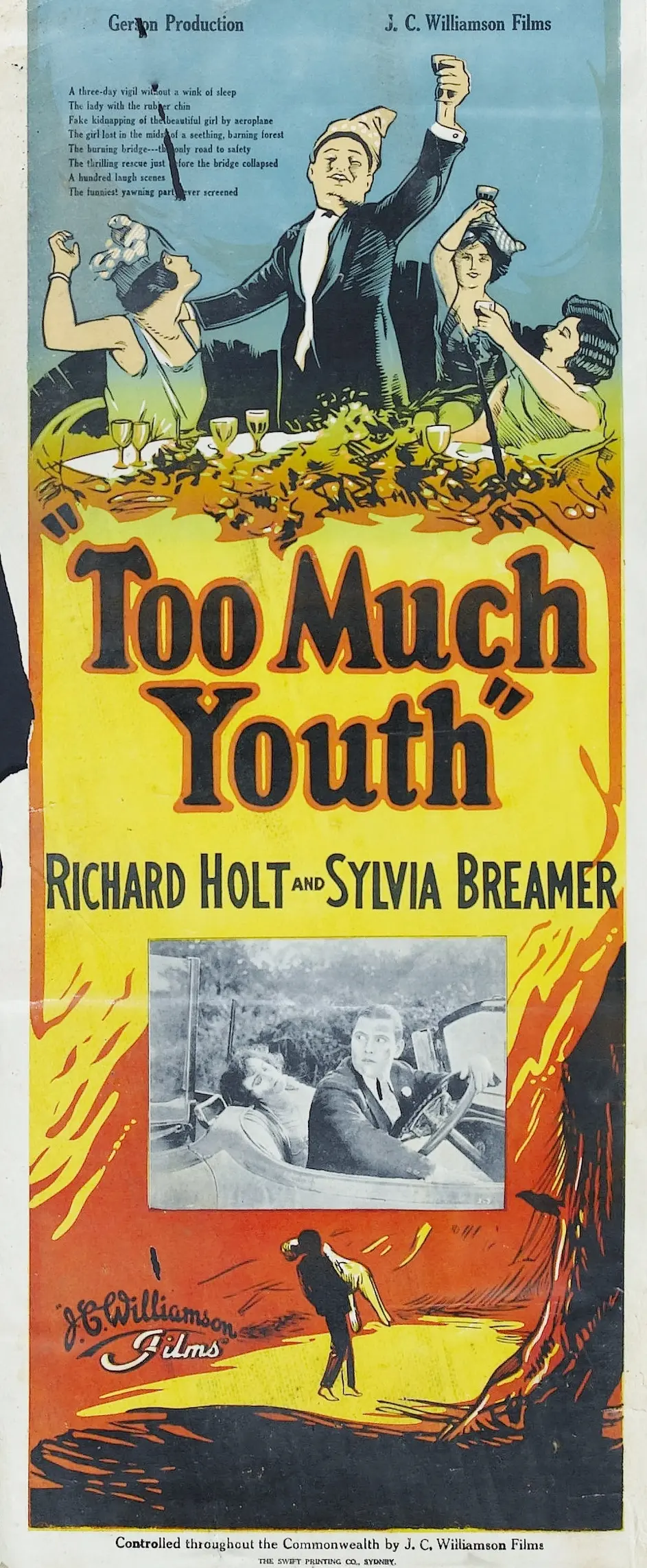
Is the 1922 silent drama
Too Much Youth
worth watching today? Short answer: yes, but with significant caveats. This film is a fascinating, if occasionally frustrating, glimpse into early Hollywood storytelling, offering a blend of light romance, paternal intrigue, and a dash of melodrama that will appeal to silent film enthusiasts and those curious about cinema's formative years, but it will likely test the patience of viewers accustomed to modern pacing and narrative complexity.It's a film for the patient cinephile, the historian, and anyone with a soft spot for the earnest, often exaggerated performances of the silent era. Conversely, it is decidedly
NOT
for those seeking high-octane action, intricate character development, or a plot that defies easy prediction. This is a period piece, both in its setting and its cinematic language, and it demands an audience willing to engage on its own terms.Directed by Eric Mayne,
Too Much Youth
is a product of its time, showcasing the narrative conventions and stylistic flourishes that defined the silent era. It tells the story of Jimmy Kenton (Ashton Dearholt), a young man whose primary interests lie in jazz and leisurely pursuits, much to the chagrin of his formidable father, Mark Kenton (Charles K. French). Jimmy’s path crosses with Marguerite Crandall (Sylvia Breamer) at a health resort, an encounter sparked by her disdain for his frivolous antics. This initial friction quickly blossoms into infatuation, leading Jimmy down a path of both romantic pursuit and familial conflict.The plot, penned by Grover Jones, leans heavily on the trope of the wayward son needing to prove himself. After an incident lands him in jail, Jimmy's father intervenes, not out of pure benevolence, but with a calculated agenda. He dispatches Jimmy to San Francisco to finalize a crucial real estate deal with Marguerite’s father, George (Joseph Belmont). This mission comes with a self-imposed vow from Jimmy: he won't sleep until the deal is done. What Jimmy doesn't know is that his father has conspired with George to prolong the negotiations, assigning a minder, Pat Casey (Walter Leroy), to ensure Jimmy's sleep-deprived ordeal continues. The climax involves a dramatic forest fire, a classic silent film device for heroism, through which Jimmy finally earns his stripes and, predictably, the girl.
It offers a fascinating window into the social mores and familial dynamics of the early 20th century, particularly the power struggles between fathers and sons.
The performances, while broad, are genuinely expressive and capture the emotional directness characteristic of silent cinema, especially Sylvia Breamer's nuanced portrayal of Marguerite.
Its simple, clear narrative arc makes it accessible even to modern audiences unfamiliar with the silent film idiom.
The pacing can feel incredibly slow by contemporary standards, with certain plot points stretched thin to fill runtime.
The 'no sleep' subplot, while intended for comedic and dramatic effect, often feels contrived and loses its impact through repetition.
Character motivations, particularly Jimmy's sudden transformation, are often simplistic and lack the psychological depth we expect today.
You are a student of film history or a dedicated fan of silent cinema looking to explore lesser-known works from the period.
You appreciate the unique acting styles and visual storytelling techniques that predate synchronized sound.
You enjoy classic melodramas with clear heroes, villains, and a satisfying, if predictable, romantic conclusion.
In silent cinema, acting is an art of exaggerated gesture and expressive facial work. Ashton Dearholt, as Jimmy Kenton, embodies the 'youthful wastrel' with a certain charm, though his transformation feels more like a switch being flipped than a gradual evolution. His early scenes, particularly the jazz club sequence, capture a rebellious energy that quickly gives way to a more determined, if somewhat one-note, heroism.
Sylvia Breamer, however, is the film's true standout. As Marguerite Crandall, she brings a nuanced performance that transcends the often-simplistic archetypes of the era. Her initial sneer at Jimmy’s antics is genuinely dismissive, not merely a theatrical pose. Later, her fear during the forest fire rescue feels palpable, adding a much-needed emotional anchor to the film’s more mechanical plot points. Her ability to convey complex emotions with subtle shifts in expression is a testament to her skill and elevates every scene she’s in.
Charles K. French, as the patriarch Mark Kenton, delivers a wonderfully stern and calculating performance. He projects an authority that is both imposing and subtly manipulative, making his character the true puppet master of the narrative. His scenes with Joseph Belmont as George Crandall, particularly when they conspire to prolong Jimmy’s ordeal, are delightful in their understated villainy. Their shared glances and knowing nods convey more about their scheme than any intertitle could.
The supporting cast, while less prominent, fulfill their roles adequately. Walter Leroy’s Pat Casey, tasked with keeping Jimmy awake, offers moments of physical comedy that lighten the increasingly strained central premise. While not all performances hit the mark of Breamer's subtlety, they collectively paint a vivid picture of the character types popular in early 20th-century American cinema.
Eric Mayne’s direction, while competent, doesn't break new ground for the period. He employs standard techniques of the time: clear establishing shots, medium close-ups for emotional emphasis, and intertitles to convey dialogue and crucial plot information. The film’s opening at the health resort is particularly effective in setting the scene, utilizing wide shots to convey the leisure and social dynamics of the setting. The contrast between this carefree environment and the bustling, more serious atmosphere of San Francisco is well-established through visual cues and scene composition.
One area where the direction truly shines is in the depiction of the forest fire. This sequence, while certainly a product of early special effects, manages to generate a genuine sense of peril. Mayne uses quick cuts and dramatic lighting to convey the chaos and danger, making it a surprisingly effective climax. It's a testament to the ingenuity of early filmmakers working with limited resources. The visual storytelling here is robust, relying on classic tropes but executing them with conviction.
The cinematography, unfortunately, is less remarkable. While functional, it rarely elevates beyond a utilitarian approach. The lighting is generally flat, and while this is common for the era, there are few moments of striking visual artistry that might compare to the more experimental works of contemporaries. However, the clarity of the black and white photography allows for a good appreciation of the actors' expressions and the period details of the sets and costumes. It’s not
The Tigress
orThe Masked Heart
in terms of visual flair, but it gets the job done.The pacing of
Too Much Youth
is perhaps its most challenging aspect for modern viewers. The film takes its time, often lingering on scenes that would be condensed or entirely cut in contemporary cinema. The central 'no sleep' subplot, while an interesting premise, becomes repetitive. We see Jimmy's growing exhaustion through increasingly exaggerated makeup and frantic behavior, but the protracted nature of the deal negotiations drags this segment out, diminishing its dramatic tension. It works. But it’s flawed.The tone oscillates between light romantic comedy, family drama, and outright melodrama. The early scenes at the resort have a breezy, almost farcical quality, especially Jimmy's initial attempts to impress Marguerite. This shifts to a more serious, almost punitive tone during Jimmy’s San Francisco ordeal. The film’s climax, with the forest fire, fully embraces the melodramatic, providing a clear-cut opportunity for heroism and resolution. This tonal shifting, while not always seamless, prevents the film from becoming entirely monotonous.
One unconventional observation: the film’s fascination with sleep deprivation as a character-building exercise feels almost proto-Kafkaesque in its absurdity, a paternal punishment disguised as an opportunity. It's a surprisingly brutal form of 'tough love' that, if taken literally, borders on psychological torture, making Mark Kenton a far more complex and arguably darker figure than initially presented. This is not just a father teaching his son a lesson; it's a father breaking his son's will through extreme means.
At its core,
Too Much Youth
explores the timeless themes of youthful rebellion against authority and the path to personal redemption. Jimmy's initial disdain for responsibility and his father's expectations is a classic narrative setup. His journey is one from idleness to purpose, catalyzed by both romantic love and harsh paternal discipline. The film argues that true character is forged through adversity, even when that adversity is orchestrated.The theme of paternal influence is particularly strong. Mark Kenton isn’t just a background figure; he is the architect of Jimmy’s trials. His decision to manipulate the real estate deal and force Jimmy into an exhausting vigil speaks volumes about the era's attitudes towards child-rearing among the wealthy elite. It’s a stark reminder that 'tough love' often involved considerable psychological leverage. One could argue Mark’s methods are borderline abusive, a strong, debatable opinion that the film, in its earnestness, doesn't fully grapple with.
The role of women, particularly Marguerite, is also noteworthy. While she is ultimately a prize to be won, her initial independence and discerning nature are refreshing. She isn't simply swept off her feet; she demands proof of Jimmy's worth, acting as a moral compass and a catalyst for his transformation. This agency, however limited by the narrative conventions of the time, offers a glimpse of evolving gender roles.
Yes, for specific audiences.
Too Much Youth
is a valuable historical document of early American cinema. It showcases silent era acting and storytelling. It offers insights into social values of the 1920s. It provides a decent, if unspectacular, melodramatic narrative. However, its slow pace and simplistic character arcs may deter casual viewers. It's best approached as a historical artifact rather than a purely entertaining modern film.Too Much Youth
is a film that demands a specific kind of viewership. It is not a lost masterpiece on par with an Erich von Stroheim epic, nor does it possess the groundbreaking visual poetry of a F.W. Murnau. Instead, it is a sturdy, earnest example of early American silent cinema, a film that, despite its flaws, manages to tell a compelling story within the confines of its era’s conventions. Its strength lies in its historical value and the earnest performances of its lead actors, particularly Sylvia Breamer, who manages to inject genuine emotion into a rather formulaic plot.While its pacing will undoubtedly test the patience of many, those willing to adjust their expectations and immerse themselves in the language of silent film will find a rewarding experience. It serves as an excellent case study in how early narratives were constructed and how actors communicated without words. As a critic, I find it more interesting as a cultural artifact than a piece of timeless entertainment, but its distinct charm is undeniable. For a deeper dive into films of this period, consider exploring White and Unmarried or The Fate of a Flirt, which offer different facets of silent era storytelling. Ultimately,
Too Much Youth
is a valuable, if not always thrilling, journey back in time, offering a window into the cinematic DNA that shaped the films we watch today. It's a film to be appreciated, studied, and perhaps, occasionally, simply enjoyed for its quaint, old-fashioned heart.
IMDb —
1927
Community
Log in to comment.