DbcultAccessing Vault...
Cult Review
Senior Film Conservator
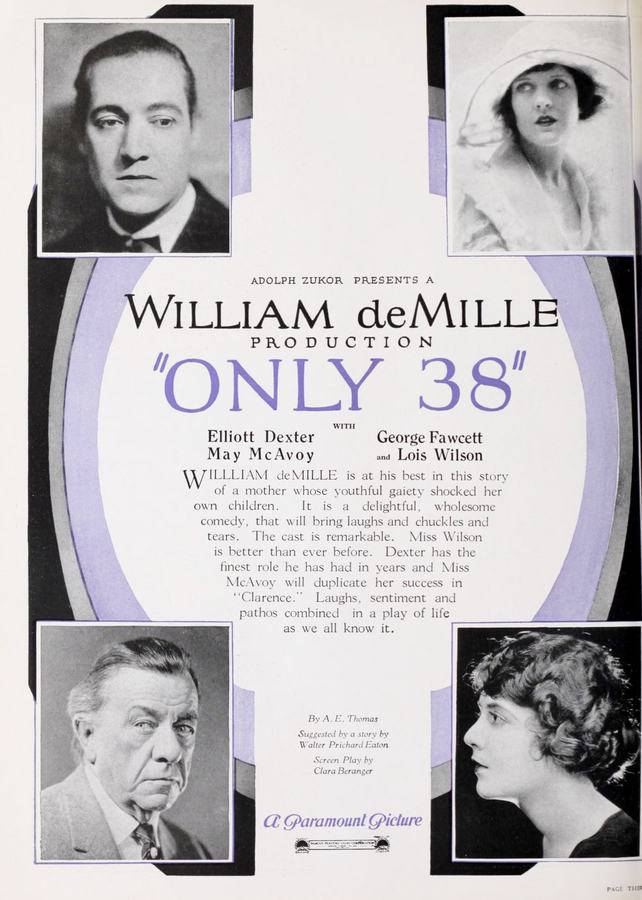
When Only 38 first flickered across the silver screens of 1926, its modest box‑office receipts belied a narrative richness that would later attract the attention of scholars and cinephiles alike. Directed by an unnamed hand but scripted by the adept trio of A.E. Thomas, Clara Beranger, and Walter Prichard Eaton, the film offers a nuanced portrait of a woman navigating the treacherous waters of grief, societal expectation, and self‑actualization.
May McAvoy, known for her luminous presence in The Goddess, embodies Mrs. Stanley with a subtle blend of stoic restraint and simmering yearning. Her eyes, framed by the soft focus typical of the era, convey an interiority that silent intertitles could scarcely capture. Opposite her, Lois Wilson—whose career later blossomed in talkies—delivers a compelling performance as the eldest twin, a character whose moral rigidity mirrors the oppressive values of the pre‑war Victorian household.
Robert Agnew provides the role of the admirer, a dashing yet ultimately secondary figure whose presence serves less as a romantic foil and more as a catalyst for Mrs. Stanley’s awakening. Supporting actors such as Lillian Leighton and Elliott Dexter populate the college setting with a credible academic milieu, while Anne Cornwall’s brief appearance adds a touch of youthful exuberance reminiscent of the era’s Just Out of College.
At its core, Only 38 interrogates the paradox of maternal sacrifice. Mrs. Stanley’s decision to relinquish personal desire for the sake of her children is not portrayed as noble martyrdom alone; it is rendered as a fraught negotiation with self‑identity. The film’s title—an enigmatic reference to the age at which the widow’s husband died—functions as a temporal marker, reminding viewers that life’s milestones are often dictated by external circumstance rather than internal volition.
The twins, ensconced in the rigid discipline of a boarding college, embody the very conservatism that Mrs. Stanley seeks to escape. Their chagrin at their mother’s newfound joie de vivre—exemplified by the dance at the college hop—exposes a generational schism that echoes the cultural shifts of the Roaring Twenties. In this regard, the film anticipates later works such as La belle Russe, which also grapple with the tension between tradition and modernity.
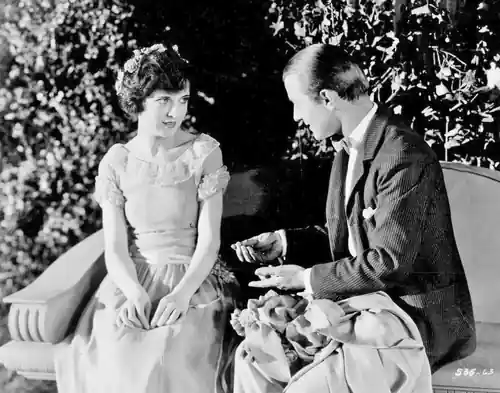
The cinematography of Only 38 employs a restrained palette, leveraging chiaroscuro to emphasize emotional states. Scenes set within the library are bathed in soft, diffused light, casting long shadows that suggest the weight of knowledge and the quietude of Mrs. Stanley’s new vocation. By contrast, the college hop bursts into a kaleidoscope of motion; the camera tracks the dancers with a fluidity that feels ahead of its time, reminiscent of the kinetic energy seen in The Suspect.
Intertitles are sparingly used, allowing the actors’ physicality to carry the narrative weight. This restraint aligns with the silent era’s best practices, where visual nuance superseded textual exposition. The film’s editing is particularly noteworthy: cross‑cuts between the twins’ stern lectures and Mrs. Stanley’s carefree twirl at the hop create a visual dialogue that underscores the thematic clash without a single word spoken.
The screenplay adheres to a three‑act structure that feels both familiar and refreshingly subversive. Act One establishes the bereavement and the logistical decisions that propel Mrs. Stanley into the college environment. Act Two escalates the emotional stakes through the introduction of the admirer, the dance sequence, and the twins’ mounting resentment. The final act resolves with a bittersweet denouement: the twins, confronted with the consequences of their selfishness, glimpse the fragility of their mother’s sacrifice, prompting a tentative reconciliation.
Pacing is deliberate, allowing moments of quiet contemplation—such as the lingering shots of Mrs. Stanley arranging books—to breathe between more dynamic sequences. This rhythm mirrors the internal oscillation between duty and desire that defines the protagonist’s journey.
While Only 38 may not boast the box‑office allure of a D.W. Griffith epic, its thematic ambition aligns it with the more introspective dramas of the mid‑1920s. Its focus on a female protagonist’s agency predates the more overt feminist narratives of later silent films, such as The Goddess. Moreover, the film’s subtle critique of class—evident in the contrast between the modest library and the opulent college hop—offers a socioeconomic reading akin to the social realism found in John Barleycorn.
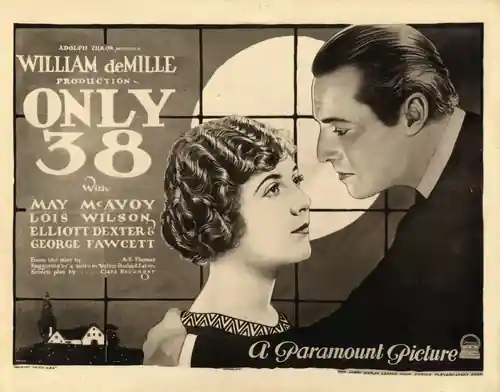
May McAvoy’s performance is the film’s linchpin. Her ability to convey a spectrum of emotions—grief, resolve, tentative joy—through nuanced facial gestures elevates the material beyond melodrama. Lois Wilson’s portrayal of the eldest twin is equally compelling; she exudes an austere rigidity that makes her eventual softening all the more impactful.
Robert Agnew’s admirer, while not the film’s focal point, provides a necessary counterbalance. His brief but earnest courtship underscores the thematic premise that personal happiness can be both a catalyst for growth and a source of conflict when weighed against familial obligations.
Original scores for silent films are often lost to history, yet contemporary screenings of Only 38 have paired it with a piano‑driven accompaniment that accentuates its emotional beats. The music swells during the dance scene, employing a jazz‑inflected motif that situates the film within its era’s cultural zeitgeist, while softer, plaintive melodies underscore the quieter library moments.
In an age where discussions of gender roles and intergenerational dynamics dominate public discourse, Only 38 offers a surprisingly contemporary lens. Mrs. Stanley’s struggle to balance personal fulfillment with maternal responsibility resonates with modern audiences navigating similar dilemmas. The film’s subtle critique of patriarchal expectations—embodied by the twins’ initial disdain for their mother’s autonomy—mirrors ongoing debates about women’s agency in the domestic sphere.
Moreover, the film’s visual language, characterized by its careful composition and restrained editing, provides a masterclass in storytelling without reliance on dialogue—a skill increasingly valued in an era of visual media saturation.
Only 38 stands as a quiet yet potent exemplar of silent‑era drama. Its deft interweaving of personal tragedy, societal critique, and aesthetic restraint renders it a work worthy of re‑examination. While it may lack the spectacle of contemporaneous blockbusters, its emotional honesty and technical proficiency secure its place within the canon of American silent cinema.
For scholars, students, and enthusiasts seeking a film that balances narrative depth with visual elegance, Only 38 offers a rewarding viewing experience. Its themes of sacrifice, autonomy, and the fragile bonds that tie families together continue to echo across decades, proving that even after a century, the film’s core questions remain as relevant as ever.
IMDb —
1921
Community
Log in to comment.