DbcultAccessing Vault...
4.2/10
Senior Film Conservator
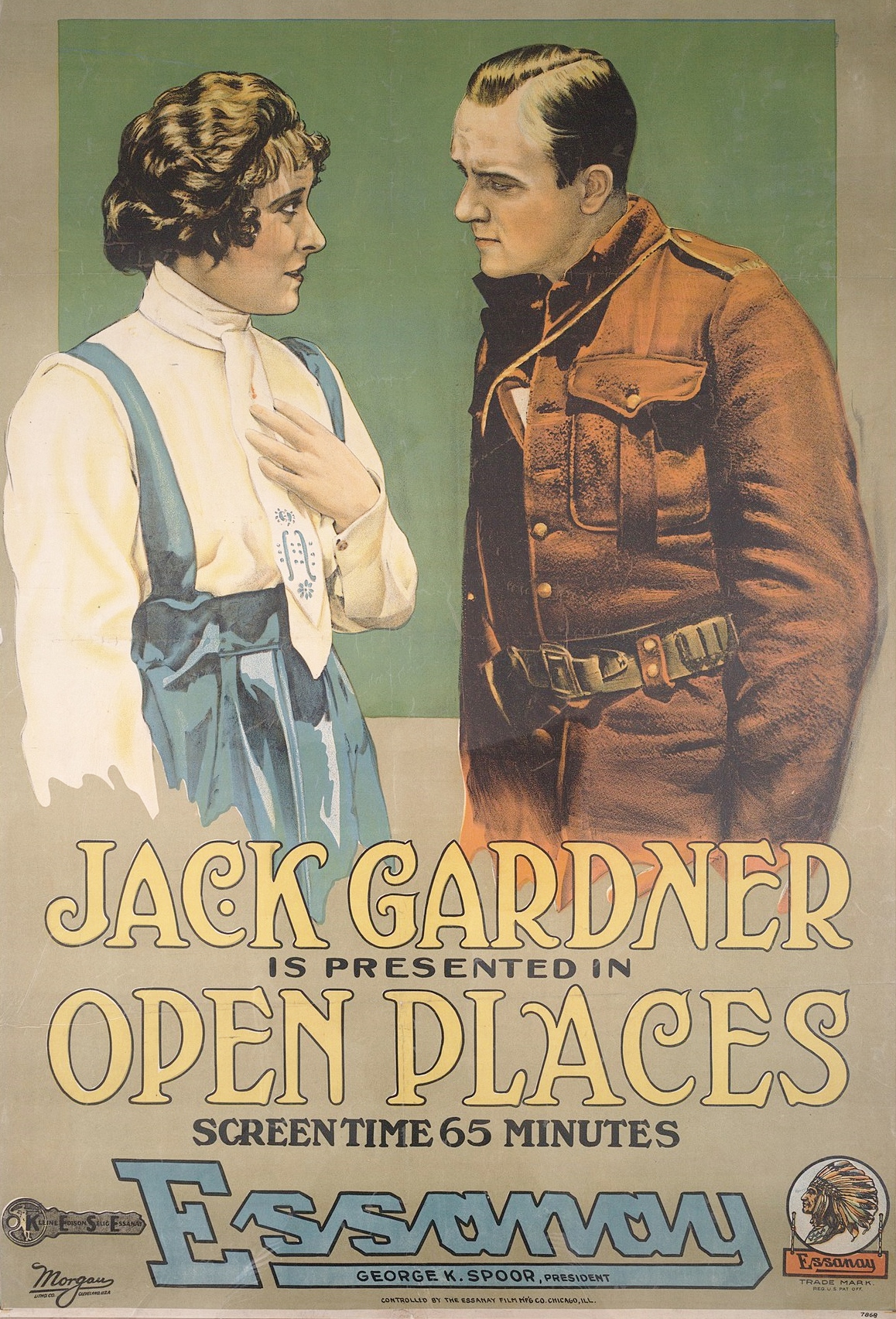
A definitive 4.2/10 rating for a film that redefined the boundaries of cult cinema. Open Places remains a cornerstone of transgressive art.
In the annals of early cinema, particularly within the burgeoning Western genre, certain films resonate with a raw, unvarnished truth about human nature, even through the flickering silence of the silver screen. W.S. Van Dyke's Open Places, a 1917 release, stands as a compelling testament to this, offering far more than a simple narrative of good versus evil on the frontier. It delves into the complex interplay of idealism and harsh reality, the seductive pull of the untamed, and the enduring strength of a woman caught in its unforgiving embrace. This isn't just a tale; it's a deep psychological exploration, a silent symphony of shattered dreams and nascent hope, played out against the vast, indifferent canvas of the American West.
Our protagonist, Mollie Andrews, portrayed with a nuanced vulnerability by Ruth King, embodies the quintessential New England spirit: refined, educated, and imbued with a romanticized vision of the world. Her journey to Rawhide, Montana, isn't merely a geographical relocation; it's a symbolic migration from the structured civility of the East to the rugged, often brutal, spontaneity of the West. Mollie arrives with a mission, not just to teach children, but to "teach the west" its manners, a charmingly naive ambition that sets the stage for her profound disillusionment. Her initial impressions of Dan Clark, played by Jack Gardner, are steeped in this romantic lens. Clark, with his picturesque frontier persona, represents the very allure that drew Mollie westward – a figure of raw masculinity, untamed yet seemingly honorable. It's a classic cinematic trope, yet here, it's handled with a subtle foreshadowing of the tragedy to come. Mollie's heart, susceptible to grand gestures and the mystique of the cowboy, quickly succumbs to Clark's charm, leading to a hasty marriage. The swiftness of their union underscores Mollie's eagerness to embrace this new life, to become part of the frontier mythos she so admired. This initial phase of their relationship, though brief, is crucial; it establishes the foundation of Mollie's idealism, making its subsequent shattering all the more impactful.
The honeymoon, however, proves to be a tragically short-lived idyll. Clark's true character, a dark, volatile undercurrent beneath his charming exterior, quickly surfaces. His transformation from romantic hero to brutal husband is swift and chilling, laying bare the harsh realities that often lurked beneath the surface of frontier life. This isn't just a personal failing; it's a commentary on the untamed aspects of the West itself, where law and order were often secondary to primal impulses. Clark's brutality isn't merely emotional; it escalates to physical violence, culminating in a cold-blooded slaying of one of his own kind. This act of violence is the ultimate betrayal, not just of Mollie's trust, but of her very worldview. Clark's subsequent flight across the border to Canada leaves Mollie adrift, not only widowed in spirit but also burdened by the weight of a broken dream and a shattered heart. The film masterfully conveys her isolation and despair through King's expressive performance, relying on subtle gestures and poignant gazes to communicate the profound depth of her suffering. This narrative arc, reminiscent of the stark moral quandaries presented in films like The Warning, explores the devastating consequences when human depravity is unleashed in an environment lacking immediate, structured retribution.
The year that follows Clark's escape is a crucible for Mollie. It's a period of profound introspection, a forced education in the harsh realities of mankind that her sheltered New England upbringing could never have prepared her for. This solitude, however, is not absolute. Into her desolate existence steps Constable Calhoun of the Royal Mounted Police, played by Carl Stockdale. Calhoun is the antithesis of Clark: steadfast, honorable, and quietly devoted. His occasional calls are not mere duty; they are acts of genuine friendship, beacons of stability in Mollie's turbulent world. The film beautifully charts the slow, organic ripening of their mutual regard into a deep, abiding love. It's a love born not of passion and hasty romance, but of shared understanding, respect, and a quiet resilience forged in adversity. Calhoun represents the promise of genuine partnership, a stark contrast to the destructive force that was Clark. However, Mollie, bound by a deeply ingrained sense of marital fidelity, struggles with her burgeoning feelings. Her commitment to her vows, even to a man who has so grievously betrayed her, speaks volumes about her character and the societal expectations of the era. This internal conflict is a powerful dramatic device, highlighting the moral complexities of her situation and preventing her character from becoming a mere damsel in distress.
The narrative tension reaches its zenith with Clark's unexpected return. His reappearance shatters the fragile peace Mollie has painstakingly built, forcing her to confront the past she had hoped to outrun. In a desperate bid to avert further tragedy, Mollie exacts a solemn promise from Calhoun, leveraging the strength of his love for her: he will not harm Clark until the latter strikes the first blow. This promise, born of Mollie's lingering hope for redemption or perhaps a final, desperate attempt at peace, places Calhoun in an agonizing predicament, torn between his duty as a lawman and his devotion to Mollie. It's a moment of profound moral dilemma, echoing the difficult choices faced by characters in films like The Secret Man, where personal allegiances clash with the demands of justice. Predictably, the beast within Clark, untamed and consumed by jealousy, cannot be restrained. He unjustly accuses Calhoun of undue attentions to Mollie, a projection of his own villainy, and launches a violent attack. The ensuing struggle is raw, brutal, and tragically inevitable. In the chaotic maelstrom of frontier justice, Clark falls dead. This climactic confrontation is not merely a resolution; it's a brutal act of fate, liberating Mollie from her agonizing marital shackles. The silent film medium, in this instance, amplifies the visceral impact of the struggle, allowing the audience to project their own understanding of the characters' desperation and the finality of the outcome.
Open Places, despite its relatively early production date, explores a rich tapestry of themes that remain pertinent even today. At its core, it's a profound meditation on the enduring conflict between civilization and savagery, both within the landscape of the American West and within the human heart. Mollie's journey from New England's ordered society to Montana's untamed frontier mirrors her internal struggle to reconcile her romantic ideals with the brutal realities she encounters. Dan Clark embodies the raw, untamed savagery, a force of destructive impulse, while Constable Calhoun represents the nascent forces of law, order, and compassionate civilization seeking to establish a foothold in the wilderness. The film also delves deeply into the theme of loyalty. Mollie's unwavering, almost self-sacrificing, fidelity to her marriage vows, even in the face of immense suffering, is a central pillar of her character. It speaks to a deeply ingrained moral code, perhaps a reflection of societal expectations of the time, that transcends personal happiness. Her eventual liberation is not a joyous abandonment of loyalty, but a tragic release from a bond that had become a source of torment.
Redemption, though not for Clark, is a subtle undercurrent for Mollie. Her journey through disillusionment and hardship ultimately leads her to a place of genuine connection and hope. The harsh lessons learned on the frontier shape her into a stronger, more resilient woman, capable of appreciating true companionship. The film also subtly critiques the romanticized notions of the West, exposing the inherent dangers and moral ambiguities that lay beneath the surface of its picturesque allure. It suggests that true heroism lies not in the flamboyant, but in the quiet steadfastness and integrity of individuals like Calhoun, who strive to uphold justice and compassion amidst chaos. This nuanced portrayal of frontier life distinguishes Open Places from more simplistic Westerns of its era, placing it alongside thoughtful dramas like The Captive, which similarly explores the resilience of individuals in challenging environments.
For a film from 1917, the performances in Open Places are remarkably effective in conveying the complex emotional landscape of the narrative. Ruth King, as Mollie Andrews, carries the emotional weight of the film with grace and conviction. Her portrayal of Mollie's transformation from wide-eyed idealist to a woman hardened by experience, yet still capable of profound love, is particularly commendable. King's expressive eyes and subtle body language communicate volumes in the absence of spoken dialogue, allowing the audience to deeply empathize with her plight. Jack Gardner, as the duplicitous Dan Clark, effectively embodies the charm and underlying menace of his character. He manages to make Clark both initially appealing and ultimately repulsive, a testament to his ability to convey character nuances through physical presence. Carl Stockdale, as Constable Calhoun, provides a grounding force. His performance is one of quiet strength and unwavering integrity, making his character a believable and admirable foil to Clark. Stockdale's portrayal of a man bound by duty yet driven by love adds a powerful layer of dramatic tension to the film's climax.
W.S. Van Dyke, still early in his prolific career, demonstrates a nascent talent for storytelling and character development. While the cinematic language of 1917 was still evolving, Van Dyke effectively uses the available techniques to build suspense, convey emotion, and establish the vastness of the Montana landscape. His direction, though perhaps lacking the sophisticated camera work of later decades, is clear and purposeful, focusing on the narrative and the emotional arcs of his characters. The pacing of the film, from the rapid romance to the year of quiet suffering and the explosive climax, is well-managed, maintaining audience engagement throughout. Considering the technological limitations and the nascent state of film as an art form at the time, Van Dyke manages to craft a compelling and emotionally resonant drama. His ability to elicit such strong performances from his cast, particularly King, suggests an innate understanding of human drama that would serve him well in his subsequent, more celebrated works. The visual composition, though simple, effectively uses the open spaces of the West to emphasize Mollie's isolation and the grandeur of the setting, a common yet effective element in early Westerns, much like those seen in The White Scar.
Open Places, while perhaps not as widely remembered as some of the epic silent films, holds significant value as a window into the thematic concerns and narrative structures of early American cinema. It contributes to the rich tapestry of the Western genre, moving beyond simplistic shoot-outs to explore the psychological toll of frontier life on its inhabitants, particularly women. The film's portrayal of a strong female protagonist, who, despite her initial naivety, ultimately navigates profound adversity with resilience, is noteworthy for its time. Mollie Andrews is not merely a passive object of male conflict; she is an active participant in her own destiny, even when constrained by societal expectations and tragic circumstances. The film's exploration of moral ambiguity, the blurred lines between justice and personal vengeance, and the slow, arduous path to genuine love, elevates it beyond mere entertainment. It's a reminder that even in the silent era, filmmakers were grappling with complex human emotions and societal dilemmas, using the nascent power of the moving image to tell stories that resonated deeply with audiences. Its focus on character development and emotional realism, rather than just spectacle, makes it a compelling watch for anyone interested in the evolution of cinematic storytelling. It stands as a precursor to more sophisticated Western dramas, demonstrating the genre's early capacity for depth and nuance. Like other character-driven dramas of the era, such as Dollars and the Woman, it highlights the struggles of individuals against overwhelming circumstances.
In conclusion, Open Places is a powerful and often heartbreaking film that offers a compelling look at the harsh realities of the American frontier through the eyes of a woman whose idealism is brutally shattered. Its nuanced performances, particularly by Ruth King, and W.S. Van Dyke's effective direction, craft a narrative that is both tragic and ultimately redemptive. It serves as a valuable historical document, showcasing the early strengths of silent cinema in conveying complex human drama without a single spoken word, leaving a lasting impression on the viewer about the enduring human spirit in the face of immense adversity. The film's exploration of themes like fidelity, betrayal, and the quest for a just resolution resonates strongly, making it a significant, if understated, piece of cinematic history that deserves to be revisited and appreciated for its profound emotional depth and its contribution to the foundational myths of the West.
IMDb 5.7
1925
Community
Log in to comment.