DbcultAccessing Vault...
Cult Review
Senior Film Conservator
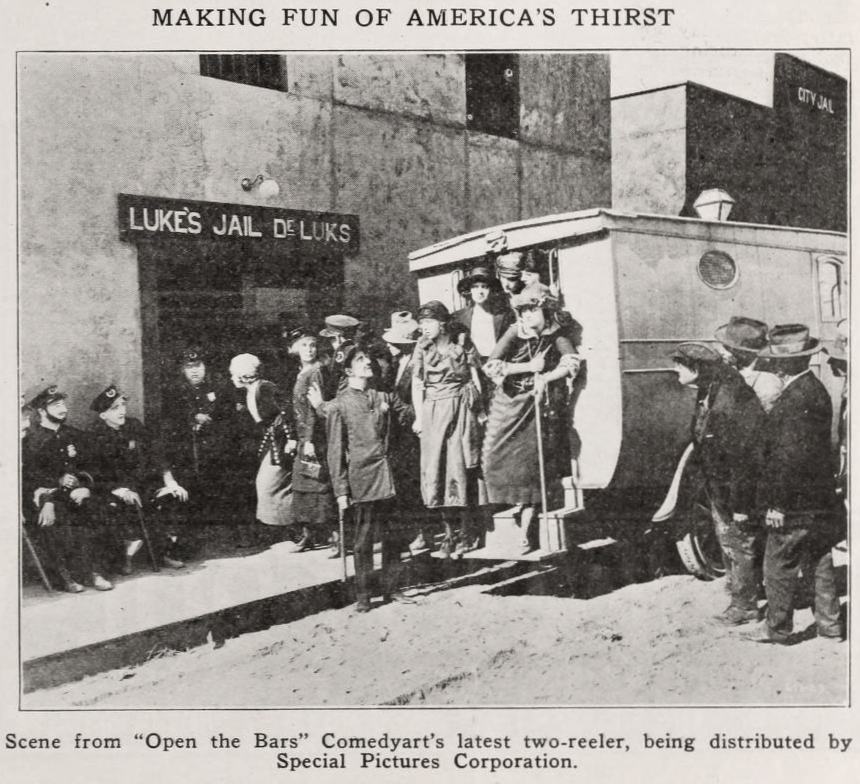
The first time the camera ogles Milburn Morante’s profile—nose like a snapped wishbone, eyes recessed as bullet holes in wet cement—it dawns on you that Open the Bars is not beckoning toward comfort. This 1919 one-reeler, long buried in the shadow of more flamboyant siblings such as Conquered Hearts or The Vampires: The Thunder Master, insists on a claustrophobia so literal that even the intertitles feel like iron slats. Morante plays Abner Cog, a nickel-cage custodian at a roving fairground where the Ferris wheel never stops because the brake lever was pawned for gin money. His backstory arrives late, stitched in like a patch of burlap: once a prison warden, he now polices a different kind of cell—children who gawp at two-headed calves and women who dance wearing moth-eaten peacock feathers.
Enter James Parrott’s scrappy newsboy, Tommy Dibs, a whippet of kinetic defiance. Parrott, better remembered for his later Laurel & Hardy gag-writing, here gifts the silent frame a spasmodic jitter: every shrug of his patched jacket is a Morse code for let me out. He lifts wallets the way poets pocket metaphors—swift, desperate, convinced ownership is a bourgeois myth. When he’s caught red-handed filching the carnival’s gate receipts, Abner must choose: hand the brat over to a magistrate who signs decrees with the same flourish he uses to swat flies, or drag him through the underbelly where justice is measured in flickering gaslight.
Liberty, the film whispers, is just another attraction with a broken turnstile.
Director Reeve McClure (his only surviving credit) refuses the moral absolutes that lubricated most Progress-Era melodramas. Bars clang shut not to punish but to exhibit: the orphanage is a diorama of starched collars and half-empty porridge bowls; the courtroom, a proscenium where attorneys pose like ham actors waiting for applause that never arrives. McClure’s camera—static by necessity yet restless in spirit—lingers on textures: the velvet nap worn off a judge’s rail, the bubbled varnish of a bench where generations of backsides have etched their sorrow. Each texture becomes a bar, each bar a thesis on how institutional rot seeps into skin.
The film’s temporal hopscotch predates When the Clouds Roll By’s Freudian dreamscape by a full decade. A single match-cut—Tommy striking sulfur in a dank stairwell—ignites a flashback of Abner’s own boyhood incarceration inside a workhouse where oatmeal came with weevles and hope arrived pre-crushed. No title card announces the rupture; the splice itself is the trauma, a celluloid scar. We glean that Abner’s obsession with cages germinated not from cruelty but from empathy so fierce it calcified into stoicism.
Morante’s physiognomy carries silent-era baggage: the arched brows of a circus clown, the hunched shoulder of a penitent monk. Watch the way he removes his bowler—slow, as if afraid the air itself might bruise his scalp—and you witness a man unpicking the last seams of authority. His pantomime is microscopically calibrated: when Tommy calls him “sarge,” the flicker under Abner’s left eyelid is both salute and flinch, a whole military career court-marshaled in a tic.
Parrott counters with rubber-limbed volatility. In a scene destined for anthologies (should any exist), Tommy attempts to pick the lock on Abner’s roll-top desk using a hairpin and a cracked photo of his dead mother. The camera holds at waist level; Parrott’s knees jitter like sewing-machine needles, his shadow boxing with the desk’s claw feet. The moment is comic yet harrowing—childhood trying to jimmy open adulthood with a relic of love.
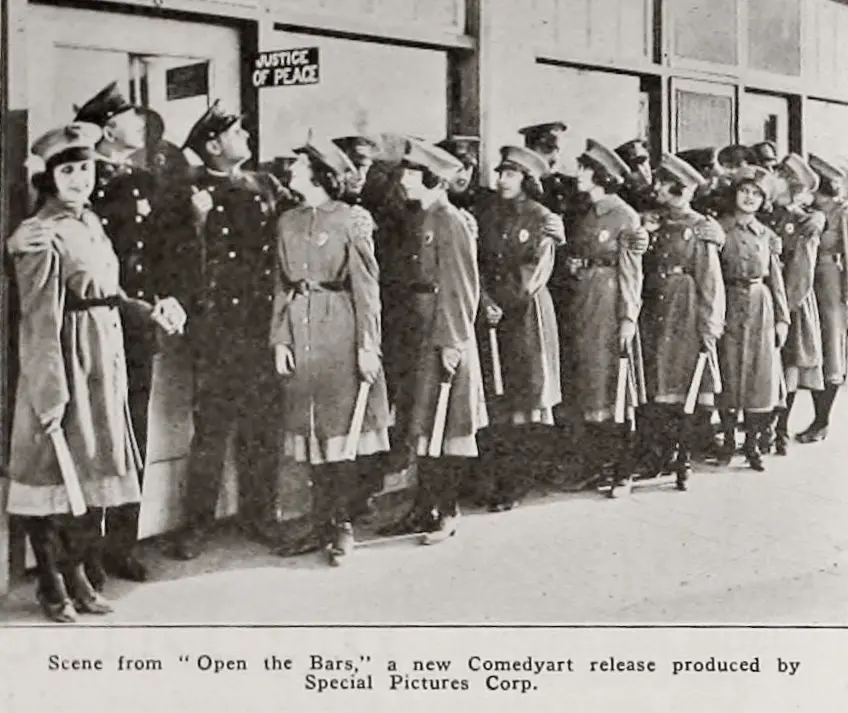
Cinematographer Gus P. Ritchey (who shot mountain actualities for the Department of the Interior) imports a documentary harshness. Day interiors are under-lit, forcing faces to swim forward from inkwell darkness, eyelids glowing like paper lanterns. Night exteriors, by contrast, bloom with over-exposure: streetlamps become magnesium flares, windows burn white as if every tenement houses its private inferno. The strategy inverts expectation—prisons are dim, freedom blinding—cueing us that liberation may scorch worse than incarceration.
Compare this to the pastoral glow of Heidi or the orientalist shimmer in For the Freedom of the East; here, beauty is suspect, illumination an interrogation lamp.
Most silents of the era spoon-feed; Open the Bars ladles vinegar. One card reads: “A key is just a crooked finger beckoning you toward the next lock.” Another, superimposed over Tommy’s first night in juvenile detention, declares: “Sleep fast—the walls measure growth by the inch.” The syntax is modernist, anticipating the caustic placards of A Lion in the House.
No musical cue sheets survive. Modern screenings often pair it with moody improvisations—dobro scrapes, glass harmonica drones. I saw it at the Castro with a trio wielding prepared piano and spring coils; every time Abner slammed a gate, the pianist struck the lowest A and let it throb until breath itself felt incarcerated. The synergy was so uncanny I half-suspected McClure had composed the film for future ears.
Women here traffic in keys as currency. A nameless matron (often mis-credited as Virginia Chester) unhooks her garter belt to smuggle file shavings; a preacher’s daughter palms the jailhouse rosary like lock-picks. Their crimes are less legal than cartographical—drawing maps out of kitchens and parlors, spaces cartographers labeled female. The film quietly queers the prison genre: the most tender embrace occurs between Tommy and Abner, a surrogate family forged in opposition to the heteronormative household that expelled them.
Why did Open the Bars evaporate from canon while The Land of Promise or Ashes of Love still circulate? Partial blame lies in its refusal of uplift. The final shot—two silhouettes stepping into a sunrise that looks suspiciously like a furnace—offers no guarantee. Distributors of 1919 wanted redemption, not prophecy. Add a fire at the Kansas storage vault in 1952, and the picture entered the phantom zone.
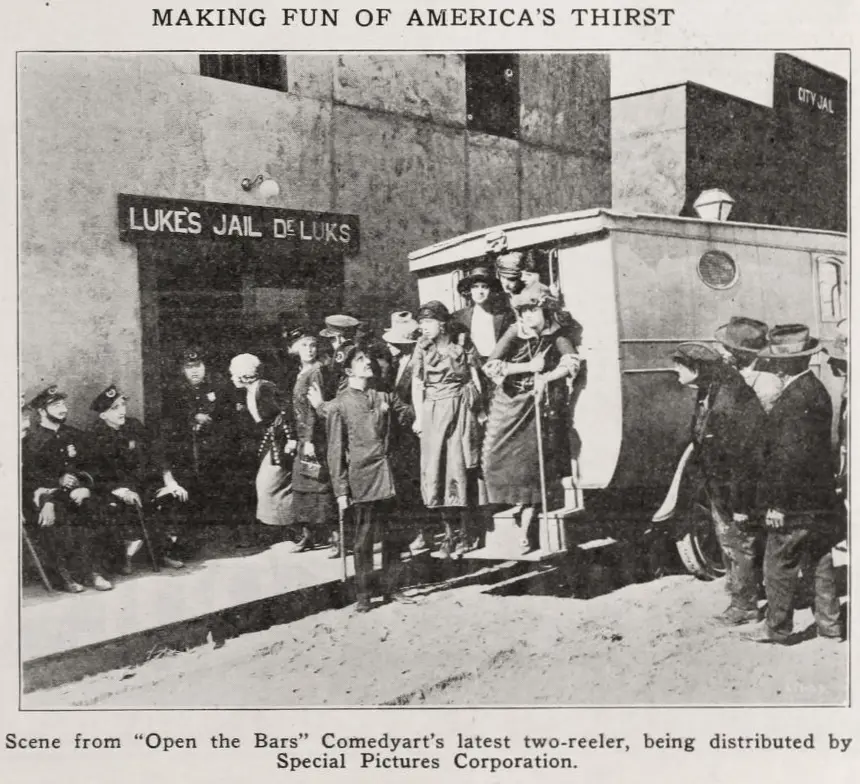
Yet fragments haunt later cinema. The child-with-escaped-convict dyad resurfaces in I Am a Fugitive, the carnival-as-microcosm in Nightmare Alley. McClure’s editing cadence—insert shot of a padlock clicking, followed by a child’s eyelid in extreme close-up—anticipates Soviet montage. Even the color palette (what we can glean from tinting notes) prefigures the sulfuric yellows and bruised blues that David Fincher fetishizes.
A 28-minute 16 mm reduction print surfaced in a Slovenian monastery in 2017, dubbed in Serbo-Croatian for provincial parish education. The intertitles were re-shot, the edges chewed by vinegar syndrome. Digital 4K scans reveal fingerprint whorls on the lens—possibly Ritchey’s—like ghost signatures approving every frame. Current restorations tint night scenes malachite and day scenes sepia, a reversal that paradoxically heightens the existential vertigo.
Watching children behind bars in 2024 carries a frisson the filmmakers could not have calculated. The newsboy’s rags evoke today’s unaccompanied minors warehoused at borders; Abner’s moral paralysis mirrors bureaucratic shrug emojis. To aestheticize suffering always courts danger, yet McClure’s gaze is not voyeuristic but forensic. He counts the vertebrae visible through Tommy’s shirt the way a social worker tallies bruises.
Set it beside Crooked Straight and you notice both traffic in moral quicksand, yet Open the Bars refuses the deus-ex-machina pardon. Pair it with Beulah and you see two visions of surrogate parenting—one bathed in evangelical glow, the other in soot. Against European pessimists like Der Thug. Im Dienste der Todesgöttin, McClure’s American agnostic dread feels pragmatic, a scar rather than a brand.
The last image we have is not the triumphant exit but a medium shot inside the jail corridor: Abner’s hand releasing Tommy’s collar, the two staring at a doorframe blazing with over-exposed daylight. Cut to black. No fade-out, no iris. Just cessation, as if the projector itself were escorted out. It’s the rare silent film that trusts the audience to supply the closing gasp.
That gasp, dear reader, is the real bar. And yes, it swings open—onto silence.
IMDb —
1929
Community
Log in to comment.