DbcultAccessing Vault...
Cult Review
Senior Film Conservator
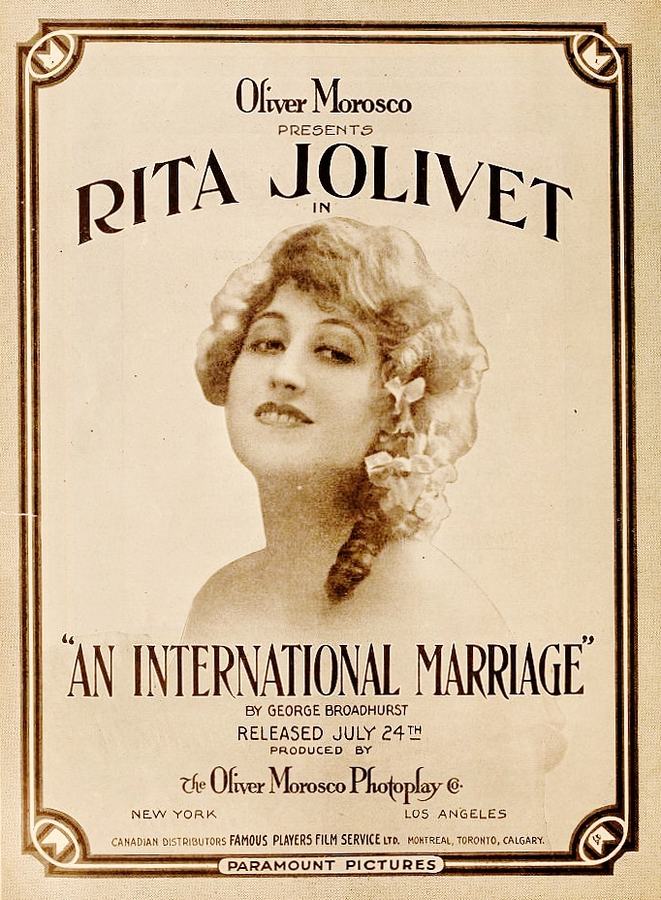
The Alchemy of 1916 Cinema
The year 1916 represented a pivotal threshold in the evolution of the moving image. It was an era where the primitive aesthetics of early short films were being discarded in favor of sophisticated, multi-reel narratives that sought to capture the complexities of the human condition. In the center of this metamorphosis stands An International Marriage, a production that transcends its era's penchant for melodrama to offer a biting critique of international relations and class mobility. Directed by Frank Lloyd and penned by the prolific George Broadhurst, this film is not merely a relic; it is a vibrant document of the American psyche at the dawn of the twentieth century.
The film introduces us to Florence Brent, portrayed with a luminous intelligence by Rita Jolivet. Jolivet, who had survived the sinking of the Lusitania only a year prior, brings a palpable gravitas to the role of the laundry heiress. In the silent era, actors often relied on exaggerated gesticulation to convey emotion, but Jolivet’s performance is remarkably restrained. She embodies the 'New Woman'—independent, wealthy, yet tethered to a sense of duty that feels both archaic and revolutionary. Her character’s journey from the industrial grit of her father’s laundry empire to the polished marble of Washington D.C. serves as a metaphor for the American dream’s ascent into global prominence.
The Architecture of Corruption
At the heart of the narrative is the Duke of Buritz, a character who represents the systemic rot of European autocracy. Unlike the pastoral innocence found in The Wishing Ring: An Idyll of Old England, which looked back with nostalgia at a simpler time, An International Marriage peers forward into the murky waters of political lobbying and moral compromise. The Duke's attempt to corrupt Congressman John Oglesby (Page Peters) is portrayed not through grand speeches, but through the subtle manipulation of social standing and romantic entanglements. It is a precursor to the modern political thriller, where the stakes are not merely personal happiness, but the very soul of a nation’s governance.
"The film operates on a dual frequency: it is both a drawing-room comedy of manners and a stern warning against the seductive lure of titles and inherited prestige. It suggests that while American money might be 'new,' it is far cleaner than the ancient bloodlines of the continent—a sentiment that echoed loudly as the United States prepared to enter the Great War."
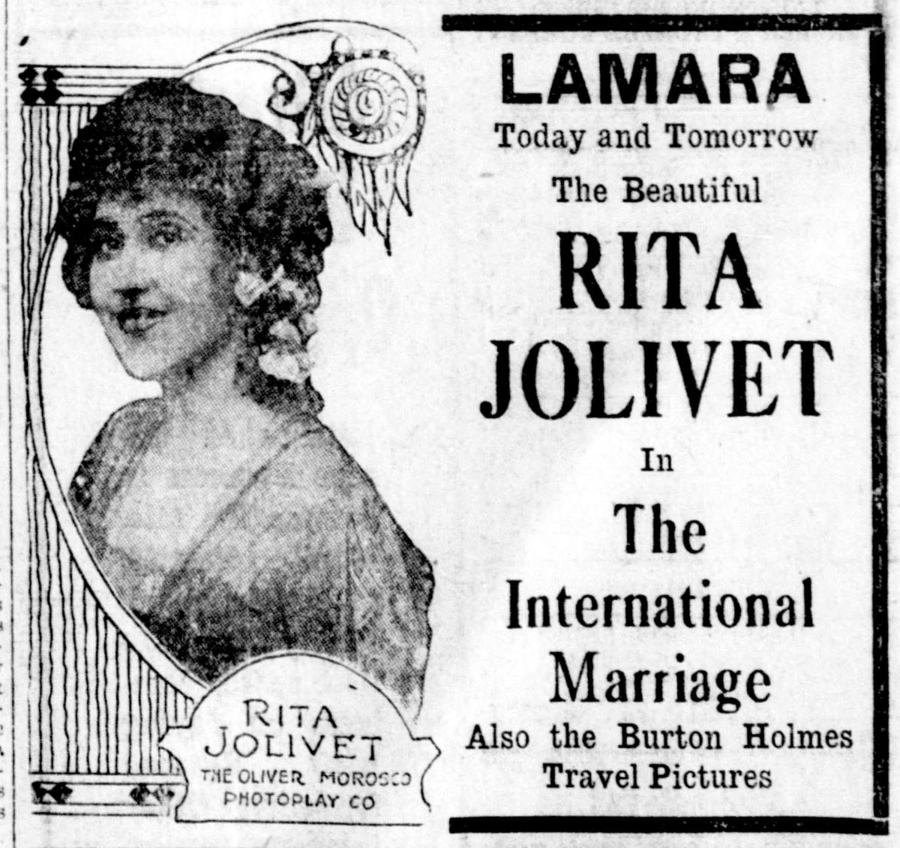
When we compare this work to contemporary releases like Peggy, starring Billie Burke, we see a stark difference in tone. While Peggy leans into the whimsical and the lighthearted, Broadhurst’s script for An International Marriage is suffused with a cynical realism. The betrayal of Eleanor Williamson by her fiancé, the Count, is handled with a cold efficiency that mirrors the transactional nature of high-society marriages. This thematic darkness is also present in international works of the time, such as the Russian drama Bespridannitsa, where the commodification of women is a central, tragic motif.
Visual Storytelling and the Static Frame
Cinematographically, the film utilizes the deep focus and elaborate set designs characteristic of the mid-1910s. The Brent household is rendered with a meticulous attention to detail that emphasizes their mercantile success, contrasting sharply with the decadent, slightly suffocating elegance of the Washington salons. The camera remains largely static, a common trait of the period, yet Lloyd manages to create a sense of movement through the blocking of actors. There is a specific scene where the Count first encounters Florence that is framed with such geometric precision that it rivals the compositions of The Vanderhoff Affair.
The film’s pacing is deliberate, allowing the audience to soak in the nuances of the Duke’s machinations. In an era where films like The Shielding Shadow were pushing the boundaries of serial action, An International Marriage remains steadfast in its commitment to the psychological drama. It shares more DNA with the character-driven narratives of Judge Not; or the Woman of Mona Diggings than with the slapstick energy of The Man from Mexico.
The Script as a Political Weapon
George Broadhurst was a man of the theater, and his transition to film brought with it a sophisticated understanding of dialogue—or in this case, the intertitle. The titles in An International Marriage are not merely functional; they are sharp, evocative, and often dripping with irony. He captures the vernacular of the American industrialist and the haughty disdain of the European elite with equal precision. This linguistic dexterity is reminiscent of the complex social hierarchies explored in Lyubov statskogo sovetnika, where the bureaucracy of the state becomes a prison for the characters' desires.
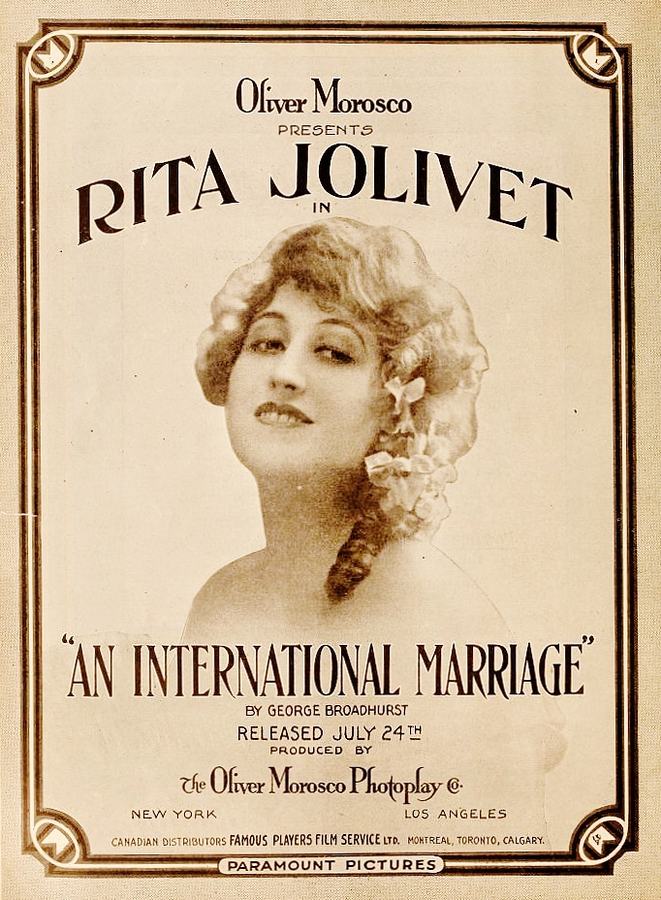
One cannot overlook the performance of Elliott Dexter as the Count. Dexter, who would later become a staple of Cecil B. DeMille’s films, plays the Count with a fascinating ambiguity. He is not a mustache-twirling villain but a man caught between the expectations of his station and the genuine, albeit misplaced, attraction he feels for Florence. This nuance elevates the film above the standard 'foreign villain' trope seen in The Prince of Graustark. In Broadhurst’s world, everyone is a victim of their own social programming.
Legacy and Cultural Impact
Why does a film about a laundry heiress and a corrupt Duke matter today? Because it documents the precise moment when America began to see itself as the moral arbiter of the world. The exposure of the Duke and Count’s duplicity by Congressman Oglesby is portrayed as a victory for transparency and democratic values. It is the same moral certainty that fueled epics like From the Manger to the Cross, though applied here to the secular world of politics and marriage.
The film also touches on the concept of 'A Woman's Honor', a recurring theme in 1910s cinema as seen in A Woman's Honor. However, Florence Brent’s honor is not something to be protected by men; she is the one who ultimately navigates the social minefield to protect her friend Eleanor and her own reputation. She is a proactive protagonist, a far cry from the passive heroines of earlier Victorian-style dramas. This shift in female agency is a hallmark of the era, reflecting the real-world movements for suffrage and economic independence.
Furthermore, the film’s exploration of the 'international' aspect—the friction between different national identities—presaged the globalization of the film industry itself. As American films began to dominate the global market, stories like this served as a form of cultural soft power, exporting the image of the honest, hardworking American overcoming the devious European aristocrat. It is a narrative thread that can be traced through decades of cinema, from the silent era to the modern blockbuster.
Technical Merits and Restoration
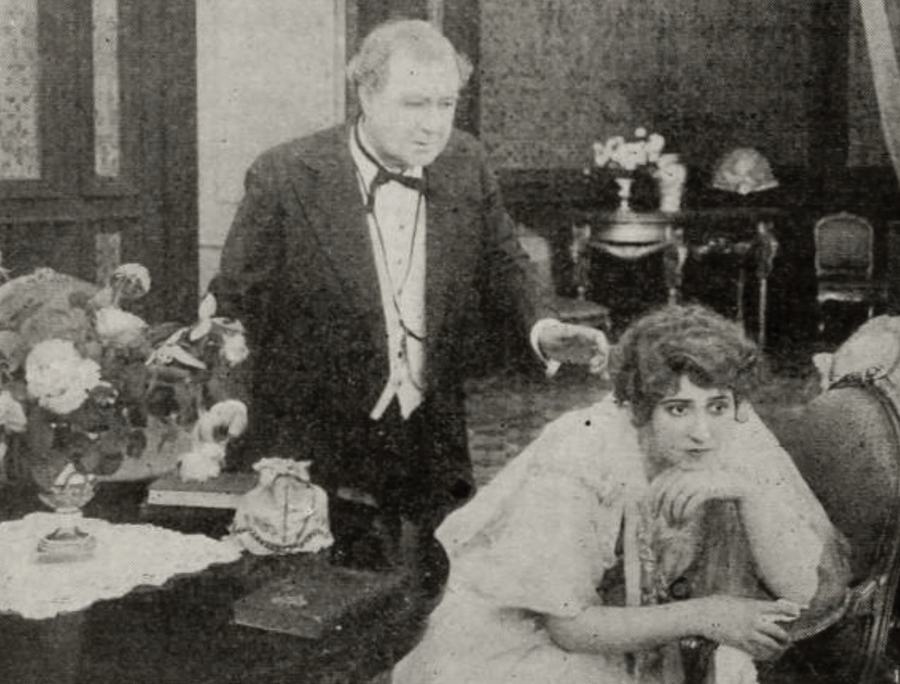
The survival of films from 1916 is a miracle of archival preservation. While many of its contemporaries, such as The Dead Alive or The Girl and the Game, have suffered from the ravages of nitrate decay, the extant footage of An International Marriage reveals a production of high technical caliber. The lighting, particularly in the night scenes and the interior of the Brent mansion, shows an early experimentation with chiaroscuro that would later be perfected in the German Expressionist movement.
The film’s score, if one were to hear the original theatrical accompaniment, would likely have mirrored the shifting moods—from the industrial rhythm of the laundry scenes to the sweeping, operatic strings of the Washington balls. Even without the sound, the visual rhythm of the editing conveys a specific musicality. The way Lloyd cuts between the Duke’s clandestine meetings and Florence’s social triumphs creates a sense of impending collision that is almost visceral.
In the broader context of 1916, a year that gave us experimental narratives like Half a Rogue and religious spectacles, An International Marriage stands out for its grounded, almost cynical take on the 'happily ever after' trope. It acknowledges that marriage is often a political alliance, and that love is a luxury that must be fought for against the backdrop of social expectation. The ending, while satisfying the audience's desire for justice, leaves a lingering question about the cost of such victories.
A Final Critical Appraisal
To watch An International Marriage today is to engage with a ghost that still has much to say. It is a film that refuses to be categorized simply as a 'romance' or a 'drama'. It is a sociological study, a political manifesto, and a showcase for one of the silent era’s most resilient stars. Rita Jolivet’s Florence Brent remains a compelling figure—a woman of substance in a world of shadows. The film reminds us that the themes of corruption, class envy, and the search for authentic connection are not modern inventions, but eternal struggles that cinema has been documenting since its inception.
As we look back at the filmography of 1916, it is easy to get lost in the sheer volume of output. Yet, An International Marriage deserves a prominent place in the canon. It lacks the saccharine sentimentality of Angel of His Dreams and replaces it with a muscular, intellectual rigor. It is a film that respects its audience’s intelligence, inviting them to look beneath the surface of the 'international' glamour to see the gears of power turning. For any serious student of film history, or any lover of the silent screen, this film is an essential chapter in the story of how movies learned to speak to the soul of a nation.
The enduring power of this work lies in its refusal to offer easy answers. While the Duke is exposed, the social structures that allowed him to flourish remain intact. Florence may have found clarity, but she remains the daughter of the 'laundry king,' a title that carries its own weight of expectation. In this complexity, An International Marriage finds its truth, standing as a testament to the sophistication of early American cinema and the timeless allure of a story well told.
IMDb 5.1
1932
Community
Log in to comment.