DbcultAccessing Vault...
Cult Review
Senior Film Conservator
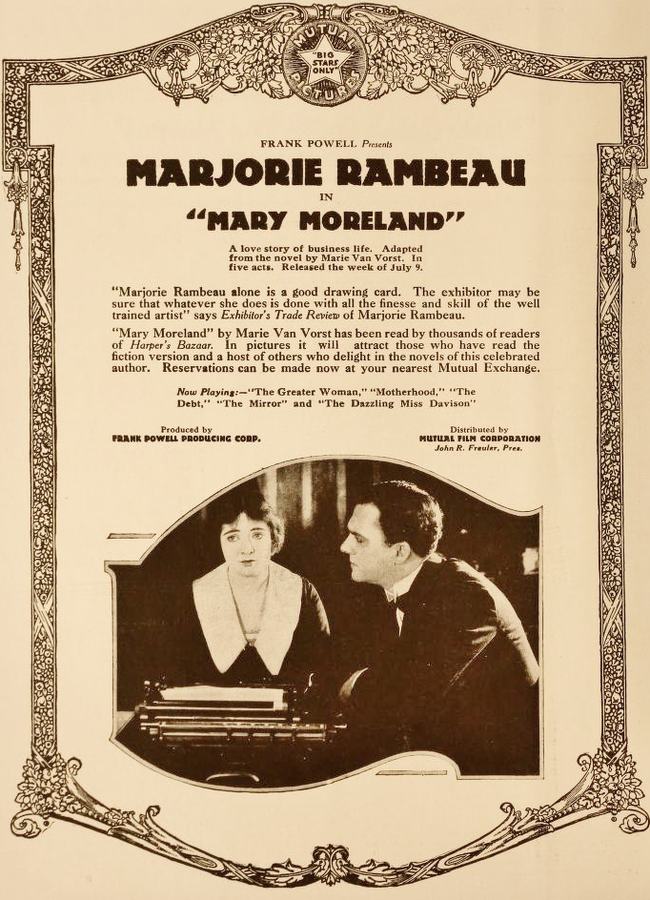
Picture Manhattan, 1920: the skyline still teething, jazz bleeding from basement doorways, and the air thick with the perfume of new money and older sins. Into this crucible strides Thomas Maugham, a Wall Street colossus whose tailored pinstripes can’t hide the hairline cracks in his composure. He intends to discard his wife the way one dumps ailing stock—swiftly, clinically—yet the moment he dictates the break-up epistle to his unassuming secretary, the transaction mutates into something volatile and profane.
The camera, hungry and unblinking, drinks in every flicker across Mary Moreland’s face: the micro-twitch of an eyebrow, the swallow that ripples down her throat like a skipped pebble. Within these granular reactions lies the entire emotional cosmos of the picture. You realize—long before Thomas does—that the real commodity exchanging hands here is not a letter but a soul. The office set itself becomes a character: venetian-blind shadows slicing the men like prison bars, the relentless tick of a bronze clock counting down to a love that will never enjoy the luxury of time.
When the two lovers finally speak their truth, the moment lands with the hush of snowfall rather than the bombast typical of Intolerance-era melodrama. No swells of orchestral strings on the soundtrack—just the cavernous silence of a room suddenly too small for everything left unsaid. Their plan to reunite in Boston feels less like a romantic elopement and more like two convicts synchronizing a jailbreak from the self-constructed prisons of duty and decorum.
Enter the wife—Mrs. Maugham, given crimson life by Marjorie Rambeau in a performance that oscillates between predatory and pathetic. She slinks into the office, all mink and menace, to deliver the film’s poisoned aria: “I still love him.” Three words, but Rambeau stretches them over a fault line of desperation so raw you can almost smell the perfume turning sour. Her presence reframes the triangle: suddenly Mary is no longer the underdog ingénue but the inadvertent usurper of another woman’s ruin. Moral calculus, once binary, fractures into prismatic ambiguity.
Ashamed, Mary recants her own happiness with a severity that feels almost biblical. She becomes both Judas and Christ—betraying love for a higher, crueler ideal of self-sacrifice. Thomas, stripped of agency twice over, is shoved back into the velvet shackles of matrimony. The remainder of the film charts the ricochet: train whistles in the throat of night, telegrams fluttering to the floor like wounded birds, and a Boston hotel lobby haunted by the after-image of two silhouettes that never arrive.
Robert Elliott’s Thomas is a master-class in masculine fragility; watch how his shoulders surrender inches whenever Mary enters the frame, as though gravity itself sides with her. Opposite him, Edna Holland imbues Mary with a luminosity that never topples into saintliness—her eyes gleam with intelligence, not innocence. In the pivotal moment where she tear-smiles her renunciation, Holland lets a tremor of selfish regret flicker across her lips, reminding us that sainthood exacts a toll she never volunteered to pay.
Compare this nuanced triangulation to the more monochrome moral schematics of Her Atonement, where guilt and redemption travel in straight, saccharine lines. Mary Moreland prefers the tangled topology of a Möbius strip: every attempt at atonement loops back into fresh betrayal.
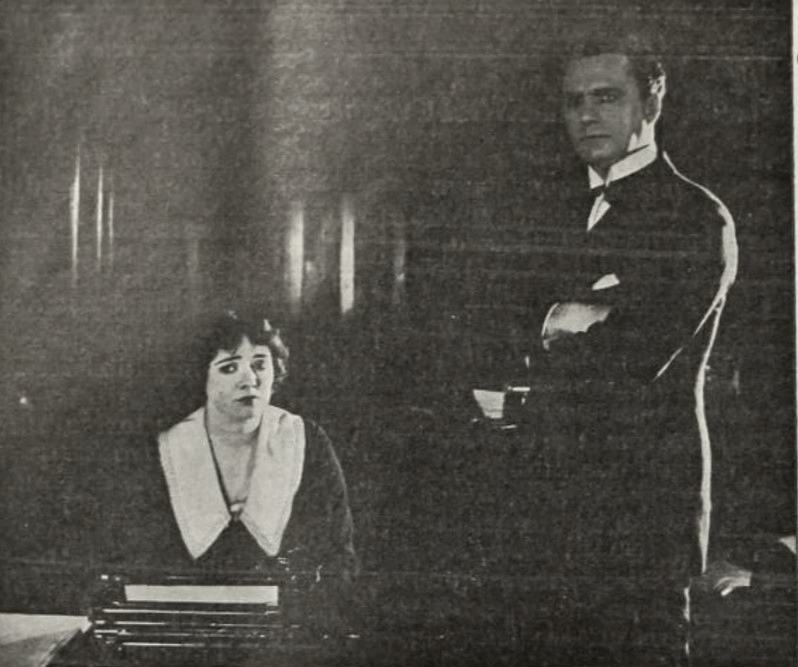
Director Fraser Tarbutt (in what should have been a career-defining turn) shoots Wall Street like a war zone: low-angle shots of columns that loom like cenotaphs, ticker tape strewn across cobblestones like spent shell casings. Yet the moment we step into the Maugham townhouse, the mise-en-scène shifts to claustrophobic opulence—lace doilies strangling tabletops, chandeliers weighing down the very air. The battleground isn’t between men but between competing aesthetics of entrapment.
Notice the color palette—or rather, the strategic absence of it. Intertitles appear against backgrounds of bruised maroon and arterial amber, but the film images themselves retreat into chiaroscuro so stark it borders on cruelty. Faces bleed into pools of obsidian; only the glint of an eye or a wedding-ring flash anchors us to humanity. It’s as if cinematographer Frank A. Ford conspired to make every frame a Rorschach test: tell me what you see, and I’ll tell you which side of the moral trench you occupy.
Scriptwriters Clara Beranger and Marie Van Vorst adapt the novelette with surgical ruthlessness, hacking away the fat of exposition until only the nerve remains. Dialogue intertitles are haiku-sharp: “We can be happy elsewhere” contains the entire American dream in five words. Contrast this economy with the verbose moralizing of Barnaby Rudge or the convoluted coincidences in Trapped by the Camera. Here, every syllable carries the weight of stock shares poised to plummet.
Archival records indicate the original exhibition recommended a live trio performing a pastiche of Chopin nocturnes. Yet I advocate experiencing the film in stark silence—let the clack of the typewriter, the rustle of Mary’s cotton dress, the distant harbor horns compose their own accidental score. Silence becomes the film’s musique concrète, amplifying every micro-gesture into thunder.
The picture interrogates capital not only as currency but as erotic leverage. Thomas’s wealth is an aphrodisiac and a shackle; Mary’s refusal to “cash in” on her love constitutes a radical act of fiscal disobedience. In renouncing him, she withholds her emotional labor from the marriage market, crashing the speculative value of domestic bliss. One can’t help but recall Within Our Gates, where racialized capital compounds suffering; here, gender performs a similar alchemy, transmuting affection into asset, then into weapon.
Tragically, no complete 35 mm print survives; what circulates among private collectors is a 26-minute re-cut with Norwegian intertitles discovered in a Hamar cellar. Even in truncated form, the film detonates. Rumor has it a 4K restoration languishes in a rights limbo between two estates—one hopes the publicity of this review might galvanize a streaming platform to liberate it. Until then, cinephiles must content themselves with bootlegged Vimeo uploads that shimmer like tarnished silver.
Mary Moreland is less a relic than a prophecy. Its DNA strands twist through Alexandra’s doomed romances, through the aching renunciations of The Lure, all the way to modern prestige television where anti-heroes mortgage happiness for duty. To watch it is to press a stethoscope against the ribcage of 1920 and hear your own arrhythmic yearnings echo back. Rate it 9.5/10—only because those missing four minutes feel like a phantom limb I’ll spend a lifetime itching.
IMDb 4
1928
Community
Log in to comment.