DbcultAccessing Vault...
6.6/10
Senior Film Conservator
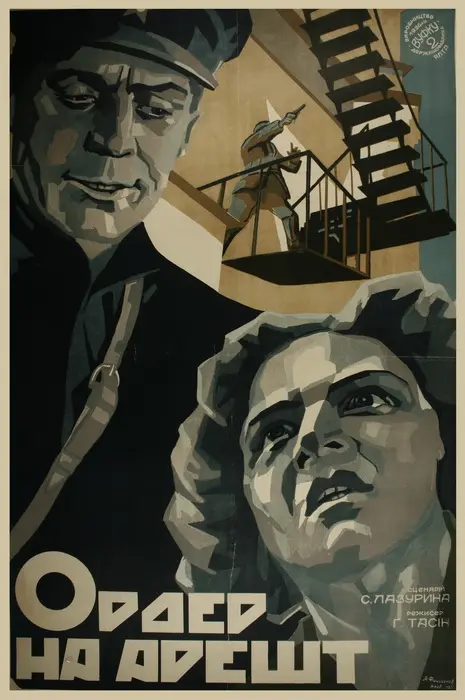
A definitive 6.6/10 rating for a film that redefined the boundaries of cult cinema. Order na arest remains a cornerstone of transgressive art.
Is Order na arest worth your time? Short answer: Yes, but only if you have the stomach for a relentless, claustrophobic psychological grind. This film is for those who appreciate the historical evolution of the thriller and the raw power of silent-era expressive acting; it is emphatically not for anyone seeking a casual evening or a lighthearted period piece.
Unlike many of its contemporaries that favored grand spectacles or romanticized adventures, this 1926 production directed by Yuri Tarich (though often associated with the writing of Solomon Lazurin) stays trapped within four walls. It is a film about the weight of paper—specifically, secret documents—and the weight of silence. It is uncomfortable, intentional, and occasionally brilliant in its cruelty.
1) This film works because it transforms a standard domestic setting into a high-stakes prison through lighting and performance alone.
2) This film fails because the antagonist White Army officers are written with such mustache-twirling villainy that they lack any human dimension.
3) You should watch it if you want to understand how early Soviet cinema used the female body as a symbol of national resilience.
The central conflict of Order na arest is the psychological and physical battle between a revolutionary's wife and the occupying White Army officers. While her husband has fled to safety, she remains to guard secret documents that could compromise the Bolshevik cause. The film focuses on her internal resolve versus the external pressure of interrogation and domestic invasion. It is a battle of wills where the stakes are life, death, and political survival.
The film excels at making a home feel like a tomb. From the moment the White Army arrives, the familiar spaces of the protagonist's house are distorted. The camera lingers on doorways and windows, turning every exit into a potential point of capture. This isn't the sweeping adventure found in The Lost City; it is a localized nightmare.
The pacing is deliberately slow. It mimics the sensation of waiting for a blow to fall. Every time an officer enters the frame, the tension spikes. The film uses shadows not just for style, but to represent the encroaching threat of the 'Order' itself. It is a masterclass in low-budget tension. The documents she protects are almost secondary to the sheer terror of her situation.
One specific scene stands out: the initial search of the house. The way the officers handle her personal belongings is more invasive than any physical blow. They aren't just looking for papers; they are dismantling her identity. It is a brutal sequence that feels modern in its execution. The film doesn't need gore to be violent.
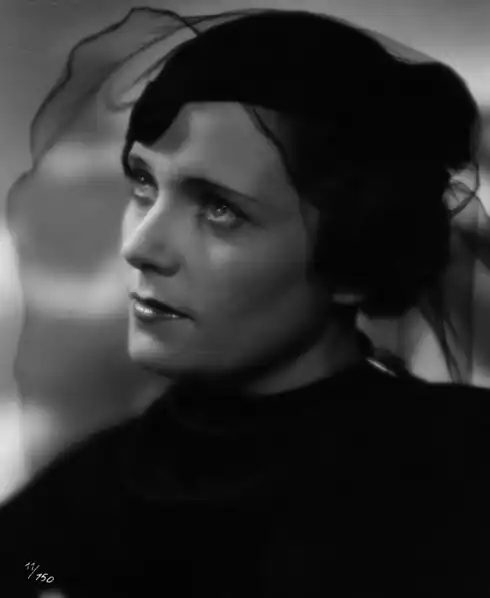
Valentyna Varetska carries the entire film on her shoulders. In an era where silent acting often leaned into hyper-theatricality, like the performance styles seen in Nathan der Weise, Varetska is remarkably restrained. Her resistance is internal. You see it in the set of her jaw and the way she refuses to track the officers with her eyes.
She isn't a traditional action hero. She is a witness. Her performance makes the psychological torture feel visceral. When she is subjected to the 'interrogation' tactics of the White Army, the film relies on her facial reactions rather than the acts themselves. This makes the viewer’s imagination do the heavy lifting. It is effective. It is also deeply upsetting.
The supporting cast, including Nikolai Panov and Heiri Emirzade, serve as effective foils. Panov, in particular, brings a coldness that contrasts well with Varetska’s silent heat. However, the film suffers from the 'villain' problem. The White Army officers are so cartoonishly evil that they occasionally break the immersion. They aren't characters; they are obstacles. They are the shadows in the corner of the room.
We have to address the elephant in the room: this is a work of Soviet agitprop. It was designed to make the White Army look like monsters and the Bolsheviks look like saints. However, the film is smarter than your average propaganda piece. By focusing on the woman’s personal suffering rather than broad political slogans, it achieves a level of psychological realism that transcends its origins.
The husband's absence is a fascinating choice. In most films of this type, the hero would return at the last second to save the day. Here, the husband has fled. He has left her to face the music. One could argue—and I will—that the husband is actually the film's silent antagonist. He put her in this position. He prioritized the 'cause' over her safety. The film doesn't explicitly say this, but the subtext is there.
Compare this to a film like The Little Boy Scout, where heroism is straightforward and rewarded. In Order na arest, heroism is a lonely, agonizing endurance test. There is no glory here. There is only the survival of a secret. It is a cynical view of revolution, whether the director intended it or not.
The cinematography in Order na arest is surprisingly sophisticated for 1926. It utilizes high-contrast lighting that predates the noir aesthetic by decades. The use of close-ups on Varetska’s face creates an intimacy that is almost voyeuristic. We are forced to look at her pain. We cannot look away.
The editing is sharp. It doesn't linger on unnecessary transitions. Like Crossed Wires, it understands how to use the rhythm of cuts to build anxiety. The 'torture' sequences are edited with a frantic energy that contrasts with the stillness of the rest of the film. It creates a jarring, rhythmic discordance that mirrors the protagonist's mental state.
The sets are sparse. This works in the film's favor. There is no clutter to distract from the human drama. Every object in the room—a chair, a lamp, a floorboard—becomes a potential hiding place or a weapon. This minimalism makes the film feel timeless. It could be set in any occupied city in any century.
Yes, but with caveats. If you are a student of cinema history, Order na arest is a vital text. It shows the bridge between early silent melodrama and the more sophisticated psychological thrillers of the 1930s. It is a precursor to the 'home invasion' subgenre. However, if you are looking for entertainment, you will be disappointed. It is a grueling experience.
The film is better than many other silents from the same period, such as The Gorgona, because it commits fully to its tone. It doesn't try to be a comedy or a romance. It is a tragedy from the first frame. It is honest about the cost of political commitment. Even the propaganda is handled with a level of craft that demands respect.
Pros:
- Exceptional use of claustrophobic space.
- Ahead of its time in terms of psychological tension.
- Strong feminist subtext regarding the domestic front of war.
- High-contrast cinematography that remains striking today.
Cons:
- Heavy-handed political messaging.
- The slow pacing might alienate modern audiences.
- Some supporting performances are overly broad.
Order na arest is a jagged, unpleasant, and essential piece of silent cinema. It doesn't care if you like it. It only cares that you feel the pressure of the interrogation room. While the political bias is obvious, the human drama at its center is undeniably powerful. It is a film that weaponizes silence. It is ugly. It is effective. It is a reminder that the most dangerous battlefields are often the ones inside our own homes.

IMDb —
1926
Community
Log in to comment.