DbcultAccessing Vault...
Cult Review
Senior Film Conservator
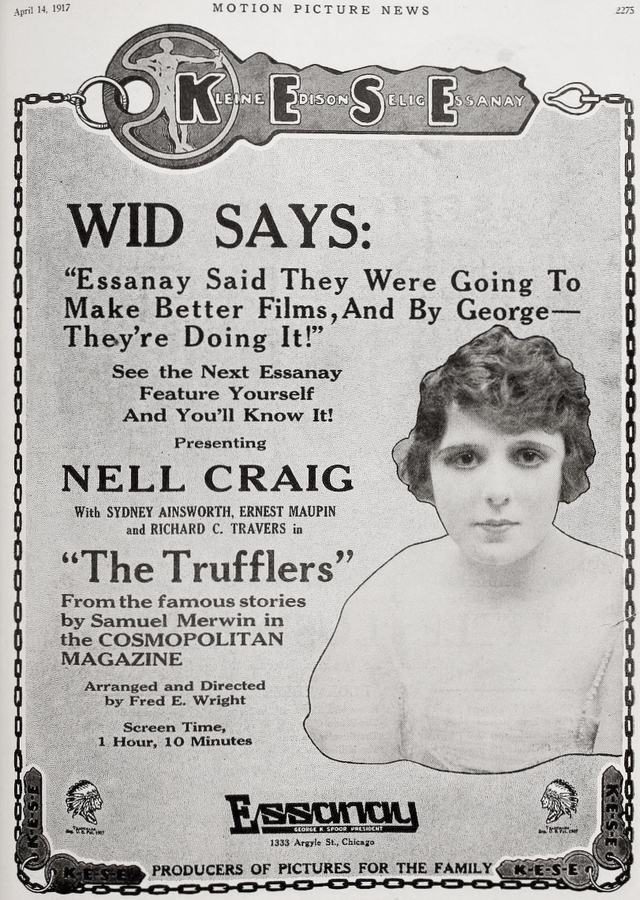
Imagine, if you can, a nitrate ribbon spooling through 1915 darkness, its silver halides shimmering like absinthe in a church chalice. Fred E. Wright and Samuel Merwin serve us a cocktail of sulfur and satin: a reverend who robs the poor box, a flapper-in-embryo who robs herself of conscience, and a scribbler whose quill drips both poetry and poison. The resulting film—not merely a flicker but a fever—laces melodrama with proto-noir cynicism, years before either genre had a name.
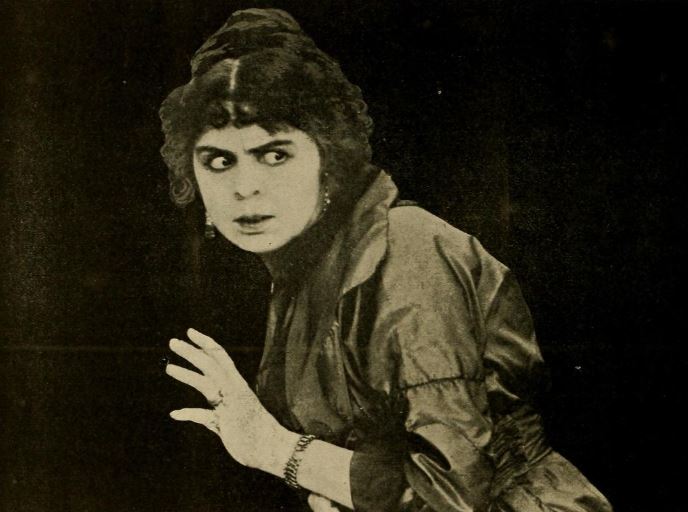
Sue Wilde’s arc is less a straight line than a Möbius strip of vanity. Virginia Bowker plays her with the restless irides of a cat who’s learned to blow cigarette hearts toward the orchestra pit. Watch her in the boarding-house mirror scene: she practices a two-step kiss—right profile for passion, left profile for posterity—while her fiancé Peter (Sidney Ainsworth) lurks in the threshold, love morphing into ledger ink. The camera need not move; Bowker’s shoulders perform dolly work all on their own, sliding from girlish anticipation to corporate predation.
When the celluloid Svengali—played by Ernest Maupain with top-hat menace worthy of a later-century Bond mogul—whispers “nation’s idol,” the phrase lands like a covenant signed in Luciferian magenta. Sue’s acceptance is filmed in a single, unforgiving tableau: a close-up that holds so long the edges of Bowker’s grin begin to quiver, as though the actress herself questions the morality of the character’s hunger. It is a moment of pre-Method honesty wedged inside Victorian plot machinery.
Peter Ericson Mann, nominally the hero, is a playwright in the same sense that Macbeth is a hospitality consultant. Ainsworth gives him a sloped gait, as if every step calculates audience exit polls. His betrayal of Dr. Wilde (John Cossar, stoic until the tremor of disgrace) is less whistle-blowing than curtain call: by destroying the father he annihilates the pedestal on which Sue pirouettes. Jealousy becomes dramaturgy; scandal merely pre-publicity for his unwritten tragedy.
Henry Bates—nicknamed “The Worm,” yet verdant with decency—arrives as antithesis. Richard Travers underplays him into near-transparency, a deliberate void beside Peter’s flamboyant rot. Note the final shot: Sue rests her cheek against his wool-suited shoulder, studio lights dim until the frame resembles a pewter cameo. It is the film’s most subversive statement: the death of sparkle, the triumph of the nine-to-five.
Cinematographer Harry Dunkinson (pulling double duty as actor) exploits orthochromatic stock that turns Bowker’s crimson stage dress into lunar silver, a chromatic betrayal that foreshadows her moral blanching. Intertitles—lettered in jittering Arts-and-Crafts font—flash like subpoenas. One card reads: “Fame is a credit account—payable on sight in tears.” It’s a line that could headline any From Gutter to Footlights redemption yarn, yet here it lands with a creditor’s knuckled fist.
Where Cameo Kirby drapes Southern honor in magnolia sentiment, The Trufflers strips honor to the bone and sells the marrow for headlines. The trajectory of Sue Wilde anticipates the fallen-women parables of The Birth of Character yet trades that film’s Sunday-school sermon for something more callous—a recognition that the camera itself is complicit, that audiences are accessories after the fact.
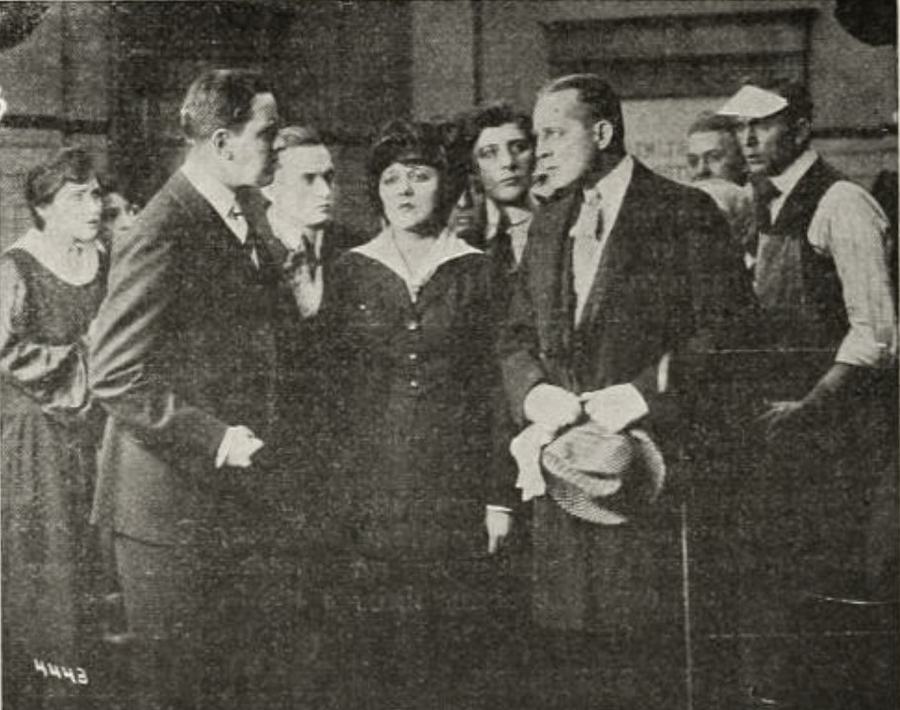
Meanwhile, fans of The Whirl of Life will note a similar centrifugal force: characters flung from domestic orbits into vertiginous spectacle. But whereas Whirl ultimately waltzes back to marital harmony, Trufflers ends in a resignation that feels like rigor mortis.
Bowker’s micro-gestures—eyelid flutter counting heartbeats, a thumbnail scraping lace when fame is proffered—evoke the intimate tremors later captured by Louise Brooks. Ainsworth counters with theatrical largesse, arms flung as if conducting invisible orchestras of angst. Their stylistic dissonance works: he represents script, she embodies celluloid; together they diagram the fault line between stage and screen that defined the mid-teens.
John Cossar delivers the film’s moral gravity in the embezzlement confession scene. Shot in profile, his beard seems to weigh more than his torso; the act of signing the bank draft is filmed as though he were autographing his own death warrant. The off-screen suicide—handled with a fade to black and a tolling church bell—carries greater gravitas than many a graphic spectacle, proving that suggestion can eclipse depiction.
Wright and Merwin, both novelists before turning to scenarios, lace dialogue with epigrams sharp enough to cut cigar smoke. Consider Peter’s declaration: “Love is a rehearsal—only the matinee counts.” Or Sue’s retort: “Then I’ll play to the gallery until the chandelier falls.” These lines prefigure the brittle banter of 1930s screwball while retaining Victorian moral dread.
Yet the writers also succumb to redemptive orthodoxy, yanking Sue into matrimony with Bates as if marriage itself were a penitentiary. Modern viewers may bristle, but the ending’s cynicism sneaks in sideways: the final intertitle calls wedlock “a life sentence with possible parole for good behavior.”
Director Fred E. Wright (pulling double duty as scribe) favors long takes that let subtext ferment. The engagement dinner unfurls in a single two-minute shot; characters enter and exit like ciphers on a weather vane, their allegiances shifting with each slammed door. Such austerity counters the rapid-fire cutting seen in Aladdin and the Wonderful Lamp spectacles, proving that intimacy can thrill as efficiently as caliphate magic.
Make no mistake, the film’s sexual politics are as dated as arsenic complexion cream. Sue’s “woman’s sphere” is explicitly the kitchen, the cradle, the hushed parlor. Yet Bowker’s performance injects a subversive undertow: even as she capitulates, her eyes retain the feral glint we first saw in the mirror. The actress refuses to fully repent, allowing modern audiences to read the ending as societal capitulation rather than personal redemption.
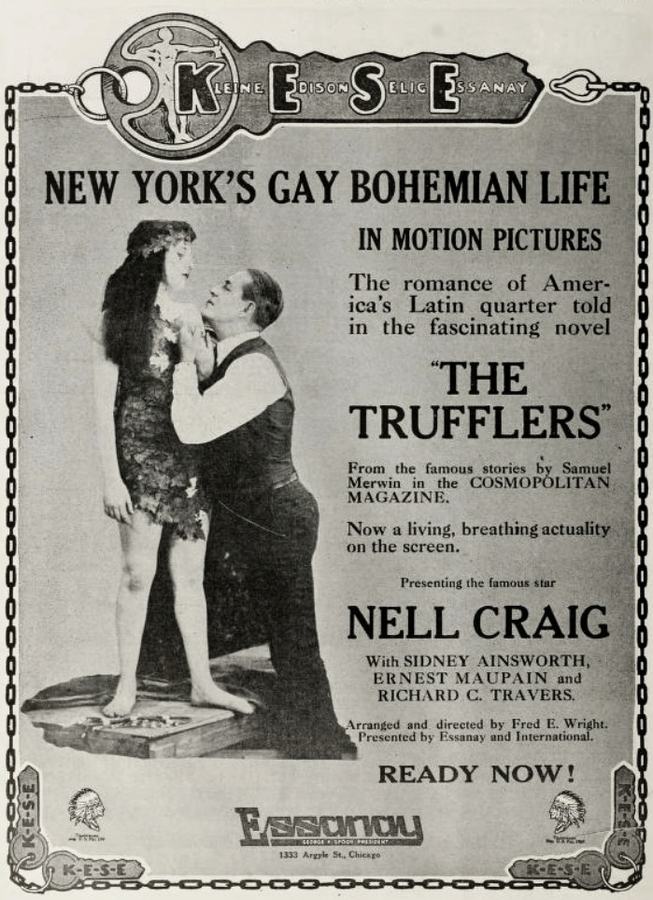
This tension aligns Trufflers with suffrage-era debates dramatized in The Perfect '36, though the latter champions reform while the former wallows in repressive caution.
For decades, The Trufflers languished in Library-of-Congress canisters, mis-catalogued under “Truffles,” a culinary tragedy averted in 2019 when a nitrate whisperer at the University of Illinois matched continuity shots to the surviving reels. The 4K scan reveals cigarette burns once masked by mildew; you can now spot the moment Bowker’s mascara forms a tiny starfish on her cheek—an accident she reportedly refused to re-shoot, claiming, “Even galaxies collide.”
Streaming options remain scattershot: it flickers on niche services like ShadowSilents and occasionally surfaces during university retrospectives. Physical media hunters should pounce on the Goldwyn-Rohauer Blu-ray, whose commentary by Bowker biographer Myra L. Telford unpacks the actress’s post-Trufflers exile to vaudeville, a fall nearly as steep as Sue’s.
Is The Trufflers a regressive morality tale dressed in Jazz-Age sequins, or a sly exposé of the machinery that devours women who dare desire loudly? The answer, like nitrate, is combustible. Wright and Merwin hand us a hand-cranked kaleidoscope: twist once, you see cautionary sermon; twist again, proto-feminist lament. What lingers is Bowker’s face—half mask, half wound—gazing at us across a century, challenging viewers to decide whether the limelight was worth the sacrifice.
Verdict: Mandatory viewing for anyone tracing the genealogy of screen vice—and for anyone who still believes glamour absolves guilt.
Relevancy today? Swap the embezzled church fund for cryptocurrency fraud, the motion-picture mogul for a streaming algorithm, and Sue’s plight feels ripped from Reddit confessions. The film’s despair over public shaming anticipates cancel culture with eerie prescience.
References: In the Lion's Den, Her Maternal Right, Red and White Roses, Makkhetes, Doctor Neighbor, The Pursuing Vengeance, A Regiment of Two, La voix d'or, One Hundred Years Ago.

IMDb —
1931
Community
Log in to comment.