DbcultAccessing Vault...
6.8/10
Senior Film Conservator
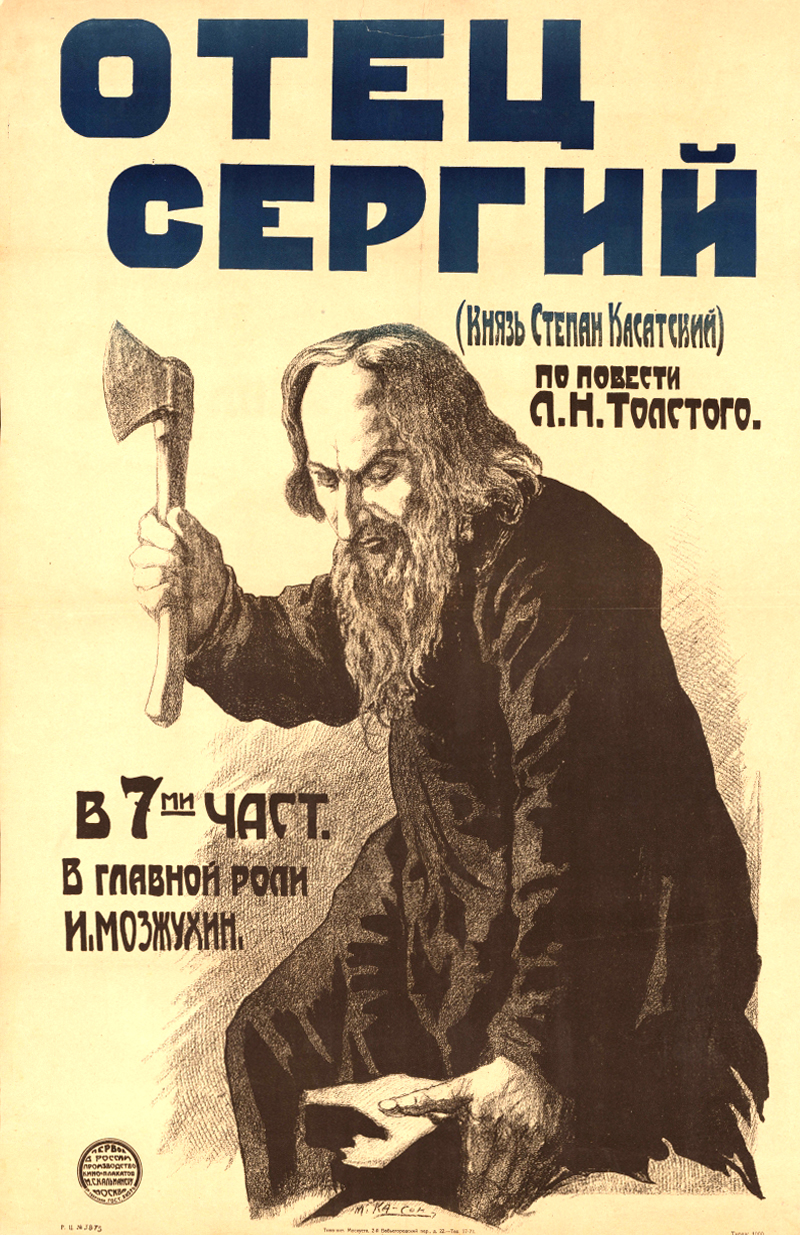
A definitive 6.8/10 rating for a film that redefined the boundaries of cult cinema. Otets Sergiy remains a cornerstone of transgressive art.
Yakov Protazanov’s 1918 magnum opus, Otets Sergiy, stands as a monolith in the landscape of early Russian cinema, a bridge between the crumbling Tsarist aesthetic and the burgeoning experimentalism of the Soviet era. To watch this film is to witness the cinematic transubstantiation of Lev Tolstoy’s prose into a visual language that feels both ancient and startlingly modern. It is not merely a biography of a fallen prince; it is an excavation of the human ego, conducted with the precision of a surgeon and the fervor of a zealot.
The narrative arc of Prince Kasatsky is one of the most demanding psychological trajectories ever committed to celluloid. Unlike the more straightforward moral fables found in contemporary works like The Primrose Path, which often lean on didacticism, *Father Sergius* revels in the ambiguity of spiritual ambition. Kasatsky’s turn to the cloth is not born of a sudden influx of divine love, but of a profound, ego-driven resentment. He cannot bear to be second to the Tsar in the heart of his beloved, and so he chooses a path where he can be second to no one but God Himself.
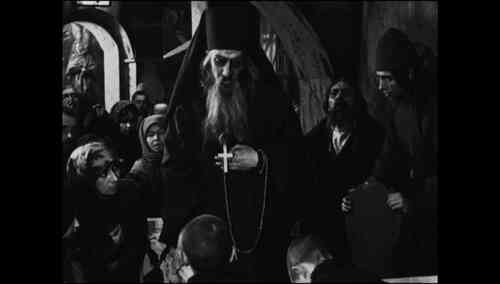
At the center of this storm is Ivan Mozzhukhin, whose performance remains one of the most staggering achievements in the history of the medium. Mozzhukhin does not merely act; he undergoes a physical and metaphysical erosion. We see him first as the rigid, impeccably groomed Prince, a man whose every gesture radiates a terrifying sense of entitlement. As the years of monastic life weigh upon him, his visage transforms. The eyes, once sharp and predatory, become hollowed out by the relentless pursuit of an unreachable purity.
The famous scene involving the severed finger—a desperate act to thwart the advances of a bored socialite—is played with a chilling lack of melodrama. It is a moment of visceral self-mutilation that echoes the psychological intensity found in The Case of Becky, though here the duality is not one of split personality, but of the warring factions of the flesh and the spirit. Mozzhukhin’s ability to convey the internal cacophony of Sergius’s mind through subtle shifts in posture and gaze is nothing short of miraculous. He captures the exhaustion of a man who has spent decades fighting a war against his own nature, only to find that his very resistance has become a form of vanity.
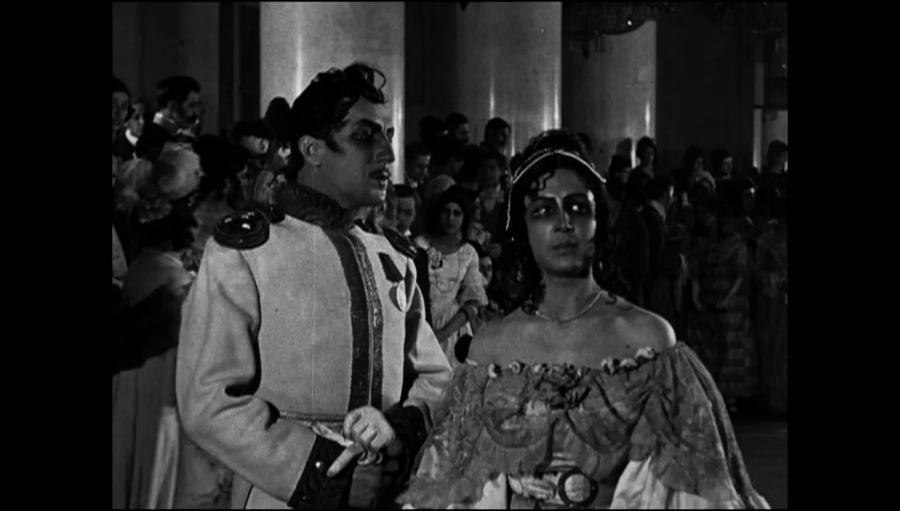
Protazanov’s direction, complemented by the exquisite cinematography of Nikolai Rudakov and Fedot Burgasov, eschews the frantic editing that would later define Soviet montage. Instead, the film breathes with a deliberate, ecclesiastical rhythm. The compositions are often static, reminiscent of Orthodox iconography, trapping the characters within the frame much like Sergius is trapped within his own rigid moral framework. This stillness creates a tension that is far more palpable than the overt theatricality of The Vampires: Satanas.
The use of space in the film is particularly evocative. The transition from the cavernous, ornate ballrooms of the opening act to the cramped, light-starved cells of the monastery serves as a visual metaphor for Sergius’s narrowing worldview. Yet, as his physical world shrinks, the spiritual stakes expand. The film masterfully utilizes deep shadows and naturalistic lighting to heighten the sense of isolation. When Sergius eventually flees his cell to live as a hermit in a cave, the darkness seems to swallow him whole, suggesting that his quest for enlightenment has led him into a profound, existential void.
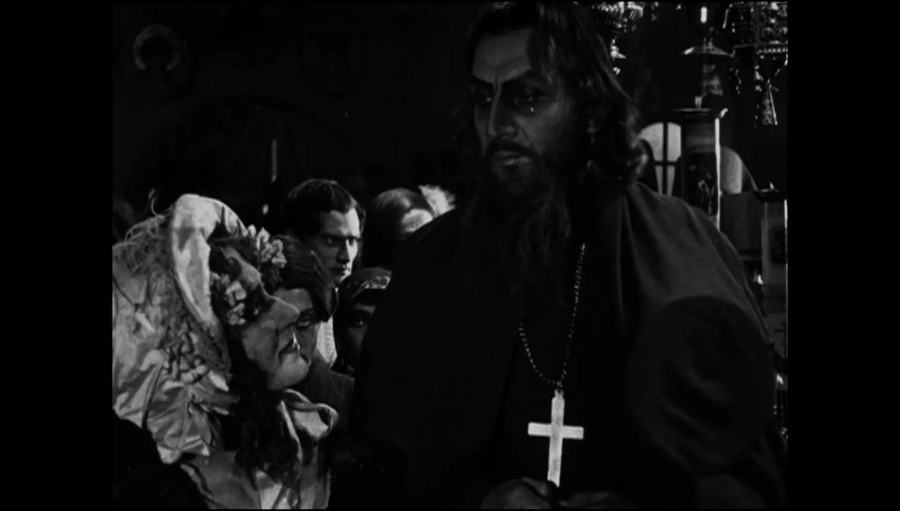
What sets *Father Sergius* apart from other religious epics is its scathing critique of institutionalized holiness. As Sergius gains a reputation as a healer, his cell becomes a destination for the pious and the curious alike. He is commodified by the Church and idolized by the peasantry. This external validation is the ultimate poison; it feeds the very pride he sought to starve. The film suggests that the performance of sanctity is, in itself, a form of sin. This thematic complexity mirrors the structural depth of Don Quixote, where the protagonist's delusions are both his salvation and his undoing.
The eventual fall of Sergius—his succumbing to the primal advances of a simple-minded girl—is not depicted as a shocking twist, but as an inevitable collapse of an over-engineered spiritual edifice. The structure was too rigid to bend, so it had to break. Protazanov handles this sequence with a somber, non-judgmental eye. There is no divine lightning, only the quiet, crushing realization of a man who has failed his own impossible standards. It is a moment of profound pathos that makes the domestic dramas of The Gulf Between or Heart and Soul seem superficial by comparison.
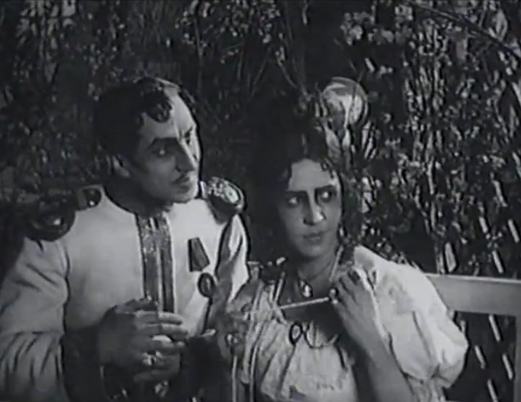
One cannot divorce *Otets Sergiy* from the year of its release. 1918 was a year of seismic upheaval in Russia, a time when the old gods were being toppled and the very foundations of society were being rewritten. In this context, the film’s depiction of the Tsar as a flawed, almost incidental figure, and its cynical view of the monastic life, carry a weight of revolutionary subtext. Yet, the film avoids becoming a mere propaganda piece. It remains stubbornly focused on the individual soul, suggesting that regardless of the political regime, the struggle with the self remains the ultimate human conflict.
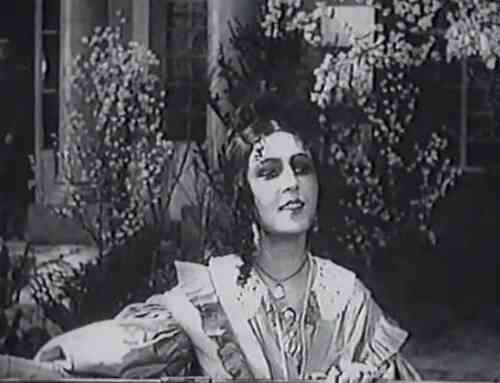
The supporting cast, including Nathalie Lissenko and Nicolas Rimsky, provide a necessary human counterpoint to Mozzhukhin’s towering performance. Lissenko, in particular, captures the tragic frivolity of the upper classes with a nuance that prevents her character from becoming a caricature. Even in the smaller roles, there is a sense of lived-in reality that was rare for the time. The film feels less like a staged play and more like a window into a disappearing world, much like the atmospheric tension found in The Dagger Woman.
The film’s conclusion is its most radical departure from traditional narrative satisfaction. Sergius does not find redemption in the arms of the Church, nor does he suffer a spectacular martyrdom. Instead, he becomes a wanderer, an anonymous face in a crowd of beggars and exiles. He finds a strange, quiet peace in his total lack of status. By losing everything—his title, his reputation, and his perceived holiness—he finally gains the humility that eluded him for decades. This ending is a masterclass in cinematic restraint, eschewing the grandiosity of The Mediator for something far more intimate and devastating.
In the final shots, as the aging Sergius walks into the vast Russian landscape, we are left with a sense of the sublime. The film does not offer easy answers about faith or the existence of God. Instead, it offers a profound meditation on the necessity of the search. *Father Sergius* is a testament to the power of silent cinema to explore the deepest recesses of the human psyche. It is a film that demands to be seen not just as a historical curiosity, but as a living, breathing piece of art that continues to challenge and provoke over a century later.
For those who seek cinema that transcends mere entertainment and ventures into the realm of the philosophical, *Otets Sergiy* is essential viewing. It stands alongside works like Warning! The S.O.S. Call of Humanity in its ambition to capture the fragility of the human condition in the face of overwhelming forces. It is a haunting, beautiful, and ultimately liberating experience that confirms Ivan Mozzhukhin’s place as one of the true titans of the screen.

IMDb 6.3
1930
Community
Log in to comment.