DbcultAccessing Vault...
Cult Review
Senior Film Conservator
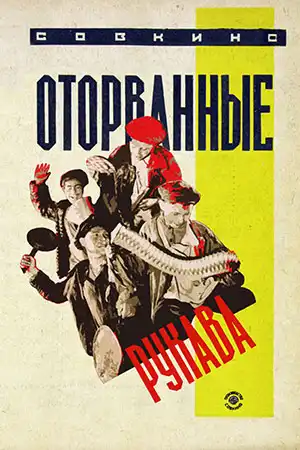
Look, if you're not already into really old Soviet cinema, Otorvannyye rukava might feel like a chore. It's not for a casual Friday night, no. But if you’ve got a real soft spot for historical snapshots, especially how a young USSR saw itself tackling big social problems, then yeah, give it a shot. Everyone else? Probably skip this one, honestly. You'll just find it slow. And maybe a bit heavy handed.
The film dives headfirst into the struggles of children left without homes after the revolution, during the NEP. These besprizorniki, as they were called, are everywhere. The movie shows them as these _wild_, almost animalistic figures at first. They're dirty, they steal, they live rough. It’s a very stark portrayal, not romanticized at all. Almost like a cautionary tale, really.
Then come the pioneers. The young, organized, *future* of the Soviet Union. They're meant to be the solution, right? The film really hammers home this contrast. You see the disheveled kids, then these incredibly neat, disciplined pioneers marching around.
One scene, there's this confrontation in a market. The homeless kids are trying to snatch food, and the pioneers, they step in. It's not a fight, exactly, more like an intervention. A very firm, almost paternal intervention, even though they’re kids themselves. The way the pioneer leader, probably Aleksandr Vinogradov, *commands* attention – it’s quite something. You don't often see child actors with that kind of gravitas.
The whole point seems to be about bringing these lost children into the collective. Teaching them order, purpose. There’s a lot of focus on education, on work. You see shots of them learning trades, reading. It’s less about empathy in the modern sense, more about _rehabilitation_ into the new society. Almost like a public service announcement, but on a grand scale.
The acting, well, it’s theatrical. Big gestures. Aleksandr Safronov, I think he played one of the more unruly kids, he really throws himself into the despair. You can almost feel the grime. And then when he starts to turn around, there’s this quiet, almost shy look of hope. It’s subtle for a moment, then it gets a bit more obvious. You know, for the message. Hard to miss.
Pacing is *definitely* of its era. Long takes. Sometimes the camera just sits there, watching a group of children eat, or march. It gives you time to think, but also time to maybe check your watch. You can tell they want you to absorb the *weight* of the situation, not rush through it. And sometimes, you just feel that weight a lot.
I was struck by how often the camera lingered on hands. Dirty hands, reaching for bread. Clean hands, holding a pen. It’s a small thing, but it pops up. Like a visual shorthand for the transformation they’re aiming for. Or maybe I just noticed it because the film moves slow enough to let your eyes wander.
The propaganda aspect is heavy, no doubt. But it's also a valuable historical document. It shows the ideology in action, what they were trying to build. You can almost feel the fervor of the time. The belief in collective action to fix societal ills. It's not a nuanced debate, it's a declaration.
Honestly, the cast having three Aleksandrs – Vinogradov, Safronov, Zhukov – it's just a funny little detail I picked up. Made me wonder if it was a common name or just a coincidence for this production. Not important to the plot, but stuck with me.
This isn't a film you enjoy in the usual way. You *study* it. You see the raw edges of a society trying to redefine itself. It’s a window, a bit dusty, but clear enough. *If you squint*.
IMDb 6
1928
Community
Log in to comment.