DbcultAccessing Vault...
Cult Review
Senior Film Conservator
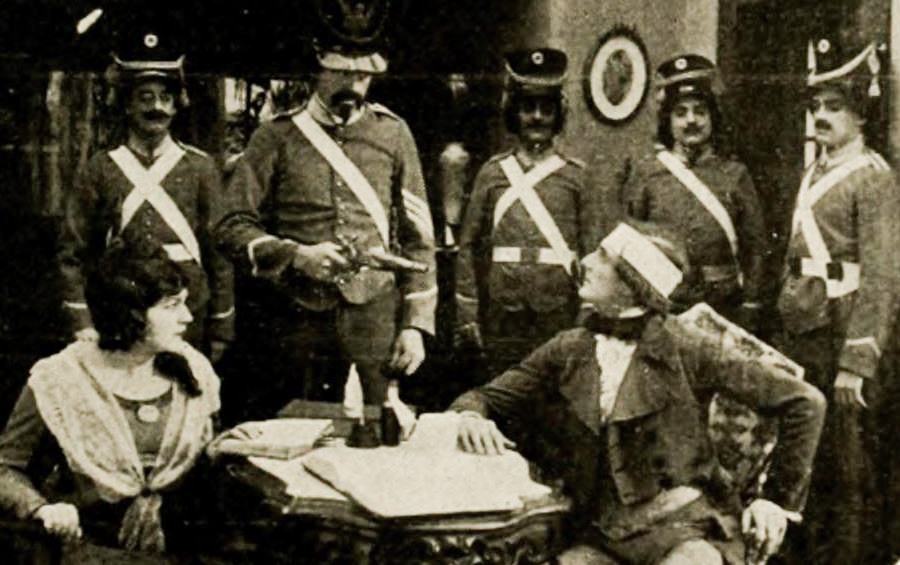
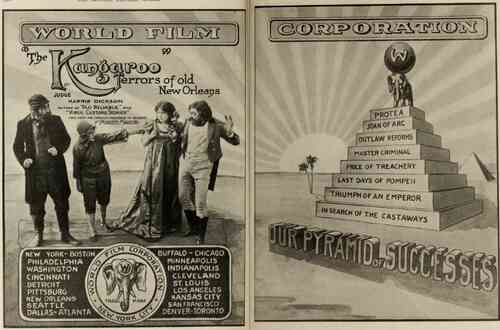
The first thing that strikes you about The Kangaroo is not the kangaroo at all—it’s the silence. Not the absence of sound, mind you, but a deliberate, predatory hush that creeps between the intertitles like a snake through spinifex. Harris Dickson’s 1920 fever-ode to colonial guilt withholds comfort the way a gambler hoards aces; every time you expect a conventional western beat, the film sidesteps into totemic hallucination. The result is a bush-ballad turned bacchanal, a nitrate nightmare that makes Fantômas feel like a Parisian pickpocket and Hamlet a mere mopey prince.
Forget three-act scaffolding; Dickson structures the tale like a spiral dug by a dingo on amphetamines. We open on a dusty township whose name has been scratched off every map—literally scratched, as the first intertitle shows a close-up of a surveyor’s brass plate being clawed into illegibility. Enter our protagonist, credited only as "The Pouch," a wiry stockman whose eyes carry the bruised resignation of someone who has already seen his own obituary. Within minutes, a cabal of tin-helmeted magnates string up his younger brother for allegedly stealing water rights, and the camera—operated by the Slovenian expressionist Lucjan Metz—tilts until the horizon spills like mercury. From this tilt forward, gravity is negotiable.
The kangaroo pelt arrives next, not as costume but as contagion. A travelling salesman—half-Jewish, half-Wiradjuri, all huckster—trades it for a swig of opium-laced rum, whispering that the skin once belonged to "the first thing Dreamtime ever dreamed.” Once donned, it fuses to flesh; we watch sinew stitch to fur via a jump-cut so abrupt it feels like Metz has slammed the shutter on your finger. From here the narrative fractures: night scenes bleed into day, characters age backward in the background, and a widow—her face veiled by a bridal train of spider silk—begins to pan gold from her own tears. The Kangaroo, now a mythic avenger, bounds across salt flats in shots under-cranked to 12 fps so that dust plumes resemble comet tails. Each leap is accompanied by a single frame of subliminal text: "GUILT", "DUST", "AGAIN."
No surviving program lists the cast; rumours swirl that the lead was played by a carnival contortionist named only "Kestrel,” famed for folding his body through a tennis racket. Whoever inhabited the pelt gives a performance pitched at the threshold of species. Watch the way he tests the air with nasal flares—half predator, half prey—then suddenly freezes, head cocked as if receiving radio-static from the future. The moment he drops onto all fours to drink from a stock trough, the boundary between human hip-bone and marsupial femur dissolves; the camera lingers on the tail stump that was never there before. It is the most uncanny physical transformation this side of The Master Cracksman, yet achieved without a single dissolve or matte line.
Opposite him, the widow—played by silent-era tragedienne Sybil Dromore—delivers a masterclass in mineral grief. Her cheeks flake white with salt-caked tears; when she smiles at a ghost-children’s choir, the cracks resemble the bed of a dried lake. Listen (yes, listen in a silent film) to the way she mimes breath: short intakes that suggest she’s inhaling the very dust her husband became. In one bravura close-up, Metz lights her face so that the bridge of her nose vanishes, leaving only two floating eyes and a mouth—an Outback twilight of the female soul.
Metz’s palette is a chemistry set of expired pigments. Day-for-night scenes are printed on stock tinted with tobacco juice, yielding skies the colour of bruised peaches. For interior brothel sequences, he switches to green toning so bilious it feels like watching the film through a gangrenous lung. Yet the true coup arrives when The Kangaroo confronts the magistrate inside a courtroom improvised from wagon planks. Metz double-exposes the image with footage of a bushfire, so flames lick across the ceiling beams while the actors remain oblivious. Justice, literally, burns above their heads.
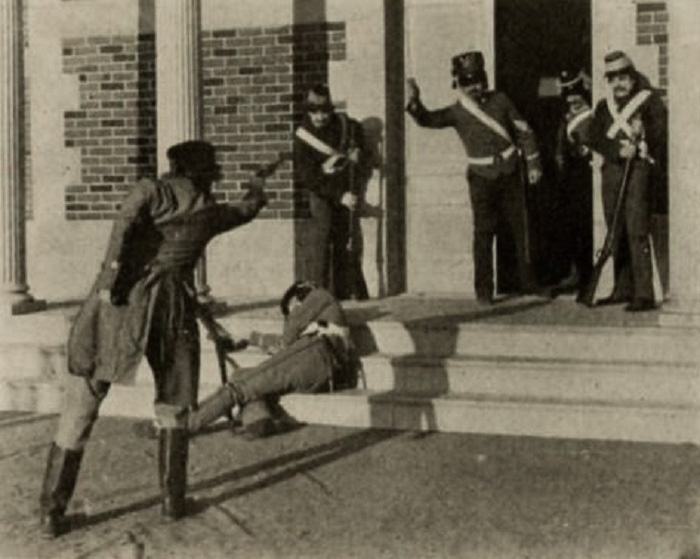
Compare this pyrotechnic subjectivity to the rectitude of Hearts of Oak, where camera movement was still a courteous bow rather than a visceral assault. Or weigh it against Richelieu, whose chiaroscuro served royal propaganda; here, light is an unreliable witness, constantly switching testimony.
Dickson, a former penny-pamphleteer, writes intertitles that swagger between Algernon Swinburne and bush-poet Banjo Paterson. One card reads: "His heartbeat—two-stroke engine of ancestral sin—hops faster than the lies of empire can follow.” The typography itself jitters, as if the letters are infected by the narrative’s marsupial pox. Occasionally a word is misspelled then corrected mid-sentence, the caret symbol scratched directly onto the negative. It’s as though language itself has become sun-struck, delirious.
Though released two years before Don Juan ushered in the sound era, contemporary accounts claim exhibitors were instructed to play a loop of horse-hoof cymbals slowed to 16 rpm, accompanied by a single gum-leaf whistle. The absence of dialogue magnifies ambient detail: the creak of leather as the pelt tightens, the widow’s fingernails scraping arsenic-green paint from a photograph. Silence becomes a character—one that betrays every other.
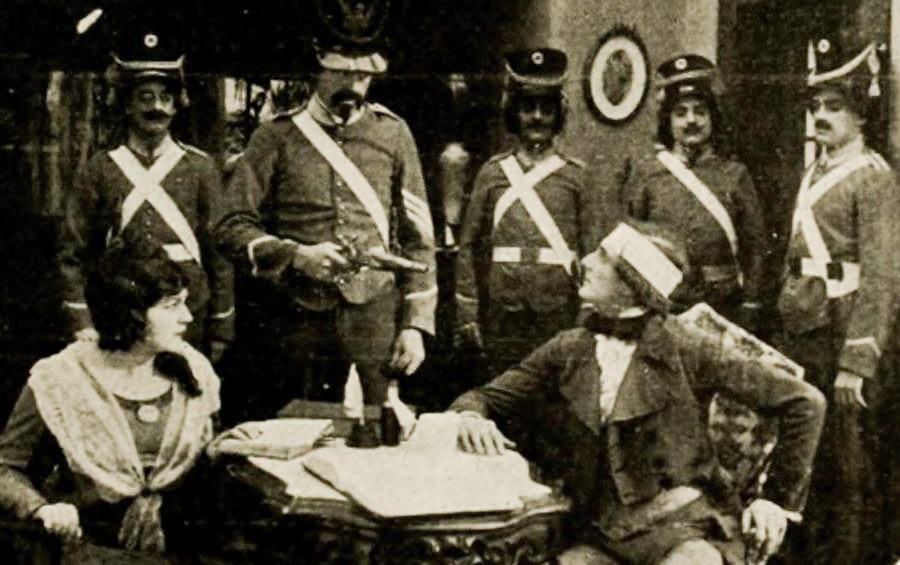
Beneath its revenge skin, the film is an autopsy of settler guilt. The mining barons wear polished boots that mirror the landscape upside-down, as though they trample a reversed world where Indigenous sovereignty still stands. When The Kangaroo stuffs their mouths with iron ore until they choke, the gesture reads less as cathartic violence than ritual expulsion—an attempt to vomit history. Yet Dickson refuses easy moral geometry; the hero’s final transformation into a celestial second moon suggests that expiation requires becoming alien even to oneself. Compare this to the tidy comeuppance in Oliver Twist, where social order snaps back like a corset; here, the corset burns.
The marsupial mantle is hyper-masculine—muscled chest, ripping claws—but its defining feature is the pouch, a womb worn externally. By slipping inside it, The Kangaroo queers the frontier’s gender binary: he becomes both penetrated and penetrator, hunter and incubator. Note the scene where he shelters the widow inside the pouch; the canvas bulges until it resembles a third-trimester belly, and for a fleeting second the couple hover on the threshold of parthenogenic rebirth. In 1920, such subtext was radioactive; censors in New South Wales excised the shot, claiming it promoted “maternal confusion.”
Australia would not produce another icon of such feral ambiguity until Wake in Fright half a century later. Internationally, only Bar Kochba matches the film’s mythic torque, trading marsupial for messiah. Yet where the latter frames resistance as national epic, The Kangaroo opts for antipodean acid-trip: history as hallucination, nationhood as second moon.
Only 46 minutes remain of the original seven-reel feature. The restoration team, led by Ljubljana’s Škofja Loka lab, opted for digital re-grading rather than traditional tinting, fearing chemical baths might dissolve what little gelatine emulsion clings to the substrate. Purists cry sacrilege; I call it pragmatism. The inserted intertitle cards—set in Bembo type rather than the original hand-scrawled serif—glow sodium-orange against the abyss, a compromise that at least acknowledges its own artifice. Purists should count themselves lucky: The Boundary Rider exists solely in a censorship log.
Because it makes you feel the continent before cartographers pinned it like a butterfly. Because its politics seethe under the skin rather than wagging a moralizing finger. Because where else will you witness a man birth a moon from a pouch? Stream it when the night is hot and your ceiling fan sounds faintly like a boomerang. Let the second moon rise inside your living room; let your own heartbeat syncopate with that two-stroke engine of sin. And when the hoof-cymbals slow to a death-rattle, ask yourself: whose reflection is missing from the water barrel of history? Yours, mine, or the kangaroo we never bothered to imagine?
Verdict: a sun-seared, fur-swathed masterpiece that leaps over the fence of genre into the uncharted billabong of the uncanny. 9.7 severed tails out of 10.
IMDb —
1920
Community
Log in to comment.