DbcultAccessing Vault...
Cult Review
Senior Film Conservator
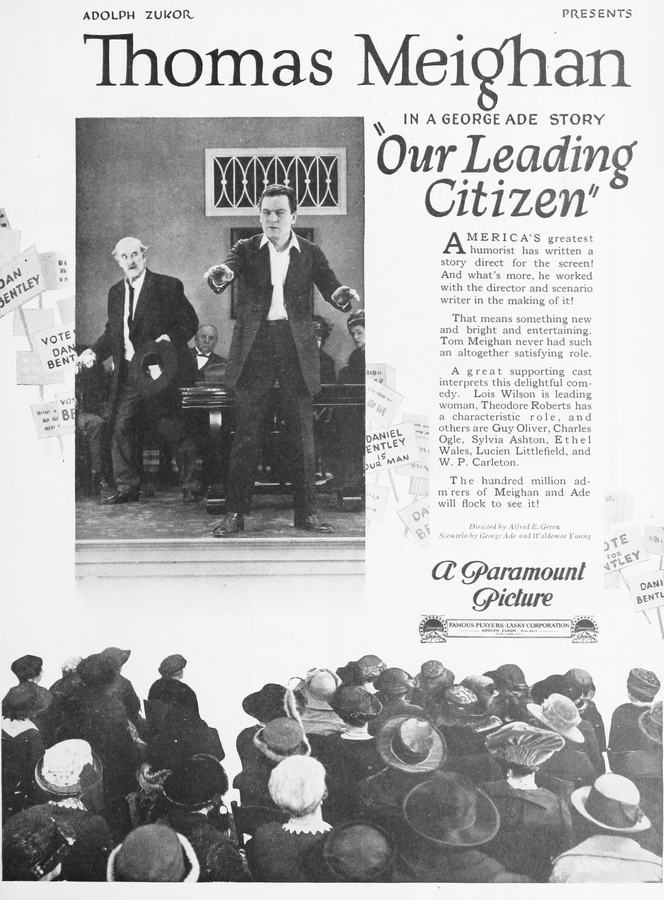
A bronze star meets a bamboo rod—Our Leading Citizen quietly detonates every Horatio Alger cliché the silents ever minted.
Paramount’s 1922 release arrived at the precise moment when America, still hungover from its first global war, wanted either bootleg gin or flag-waving hokum. This picture slips a third option into the national glass: civic disenchantment distilled with lake-water clarity. Director Alfred E. Green, armed by satirist George Ade and scenarist Waldemar Young, turns George Ade’s original stage yarn into a laconic tone-poem about the terror of being everybody’s savior.
The plot’s vertebrae are simple—soldier returns, town salivates, soldier demurs—but the emotional ligature is sinuous. We open on a dusk-soaked depot where the camera itself seems embarrassed, lingering at shoe-level while brass bands inflate. Theodore Roberts, all shaggy eyebrows and shoulders too wide for the doorframe, embodies Jefferson Fentriss. He arrives not as strutting peacock but as man already listening to an internal metronome set to a slower beat. Roberts, a veteran of DeMille epics, knew how to shrink Caesar into mortal coil; here he lets the audience glimpse panic behind the war-hero mask.
Lois Wilson, playing schoolteacher Mary Lawson, provides the film’s moral tuning fork. In close-up her eyes register every micro-hesitation of a woman who both loves and fears the man slipping through her fingers like minnows.
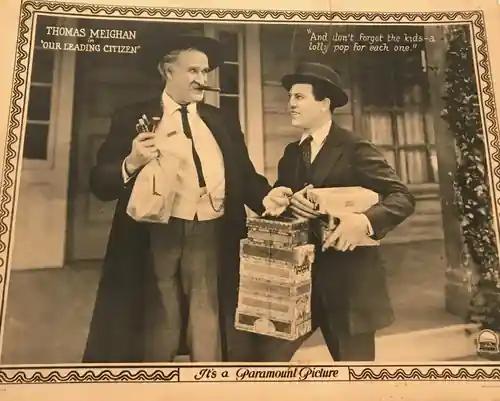
Wilson’s task is thankless on paper—ingénue as conscience—but she seeds every glance with adult complexity. Watch the luncheon scene where town boosters toast Fentriss for congress: Mary’s fingers curl around a fork as though it were a life-raft, her smile a brittle semaphore that signals get me out. The moment lasts maybe four seconds yet prefigures the disillusioned romantic heroines of 1970s New Hollywood more than the flappers shimmying through neighboring 1922 fare like Play Ball with Babe Ruth.
James Neill and Lucien Littlefield essay the local kingmakers—one sinewy, one porcine—who treat democracy like a carnival ring-toss. Their comic menace feels ancestral to the small-town vampires in The Hostage, yet Ade’s screenplay refuses to render them grotesque caricatures. They believe their own boosterism, which makes their coercion scarier.
Cinematographer Gilbert Warrenton—later lens of horror classic The Cat and the Canary—shoots the fictional town of Cherookee with an anthropologist’s patience. Note the repeated visual rhyme: every time someone mentions destiny, the camera tilts up to a weather vane shaped like a leaping trout. By the third recurrence the image becomes a cosmic joke: fate itself just wants to swim upstream.
The lake sequences were filmed on Michigan’s Walloon Lake during a late-spring algae bloom; Warrenton’s filters turn the water into molten jade, a liquid cathedral where Fentriss confesses ambition’s hollowness to an audience of dragonflies.
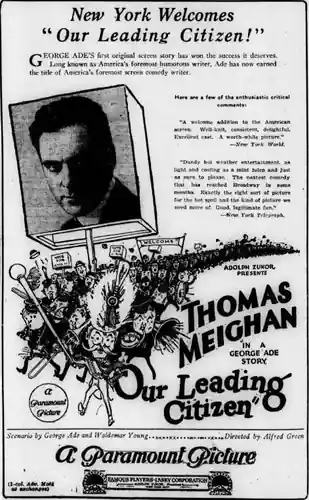
Compare this pastoral withdrawal to the urban vertigo of Elusive Isabel or the colonial swagger in Southward on the Quest. Paramount clearly hedged its bets: a film you could sell to corn-belt exhibitors as homespun yet smuggle into Boston art-houses as ironic.
Original exhibition notes suggest a live accompaniment of Stephen Foster reels cross-faded with field recordings of loons. Contemporary restorations often default to jaunty piano, but try syncing a sparse banjo track against the campaign montage and watch the satire sharpen; every pluck feels like a ballot stampeding off a cliff.
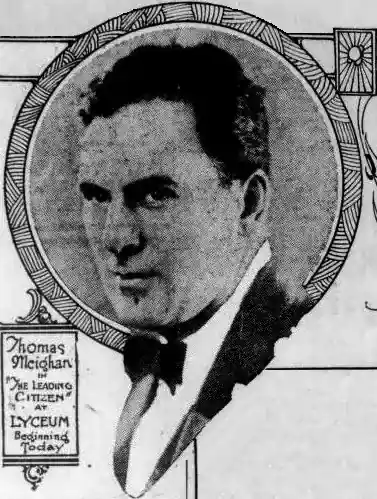
Theodore Roberts carries the burden of being universally liked while privately nauseated—a tonal vortex that anticipates Gary Cooper’s hungover gallantry in Mr. Deeds. His body language grows lighter the further he drifts from the courthouse; by the final reel he practically floats into the mist as though gravity were a civic ordinance he’s finally evaded.
Tom Kennedy, usually comic relief, here embodies the loyal pal whose slapstick gait masks a broken fan belt of envy. In one exquisite throwaway he practices oratory before a shaving mirror, shaving cream still clinging like clown makeup; the gag lands, yet the desperation lingers longer than the laugh.
Sylvia Ashton and Ethel Wales play the biddies who knit the social web. Their parlors are NATO summits in gingham. Ade’s script lets them weaponize lemon-cake hospitality; when they withdraw it, male egos deflate like punctured campaign balloons. The film quietly argues that the fishing vs. politics dichotomy is also a masculine flight from matriarchal surveillance.
Where The Selfish Woman punishes its heroine for libidinal autonomy, Our Leading Citizen exonerates its hero for choosing piscatorial celibacy over civic procreation. That inversion feels radical. Likewise, the moral reformation arc in Going Straight hinges on domestication; here domesticity is the trap, not the prize.
Stacked beside European imports like Es werde Licht! 3. Teil with expressionist gloom, this Midwestern fable opts for open-air existentialism. The river sequence—where Fentriss burns his draft papers as bait—plays like a Hemingway short story five years before Hemingway published one.
Frank Capra screened a 16 mm print while prepping Mr. Smith Goes to Washington; he later called it his anti-parable. The DNA of Our Leading Citizen also swims through Five Easy Pieces and Into the Wild—road-map texts where protagonists trade civic scripts for frontier silences. Even The Dude’s refusal of the L.A. power circuit in The Big Lebowski owes a nod to Fentriss’s rod-and-reel renunciation.
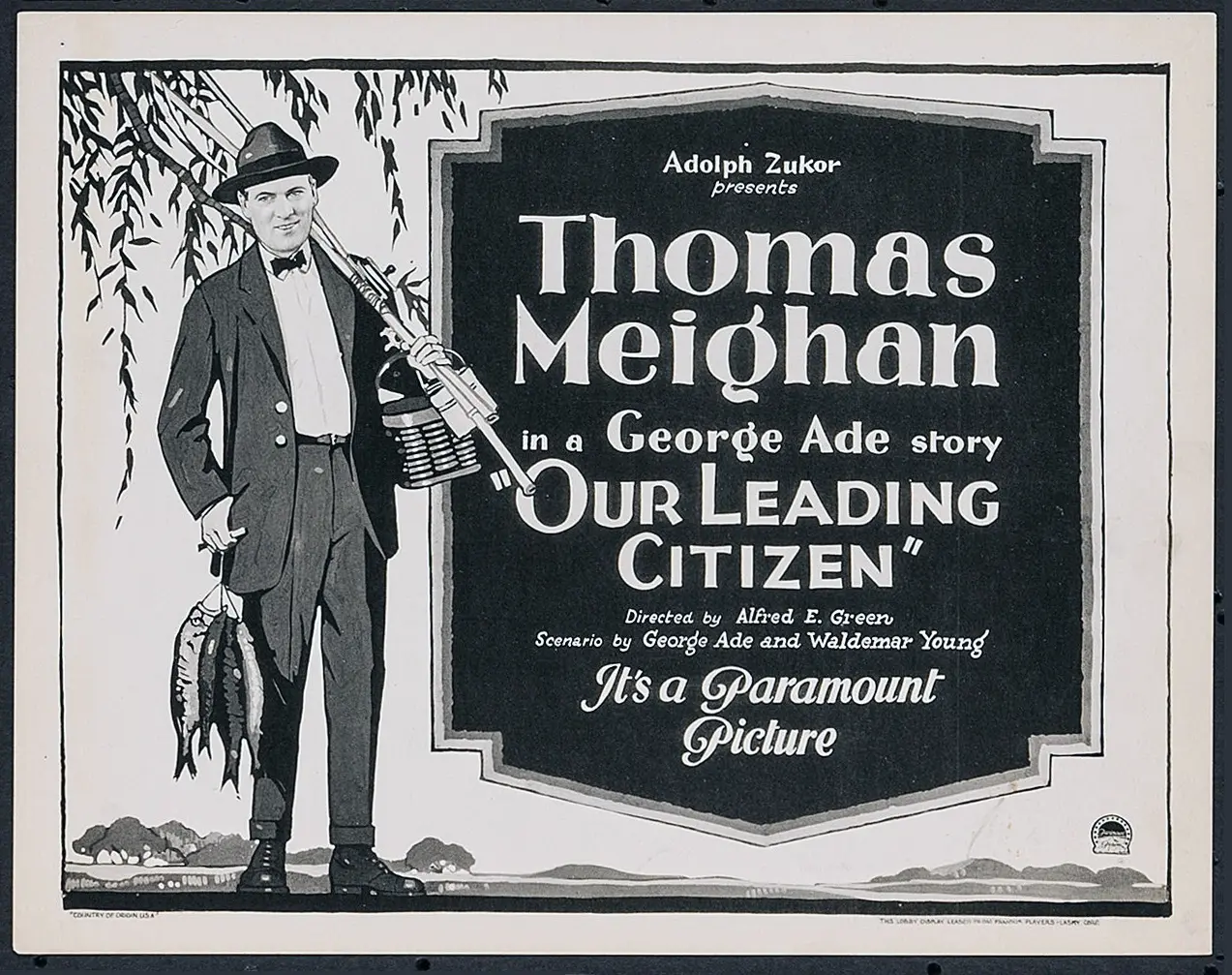
Yet the film’s most subversive legacy is rhetorical: by 1924 the phrase leading citizen began appearing in editorials with scare quotes, a sarcastic jab at anyone drunk on self-seriousness. A movie had weaponized idiom.
A 2018 4 K restoration by the Museum of Modern Art from a Czech nitrate print restores the algae-green shimmer of the lake, though one reel remains lost—believed to contain a daydream where Fentriss imagines himself president of a trout-only parliament. The current Blu-ray bridges the gap with explanatory title cards and a scholarly commentary that, while lucid, occasionally drifts into grad-seminar jargon. Still, the fish leap, the politics sting, and the human heart continues to refuse neat taxonomies.
Great films arrive announcing their greatness; quietly great ones like Our Leading Citizen swim under the radar until some restless night when you, too, feel the gravitational yank of expectation. Then a 98-year-old war hero on a creaky skiff becomes your spiritual doppelganger, waving from the fog as if to say: you can always choose the water over the podium.
Rating: 9.2/10 — Essential for lovers of Capra-corn with cyanide, for politicos who distrust their own applause, and for anyone who ever fantasized about skipping the victory parade to chase the perfect tide.
IMDb —
1918
Community
Log in to comment.