DbcultAccessing Vault...
5.2/10
Senior Film Conservator
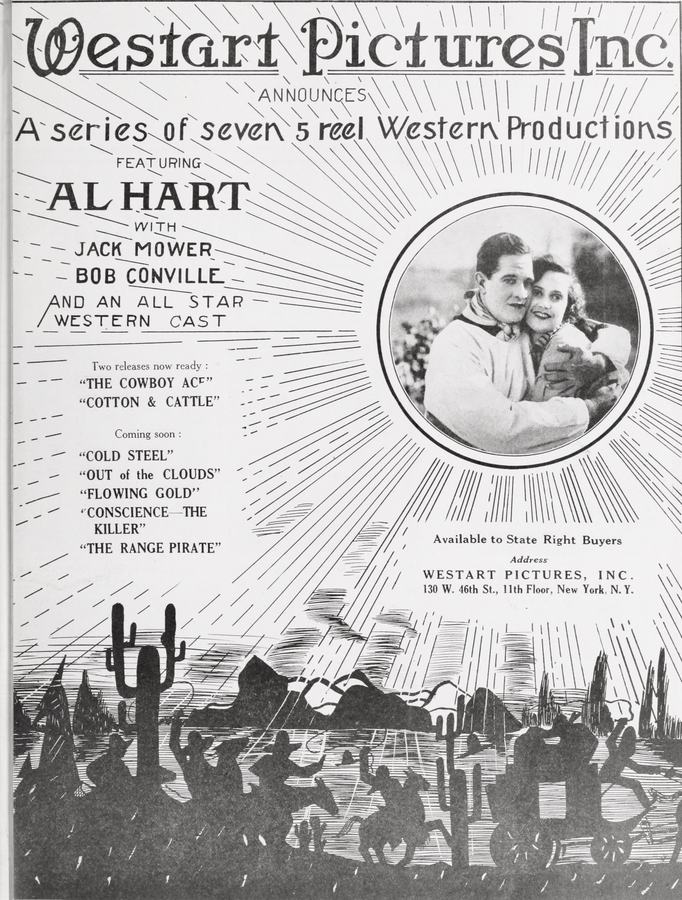
A definitive 5.2/10 rating for a film that redefined the boundaries of cult cinema. Out of the Clouds remains a cornerstone of transgressive art.
Out of the Clouds is a film that demands your attention, not because it shouts for it, but because it exists in the rarefied space where silence speaks louder than words. W. M. Smith’s script, a labyrinth of existential dread and artistic disillusionment, unfolds in a way that feels both meticulously plotted and organically decayed. The film’s opening shot—a slow dolly into a fog-drenched mountain cabin, its windows glowing like dying embers—sets the tone: this is a place where time is both stagnant and accelerating, where the past clings to the walls like mold. Robert Conville’s performance as the industrialist, a man whose wealth cannot buy him peace, is a masterclass in restrained intensity. His eyes, often narrowed into calculating slits or widened with the terror of confronting his own emptiness, become a window into the film’s soul.
Al Hart’s artist, by contrast, is a man consumed by his own creative paralysis. Hart plays the role with a vulnerability that’s almost painful to watch, his trembling hands and halting speech suggesting a soul perpetually on the brink of collapse. Jack Mower’s sculptor is the enigma of the trio, a figure who exists in the background but whose presence looms large. Mower’s stillness is disquieting; he listens more than he speaks, and when he does, his words are laced with a wisdom that feels both earned and alien. The dynamic between the three is charged with an undercurrent of unspoken rivalry, their conversations often spiraling into philosophical tangents that double as veiled barbs. It’s a credit to Smith’s writing that these exchanges never feel forced, even as they become increasingly self-indulgent.
The cabin itself is a character of mythic proportions. Its wooden beams creak with the weight of decades, and the fog that rolls in through the cracks in the walls is more than a visual motif—it’s a character that invades the psyche. The film’s sound design is equally deliberate; the absence of music is jarring at first, replaced by the constant hum of a distant waterfall and the occasional, jarring creak of a floorboard. When the score does arrive, it’s sparse and haunting, a violin’s keening wail that feels like it’s coming from another dimension. This auditory landscape amplifies the sense of isolation, making the viewer as claustrophobic as the characters.
Out of the Clouds draws inevitable comparisons to The Ghost of Old Morro, another film that uses remote settings to explore existential malaise. However, where Morro’s protagonist is haunted by a literal ghost, Smith’s focus is on the ghosts we carry within us—regret, guilt, the fear of irrelevance. The film’s structure is nonlinear, with flashbacks that reveal the three men’s histories in fragmented, often contradictory ways. These glimpses into their pasts are not mere exposition; they are psychological dissections that peel back layers of denial. The industrialist’s memories of a failed marriage, the artist’s recollection of a botched exhibition, the sculptor’s fractured childhood—each is a brushstroke in a larger portrait of human frailty.
One of the film’s most remarkable sequences occurs in the second act, when the trio ventures into the forest to retrieve a lost sculpture. The scene is shot in such a way that the trees become a metaphor for entrapment, their gnarled branches clawing at the sky. The dialogue here is sparse, but the tension is palpable. Hart’s artist, who has spent much of the film ruminating on the nature of creativity, fumbles with his sketchpad, his hands shaking. Mower’s sculptor, usually silent, offers a single line: “Art isn’t about finding beauty—it’s about surviving the act of creation.” It’s a line that encapsulates the film’s thesis, and it lingers like a shadow over the final act.
The climax is as abrupt as it is devastating. In a film that has spent two acts building a house of mirrors, the final confrontation between the three men is a shattering of reflections. Conville’s industrialist, who has always projected an image of control, is exposed as the most fragile of them all. The revelation that his wealth is built on a lie—his factory’s machines are obsolete, his success a fluke—strips away his veneer of authority. Hart’s artist, in a moment of rare clarity, accuses him of being “a parasite who feeds on the desperation of genius.” The film does not offer resolution; instead, it leaves its characters (and the audience) in the fog, the cabin’s door slamming shut behind them as the screen fades to black.
Visually, Out of the Clouds is a study in chiaroscuro. The contrast between light and shadow is not just aesthetic but thematic: the industrialist’s gold-trimmed spectacles versus the artist’s charcoal-stained fingers, the sculptor’s bronze tools against the cabin’s rotting floorboards. The color palette is muted, dominated by greys and earth tones, with the occasional pop of color—red in a wine-stained cloth, blue in a shattered glass—to signal moments of emotional rupture. This restraint in visual language allows the performances to take center stage, and in this, the film finds its greatest strength.
Comparisons to The Scarlet Letter are inevitable, given the film’s exploration of moral decay and societal hypocrisy. Yet Out of the Clouds is less concerned with sin and more with the corrosive nature of self-awareness. Its characters are not villains but victims of their own introspection, trapped in a cycle of self-sabotage that feels both pitiable and inescapable. The film’s greatest achievement is its ability to humanize these flawed men without romanticizing their flaws. Hart’s artist is not a tortured genius but a man who uses his art as a crutch, Mower’s sculptor is not a sage but a man hiding from his own history, and Conville’s industrialist is not a villain but a man who has mistaken ambition for purpose.
The final moments of the film are a masterstroke. As the fog rolls in and the cabin’s lights flicker, the camera lingers on a painting the artist has begun—half-finished, its subject obscured by a hand. This image, of a man grasping at meaning in a void, is the film’s most poignant metaphor. It’s a reminder that Out of the Clouds is not just about the characters but about the viewer as well, inviting us to confront the same questions of identity and purpose. By the time the screen fades to black, you realize that the film has been building a silence, not a narrative, and that the true story lies in what remains unspoken.
For modern audiences, Out of the Clouds may feel like an artifact from another era, but its themes are disturbingly relevant. In an age where social media has turned self-expression into a performance, where the line between authenticity and artifice is increasingly blurred, the film’s exploration of creative integrity feels prescient. It’s a work that rewards multiple viewings, each time revealing new layers of subtext and symbolism. If you’re looking for a film that will haunt you long after the credits roll, look no further than this mist-enshrouded masterpiece.
IMDb 5.6
1936
Community
Log in to comment.