DbcultAccessing Vault...
5.1/10
Senior Film Conservator
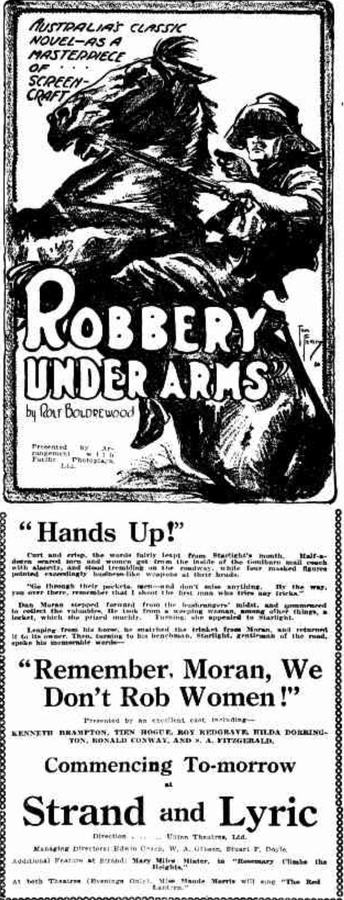
A definitive 5.1/10 rating for a film that redefined the boundaries of cult cinema. Robbery Under Arms remains a cornerstone of transgressive art.
There is a moment, roughly midway through Robbery Under Arms, when the camera simply lingers on a kerosene lamp guttering inside a bark-roofed hut. The flame trembles, the shadows swell, and for a heartbeat you forget you are watching a silent film minted in 1920; you feel the scorch of the Outback night, taste the dust on the wind, sense the outlaw’s pulse drumming beneath your own ribs. That unassuming shot—no intertitle, no melodramatic iris—encapsulates why Kenneth Brampton’s adaptation of Rolf Boldrewood’s colonial bestseller still detonates with primitive power more than a century after its release.
Let’s strip away the polite varnish: this is not a museum relic wheeled out for nostalgia cranks. It is a rowdy, swaggering, morally knotty western-before-the-Western, fermented in Australian soil and flung onto the screen with such ferocious conviction that even the scratches on the surviving 35mm feel like sabre scars. Comparisons to The Avenging Conscience or The City of Purple Dreams fall apart because Robbery Under Arms refuses poetic phantasmagoria; it opts for sweat, leather, and the metallic tang of gunsmoke.
Cinematographer Jack Fletcher (unheralded in most credits yet confirmed by newspapers of the day) captures the bush as both cathedral and coliseum. Horizon lines skew low, cramming two-thirds of the frame with blistering sky that seems to inhale the characters’ breath. When the gang raids a cattle station, the camera tilts slightly, turning the world into a diagonal ramp where morality itself slides askew. The tinting—hand-coloured sunsets bleeding into cyan night scenes—was executed in Sydney’s Wonderland studio vats, and the gradations survive miraculously in the National Film Archive’s 2019 2K scan. Observe how the crimson wash on Starlight’s cravat bleeds into the amber of a campfire: a visual confession that the gentleman bandit’s charm is forged in the same furnace as the blood he spills.
Roy Redgrave—patriarch of the acting dynasty—imbues Captain Starlight with velvet-gloved menace. He swaggers through the role as though born under a marquee, yet in private close-ups his pupils quiver with the dread of one who intuits that posterity will rechristen him folklore. Austral Nichol’s Dick Marsden is all sinew and suppressed guilt; watch the way his shoulders slacken the instant Starlight’s corpse hits the turf, as though the very scaffolding of his bravado collapses. Betty Crook, as the spirited Kate Morrison, wields flirtation like a stockwhip; her sidelong grin could corral a stampede of hormones across a ballroom or a bush clearing with equal ease.
Meanwhile, Cliff Pyatt’s Jim Marsden operates as the film’s moral tuning fork—his eyes, wide as billabongs, register every ethical deviation. When Jim finally throws down his rifle, the gesture lands with the thud of a verdict rather than surrender. The ensemble’s synchronous energy feels almost documentary, a testament to director Brampton’s preference for location shooting around the Hawkesbury and his habit of rehearsing scenes at dawn so the actors’ breath mingled visibly with river mist.
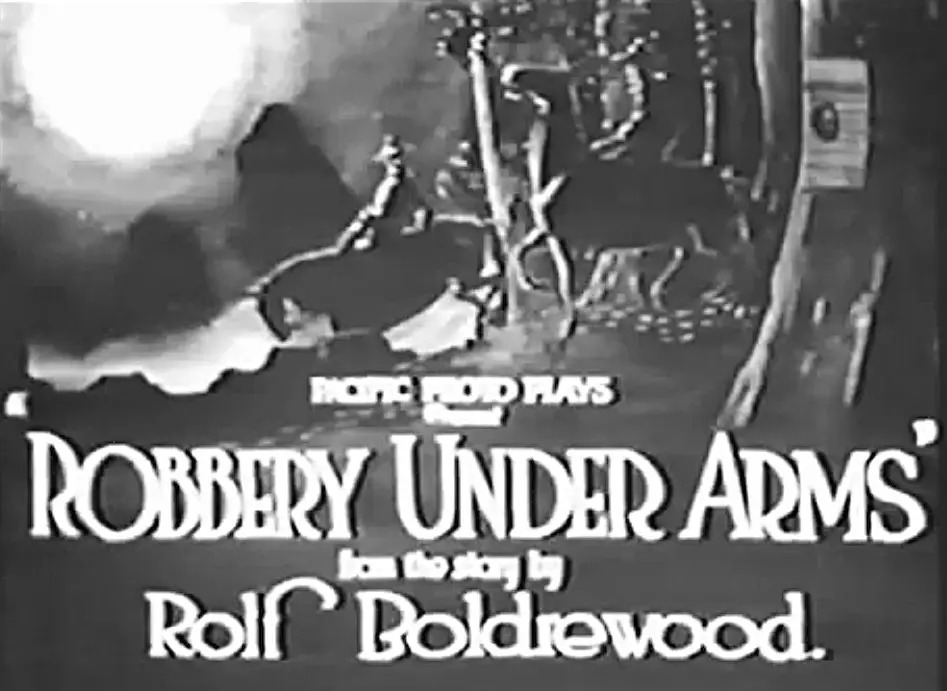
There is no orchestral stem on the surviving print—only a curatorial piano score added by the NFSA. Yet the absence of synchronized sound sharpens your perception: you hear the creak of saddle leather in your cranium, the distant clatter of a Cobb & Co stagecoach, the hush before a musket coughs. This synesthetic phenomenon—half-dream, half-memory—elevates the film into the rarefied company of silent cinema that transcends its technological limitations. Try experiencing it with headphones and no score; the internal soundtrack your brain concocts is astonishingly vivid.
Released only months after the Palmer raids in the United States and amid Australia’s own crackdowns on union radicalism, Robbery Under Arms functions as both escapism and coded protest. Starlight’s charisma romanticizes the bushranger archetype—an outlaw who thumbs his nose at Crown authority—while the final execution of the gang nods to the iron fist beneath the velvet pageant. The film cannily anticipates the cultural push-pull still ricocheting through Australian identity: larrikin irreverence versus institutional obedience. Viewed today, with debates raging over Australia Day and colonial monuments, the narrative’s ambivalence feels prescient rather than antiquated.
Boldrewood’s novel sprawls across 500 pages of serialized dalliance—cattle theft, horse racing, New Zealand digressions, comic relief station owners. Brampton and co-writer Charles Chauvel (yes, the future director of Forty Thousand Horsemen) condense the saga into a kinetic 74 minutes without amputating emotional limbs. They achieve this by structuring the plot as a three-movement symphony:
Such compression courts melodrama, yet the film’s tactile realism—the rust on the stirrups, the sweat streaks on linen—anchors the heightened stakes. Intertitles, mercifully sparse, favour bush vernacular: “We’re away like a possum up a gum-tree!” This linguistic spice differentiates the picture from contemporaneous American westerns still mired in Victorian pomposity.
Women here are neither hapless hostages nor mere moral ballast. Kate Morrison and her confidante Ethel McLeod (played by Hilda Dorrington) weaponize social etiquette—flirting with troopers to extract intelligence, smuggling files baked into damper loaves. Their agency is circumscribed by the era, yet the camera grants them reaction shots that rival the men’s for psychological complexity. In one daring insert, Kate’s eyes reflect Starlight’s burning homestead; the double exposure quietly argues that women inherit the scars of masculine adventure.
Film historians often shoehorn this movie into the bushranger cycle, a genre the New South Wales government briefly banned for fear of glorifying lawlessness. But look closer and you’ll detect the embryonic DNA of Outback noir: the chiaroscuro of campfire faces half-lit, the moral quicksand, the inexorable drift toward doom. Its DNA snakes forward through The Reckoning Day and even the 1971 Wake in Fright. The landscape itself becomes a character—implacable, beautiful, and thirsty for blood.
The 2019 restoration, bankrolled by NFSA and a crowdfunding surge of Aussie cinephiles, unearthed nearly four minutes previously relegated to censor cuts—primarily the bullet impact on Starlight’s sternum, startlingly graphic for 1920. The photochemical cleanup retained the cigarette burns that signal reel changes; purists argued these burns are the stigmata of authenticity. Grain management walks the tightrope between scrubbed hygiene and filthy authenticity, landing mostly on the right side. The 2K scan reveals texture in gum bark that prior 16mm dupes mashed into mush; you can practically count the ants on a discarded jam tin.
Stack Robbery Under Arms beside American Maid or Tender Memories and the antipodean film’s muscular authenticity wallops their studio-bound artifice. Conversely, contrast it with The Life of Adam Lindsay Gordon and you appreciate how deftly it sidesteps hagiographic biography. It occupies a unique interstice: too rowdy for polite society, too lyrical for mere pulp.
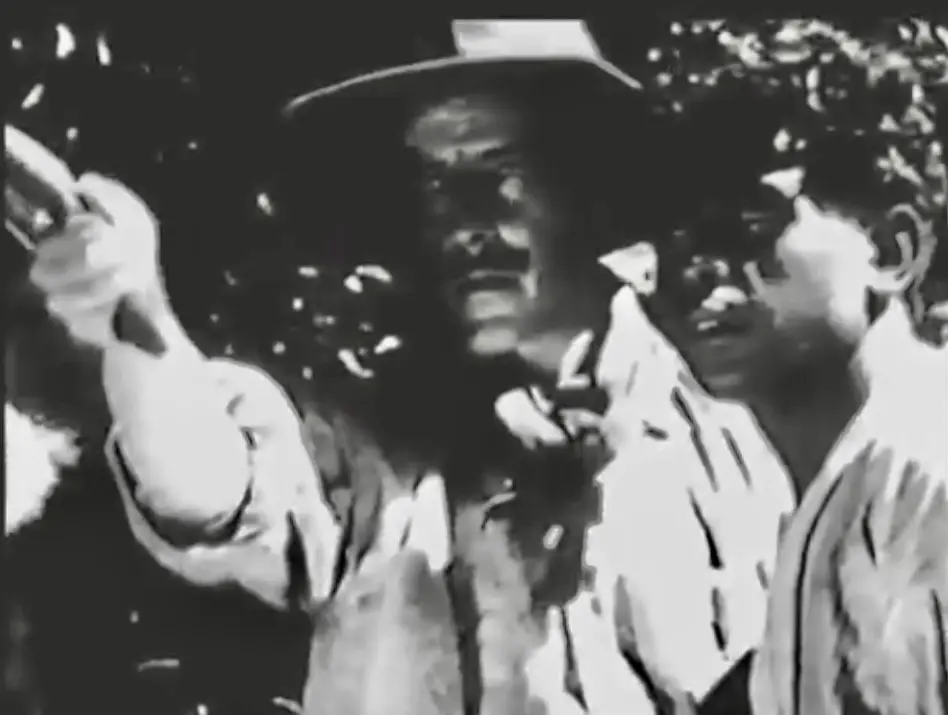
Even masterpieces carry buckshot scars. The subplot involving a Maori sidekick (uncredited actor, possibly of Pacific Islander heritage) traffics in the era’s lazy ethnographic caricature. While the character aids the gang, the intertitles spell his dialogue in cringe-inducing “me savvy plenty” pidgin. Additionally, the rushed third act compresses the brothers’ trial into a single montage, blunting the emotional wallop. Finally, the surviving print’s second reel suffers from nitrate warping that no digital sorcery can fully ameliorate; faces ripple as though viewed through a heat mirage.
Cine-clubs in Paris screened a 9.5mm abridgement during the 1968 student riots—French cinephiles claimed Starlight as an anarchist saint. Australia’s own Bush Telegraph Podcast uses the film’s theme whistle as its bumper music. Quentin Tarantino reportedly owns a French lobby card and referenced its crimson sunset tint in Django Unchained. Meanwhile, Australian bushranger cosplay burgeons at history fairs, with Robbery Under Arms cosplayers competing against Ned Kelly ironclads.
As of this month, the restored edition streams globally on NFSA’s AusCinema platform with optional commentary by historian Dr. Nicole Tynan. A limited-edition Blu-ray from Severin Films pairs the movie with a 48-page booklet of essays, including one that dissects the government’s 1906–1941 ban on bushranger films. Physical media devotees should pounce—only 3000 units pressed.
Should you invest 74 minutes? If you crave sanitized heritage, shuffle off to The Pied Piper of Hamelin. If, however, you hunger for cinema that still smells of horse sweat and gun oil, Robbery Under Arms will hijack your senses. It is not merely a milestone; it is a gauntlet hurled across a century, daring modern filmmakers to match its reckless vitality. Strap on your swag, tighten the chin strap of your cabbage-tree hat, and ride with Starlight—you’ll emerge dust-smothered, sun-blinded, and weirdly elated.
IMDb 6.8
1932
Community
Log in to comment.