DbcultAccessing Vault...
7.7/10
Senior Film Conservator
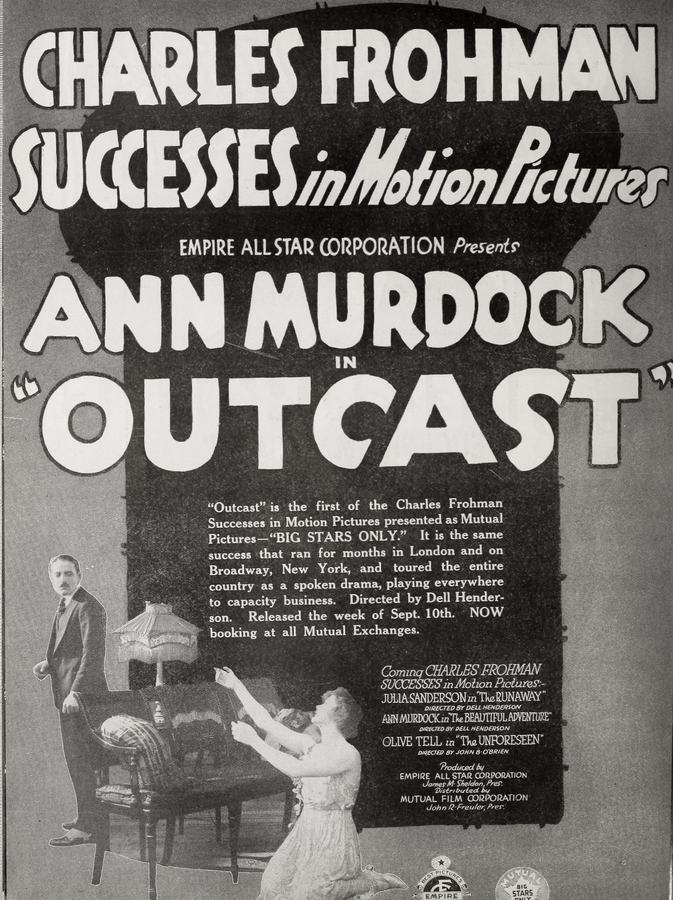
A definitive 7.7/10 rating for a film that redefined the boundaries of cult cinema. Outcast remains a cornerstone of transgressive art.
There are certain cinematic narratives that, regardless of their vintage, possess an enduring, almost visceral power to captivate and provoke introspection. 'Outcast' is unequivocally one such film, a profound exploration of human frailty, societal condemnation, and the arduous, often circuitous, path to redemption. It's a story that unfurls with the unsparing realism of a classic tragedy, yet ultimately offers the fragile, hard-won promise of a new dawn. From its opening frames, the film immerses us in a world where moral rectitude is often a luxury, and survival a constant, brutal negotiation.
The narrative's emotional fulcrum rests squarely upon the shoulders of Miriam Gibson, portrayed with a compelling blend of vulnerability and steel by Kate Sergeantson. Her initial encounter with a handsome adventurer is painted with the deceptive hues of romance, a fleeting moment of joy swiftly overshadowed by the harsh reality of his mercenary ambition. This man, a prototype of the charming rogue, abandons her with the casual cruelty of a predator, choosing the financial security offered by an older, wealthier woman over the burgeoning life he helped create. This act of profound betrayal sets Miriam on a trajectory of despair, forcing her into an existence where her body becomes a commodity, a desperate means to an end: the survival of her newborn child. The film unflinchingly portrays the grim calculus of such a life, avoiding sensationalism in favor of a stark, almost documentary-like depiction of her struggle. The pervasive societal judgment, the whispers and averted gazes, form an invisible yet crushing weight upon her already burdened spirit. It’s a testament to the film's nuanced storytelling that Miriam never descends into caricature; her choices, however desperate, are always framed within the context of her circumstances, evoking a profound empathy from the viewer.
The cruellest twist of fate arrives with the death of her child, a devastating blow that shatters the very foundation of her will to endure. The reason for her struggle, her sacrifice, is abruptly extinguished, leaving her adrift in a sea of grief and hopelessness. This pivotal moment marks a profound shift in Miriam's journey; stripped of her maternal purpose, she becomes a ghost of her former self, a vessel for an unquantifiable sorrow. Her subsequent migration to London is less a journey towards a new beginning and more an escape from the haunting echoes of her past, a flight into the anonymity of a sprawling metropolis. Here, she enters the orbit of Geoffrey Sherwood, played by Jules Raucourt, a barrister whose own life has been derailed by a different kind of heartbreak. Geoffrey, once a man of promise, has succumbed to the corrosive embrace of alcohol, a direct consequence of his fiancée Valentine's desertion for a more financially advantageous match with a wealthy baronet. Their shared experiences of abandonment, though disparate in their manifestations, forge an unspoken, almost pre-destined connection between them.
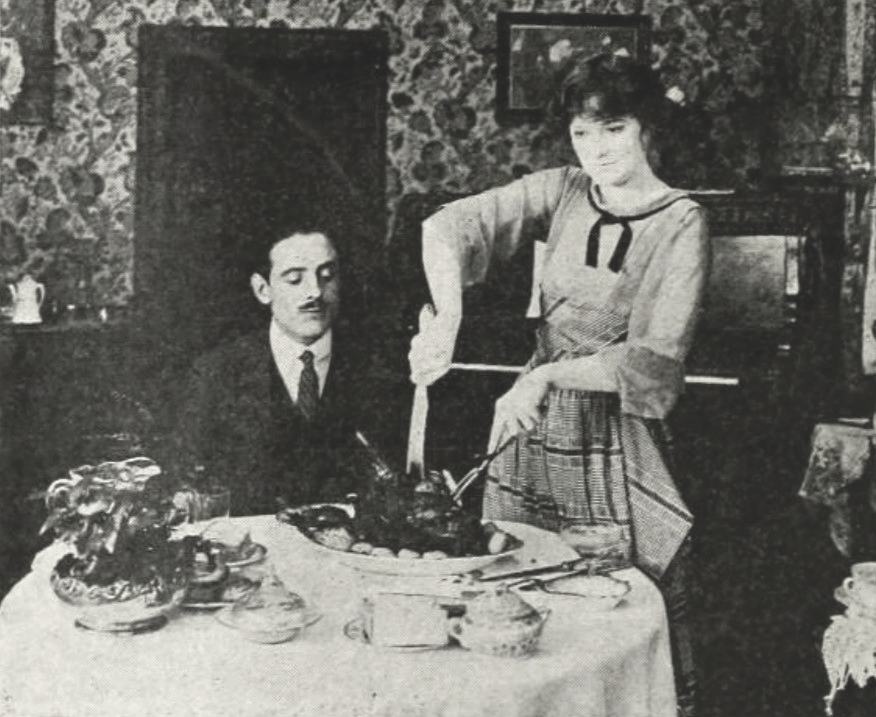
Miriam, in her new role as Geoffrey's mistress and housekeeper, finds a semblance of stability, a quiet refuge from the tempest of her past. Yet, beneath the surface of this pragmatic arrangement, a fragile hope begins to blossom within her: the yearning for a legitimate union, a chance at respectability and a conventional life. She tends to Geoffrey with a quiet devotion, managing his household and, perhaps more importantly, offering a silent, unwavering presence that begins to chip away at his self-destructive tendencies. Her kindness is a balm, a stark contrast to the superficiality and betrayal he has experienced. For a time, it seems as though this unlikely pair might indeed forge a future together, piecing together fragments of shattered lives into a mosaic of quiet contentment.
However, the past, as it often does in such dramas, has a way of asserting its unwelcome presence. Valentine, Geoffrey's former fiancée, re-enters the scene, a disruptive force cloaked in the veneer of sophistication. Unhappy in her marriage to the baronet, she begins to 'trifle' with Geoffrey, a manipulative game designed to assuage her own ennui and reassert her power. Geoffrey, still wounded and perhaps susceptible to the allure of his past, responds to her overtures, discarding Miriam with a thoughtless cruelty that mirrors his own prior abandonment. This moment is particularly poignant, as Miriam once again faces the crushing weight of rejection, a familiar echo of her initial betrayal. Yet, her reaction is not one of vitriol or despair, but a quiet, dignified retreat, a testament to her enduring strength and the lessons learned from a life of hardship. This nuanced portrayal of Miriam's resilience elevates her character beyond that of a mere victim, solidifying her as a figure of profound moral fortitude.
The film then pivots to Geoffrey's awakening, a slow, painful process of introspection catalyzed by Miriam's steadfast character. As he succumbs to Valentine's fleeting charms, he gradually begins to perceive the shallowness of her affections, the manipulative undercurrents beneath her polished exterior. The realization that she has not even divorced the baronet, her current husband, underscores her fundamental lack of integrity and depth. It is in this stark contrast, between Valentine's superficiality and Miriam's genuine kindness, that Geoffrey's dormant sense of shame and moral compass are reawakened. He begins to see Miriam not as a convenience or a temporary solace, but as a woman of profound character, whose quiet consideration for others, even in the face of her own suffering, stands in stark relief to the self-serving machinations of Valentine. This moment of clarity is meticulously crafted, avoiding any sudden, unbelievable epiphanies, instead building through a series of subtle observations and internal conflicts. It’s a powerful testament to the idea that true virtue often resides in the most unexpected places, often overlooked by those blinded by societal conventions or personal grievances.
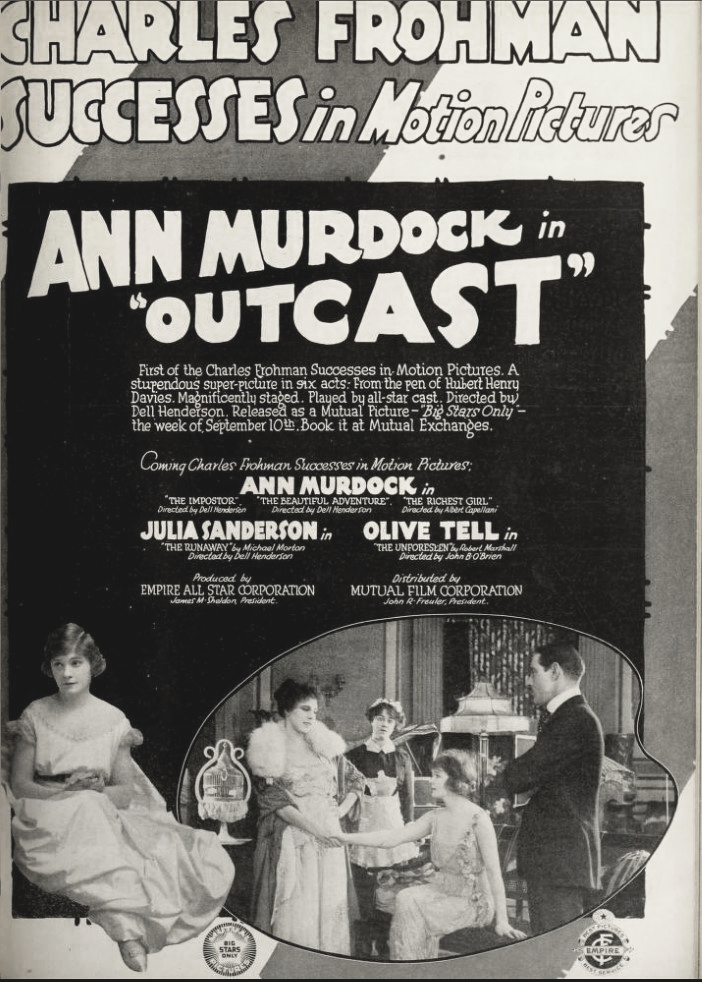
The film's exploration of redemption is particularly compelling here. Geoffrey’s journey from jilted lover to a man lost in drink, and then to a man capable of recognizing and valuing genuine goodness, is a testament to the human capacity for growth and change. It’s not a redemption that comes easily or without significant personal cost, but one earned through self-reflection and a willingness to confront one’s own flaws. In this regard, 'Outcast' shares thematic echoes with films like The Road to the Dawn, where characters often grapple with past mistakes and seek a new moral compass, or even the dramatic shifts in fortune seen in The Child of Destiny, where character arcs are frequently defined by profound personal transformations in response to adversity. The gradual nature of Geoffrey’s realization, the way Miriam’s quiet dignity slowly penetrates his alcoholic haze, feels authentic and earned. It avoids the theatrical flourishes that might have undermined the sincerity of his transformation, opting instead for a more introspective and believable progression.
The narrative culminates in a profoundly understated yet deeply significant act: Geoffrey and Miriam's marriage in a humble Scottish kirk. This choice of setting is symbolic; far removed from the societal judgment and complex social strictures of London, the kirk represents a sanctuary, a place where their union can be consecrated free from the gaze of a disapproving world. It is a union built not on passion or societal expectation, but on mutual respect, hard-won understanding, and a shared desire for a genuine connection. The subsequent decision to sail for Buenos Aires is more than just a change of scenery; it is a symbolic act of severing ties with their pasts, a deliberate embrace of a new beginning, untainted by the ghosts of their former lives. Buenos Aires, in this context, becomes a metaphor for hope, for the possibility of crafting a new identity and a new future, far from the suffocating prejudices and heartbreaks they endured. It's an escape, yes, but also a proactive step towards self-recreation, a testament to their enduring belief in second chances. This idea of escaping past circumstances for a fresh start in a new land resonates with the spirit of adventure and reinvention that often characterized early cinema, where geographical shifts frequently denoted profound personal transformations.
The film's strength lies not only in its compelling plot but also in its nuanced character development and its astute social commentary. It courageously confronts issues of class disparity, gender inequality, and the hypocrisy of societal morality. Miriam’s journey, in particular, offers a scathing critique of a world that condemns women for choices often born of desperation, while simultaneously overlooking the moral failings of privileged men. Her resilience in the face of relentless adversity is truly inspiring, positioning her as a proto-feminist figure, a woman who, despite her circumstances, retains an unwavering sense of self-worth and a profound capacity for love. The performances by Sergeantson and Raucourt are stellar, imbuing their characters with a depth and authenticity that elevates the material beyond mere melodrama. Sergeantson, in particular, conveys Miriam’s inner turmoil and quiet strength with remarkable subtlety, her eyes often speaking volumes where words might fail. Raucourt’s portrayal of Geoffrey’s descent and eventual awakening is equally convincing, capturing the nuances of a man grappling with his own moral failings and societal pressures. The supporting cast, including the manipulative Valentine, further enriches the narrative tapestry, providing essential foils and catalysts for the protagonists' journeys.
From a technical perspective, the writing by Hubert Henry Davies and Anthony Paul Kelly is robust, constructing a narrative arc that is both intricate and emotionally resonant. They skillfully balance the melodramatic elements inherent in the plot with moments of genuine human insight, ensuring that the characters feel real and their struggles relatable. The pacing is deliberate, allowing the audience to fully immerse themselves in the characters’ emotional landscapes and the unfolding drama. While specific directorial choices are not detailed in the plot summary, the seamless flow of the narrative suggests a keen understanding of visual storytelling, effectively translating the complexities of the human condition onto the screen. The film’s ability to evoke such strong emotions without resorting to overt sentimentality is a testament to its masterful execution. It's a film that asks profound questions about forgiveness, second chances, and the definition of true character, questions that remain relevant even today. The journey of Miriam and Geoffrey is not one of flawless triumph, but of enduring human spirit, a testament to the belief that even after the deepest despair, a new life, however humble, can be built upon the foundations of mutual respect and hard-won affection. It's a classic that reminds us of the power of empathy and the enduring quest for personal dignity in a world often quick to judge and slow to forgive.
In conclusion, 'Outcast' stands as a powerful and enduring piece of cinema, a poignant exploration of the human heart's capacity for both profound suffering and extraordinary resilience. It’s a film that, through its detailed portrayal of Miriam’s arduous journey and Geoffrey’s eventual redemption, offers a timeless message about the transformative power of love and understanding in the face of societal prejudice. The narrative, rich with thematic depth and emotional intensity, lingers long after the credits roll, prompting reflection on the nature of morality, forgiveness, and the perpetual human yearning for a fresh start. It serves as a compelling reminder that even from the ashes of despair, hope can, and often does, emerge, leading characters to a new, brighter horizon.

IMDb 6.3
1933
Community
Log in to comment.