DbcultAccessing Vault...
7.2/10
Senior Film Conservator
A definitive 7.2/10 rating for a film that redefined the boundaries of cult cinema. Outdoor Pajamas remains a cornerstone of transgressive art.
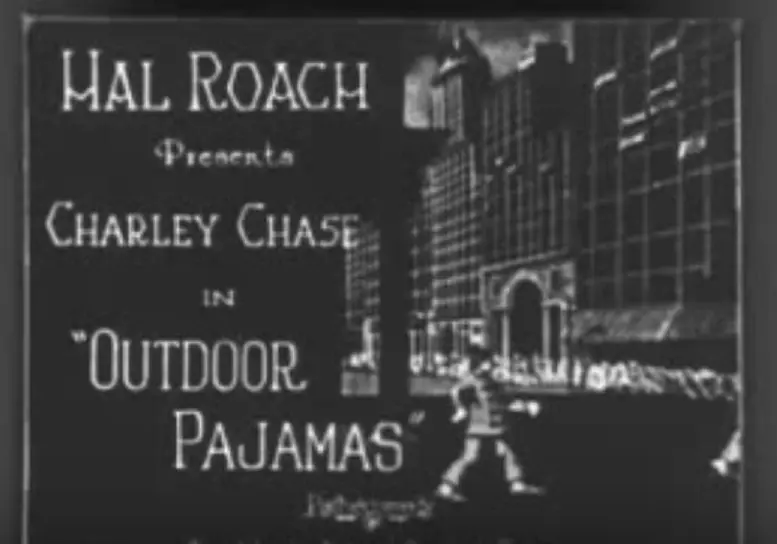
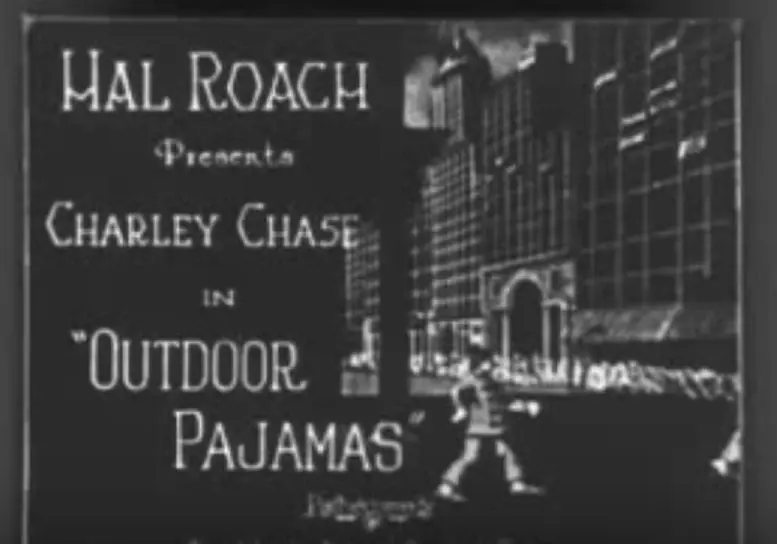
Stepping back into the raucous, inventive world of early 20th-century silent comedy is akin to unearthing a time capsule filled with pure, unadulterated joy. Among the myriad cinematic treasures from this era, a particular short film, 'Outdoor Pajamas', starring the inimitable Charley Chase, stands as a vibrant testament to the enduring power of physical humor and the meticulous craft of slapstick. Released in 1924, this film, while perhaps less universally recognized than the towering works of Chaplin or Keaton, encapsulates a unique brand of comedic brilliance that is both profoundly relatable and delightfully absurd.
The premise is deceptively simple, a classic setup for escalating mayhem: Jimmy Jump, portrayed by the effortlessly droll Charley Chase, wakes up late for his own wedding. This single, unfortunate event triggers a chain reaction of escalating misfortunes, forcing him out of his home and onto the bustling streets clad only in his pajamas. The genius of the film lies not just in this initial predicament, but in the relentless, almost poetic, way one disaster seamlessly morphs into the next, painting a vivid picture of a man utterly at the mercy of an indifferent, yet hilariously hostile, urban environment.
Charley Chase, a name that perhaps doesn't resonate with the same immediate recognition as some of his contemporaries, was nonetheless a comedic titan, a master of the slow burn and the exasperated reaction. Unlike the tramp's poetic resilience or the Great Stone Face's stoic ingenuity, Chase's comedic persona often revolved around a dapper, slightly put-upon everyman whose attempts at maintaining dignity in the face of chaos inevitably backfired. In 'Outdoor Pajamas', this persona is on full, glorious display. His initial rush of panic, the desperate attempts to blend in, and the slow, agonizing realization of his predicament are all conveyed with an exquisite subtlety that belies the broadness of the slapstick around him.
The film opens with a shot that immediately establishes the frantic pace: a clock face, ticking away precious moments, followed by Chase's character, Jimmy Jump, jolting awake in a state of disoriented panic. His bride-to-be, Martha Sleeper, likely playing the long-suffering fiancée, is waiting, oblivious to the sartorial nightmare unfolding. The absurdity of a man rushing to his wedding in striped nightwear is the core visual gag, but Chase elevates it beyond mere visual spectacle. He imbues Jimmy with a palpable sense of embarrassment, a desperate yearning for anonymity that the universe consistently denies him. This emotional anchor makes his subsequent travails all the more hilarious and, surprisingly, empathetic.
The brilliance of 'Outdoor Pajamas' also lies in its expertly choreographed ensemble work. As Jimmy ventures outside, he doesn't just encounter random obstacles; he interacts with a vibrant tapestry of characters, each contributing to his escalating predicament. Jerry Mandy, Clara Guiol, Beth Darlington, and Chester A. Bachman, among others, populate the film's landscape, playing roles that range from curious onlookers to unwitting antagonists. Their reactions, often a mix of confusion, amusement, and disdain, amplify Jimmy's mortification and propel the narrative forward.
Consider the scene where Jimmy tries to hail a cab, or perhaps attempts to blend into a crowd, only to be singled out by his outlandish attire. The humor stems from the universal fear of public exposure and the social awkwardness of being caught unprepared. Eddie Baker, Olive Borden, and Jules Mendel, even in their brief appearances, help to build this world of escalating chaos. The film doesn't rely on a single, grand comedic set piece but rather a rapid-fire succession of smaller, interconnected gags, each one building upon the last, much like a carefully constructed Rube Goldberg machine of humiliation. Leo Willis, Jack Ackroyd, and even the memorably named 'Tonnage' Martin Wolfkeil, contribute to the film's rich texture, ensuring that Jimmy's journey is never a solitary one, but a shared experience of public spectacle.
The pacing is relentless, a hallmark of silent comedy where every frame counts. There's no dialogue to slow things down, only the expressive faces of the actors, the frantic physicality, and the often-hilarious intertitles. Edna Hall, Jack Gavin, Al Flores, Lyle Tayo, and George Rowe round out a cast that, collectively, creates a believable and bustling backdrop against which Chase's character struggles. Each interaction, no matter how fleeting, serves to underscore Jimmy's growing desperation, transforming a simple domestic mishap into an epic, public battle against the forces of fate and trousers.
To fully appreciate 'Outdoor Pajamas', it's beneficial to place it within the wider context of silent cinema. While Chaplin's 'Little Tramp' in films like The Essanay-Chaplin Revue of 1916 often found himself in predicaments stemming from his outsider status, Chase's Jimmy Jump is an insider, a regular guy whose life is derailed by an unfortunate oversight. This difference in character archetype provides a distinct flavor of humor. Chase's comedy is less about social commentary through the eyes of the downtrodden and more about the universal anxieties of social faux pas and the unpredictable nature of everyday life.
Comparing it to other films of the period, we see a rich tapestry of narrative and thematic approaches. While a drama like The Witching Hour (1921) delved into psychological suspense, or God's Law and Man's (1917) explored moral dilemmas, 'Outdoor Pajamas' firmly plants itself in the realm of pure, unadulterated escapism through laughter. It shares a certain anarchic spirit with other comedies, but its focus on the 'dignified man in an undignified situation' sets it apart.
The meticulous planning of gags and the visual storytelling in 'Outdoor Pajamas' can be seen as a precursor to the intricate stunt work of Buster Keaton, though Chase's character rarely possesses Keaton's almost supernatural ability to navigate danger with deadpan precision. Instead, Jimmy Jump stumbles, flails, and reacts with an all-too-human blend of panic and resignation. This makes his comedy profoundly accessible and perhaps even more endearing to some viewers.
Even in comparison to other comedic shorts like Distilled Love (1920) or Smarty (1921), 'Outdoor Pajamas' carves out its own niche. While those films might focus on romantic misunderstandings or clever schemes, Chase's film derives its humor from the sheer, relentless misfortune of a man who simply wants to get married, but whose attire dictates an entirely different, more chaotic, path. This focus on the visual absurdity of his situation, rather than intricate plot twists, is a hallmark of its appeal.
Beyond the immediate laughs, 'Outdoor Pajamas' showcases remarkable technical craftsmanship. The cinematography, though perhaps not groundbreaking for its time, is efficient and effective, capturing the frantic action with clarity. The editing is sharp, ensuring that each gag lands with maximum impact and that the film's brisk pace never falters. The use of intertitles is sparse but effective, providing just enough context without interrupting the visual flow of the comedy. One can only imagine the live musical accompaniment that would have originally elevated the on-screen antics, a crucial element of the silent film experience that is often lost in modern viewings.
The film's exploration of public perception and personal embarrassment is a timeless theme. Jimmy's attempts to hide, to improvise, to escape the public gaze are universally understood. It's a scenario that, stripped of its 1920s context, could easily be transposed to a modern setting, proving the timelessness of its comedic core. The sheer audacity of his predicament, combined with Chase's masterful portrayal of a man teetering on the brink of a nervous breakdown, makes for compelling viewing.
While other films like Ruth of the Rockies (1920) might offer thrilling adventure, or Colomba (1920) dramatic intrigue, 'Outdoor Pajamas' offers something equally valuable: a pure, unadulterated comedic escape. It doesn't aim for grand narratives or profound statements, but rather a meticulously crafted series of escalating gags designed to elicit genuine laughter. This focus on comedic efficiency is where the short truly shines.
The film also subtly touches upon societal expectations. The pressure to present oneself appropriately, especially for a significant event like a wedding, is palpable. Jimmy's pajamas represent a complete breakdown of this social contract, forcing him into a series of increasingly desperate measures to restore order and decorum to his life. This underlying tension adds another layer to the humor, making his plight not just funny, but also relatable on a deeper, almost psychological level. It's a comedic exploration of the 'naked public square' anxiety we all occasionally feel.
In an era where cinema was still finding its voice, films like 'Outdoor Pajamas' were instrumental in defining the grammar of visual comedy. It demonstrated that humor could be derived from simple premises, executed with precision and an understanding of human foibles. It's a delightful example of how much entertainment could be packed into a relatively short runtime, a testament to the talent of its director (though uncredited, the guiding hand is evident) and, of course, its star.
Comparing it again to the wider cinematic landscape, one can see its thematic echoes even in more serious fare. While A Soul Enslaved (1916) might explore personal torment through drama, 'Outdoor Pajamas' finds similar torment, albeit comedic, in the everyday struggles of a man caught in an inescapable cycle of bad luck. The film's energy and inventiveness are also reminiscent of the early serials, like those featuring action and adventure, but here, the 'adventure' is purely one of social survival.
The delightful chaos of 'Outdoor Pajamas' serves as a perfect counterpoint to the more dramatic narratives of its time, such as the suspense of The Evil Eye (1920) or the cultural explorations of Half Breed (1918). It reminds us that cinema, in its nascent stages, was a broad church, offering everything from poignant human stories in The Heart of a Girl (1917) to the lighthearted exuberance of comedies like this one. Even the fantastical elements found in some films, or the grand spectacles of others like Molly of the Follies (1919), find their own unique parallel in the sheer inventiveness of silent comedy's physical language.
Ultimately, 'Outdoor Pajamas' is more than just a historical curiosity; it's a vibrant, laugh-out-loud comedy that transcends its era. It's a masterclass in comedic timing, character portrayal, and the art of escalating absurdity. For anyone with an appreciation for the golden age of cinema, for those who delight in the intricate dance of slapstick, or simply for anyone in need of a good, honest laugh, this Charley Chase gem is an absolute must-watch. It's a delightful romp that proves that even in the most embarrassing of situations, there's always a kernel of universal humor to be found. It stands as a powerful reminder of how truly inventive and engaging early cinema could be, a joyful noise in the silent era's grand symphony of storytelling.
IMDb 5.7
1930
Community
Log in to comment.