DbcultAccessing Vault...
Cult Review
Senior Film Conservator
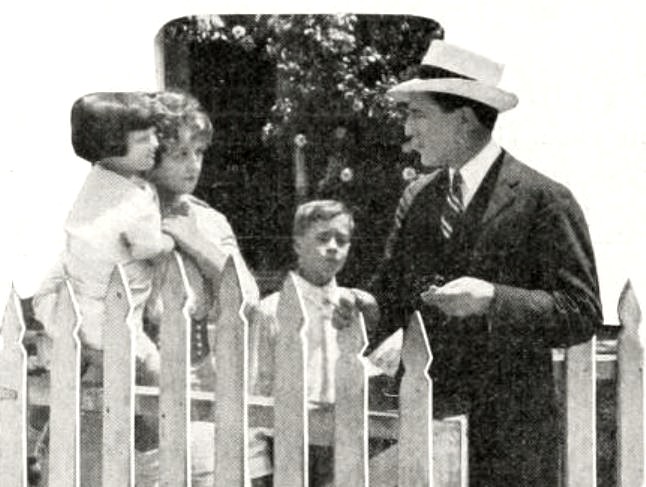
Spoiler-rich excavation ahead—enter the vault at your own peril.
Picture 1915: Europe is busy dismembering itself across the Atlantic, yet inside American picture-palaces the war is interior, fought with nothing louder than the rustle of taffeta and the clack of a typewriter. The Fighting Hope lands in that hush like a thrown gauntlet—an implacable little fable about how marriage can mutate into penal servitude without a single jailer in sight.
Director/producer team Turnbull–Hurlbut refuse to cushion the fall. From the first iris-in we are inside a marble mausoleum of finance: columns that dwarf the human spine, chandeliers that glitter like guillotines. Against this ossified grandeur Anna Granger—played by Cleo Ridgely with the porcelain composure of a woman who has already rehearsed her own funeral—glides in disguise, a ghost haunting the scene of the crime.
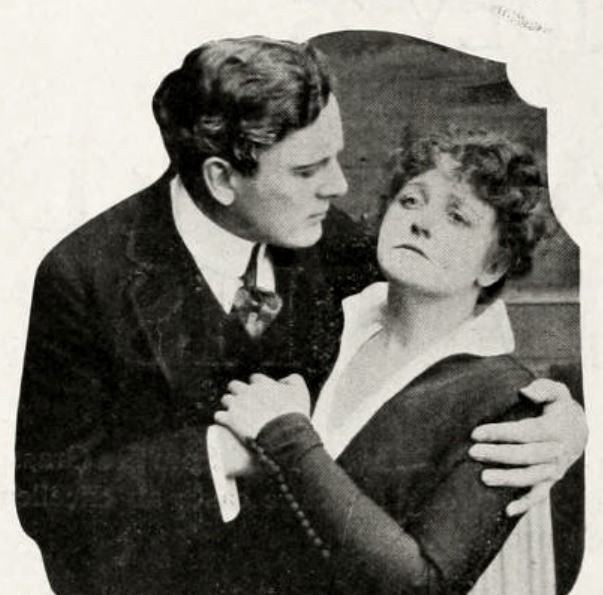
Silent cinema is architecture first, drama second. Intertitles are flying buttresses; faces are gargoyles. Notice how cinematographer Frank Urson (uncredited yet identifiable by his signature top-light that carves cheekbones into cliffs) frames Ridgely in medium-long shot against receding rows of ledgers—each ledger a headstone, each column a bar. The visual thesis: patriarchal capital incarcerates womanhood long before any courtroom verdict.
Anna’s husband, a slippery functionary essayed by Tom Forman, is introduced via a dissolve that melts his confident grin into a wanted circular. It’s the film’s most overtly expressionist flourish—an early warning that identity here is as fragile as nitrate stock. When the jail-door clangs shut off-screen, we cut not to the interior of a cell but to Anna’s face in extreme close-up: the first crack in the porcelain. The marriage contract has become a penal contract.
Enter Theodore Roberts as bank president Horace Mordaunt—part Lear, part robber-baron, all patriarch. Roberts, a stage titan who could intone Shakespeare while tying a trout fly, knew that silent acting is not mute but transposed. He orchestrates whole arias with eyebrow arches and the tremor of a cigar. Mordaunt is himself indicted, a delicious irony: the throne is rotten, yet the servant still bows.
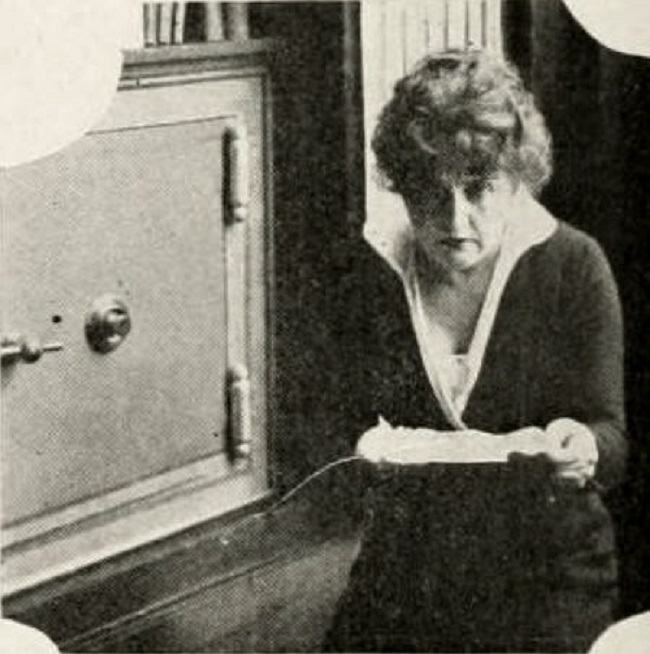
The detectives—thin men in bowler hats—slither through the narrative like rumors. Their lantern-slide search yields a letter that detonates the third reel. Watch how the camera lingers on the unfolded stationery: a macro of ink and watermark that feels almost pornographic. The letter is the era’s equivalent of a sex-tape leak—proof that desire, fiscal or carnal, leaves paper trails.
Ridgely, often dismissed as “just another Paramount ingénue,” operates here like a time-bomb wrapped in kid gloves. Her acting credo: show the effort of not showing. When Anna learns the money financed another woman’s boudoir, Ridgely’s pupils dilate a single millimeter—on 35 mm that micro-gesture reads like Krakatoa. No hand-to-brow theatrics, no gnawing of knuckles. Instead, she quietly closes the ledger she has been auditing, the click of the brass clasp sounding, within the orchestral hush, like a gunshot.
Compare this to Mary Pickford’s more solar histrionics in A Girl of Yesterday; Ridgely offers lunar minimalism. The performance hasn’t aged; it has ossified into something starker, almost modernist.
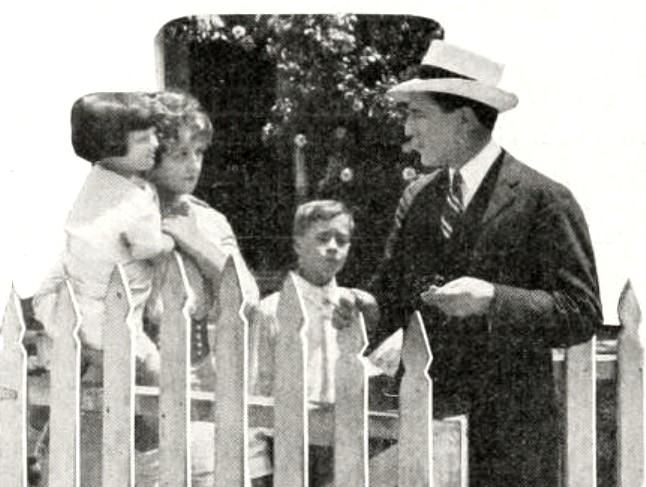
Forman’s husband is no moustache-twirling villain. He is worse: the banal, likable colleague who salts away your future between cocktails. Forman gives him a boyish bounce, a perpetual ‘just stepped off the tennis court’ glow. The horror lies in how easily one could swap favors with this man at a bar, never suspecting the moral crater behind the smile. When the letter condemns him, Forman lets the grin linger a beat too long—an exquisite touch that turns camaraderie into cadaver.
Turnbull, a scenarist who could distill Madame Bovary into a reel and change, structures the script like a banking ledger itself: debits of trust on the left, credits of revelation on the right. Dialogue intertitles are stingy—she prefers imagistic synecdoche. “Another woman’s perfume” flashes onscreen without expository padding; the next cut is Anna’s fingers tightening around a quill until ink bleeds like stigmata. The feminist undercurrent is unmistakable: a woman’s labor (both emotional and clerical) props up a cathedral of capital that promptly collapses on her head.
Film historians hunting proto-noir signposts will feast here. Note the sequence where Anna descends a spiral staircase—Urson backlights the railing so that bar-like shadows stripe her gown, prefiguring the jail-cell silhouette. Later, she confronts her reflection in a polished copper teller’s shield; the mirror image fractures, an early experiment in subjective fracture that Alias Jimmy Valentine would borrow the following year.
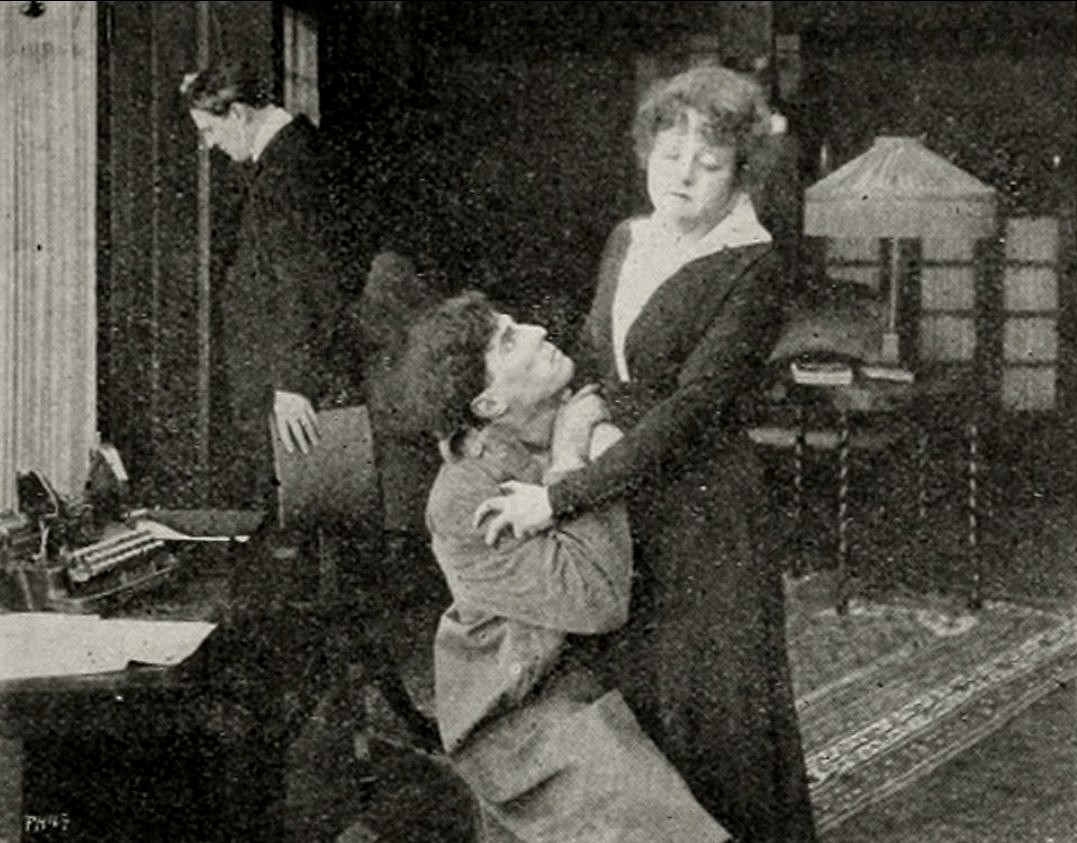
The climax—a swift, almost ruthless departure—denies the audience restorative justice. The husband vanishes from the narrative the instant Anna’s loyalty combusts. We neither see the divorce decree nor the inside of a courtroom; instead, the final shot holds on Ridgely’s back as she walks toward an open window, city haze beyond suggesting a world widowed of absolutes. Fade-out. No epilogue, no moral placard. The vacuum feels startlingly contemporary.
Stack The Fighting Hope beside The Queen’s Jewel and you see two divergent modes of female agency: jewel-thief vs. bookkeeper, external heist vs. internal audit. Place it adjacent to The Blue Mouse and you notice how both films weaponize petit-bourgeois domesticity—one through farce, the other through frigid melodrama.
More intriguing is the echo in In the Bishop’s Carriage where a pickpocket reforms yet remains chained to patriarchal judgment. Anna Granger, by contrast, never repents; she simply recalibrates the vector of her devotion. The film is less interested in redemption than in the moment when the cost of faith outstrips its dividends.
Original exhibition reports list a cue sheet calling for “Chanson Triste” during Anna’s first night shift, shifting to “Ride of the Valkyries” when the detectives storm the vault. Contemporary restorations often substitute a somber piano etude; either way, the absence of diegetic noise amplifies every rustle of Ridgely’s cotton blouse—an aural stand-in for the patriarchal surveillance that never sleeps.
Only two 35 mm prints are known to survive: one at the Library of Congress (incomplete, German intertitles), one in a private Parisian collection. Hence, most viewers encounter The Fighting Hope via 2K scans on boutique streaming channels like RetroVault or ShadowSilents. The LOC print’s tinting schema—amber for interiors, viridian for exteriors—survives, giving the film an autumnal chill that feels eerily appropriate for a story about the season when trust withers.
Great films arrive bearing double-edged riddles: they document the era that birthed them and foreshadow the one that will inherit them. The Fighting Hope is ostensibly a 1915 morality play about a wronged wife; in 2024 it reads as a stealth manifesto on emotional labor, financial gaslighting, and the moment when loyalty declares bankruptcy. The closing image—Anna walking toward daylight without a single male gaze tethering her—feels less like curtain-fall and more like a match being struck in a darkened vault. The flame is small, but nitrate remembers fire.
Verdict: essential viewing for anyone mapping the genome of feminist cinema, the archaeology of noir, or the simple, savage pleasure of watching a porcelain mask crack into shrapnel that still reflects the light.
IMDb 5.8
1932
Community
Log in to comment.