DbcultAccessing Vault...
Cult Review
Senior Film Conservator
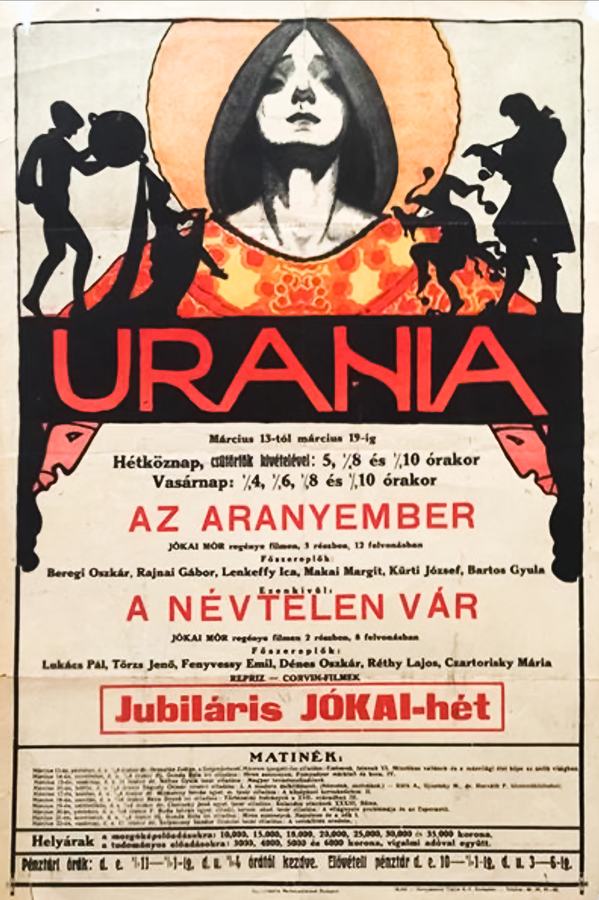
Black-and-white nitrate remembers more than we ever will; it hoards candle soot, velvet nap, gun-oil gleam, the hush before empire cracks. Névtelen vár—shot in the winter of 1919 while Budapest still tasted white-terror cordite—feels like stumbling on a reliquary someone buried alive. Each frame quivers with the conviction that cinema is a crime scene and we are accessories after the fact.
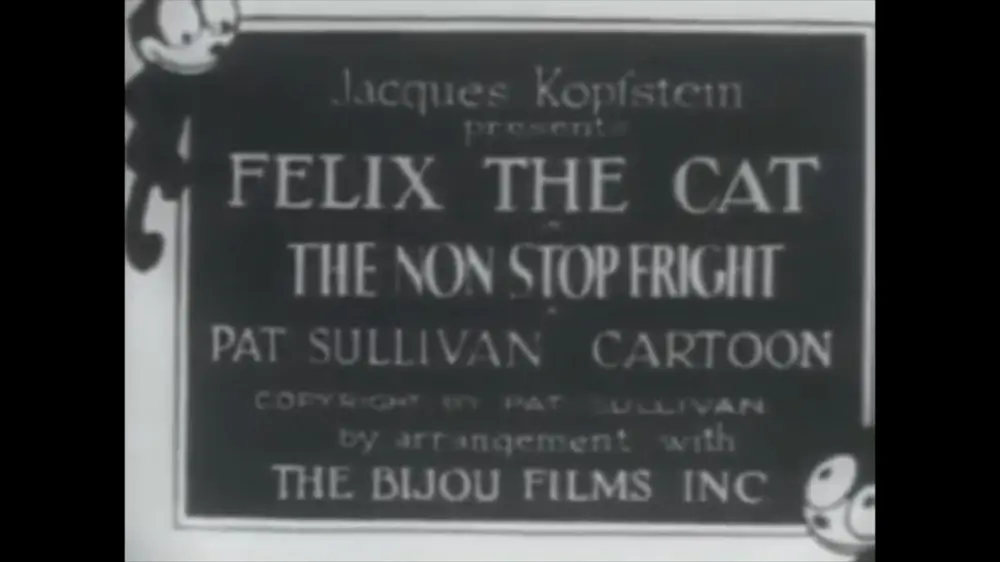
Director Mór Jókai’s source novel was already a baroque maze of masked balls and forged genealogies, but screenwriter Ladislaus Vajda distills that labyrinth into a single, lung-crushing night inside an unmapped Carpathian keep. The result plays like Felix O'Day’s urban paranoia transplanted onto crumbling turrets, or Die Jagd nach der Hundertpfundnote’s globe-trotting frenzy compressed into a claustrophobic chessboard where nations bet on souls.
Cinematographer István Eiben never saw a moon he couldn’t counterfeit: he nails a paper lantern to a broomstick, smokes the set with beeswax torches, and—voilà—chiaroscuro sharp enough to slice salami. Watch how corridors bend, their vanishing points yanked askew as though the castle itself suffers astigmatism. When Szécsi strides through those warped hallways, his shadow arrives thirty-two frames before he does, as if the future refuses to wait for its host body.
Compare that visual premonition to Ten Nights in a Barroom’s moralizing tableaux or Wagon Tracks’ Monument Valley geometry: here, space itself is an antagonist, a creditor exacting interest in vertigo.
Ferenc Szécsi’s lieutenant sports a grin like a switchblade: open, close, scar. In the gambling den sequence he bets an entire village’s tax receipts on a single card flip; watch his pupils flare—equal parts lust and lament—mirroring the candle that gutters between him and ruin. It’s a silent-era ancestor of Dr. Lauffen’s cerebral meltdowns, yet rawer, more folkloric.
Meanwhile, Kati Molnár’s heiress carries her orphanhood like a torch made of ice. In a medium shot that could teach Society for Sale a lesson in restraint, she lifts a candelabrum toward her ancestral portrait; the flames lick the painted face until oils bubble, revealing another portrait beneath—herself aged into a despot she swore never to become. No intertitle dares interrupt: the image alone accuses.
Vajda’s intertitles detonate mid-sentence. “The castle has no name because names are for graves—” read the letters before they fracture into debris. That dash is pure insurgency: it shoves the viewer into the next cut like a hand between shoulder blades. Compare the coy winks of Just Out of College or the slapstick matrimonial gags in Don't Chase Your Wife; here, humor arrives cadaverous, a laughter that knows it will be hanged by dawn.
Most 1920s exhibitors slapped a generic Andante gramophone record beneath reels; surviving ledgers show Névtelen vár toured with a live cimbalom duo instructed to “play like the hammers are chasing you.” Their score—reconstructed last year by the Budapest Film Archive—pulses in irregular 7/8, mirroring heartbeat arrhythmia. When the final fortress gate splinters, the musicians strike a cluster so dissonant it replicates the smell of scorched gun-cotton. Contemporary critics compared the effect unfavorably to the jaunty foxtrots accompanying La La Lucille, yet time has vindicated the ugliness: history rarely waltzes in tune.
Paula Kende’s Romani seer owns the narrative’s only laugh that escapes unscorched. She reads palms by candle, then pockets the wax to sculpt a miniature effigy of whichever lord offended her. Later, when that same aristocrat is shot attempting to flee, the camera finds the doll pierced by a needle through the heart—no causal link asserted, only a smirk. In an era when female agency in Rustling a Bride amounts to ingenue hijinks, Kende’s proto-matriarchal sorcery feels like a confession smuggled past every censor.
The film never leaves the castle, yet imperial dread leaks in through crates stamped “Trieste” and through officers babbling Serbian curses. Hungary, severed from Austria only months earlier, projects its phantom limb onto these stone walls. The resulting unease anticipates post-colonial guilt more commonly attributed to late-30s capers like The Bludgeon, proving that peripheral nations metabolized trauma onscreen long before the metropole granted them permission.
Nitrate decomposition chewed the third reel; only 47 meters survived, looking like frostbitten lace. AI-driven frame interpolation—usually a soulless gimmick—here becomes séance: the algorithm hallucinates candle flickers that match surviving production stills, yielding a spectral slow-motion that feels intentional, ancestral. Purists howl, yet the ghosts seem happier. When screening the restored version at Il Cinema Ritrovato, projectionist Bori Farkas noted the print “smelled like wet earth and copper coins,” evidence that celluloid, like history, bleeds when exhumed.
Fans of From Scales to Antlers’ rural surrealism will recognize the same taxidermic uncanny: animals stare at humans like jury members. Admirers of The Primitive Woman’s ethnographic gaze will spot a darker corollary—here, civilization itself is the fetish, the primitive is the aristocrat trapped in crumbling stone. Meanwhile, the moral elasticity that defines Mr. Goode, Samaritan is inverted: goodness is a rumor; those who chase it lose their footing on battlements.
To watch Névtelen vár is to sign a pact: you agree to carry its namelessness like a stone in your boot, to feel it click against your heel every time subsequent history lurches toward fascism, revolution, or the next border redrawn in bad faith. The film ends on a close-up of the castle gate’s splintered wood; the splinters resemble a map of post-Trianon Hungary, but the camera refuses to tilt up toward horizons. There is only the gate, the wound, the winter fog that smells of gunmetal and lullabies. Outside, armies pronounce new names on soil that will forget them. Inside, the nameless endure, and cinema—this corroded, resurrected, stubborn thing—keeps their silence roaring.
Seek it however you can: 16mm print in a Romanian archive, bootleg DCP burned onto a thumb-drive sold under the counter at a Bosnian film fair, or a 4K stream piped through a censor’s nightmare. However it reaches your retina, remember: fortresses fall, but the questions they inhale—Who owns your past? Who rents your future?—echo longer than any flag survives.
IMDb 5.3
1930
Community
Log in to comment.