DbcultAccessing Vault...
5.5/10
Senior Film Conservator
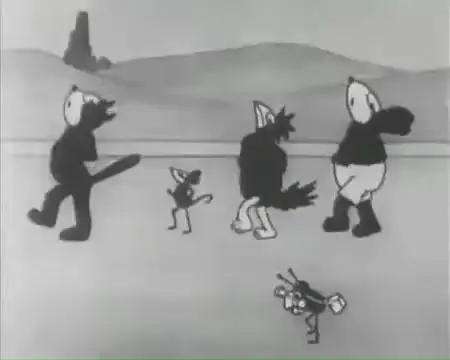
A definitive 5.5/10 rating for a film that redefined the boundaries of cult cinema. Barnyard Olympics remains a cornerstone of transgressive art.
The year 1932 represented a pivotal juncture in the evolution of the moving image, a period where the burgeoning language of sound synchronization was beginning to marry the fluid, experimental kineticism of the silent era. In the midst of this technical renaissance, Barnyard Olympics emerged not merely as a piece of ephemeral children's entertainment, but as a sophisticated exercise in rhythmic timing and visual subversion. Directed by the stalwart Wilfred Jackson, this short film captures a specific zeitgeist—an era defined by the Great Depression’s crushing weight and the paradoxical escapism of the Olympic spirit. To watch Mickey Mouse navigate the hurdles of this agrarian decathlon is to witness the birth of the modern underdog archetype, stripped of the grit found in Greed (1924), yet retaining a visceral sense of struggle.
The visual language of the film is rooted in the 'rubber-hose' style, a technique that prioritizes the internal logic of motion over the rigid constraints of anatomy. Jackson’s direction utilizes this elasticity to create a sense of perpetual motion that feels almost subterranean in its intensity. Unlike the heavy, portentous framing of The Storm (1922), where the environment is an antagonist, the world of the barnyard is a participant. The ground swells, the equipment breathes, and the very air seems to vibrate with the percussive score. This isn't just animation; it’s a choreography of chaos. The bicycle race, which serves as the film’s centerpiece, is a masterclass in spatial distortion. As Mickey and Pete hurtle through the countryside, the background becomes a shifting tapestry of obstacles that challenge the viewer's perception of depth, much like the frantic pacing found in Trigger Fingers.
There is a raw, unvarnished energy here that predates the more polished, sanitized versions of Mickey Mouse that would dominate the late 1930s. This Mickey is scrappy, slightly mischievous, and capable of a physical intensity that borders on the grotesque. He is the Everyman in a way that resonates with the audiences of the early 30s—a figure who must rely on wit and resilience to overcome the sheer brute force of his surroundings. This resilience mirrors the stoicism seen in The Man Unconquerable, though Jackson trades the melodrama for a series of escalating gags that function with the precision of a Swiss watch.
The transition to sound was still a relatively fresh wound for many filmmakers in 1932, yet Jackson handles the audio-visual marriage with a dexterity that puts many live-action features of the time to shame. The 'Mickey Mousing' technique—where the music mirrors every physical action—is employed here with surgical precision. Every punch, every stride, and every collision is punctuated by a musical cue that elevates the slapstick to the level of opera. It’s a far cry from the more somber, dialogue-heavy atmosphere of The Other Man's Wife or the tragic weight of Whom the Gods Would Destroy. Instead, the soundtrack provides a buoyancy that allows the film to explore themes of failure and triumph without ever becoming bogged down in sentimentality.
The character of Pete serves as the perfect gravitational anchor for this auditory madness. His presence is announced by deep, brassy tones that signify his role as the immovable object to Mickey’s unstoppable force. Their rivalry is not merely a plot device; it is a fundamental clash of ideologies. Pete represents the corrupt, entrenched power structures that utilize deceit to maintain dominance—a theme that echoes through the darker corridors of Drama na okhote. Mickey, by contrast, is the spirit of innovation, the figure who uses the tools of his oppression—in this case, the very obstacles Pete places in his path—to propel himself toward victory.
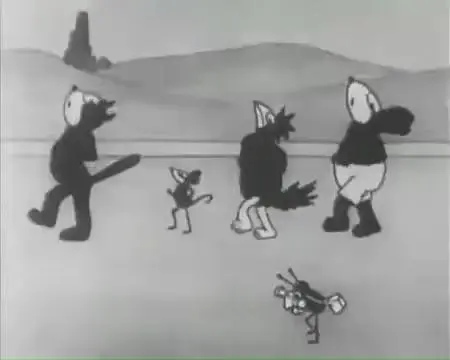
To view Barnyard Olympics in a vacuum would be a disservice to its complexity. It was released during the same year as the Summer Olympics in Los Angeles, a period when the United States was desperate for a narrative of national prowess. The film parodies this desire for prestige by placing it in the mud and grime of a farm. There is a subversive quality to seeing a goat acting as a judge or a turtle participating in a sprint. It’s a dismantling of the pomp and circumstance that usually accompanies such events, reminiscent of the social critiques found in Der Leibeigene. While other films of the era, such as The Deemster, dealt with the weight of tradition and law, Jackson’s work suggests that in the face of absolute chaos, the only law is survival—and perhaps a well-timed pratfall.
One cannot ignore the sheer technical audacity of the animation frames. The fluidity of the rowing sequence, where the water is rendered as a series of undulating, rhythmic lines, showcases a level of craftsmanship that was light-years ahead of contemporaries like In the Python's Den. There is a tactile quality to the animation; you can almost feel the tension in the bicycle spokes and the heat of the dust rising from the track. This sensory immersion is what separates the Disney output of this era from the more static productions of the time. It shares a certain 'flickering' vitality with Flickering Youth, yet it channels that energy into a more coherent, albeit frantic, narrative structure.
There is a lingering darkness in Barnyard Olympics that is often overlooked. The violence, while comedic, is persistent and occasionally quite sharp. Pete’s attempts to sabotage Mickey are not mere pranks; they are calculated acts of malice that would feel right at home in a more serious drama like His Convict Bride. This pre-code edge gives the film a weight that modern animation often lacks. There is a sense that the stakes are real, even if the consequences are temporary. When Mickey is flattened or stretched, the visual impact is visceral. It’s a form of physical theater that draws from the same well as the high-stakes gamesmanship in Skinning Skinners.
Furthermore, the film’s conclusion—a frantic, multi-character pile-up that somehow results in Mickey’s victory—is a cynical yet hilarious commentary on the nature of success. It suggests that winning is often a matter of being the last one standing in a field of wreckage, a sentiment that might have been shared by those who lived through the events of As a Man Sows. The final frame isn't just a celebration; it’s a sigh of relief. The barnyard returns to its state of equilibrium, but the scars of the competition remain, etched into the landscape and the memory of the viewer.
Ultimately, Barnyard Olympics stands as a testament to the power of the short form. It manages to pack more character development, technical innovation, and social commentary into its brief runtime than many features of the era. It is a film that demands to be watched not as a relic of a bygone age, but as a living, breathing piece of art that continues to influence the medium. Jackson’s work here is a bridge between the primitive sketches of the 1920s and the cinematic heights of the 1940s. It lacks the courtroom gravity of Hello, Judge, but it replaces it with a frantic, unyielding joy that is infectious. For any serious student of cinema, this is essential viewing—a vibrant, screaming, sweating example of what happens when the medium of animation is pushed to its absolute limits. It is, in every sense of the word, a gold-medal performance in visual storytelling.

IMDb 6.4
1931
Community
Log in to comment.