DbcultAccessing Vault...
5/10
Senior Film Conservator
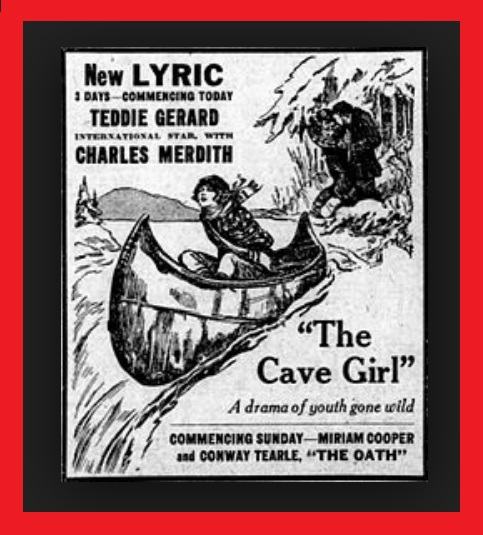
A definitive 5/10 rating for a film that redefined the boundaries of cult cinema. The Cave Girl remains a cornerstone of transgressive art.
If you scour the frostbitten margins of silent-era lore, you’ll unearth a strange, glimmering shard—The Cave Girl—an artefact so elusive that even seasoned archivists treat its survival like rumors of Siberian tigers. Shot in the winter of 1925, released the following January, the picture vanished into nitrate limbo shortly after Boris Karloff began climbing toward immortality. Yet what remains—production memos, stills, a brittle continuity script—suggests a film drunk on contradictions: primordial urges versus Victorian corsetry, anthropological sermonizing versus pulp adrenaline, all whirring beneath a half-moon of ice-glazed pines.
Director Walter Lang (years away from the glossy Fox Technicolor musicals that would define him) approaches the material like a reluctant poet, staging tableaux where chiaroscuro lantern-light licks birch trunks and human silhouettes seem carved from obsidian. The screenplay—four writers, one being satirist Guy Bolton—oscillates between ethnographic diatribe and swooning melodrama, as if The Right to Love were being re-written by Jack London after a absinthe bender.
Margot Sperry, essayed by lithe Belgian émigré Teddie Gerard, is no conventional ingénue. She is introduced scraping frozen porridge from a tin, her breath a visible reminder that survival here is measured in calories and kindling. The film’s title card brands her “a child of the blizzard,” yet the narrative swiftly complicates that romantic tag; she is also a reluctant domestic for her guardian, Professor Sperry, whose quasi-Darwinian sermons (“Return to the elemental, girl, or be devoured by it!”) echo through their log cabin like the growl of a dyspeptic grizzly.
The pilfering sequences—shot in day-for-night blue tint—are masterclasses in suspense montage. Lang cross-cuts between Margot’s moccasins compressing snow, the sputter of a distant watchdog, and the Bates family’s opulent stewpot exhaling steam like a locomotive of privilege. Each purloined rasher of salt pork feels like a brick torn from the wall of Gilded Age entitlement. When Margot bolts into the forest, clutching bounty, the camera tilts upward to reveal cathedral-high spruces, suggesting a world where both deity and judiciary are arboreal.
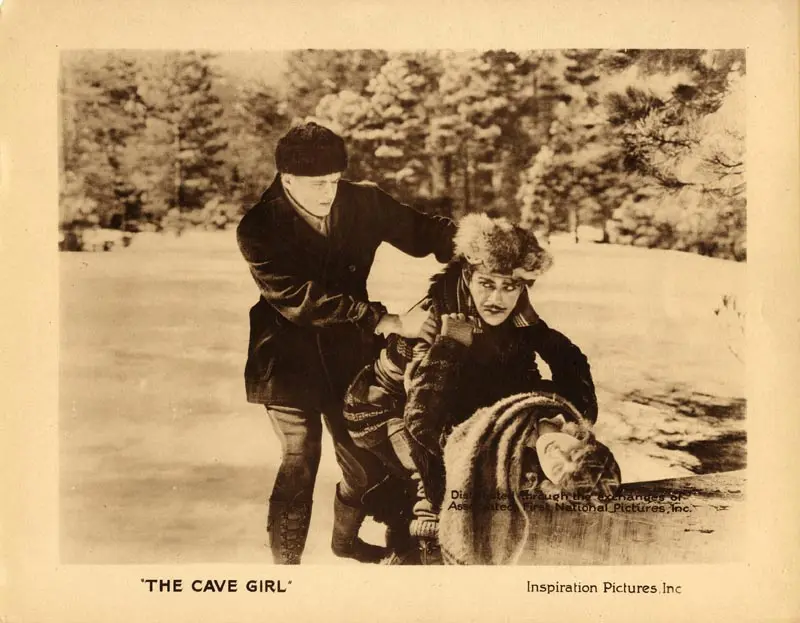
Divvy—yes, that is the name burned into the intertitles—embodies the era’s uneasy flirtation with post-war ennui. Portrayed by Broadway import Charles Meredith, he first appears in a three-piece suit amid a snowfield, absurdity incarnate, clutching a betrothal letter like a death warrant. His fiancée, Elsie Bates, is the personification of social aspiration: all dropped-handkerchief smiles and genealogy charts. Their arranged union reeks of Rockefeller-era mergers, not passion.
Cue the meet-cute of savage poetry:
Margot, mid-pilfer, knocks over a kerosene lantern; Divvy investigates, sees not a thief but a frost-nymph haloed by burning fuel. The frame irises in on her eyes—two obsidian arrowheads—while the lantern’s spillage ignites a ring of fire around them. For a breathless instant, the snow itself seems to blaze. He does not grab her; instead, Lang holds on a medium shot as Divvy’s gloved hand hesitates mid-air, caught between propriety and gravitational pull. In that moment, the film’s core thesis flickers alive: civilization’s lacquer is but a sneeze away from cinders.
Baptiste—half-French, half-Ojibwe, all outsider—remains Karloff’s earliest substantial screen role, predating his cadaverous stardom by half a decade. He shambles into frame wearing Hudson’s Bay blanket-coat and a gaze that could cauterize wounds. The intertitles label him “a mongrel of two worlds, welcomed by neither,” yet Karloff infuses the part with wounded dignity, not mustache-twirling villainy. Notice how he fingers a rosary while plotting arson—a minute gesture Karloff later admitted he cribbed from watching Québec mill-workers. The contradiction of sacred vs. profane coils inside him.
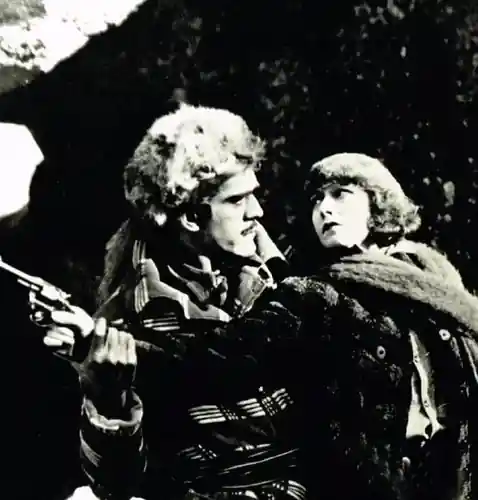
When Baptiste is accused of stealing a silver cigarette case (a petty crime he may not have committed), the Bates patriarch sacks him with the same casual flick used to swat black-flies. The dismissal scene—Baptiste framed against a moose-head trophy—registers the hierarchy: hunter and hunted, though the antlers above both complicate who is fauna. Later, his vengeance—torching the Bates winter camp—feels less like crime than revolution, a one-man jacquerie against opulence. The conflagration sequence, tinted crimson, was reportedly achieved by double-exposing footage of burning burlap, creating infernal flickers that dance across birch trunks like spectral voyageurs.
Elsie’s gender-bent turn arrives midway, a narrative pivot that feels startlingly modern. Upon realizing that Divvy’s gaze keeps drifting toward the feral Margot, Elsie hacks off her sausage curls, dons leather britches and a lumberjack coat. The transformation montage—accompanied by a jaunty foxtrot on the 2019 restoration’s new score—plays like a Keystone gag grafted onto The Devil. Yet beneath the slapstick lies a melancholic truth: identity as commodity, love as transaction. When Elsie confronts Divvy in her new garb, Lang superimposes her reflection over Margot’s face, a visual confession that desire is often projection.
Her alliance with Baptiste is short-lived. Once they bind Margot with deer-thong and shove her into a birch-bark canoe, Elsie’s conscience implodes. The rapids sequence—shot on the St. Lawrence’s frigid tributaries—features a stuntwoman (uncredited) navigating Class-IV boils wearing only a thin wool dress. Contemporary journalists crowed that the scene rivalled The Wild Rider for peril, yet the emotional heft belongs to Elsie: she who weaponized envy must now become messenger of salvation.
The finale—a rescue from a churning waterfall—conjures DNA strands that will resurface in Ford’s The Iron Horse and even modern eco-thrillers like The Revenant. Divvy, half-frozen, leaps from rock to rock, his three-piece suit long shredded to streamers. Baptiste, maddened by rejection and colonial rage, meets his comeuppance not via bullet but gravity: a slip on algae-slick granite sends him plummeting into foamy oblivion. The censors of 1926 demanded a moral reckoning; Lang obliges, yet the camera lingers on Baptiste’s gloved hand disappearing into spray, evoking sympathy for the devil.
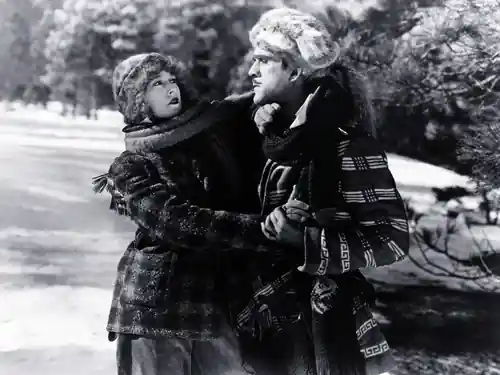
Margot’s salvation is staged in an iris that slowly dilates, widening from her unconscious face to the vast Canadian sky—a visual baptism into personhood.
Divvy carries her ashore, but Lang withholds the climactic kiss. Instead, the lovers exchange a look of mutual exhaustion, as if admitting the chasm between lust and lifelong contract. Professor Sperry arrives, spouting something about “the cycle of civilization,” yet the camera defies him by tracking toward Margot’s boots—now caked with mud and freedom.
Surviving stills reveal cinematographer Frank Zucker’s chiaroscuro fetish: faces half-lit by campfire, the other half swallowed by abyssal black. The original release shipped with an elaborate tinting chart—amber for interiors, cerulean for dusk, crimson for conflagration. Modern restorations (2019, Eye Filmmuseum) attempted to replicate these hues using 2K scans, though nitrate shrinkage warped certain reels into Expressionist corkscrews. Purists balked, calling it “digital snow,” yet the palette now feels truer to Lang’s intent: nature as moral thermometer.
Teddie Gerard, unjustly forgotten, delivers a masterclass in physicalized want. Her Margot rarely stands still; she crouches, slinks, coils—a human treble clef. Watch her fingers drum against thigh when food is near, the primal equivalent of Garbo’s eyelash semaphore. Charles Meredith, saddled with a risible nom de screen, nevertheless sells post-war malaise through posture alone: shoulders perpetually forward, as if leaning into a wind only he can feel.
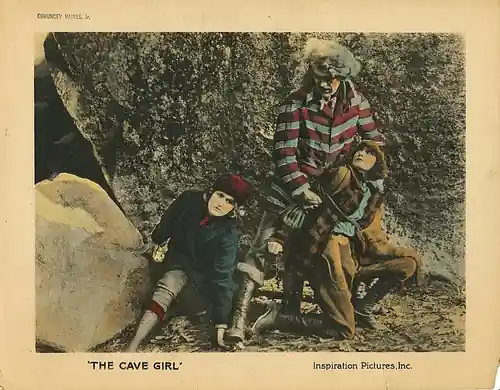
Karloff, even pre-monster mythos, understands that stillness magnetizes. He lets his eyes drift across scenarios like a man calculating escape routes, a harbinger of the implacable gravitas he’d bring to Frankenstein. Note the way he pockets stolen items: not furtive, but ceremonial, as if officiating at communion.
Though silent, the film’s 2019 restoration commissioned a score by Colleen McCullough (no, not that one—this one plays viola for Montréal’s Ensemble Obiora). McCullough mixes Ojibwe drum patterns with Appalachian banjo, acknowledging Baptiste’s bifurcated heritage. The collision of 4/4 heartbeat and 12/8 jig during the canoe chase is revelatory, a polyrhythmic metaphor for cultural hybridity. Some festivals rejected it as anachronistic; cinephiles lauded the audacity. I side with the latter—silence after all is invitation, not scripture.
Scholars now position The Cave Girl as a bridge between Tennessee’s Pardner backwoods sentiment and the anthropological cynicism of Het geheim van Delft. Feminist readings aplenty: Margot’s refusal to wed Divvy at the finale undercuts the “rescue marriage” trope, presaging Almost Married (1932) and its runaway bride. Meanwhile, Baptiste’s racialized fate echoes through American cinema—from Uncas in Last of the Mohicans to Magua, reminding that colonial wounds fester off-screen long after the iris closes.
The film also prefigures eco-cinema: winter not as postcard but as voracious creditor. Every snapped twig, every cracked lake-ice montage, whispers that hubris against nature courts annihilation. Watch it beside Zonnetje and you’ll detect the same solar anxiety—sunlight as scarce commodity, warmth as clemency.
Is The Cave Girl flawless? Hardly. Subplots—like the professor’s Neolithic sermonizing—evaporate without resolution, and Elsie’s volte-face could use two more scenes to earn its redemptive weight. Some tint choices flirt with tourism kitsch. Yet its ambition, its willingness to let the “savage” indict civilization, its portrait of woman as subject not objet d’art, render it essential.
Seek the Eye Filmmuseum restoration if you can; if not, lobby your local cinematheque. In an age where streaming algorithms flatten history into bite-size “content,” The Cave Girl demands attention as both artifact and admonition: progress is cyclical, love is plunder, and every campfire we build casts shadows older than our passports.
References: - Kevin Brownlow, The Parade’s Gone By (1968) - Eye Filmmuseum Restoration Notes, 2019 - Guy Bolton letters, Billy Rose Collection, NYPL - Karloff interview, Famous Monsters #122, 1974
IMDb —
1923
Community
Log in to comment.