DbcultAccessing Vault...
5.1/10
Senior Film Conservator
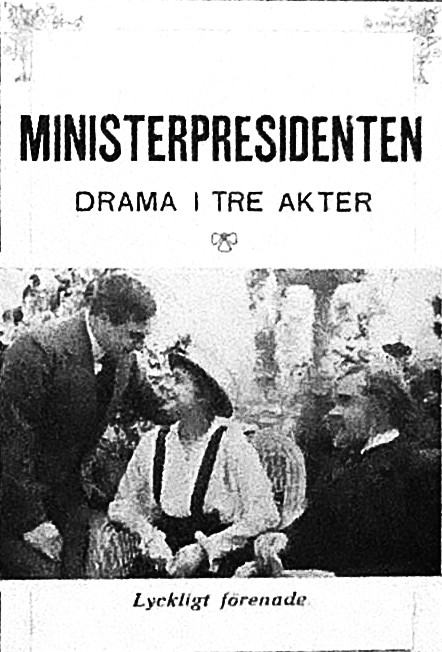
A definitive 5.1/10 rating for a film that redefined the boundaries of cult cinema. Ministerpresidenten remains a cornerstone of transgressive art.
In the annals of early cinema, few works capture the intricate dance between personal desire and public ambition with the nuanced subtlety of Georg af Klercker's 'Ministerpresidenten'. Released in 1916, this Swedish silent film, far from being a mere relic, resonates with a timeless exploration of human frailty, the seductive power of influence, and the often-destructive nature of rivalry. Its seemingly simple premise—a love triangle involving a newspaper man, a lawyer, and a beautiful woman—belies a deeper, more sophisticated commentary on the societal structures and individual aspirations that defined the nascent 20th century. The film, in its quiet grandeur, invites us to ponder the true cost of power and affection, and how these two formidable forces inevitably intertwine to shape destinies.
At the heart of 'Ministerpresidenten' lies a captivating dramatic core: the fierce competition for the affections of Rose Legrange, portrayed with luminous grace by Mary Johnson. Johnson, a silent era star, imbues Rose with an enigmatic quality, a quiet strength that suggests more than just being a passive object of desire. Her beauty is not merely superficial; it is a catalyst, a potent force that ignites the latent rivalries between Jean Bazard and Alphonse Carrel. One might draw parallels to the compelling female figures in films like Assunta Spina, where the protagonist's beauty and spirit become central to the unfolding drama, often leading to tragic or transformative outcomes. Rose's quiet dignity, even amidst the tempestuous desires swirling around her, provides a crucial anchor to the narrative.
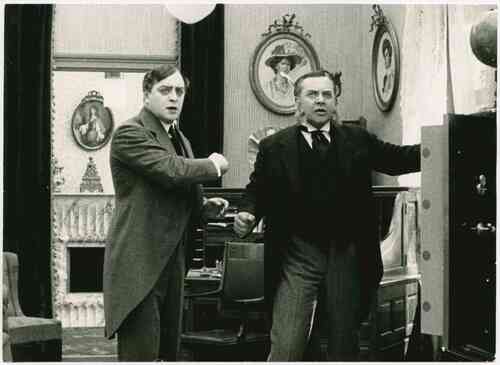
Jean Bazard, the newspaper man, brought to life by Carl Barcklind, embodies the burgeoning power of the press in an era where public opinion was increasingly shaped by headlines and exposé. Bazard is not just a suitor; he is an archetype of the modern intellectual, a purveyor of information, perhaps even a nascent political force himself. His pursuit of Rose likely isn't solely romantic; it could be interpreted as a desire to possess a symbol of societal grace and influence, to elevate his own standing through association. The dynamism of his profession, the constant quest for truth or at least a compelling narrative, lends him an air of restless ambition. This characterization allows Klercker to subtly explore the intersection of personal life and public persona, a theme that remains remarkably relevant even today.
Opposing Bazard is Alphonse Carrel, the lawyer, masterfully played by Arvid Hammarlund. Carrel represents the established order, the meticulous adherence to law and precedent. His love for Rose, while passionate, is perhaps tempered by a desire for control and a structured existence. The legal profession, by its very nature, thrives on logic and the systematic application of rules, contrasting sharply with the often chaotic and unpredictable world of journalism. This inherent occupational friction adds a fascinating layer to their personal rivalry, transforming it into a symbolic battle between the guardians of tradition and the harbingers of change. One can almost sense the societal shifts of the early 20th century reflected in their clash, a period where old hierarchies were being challenged by new forms of power and influence.
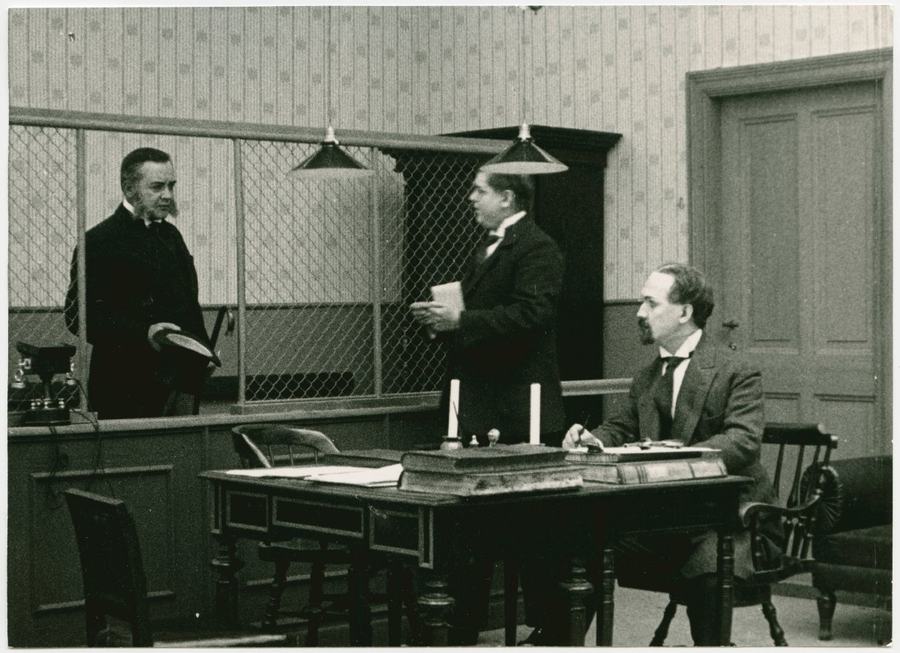
Georg af Klercker's directorial hand in 'Ministerpresidenten' is nothing short of masterful. Known for his prolific output and innovative techniques during the Swedish silent film era, Klercker demonstrates a keen understanding of visual storytelling. Without the aid of spoken dialogue, every gesture, every facial expression, every carefully composed frame had to convey emotion, intent, and narrative progression. The film's aesthetic is characterized by a deliberate elegance, with Klercker employing deep focus and thoughtful mise-en-scène to create a rich, immersive world. His use of lighting, in particular, often highlights the internal struggles of the characters, casting shadows that mirror their moral dilemmas or illuminating their moments of clarity.
The pacing of 'Ministerpresidenten' is deliberate, allowing the audience to absorb the emotional weight of each scene. Unlike some of the more frenetic melodramas of the period, Klercker often opts for sustained shots, letting the actors' performances unfold naturally. This approach fosters a deeper connection with the characters, inviting empathetic engagement rather than mere passive observation. While not on the epic scale of a D.W. Griffith masterpiece like Intolerance, Klercker's film achieves an intimacy and psychological depth that is equally compelling. He understands that grand drama can reside not just in sweeping historical events, but in the quiet, desperate struggles of individual hearts and minds.
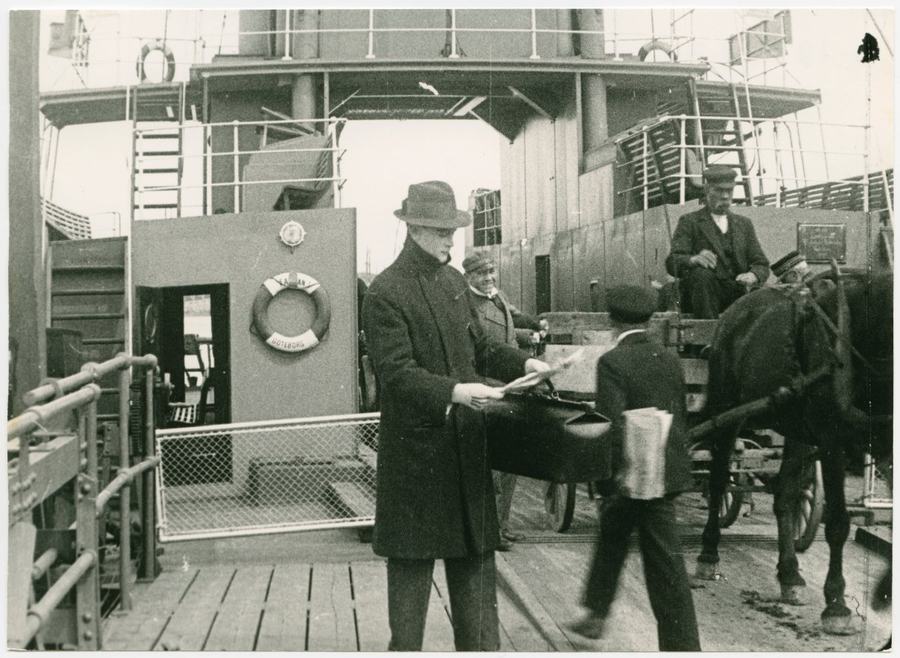
Klercker's ability to extract nuanced performances from his cast is also noteworthy. In a time when silent acting could often veer into exaggerated theatrics, the ensemble in 'Ministerpresidenten' delivers performances that feel remarkably restrained and authentic. Mary Johnson, Carl Barcklind, and Arvid Hammarlund communicate complex emotions through subtle shifts in posture, the intensity of their gaze, and the delicate expressiveness of their hands. This understated approach enhances the film's realism and prevents the melodrama from becoming overwrought. One can see echoes of this refined performance style in other European silent films of the era, where psychological realism began to take precedence over grand gestures.
The very title, 'Ministerpresidenten' (The Prime Minister), hints at a dimension far grander than a simple romantic rivalry. It suggests that the stakes involved extend beyond the personal affections of Rose Legrange. It implies that one or both of the protagonists, Jean Bazard or Alphonse Carrel, either holds or aspires to hold a position of significant public power. This elevates their conflict from a private matter to one with potential political ramifications, where personal choices could impact national destiny. The film, therefore, becomes a study of how private passions can collide with public responsibilities, and how the pursuit of love can become entangled with the pursuit of power.
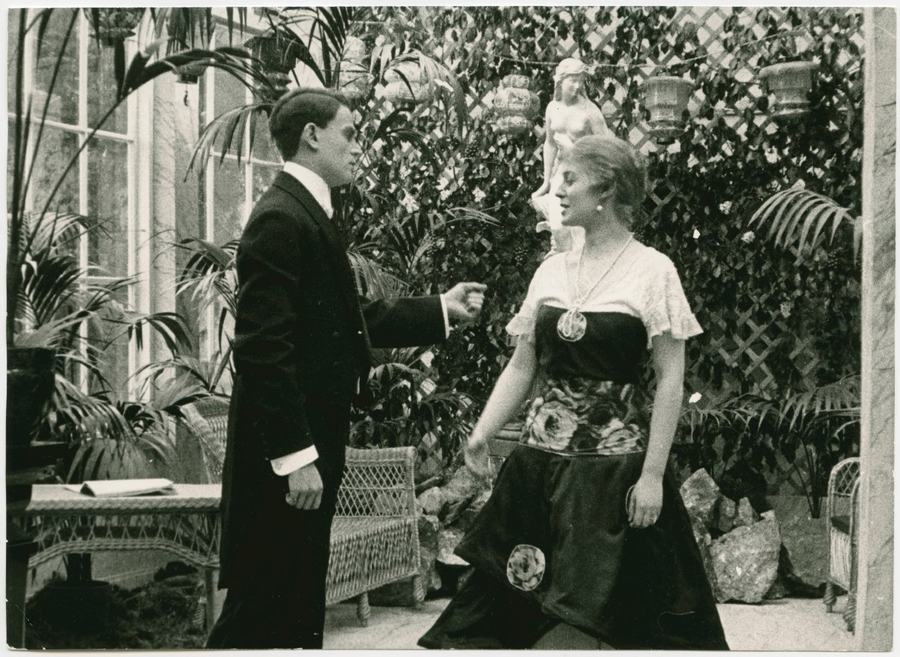
This thematic depth distinguishes 'Ministerpresidenten' from many contemporary melodramas. While films like The Whirl of Life might revel in the spectacle of societal upheaval or personal crisis, Klercker's work delves into the more subtle, psychological pressures exerted by public scrutiny and the expectations placed upon those in positions of influence. The rivalry for Rose's hand, in this context, becomes a microcosm of a larger struggle for dominance—be it in the political arena, the social sphere, or the realm of public opinion. The film subtly critiques the often-hypocritical standards of society, where personal integrity can be sacrificed at the altar of ambition.
Furthermore, the film offers a fascinating glimpse into the portrayal of female agency in early 20th-century cinema. While Rose is the object of desire, her character, through Mary Johnson's nuanced performance, suggests an internal world of her own. She is not merely a prize to be won but a woman navigating a complex situation, her choices carrying significant weight. This nuanced depiction is a step beyond the often one-dimensional female characters seen in some films of the period, hinting at the evolving role of women in society, a theme also explored in films like Her Mother's Secret or Leah Kleschna, which often grappled with the societal constraints and moral dilemmas faced by women.
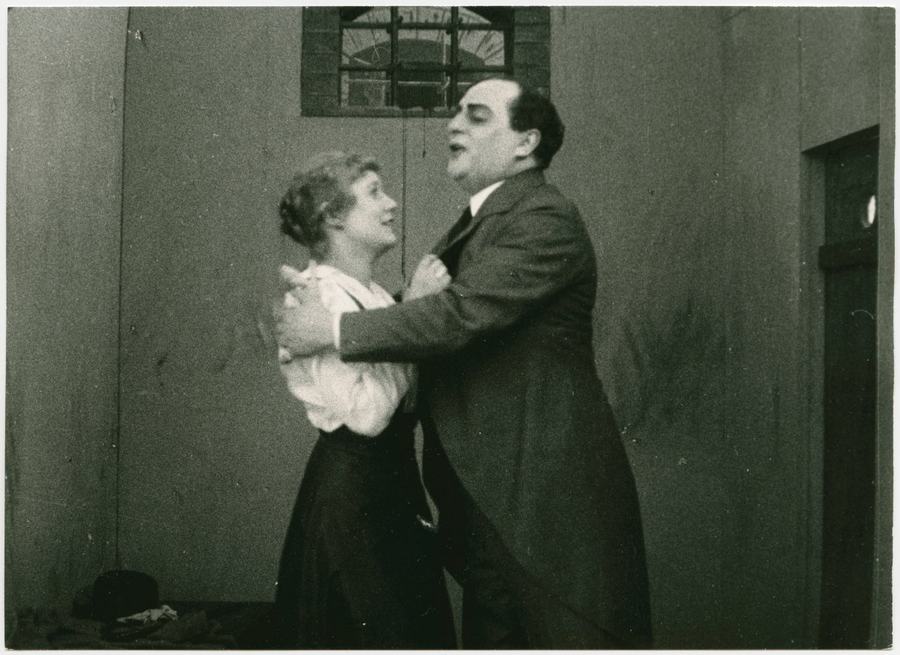
'Ministerpresidenten', while perhaps not as widely known as some of its international contemporaries, holds a significant place in the history of Swedish cinema. Georg af Klercker's output was prodigious, and his films often pushed the boundaries of narrative and visual sophistication. This particular work exemplifies his ability to craft engaging stories that are both entertaining and intellectually stimulating. The film serves as a valuable artifact, offering insights into the cultural, social, and political anxieties of its time, while simultaneously delivering a compelling human drama.
Its enduring relevance lies in its exploration of themes that remain perennially fascinating: the destructive nature of unchecked ambition, the complexities of love, and the often-fraught relationship between private desires and public duty. In an age saturated with political intrigue and media scrutiny, the narrative of 'Ministerpresidenten' feels remarkably prescient. The struggle between the journalist and the lawyer, both vying for affection and implicitly for influence, mirrors contemporary debates about truth, justice, and the power of public perception. It reminds us that while the technological landscape of cinema has transformed dramatically, the fundamental human motivations driving our stories remain constant.
The film's subtle exploration of character motivations and the societal pressures that shape them is particularly commendable. It doesn't offer simplistic heroes or villains but rather complex individuals caught in a web of their own making. The climax, whatever its resolution, is not merely a triumph or defeat for one party but a reflection of the intricate consequences that arise when personal lives become entwined with the machinations of power. This nuanced approach to storytelling is what elevates 'Ministerpresidenten' beyond a mere historical curiosity into a work that continues to provoke thought and stimulate discussion. It stands as a testament to the power of silent cinema to convey profound truths with grace, elegance, and an enduring emotional impact.
Ultimately, 'Ministerpresidenten' is more than just a love story; it is a profound observation on the human condition, a study of the forces that drive individuals to great heights or tragic lows. Klercker, through his masterful direction and the compelling performances of his cast, crafts a narrative that is as intellectually stimulating as it is emotionally resonant. It is a film that deserves to be rediscovered and appreciated for its artistic merit and its timeless exploration of the intricate dance between love, ambition, and the inescapable pressures of public life. Its quiet power continues to reverberate, inviting audiences to reflect on the enduring complexities of the human heart and the societal stage upon which its dramas are played out.
IMDb 6.8
1936
Community
Log in to comment.