DbcultAccessing Vault...
Cult Review
Senior Film Conservator
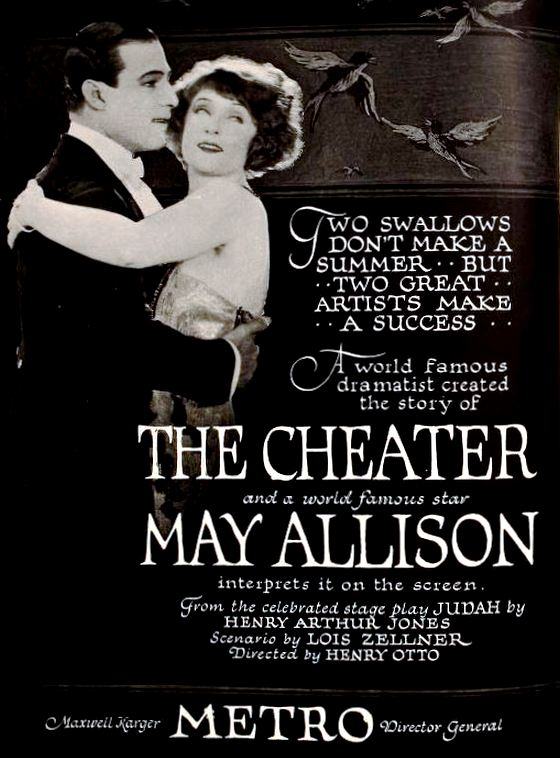
There is a peculiar, almost haunting quality to the silent cinema of the early 1920s, a period when the medium was shedding its theatrical chrysalis and embracing the nuanced visual language of psychological realism. The Cheater (1920), directed by Henry Otto and based on the play by the venerable Henry Arthur Jones, stands as a quintessential example of this transition. It is a film that oscillates between the gritty textures of the London underworld and the sterile, gilded cages of the aristocracy, anchored by a performance from May Allison that is nothing short of luminous.
"In the realm of the silent screen, the face is the landscape of the soul. In 'The Cheater,' May Allison navigates a terrain of guilt and burgeoning grace with a dexterity that rivals the contemporary icons of her age."
The narrative premise—a criminal posing as a healer—is a trope that has seen various iterations throughout film history, yet rarely is it handled with such delicate balance between cynicism and sentimentality. Lilly Meany is not your typical cinematic villainess; she is a product of her environment, a woman whose survival is predicated on her ability to mirror the desires and delusions of the wealthy. When she enters the orbit of Lord Asgarby, we see the collision of two disparate worlds. This thematic clash is a staple of the era, reminiscent of the social friction explored in The Oakdale Affair, where the boundaries of class and morality are similarly tested.
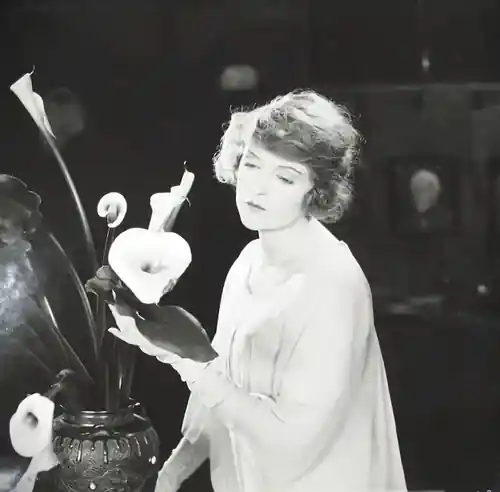
One of the most striking sequences in the film involves Lilly mending a broken doll to win the confidence of Eve, Asgarby’s crippled sister. To a modern audience, the metaphor might seem overt, but within the context of 1920, it was a sophisticated piece of visual storytelling. The doll represents Eve herself—shattered, inanimate, and discarded by the world of the healthy. By fixing the toy, Lilly performs a secular miracle that serves as a precursor to the spiritual one. It is a moment of profound irony: the woman who makes her living by breaking things (social contracts, laws, trust) finds that her greatest power lies in the act of restoration.
This psychological manipulation, while intended as a 'fleece,' becomes a catalyst for genuine change. It raises the question: if a lie produces a truth—in this case, the physical healing of a girl—does the lie retain its malevolence? The film suggests a complex moral landscape, much like the one navigated in The Devil to Pay, where the cost of redemption is often paid in the currency of deception.
May Allison delivers a performance that is both restrained and deeply expressive. Her large, communicative eyes do the heavy lifting that dialogue would later provide. She manages to convey the internal struggle of a woman who is beginning to believe in her own performance. Beside her, the cast is populated by stalwarts of the silent era. Notably, a young Rudolph Valentino appears in a supporting role. While he had not yet achieved the 'Latin Lover' superstardom that would define his legacy, his presence here adds a layer of historical intrigue. His charisma is palpable even in the background, a burgeoning star whose trajectory would soon eclipse many of his contemporaries.
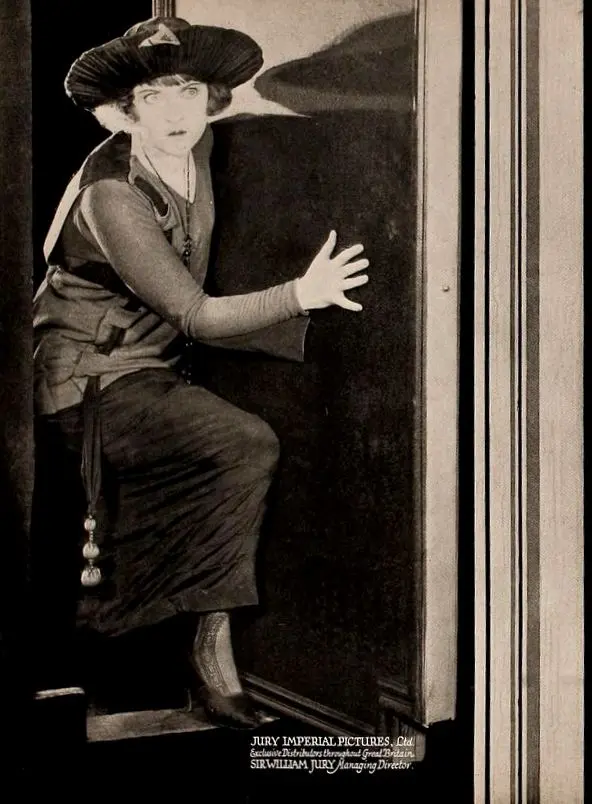
The chemistry between Allison and Frank Currier, who plays Lord Asgarby, is built on a foundation of mutual respect that gradually morphs into a romantic entanglement. Currier portrays Asgarby not as a fool to be pitied, but as a man of immense faith who is searching for a miracle in a world that has become increasingly disillusioned after the Great War. This search for meaning is a recurring motif in post-war cinema, often seen in international works like Anny - en gatepiges roman or the emotionally charged Flor de durazno.
Henry Otto’s direction is characterized by a keen eye for composition. The London underworld is depicted with a shadowy, almost expressionistic flair that contrasts sharply with the airy, light-filled manor of the Asgarbys. This visual dichotomy serves to heighten the sense of Lilly’s displacement. She is a creature of the dark who has wandered into the light, and the cinematography reflects her gradual acclimatization to this new environment. The use of intertitles is sparing, allowing the visual narrative to breathe, a technique that was perfected in films like The Strange Case of Mary Page.
The pacing of The Cheater is deliberate, allowing the tension of Lilly’s secret to simmer. Every interaction with Mrs. Prall or Lord Asgarby is fraught with the potential for exposure. This creates a suspenseful atmosphere that keeps the viewer engaged, even as the film explores its more philosophical themes. It is a masterclass in building stakes without the need for grand action sequences, relying instead on the internal emotional states of its characters.
The climax of the film—Lilly’s confession—is a masterstroke of dramatic writing. In an era where the 'fallen woman' was often punished with death or social exile, The Cheater offers a radical alternative: forgiveness. Lord Asgarby’s decision to marry Lilly despite her criminal past is a subversion of the typical Victorian morality play. It suggests that identity is not fixed, and that the capacity for change is the ultimate human miracle. This thematic resolution echoes the redemptive arcs found in By Power of Attorney, where legalistic justice is secondary to emotional truth.
Furthermore, the film’s treatment of Eve’s recovery is fascinating from a medical and psychological perspective. It touches upon the power of suggestion and the burgeoning understanding of psychosomatic illness. By placing a charlatan at the center of a genuine cure, the film critiques the rigidity of the medical establishment of the time, much like the subtle social commentaries in Arms and the Girl or the pastoral explorations of A Pool of Peaches.
To truly appreciate The Cheater, one must view it through the lens of 1920. The world was in a state of flux, and cinema was the primary medium through which people processed the shifting social landscapes. The film’s exploration of faith healing was particularly relevant in an age where traditional religion was being challenged by new spiritual movements and scientific advancements. It sits alongside other films of the period that sought to explore the 'unseen,' such as The Mission Trail or the enigmatic På livets ödesvägar.
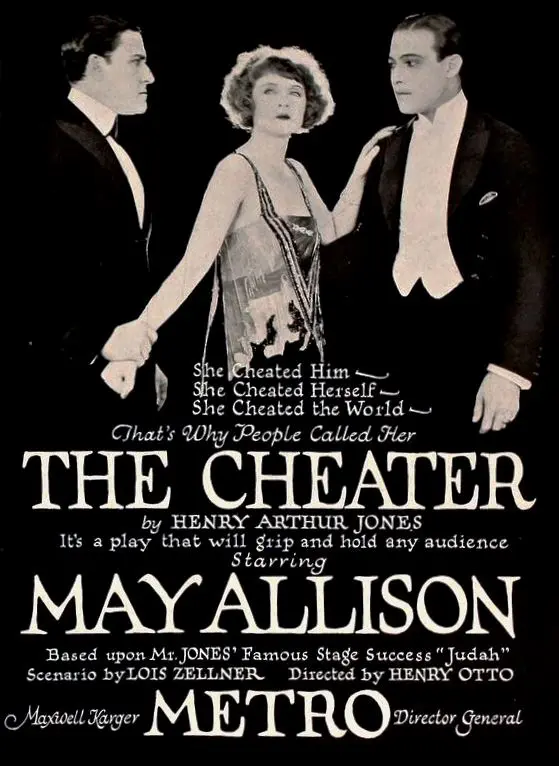
While The Cheater may not be as widely discussed today as the works of Griffith or Murnau, its contribution to the development of the character-driven drama cannot be overstated. It eschews the melodrama of the previous decade in favor of a more nuanced exploration of human frailty. The film’s DNA can be seen in later 'con artist with a heart of gold' movies, but few have the same earnestness and visual elegance. It is a piece of cinema that demands to be watched with a contemplative eye, much like the intricate mysteries of Das Geheimschloss or the cultural tapestries of The Independence of Romania.
The supporting cast provides a sturdy framework for Allison’s performance. Frank Currier’s Lord Asgarby is the personification of the old guard—dignified, perhaps a bit naive, but ultimately driven by a profound love for his sister. Mae Giraci as Eve captures the vulnerability and eventual joy of the 'crippled sister' archetype without descending into caricature. The gang members from Lilly’s past serve as a constant reminder of the world she is trying to escape, providing a sense of impending doom that heightens the narrative tension. This ensemble dynamic is similar to the character-rich environments of The Halfbreed or the rugged charm of Headin' South.
Even the smaller roles, such as the socialites who are the targets of Lilly’s initial scams, are portrayed with a biting wit. They represent the superficiality of a class that has more money than sense, making Lilly’s crimes seem almost like a form of wealth redistribution. This satirical edge gives the film a modern sensibility that keeps it from feeling like a mere museum piece.
In the vast archive of silent cinema, The Cheater occupies a unique space. It is a film that is simultaneously of its time and ahead of it. Its exploration of the fluidity of identity and the redemptive power of love remains resonant. While it lacks the bombast of the epic spectacles that were beginning to dominate the box office, its intimacy is its greatest strength. It invites the viewer into the private spaces of its characters’ hearts, asking us to judge not by the letter of the law, but by the spirit of the human experience.
For those interested in the evolution of film narrative, The Cheater is essential viewing. It provides a fascinating look at the early career of May Allison and the nascent screen presence of Rudolph Valentino. More importantly, it is a beautifully crafted story that reminds us that even in a world of grifters and cheats, the possibility of a genuine miracle—emotional or otherwise—is never entirely out of reach. It is a cinematic journey as rewarding and unexpected as a trip through Unknown Switzerland, uncovering hidden depths in a landscape we thought we knew.
Verdict: A poignant, visually arresting exploration of the intersection between fraud and faith. A high-water mark for 1920s drama.
IMDb —
1924
Community
Log in to comment.