DbcultAccessing Vault...
5.8/10
Senior Film Conservator
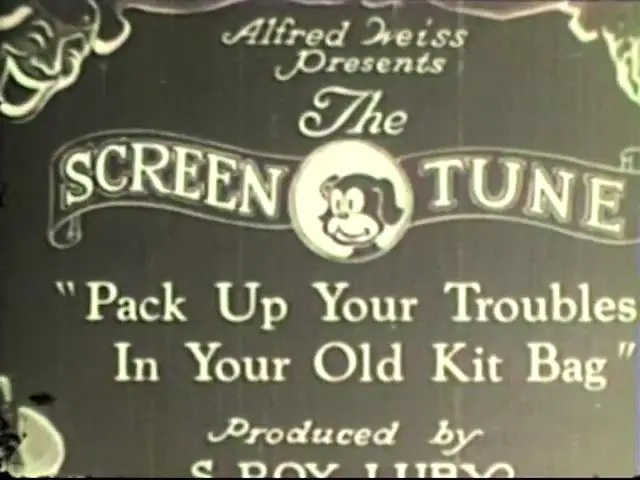
A definitive 5.8/10 rating for a film that redefined the boundaries of cult cinema. Pack Up Your Troubles remains a cornerstone of transgressive art.
Is 'Pack Up Your Troubles' worth digging up from the archives today? Short answer: absolutely, if you appreciate the raw, unhinged energy of early animation and the historical oddities that shaped cinema, but it’s decidedly not for those seeking conventional narrative or modern polish.
This Fleischer Studios short is a vibrant, if perplexing, time capsule. It's a must-watch for animation historians, enthusiasts of pre-Code era cartoons, and anyone fascinated by the experimental spirit of sound's infancy in film. However, if your preference leans towards coherent storytelling, sophisticated animation, or a clear character arc, 'Pack Up Your Troubles' will likely leave you more baffled than entertained.
Dave Fleischer's 'Pack Up Your Troubles' is less a film and more a cultural artifact, a vibrant, chaotic burst from an era when animation was still finding its voice, often quite literally. Released during the nascent years of synchronized sound, this short cartoon, featuring Pinkie the Pup, encapsulates the experimental, often surreal, spirit of Fleischer Studios.
The premise is deceptively simple: Pinkie, a chef in a fancy restaurant, is tasked with preparing spaghetti, tuna fish, and fried egg. What unfolds, however, is anything but straightforward. The kitchen becomes a stage for rubber-hose animation whimsy, a world where the laws of physics are merely suggestions and character motivations are secondary to visual gags.
The film works because of its sheer, unbridled surrealism and its undeniable historical significance. It’s a bold, almost defiant, rejection of narrative convention, embracing instead a stream-of-consciousness style that feels oddly modern in its postmodern irreverence. The animation, characteristic of the Fleischer output, possesses a distinct fluidity and a slightly unsettling, almost grotesque charm that sets it apart from its contemporaries.
This film fails because its narrative incoherence and jarring tonal shifts can be genuinely off-putting to a contemporary audience. The abrupt transition from Pinkie's culinary misadventures to a sing-along feels less like a narrative choice and more like a hard reset, a concession to the popular entertainment formats of the time rather than a seamless part of the story.
You should watch it if you're an animation historian, a fan of pre-Code oddities, or someone who genuinely enjoys experimental, non-sequitur humor that doesn't feel the need to explain itself. It’s a fascinating glimpse into the creative freedom that existed before animation studios settled into more standardized storytelling.
Pinkie the Pup is a character of pure id, driven by the immediate demands of his boss and the surreal logic of his animated world. His initial struggle with the menu items—spaghetti, tuna fish, and fried egg—is less about culinary skill and more about the visual comedy derived from his exaggerated reactions and the pliable nature of his animated form. The way Pinkie interacts with his environment, his body stretching and compressing with each action, is a hallmark of the rubber-hose animation style popularized by Fleischer Studios. It’s an aesthetic that prioritizes movement and expression over anatomical accuracy, creating a dynamic, almost liquid visual experience.
The directing, attributed to Dave Fleischer, leans heavily into this visual elasticity. There’s a palpable sense of improvisation, as if the animators were simply enjoying the freedom of the medium. The pacing is frantic, mirroring the chaotic energy of a busy kitchen, but it’s a chaos that feels deliberately crafted to amuse. This isn't the carefully orchestrated slapstick of later cartoons; it's a more raw, spontaneous kind of humor. One can observe this in Pinkie's frantic movements around the kitchen, his limbs flailing, his expression shifting from determined to bewildered in an instant.
The 'acting,' through the lens of character animation, is broad and expressive. Pinkie's wide eyes and exaggerated snout convey his plight without the need for extensive dialogue. The boss, a gruff, stocky figure, embodies the authoritarian archetype, his pronouncements driving Pinkie's actions. Their dynamic, though brief, sets up the initial conflict before the film takes its drastic turn.
One could argue that the film’s narrative structure is its biggest weakness, but perhaps also its most intriguing strength. The sudden shift to the alphabet soup, where Pinkie looks in, acts as a portal, not just to a different scene, but to an entirely different mode of engagement. It’s a fourth-wall break so abrupt it almost feels accidental, yet it’s entirely purposeful.
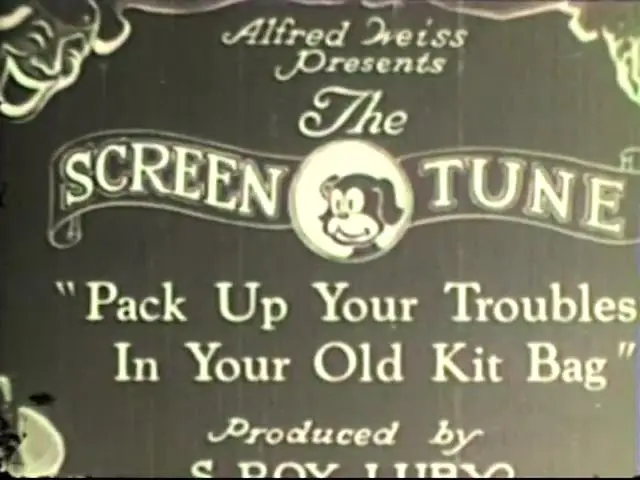
The introduction of the Bouncing Ball, leading the audience in a sing-along of 'Pack Up Your Troubles,' is the moment this short transcends mere animation and becomes an interactive experience. This wasn't just a gimmick; it was a popular, ingenious way to engage cinema audiences of the era, turning passive viewing into active participation. The ball, bouncing across lyrics at the bottom of the screen, served as a communal karaoke guide, fostering a sense of shared enjoyment that few modern films attempt.
The tone shifts dramatically from the frenetic kitchen comedy to a more cheerful, almost saccharine, communal sing-along. This tonal whiplash is, for many, the most challenging aspect of the film. It's a stark reminder of the diverse entertainment values of the early 20th century, where vaudeville sensibilities often bled into cinematic presentations. The choice of song itself, a popular WWI-era tune, further grounds the short in its specific historical context, evoking a sense of nostalgic resilience.
From a cinematography perspective, or rather, the animation's visual composition, the film maintains a relatively simple, straightforward approach. The camera angles are mostly eye-level, focusing on the characters and their immediate actions. There are no grand sweeping shots or complex visual metaphors. Instead, the focus is on clarity for the gags and, later, the readability of the song lyrics. This simplicity is not a flaw; it’s a reflection of the technological limitations and aesthetic priorities of the time, where the novelty of moving images and synchronized sound often took precedence over intricate visual storytelling.
Compared to more narrative-driven shorts like The Border Legion (though a live-action Western, it exemplifies a different type of early cinematic ambition), 'Pack Up Your Troubles' showcases animation's unique ability to diverge from reality and embrace pure fantasy and interaction. It stands as a testament to the diverse and experimental landscape of early cinema, where different genres explored different facets of the medium's potential.
Dave Fleischer, as a key figure in the studio, imbued these shorts with a distinct personality. The Fleischer style, often characterized by its darker, more urban aesthetic compared to Disney's pastoral charm, is evident even in this seemingly lighthearted short. There's a certain grit, a slightly off-kilter quality to Pinkie and his world that feels uniquely Fleischer. This studio was never afraid to push boundaries, whether through rotoscoping techniques or, as seen here, through unconventional narrative structures.
The lack of a credited writer is common for shorts of this era, often being collaborative efforts driven by visual ideas and gags rather than a tightly constructed script. This contributes to the episodic, almost improvisational feel of the film. It's a testament to the animators' creativity that they could string together such disparate elements into a cohesive, albeit peculiar, viewing experience.
One unconventional observation is how the film subtly critiques the very nature of labor. Pinkie’s endless, somewhat absurd tasks in the kitchen, culminating in a nonsensical gaze into alphabet soup, can be interpreted as a commentary on the repetitive, often meaningless nature of work, before the film offers the escapism of collective singing. It's a stretch, perhaps, but the underlying tension of Pinkie’s predicament is palpable before the joyous release.
The short’s biggest flaw, for a modern viewer, is undoubtedly its disjointed nature. It feels like two half-formed ideas stitched together. Yet, it's precisely this Frankensteinian construction that makes it so fascinating for historical examination. It’s a snapshot of a transitional period, where entertainment was still figuring out its forms and functions, and anything was possible on the silver screen.
In the grand tapestry of cinematic history, 'Pack Up Your Troubles' is a vibrant, if slightly frayed, thread. It's a testament to the audacious spirit of early animation, a period when rules were still being written and experimentation was the norm. Dave Fleischer and his team deliver a short that is both bewildering and charming, a true product of its time that continues to intrigue those willing to look past its narrative eccentricities.
It works. But it’s flawed.
While it won't resonate with everyone, its value as a historical document and a display of Fleischer's distinctive style is undeniable. It’s a trip. A very strange trip. For those who appreciate the raw, unfiltered creativity of cinema’s formative years, 'Pack Up Your Troubles' offers a unique, if peculiar, form of joy. For others, it might just be a curiosity, a baffling relic from a bygone era. Either way, it demands a certain respect for its sheer audacity.
IMDb 7.3
1934
Community
Log in to comment.