DbcultAccessing Vault...
Cult Review
Senior Film Conservator
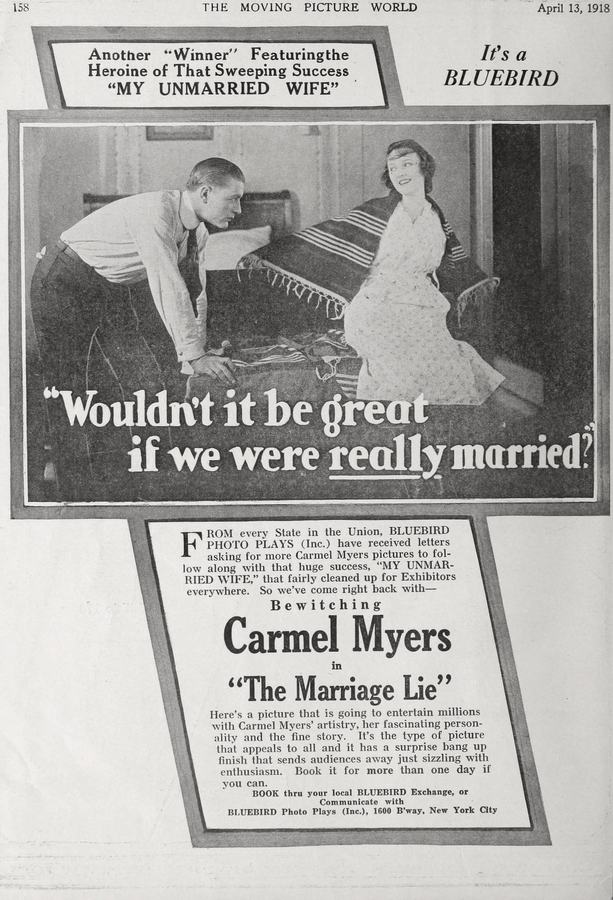
Stepping back into the flickering shadows of early cinema, one often encounters narratives that, despite their antiquated presentation, resonate with surprisingly modern emotional depth. The Marriage Lie, a 1918 silent drama, is precisely such a film, a captivating exploration of ambition, deception, and the serendipitous emergence of genuine affection from the most unlikely of arrangements. It’s a testament to the enduring power of storytelling, even when conveyed through pantomime and intertitles, that this particular tale manages to entangle the viewer in its intricate web of pretense and burgeoning romance.
At its core, the film presents a rather audacious premise: Douglas Seward, portrayed with earnest conviction by William Quinn, finds his professional aspirations thwarted by an almost whimsical stipulation from the eccentric contractor Terence Craver. Craver, whose peculiar hiring philosophy demands that all his engineers be married men, creates an immediate, insurmountable hurdle for the ambitious Seward. This isn't merely a preference; it's an unyielding prerequisite, a strange quirk that defines the very fabric of Craver's business empire. Such a detail, while perhaps comical to a contemporary audience, speaks volumes about the societal pressures and expectations prevalent in the early 20th century, where marital status often signified stability, responsibility, and a certain respectability deemed essential for professional roles. It’s a fascinating lens through which to view the era’s social contracts, where personal life and professional advancement were inextricably linked, sometimes in the most bizarre ways.
Enter Eileen Orton, brought to life with a delicate balance of vulnerability and resilience by Carmel Myers. Eileen's circumstances are dire; orphaned and destitute, she represents the stark reality faced by many women of her time who lacked independent means. Her predicament makes her ripe for Seward's desperate proposition: a marriage of convenience, a purely contractual arrangement where she would pose as his wife to satisfy Craver's demands, in exchange for financial support. This pragmatic solution, born of necessity rather than affection, forms the bedrock of The Marriage Lie. The agreement is simple, stark, and devoid of romantic sentiment on the surface, yet it sets in motion a chain of events that will irrevocably alter both their lives. The initial scenes establishing this pact are crucial, laying the groundwork for the emotional complexities that will unfold, demonstrating the desperate measures individuals might take when cornered by economic or social pressures.
With the 'marriage' successfully orchestrated, Seward secures his position and departs for South America, leaving Eileen to maintain the facade. This geographical separation is a brilliant narrative device, allowing for the slow, organic development of feelings that might otherwise have been rushed or unbelievable. It's during this period that the film truly begins to explore the nuances of human connection. Eileen, initially a reluctant participant in a charade, finds herself in an increasingly precarious position. Craver, played by Harry Carter with a menacing charm, quickly reveals his own predilections, developing an intense infatuation with Eileen. His 'mania for beautiful women,' as described in the plot synopsis, is not merely a passing fancy but a persistent, almost predatory attention that places Eileen in a vulnerable situation. Carter’s portrayal, even in the silent medium, conveys a palpable sense of entitlement and possessiveness, making Craver a compelling antagonist whose desires threaten to unravel the delicate lie.
What truly elevates the film beyond a simple romantic drama is Eileen's evolving emotional landscape. Despite Craver’s relentless pursuit, her heart begins to turn towards the absent Seward. His consistent, generous remittances – half his salary each week – are not just financial aid; they become tangible tokens of his reliability, his commitment to their unusual agreement, and perhaps, a nascent form of care. Carmel Myers masterfully conveys this subtle shift, her expressions transitioning from mere gratitude to a deeper, more profound attraction. This internal conflict—her obligation to maintain the lie, her growing unease with Craver, and her burgeoning feelings for Seward—forms the emotional core of the film. It's a classic cinematic trope, yet handled with a sincerity that transcends the era’s often melodramatic tendencies.
The thematic richness of The Marriage Lie is undeniable. It delves into the nature of truth and deception, exploring how a lie, initially conceived out of desperation, can paradoxically pave the way for an authentic connection. It questions societal norms, particularly the expectation of marriage for professional standing, and subtly critiques the power dynamics between men and women in a patriarchal society. Eileen's lack of agency at the outset, forced by circumstances into a difficult choice, gradually gives way to a quiet strength as she navigates Craver's advances and her own developing affections. The film, in its own understated way, touches upon the idea that true love can be found in unexpected places, even when the path to it is paved with artifice.
The performances, though silent, are remarkably expressive. William Quinn as Douglas Seward embodies the driven, honorable engineer caught in a moral quandary. His desperation to secure a position is palpable, but so too is his underlying decency, which is evident in his consistent support of Eileen. Carmel Myers, however, is the true revelation. Her ability to convey a complex range of emotions—fear, gratitude, confusion, and eventually, love—without uttering a single word is a testament to her skill as a silent film actress. She transforms Eileen from a passive recipient of circumstances into a character with genuine internal life. Harry Carter’s Terence Craver is appropriately menacing, providing the necessary external conflict that propels the story forward. Kenneth Harlan and Joseph W. Girard, though in supporting roles, contribute effectively to the ensemble, grounding the narrative in a believable, if slightly exaggerated, world.
The film's climax, with Seward's dramatic return to New York, is a classic example of silent film's ability to build tension and deliver satisfying resolutions. His timely arrival to protect Eileen from Craver’s increasingly aggressive overtures is a moment of catharsis, not just for the characters, but for the audience who has witnessed Eileen’s growing discomfort. This act of protection solidifies Seward’s heroic status in Eileen’s eyes and underscores the shift from a transactional relationship to one of genuine care. The confrontation, though likely stylized by the standards of the era, serves as the ultimate unraveling of the initial deception. The lie, no longer necessary, gives way to truth, and Seward's subsequent proposal to Eileen is not merely a formal gesture but the culmination of a journey through artifice to authentic connection. It’s a deeply romantic moment, earned through the trials and tribulations both characters have endured.
Comparatively, The Marriage Lie shares thematic threads with other films of its era that explored the complexities of social contracts and personal desires. One might draw parallels to films like We Can't Have Everything, which also delves into the dilemmas faced by individuals caught between societal expectations and personal yearnings, often highlighting the sacrifices made in the pursuit of happiness or status. The internal struggle of Eileen, torn between obligation and burgeoning affection, echoes the emotional quandaries found in many silent dramas where characters grapple with difficult choices. Furthermore, Craver's possessive infatuation bears a resemblance to the destructive desires explored in a film like Envy, where powerful emotions, unchecked, can lead to dangerous outcomes and threaten the happiness of others. The way a perceived rival, or in this case, a 'wife' who isn't truly his, can ignite a consuming passion that borders on obsession is a timeless narrative element.
Harvey Gates’s writing for The Marriage Lie is remarkably astute, crafting a narrative that maintains a delicate balance between dramatic tension and romantic development. The pacing, a crucial element in silent film where intertitles must carry much of the exposition, is well-judged, allowing the story to unfold naturally without feeling rushed or protracted. The visual storytelling, while undoubtedly limited by the technology of the time, effectively communicates the emotional beats and character motivations. One can imagine the subtle shifts in body language, the meaningful glances, and the dramatic gestures that would have been employed to convey the unspoken feelings and conflicts.
In conclusion, The Marriage Lie stands as a compelling example of early 20th-century filmmaking, demonstrating that even with the constraints of the silent era, powerful and emotionally resonant stories could be told. It’s a narrative that begins with a pragmatic deception and culminates in a genuine, heartfelt union, proving that sometimes, the most authentic connections can emerge from the most inauthentic of beginnings. For those interested in the evolution of cinematic romance, or simply a well-crafted period drama, this film offers a fascinating glimpse into a bygone era, reminding us that the human heart’s capacity for love and ingenuity remains timeless, regardless of the technological advancements in storytelling. It’s a charming, poignant piece of cinematic history that deserves to be revisited and appreciated for its nuanced portrayal of human relationships under duress and the ultimate triumph of affection over artifice.
IMDb 6.4
1931
Community
Log in to comment.